7 Dynamic Storefront Features That Improve Product Discovery
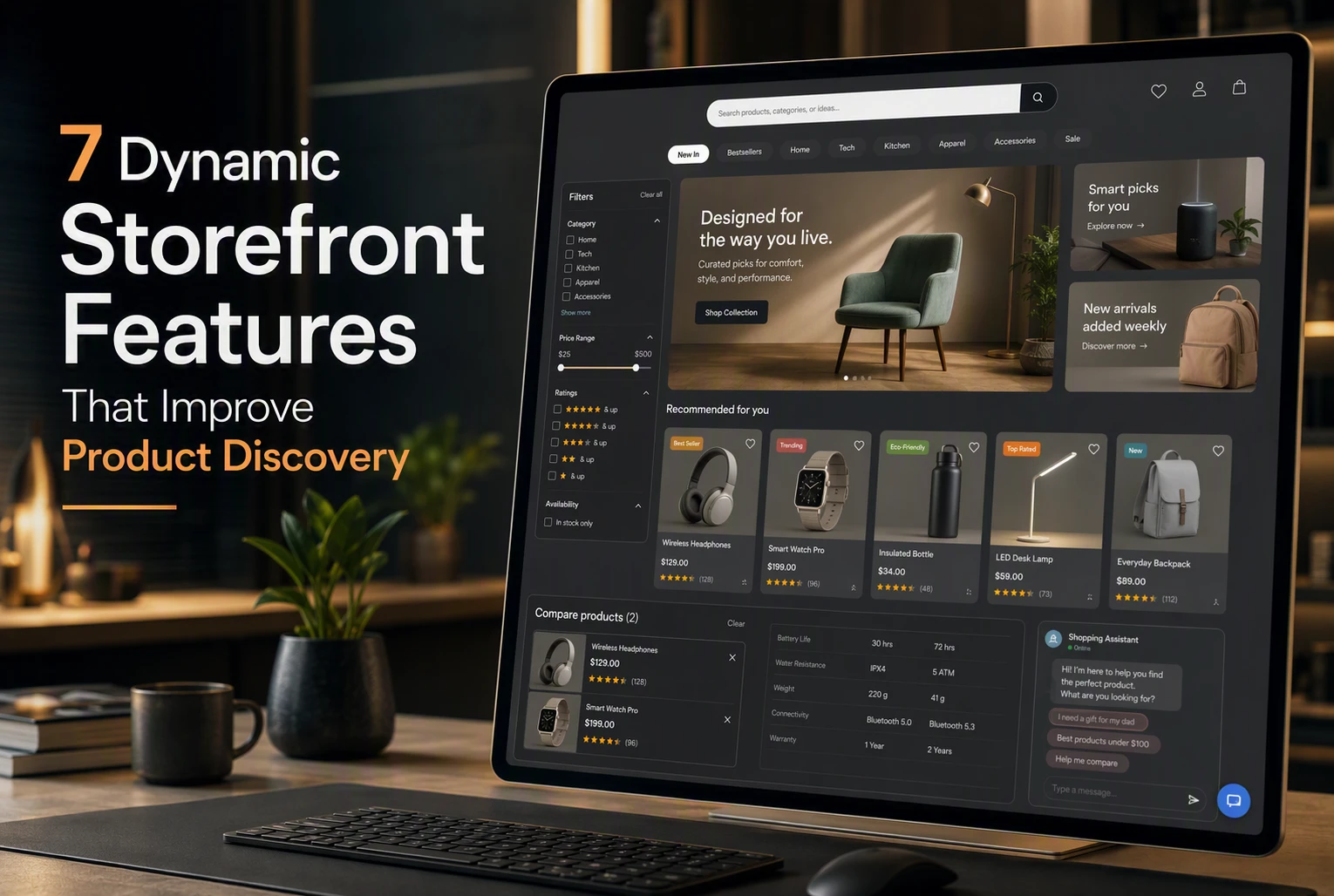
Quick Summary: Dynamic storefront features like real-time AI sales agents, adaptive landing pages, and personalized recommendations help shoppers find products faster and more relevantly. These tools reduce hesitation and bounce rates, especially on high-intent pages, by tailoring the experience based on behavior, intent, and inventory. Choosing the right feature depends on your biggest discovery challenge, and combining several often yields the best results.
Shoppers judge your catalog fast. The storefront that wins helps them find the right product in seconds, not after endless clicks, filters, and guesswork. Most stores still make buyers do the work and hope they do not leave first. This list ranks dynamic storefront features by how much they boost discovery speed, relevance, and confidence. These dynamic storefront features matter most on high-intent pages. The best dynamic storefront features cut hesitation right when shoppers need help.
Quick Comparison
| Feature | Best for | Discovery impact | Where it shows up | Implementation effort |
|---|---|---|---|---|
| Real-Time AI Sales Agent | High-consideration D2C catalogs | Very high | PDPs, chat widget, homepage, cart | Medium |
| Adaptive Landing Pages | Traffic from paid ads, email, SMS, and campaign links | High | Homepage, landing pages, campaign pages | Medium |
| AI Product Recommendations | Large catalogs with many similar products | High | PDPs, cart, homepage, post-purchase | Low to medium |
| Dynamic Merchandising and Catalog Prioritization | Fast-changing catalogs and inventory-sensitive brands | High | Collection pages, category pages, feeds | Medium |
What to know about dynamic storefront features
Dynamic storefront features change what shoppers see based on intent, behavior, and what your catalog looks like right now. That helps people find the right product faster instead of bouncing, looping through filters, or asking support for basic guidance.
This matters more in 2026 because catalogs are bigger, traffic costs more, and shoppers expect relevance on the first few clicks. Strong discovery features cut dead ends, improve product order, and guide buyers before they give up.
If shoppers cannot find, compare, or narrow options fast, better traffic will not fix the problem.
1. Real-Time AI Sales Agent
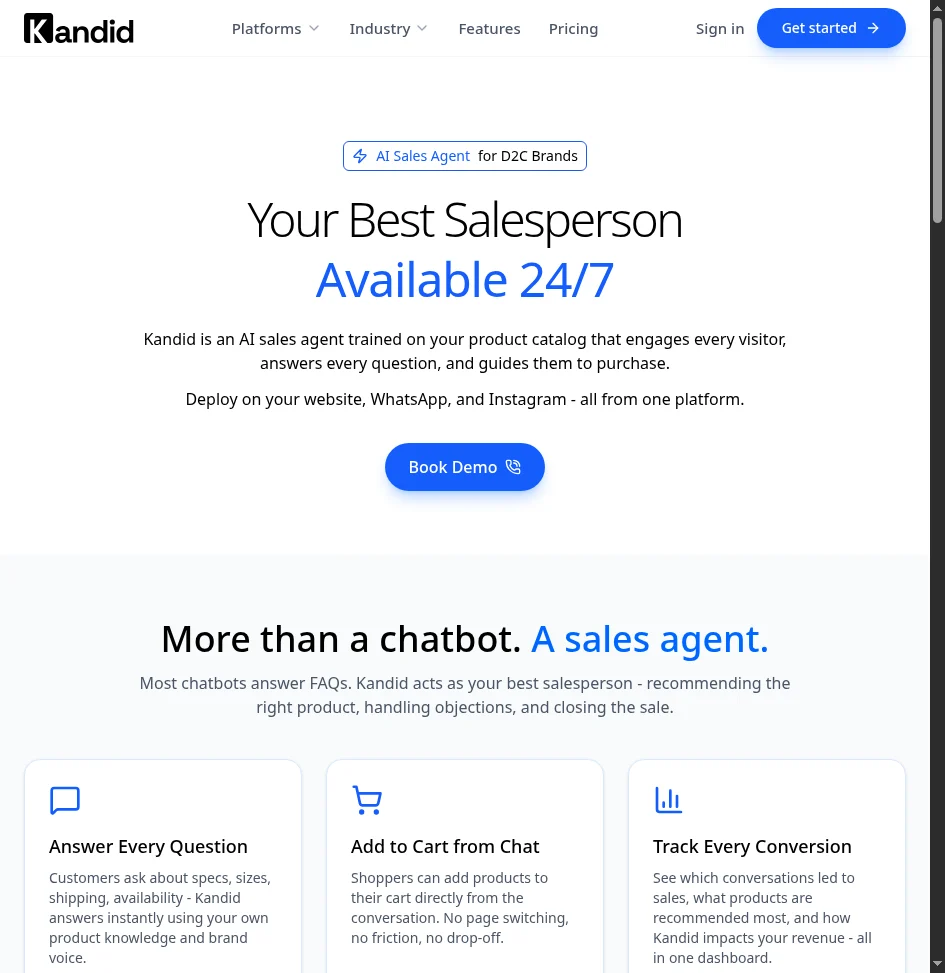
A real-time AI sales agent acts like guided selling, not just chat. Kandid helps shoppers ask what they mean and get answers, comparisons, and product picks fast, which matters as U.S. retail e-commerce reached 16.9% of total retail sales in Q1 2026.
Highlights
- Answers fit, size, compatibility, and use-case questions
- Recommends by intent
- Add-to-cart from chat Specs
- Best for: High-consideration D2C catalogs
- Impact: Very high
- Effort: Medium It ranks first because it cuts choice friction, and better web question design reduces user burden.
Last updated: August 7, 2026
Also Read: Dynamic Storefront 2026: How Data Quality Shapes Retail Visibility
2. Adaptive Landing Pages
Adaptive landing pages change the first view based on intent, source, or shopper context. If your ad click lands on a page that matches the promise, relevance improves and early bounce often drops, as Shopify notes in its guide to PPC landing pages.

Highlights
- Adapts content and product placement in real time
- Matches traffic source to the right category or offer, like personalized landing pages
Specs
- Best for: Paid ads, email, SMS, campaign links
- Discovery impact: High
- Implementation effort: Medium
Pros
- Improves message match and starting relevance
Cons
- Needs clean audience and traffic signals
It ranks here because it improves discovery before browsing starts.
Last updated: August 7, 2026
Also Read: Retailers Add Live Inventory Updates to Dynamic Storefront Displays
3. AI Product Recommendations
AI product recommendations help shoppers find the next best item fast. On large catalogs, Amazon Personalize and Google AI Commerce Search show how live behavior and catalog signals can surface better-fit alternatives, bundles, and complements without extra searching.

Highlights
- Similar items, complements, and upsells that feel relevant
- Adapts by session intent and product context
Specs
- Best for: Large catalogs with many similar products
- Discovery impact: High
- Where it shows up: PDPs, cart, homepage, post-purchase
- Implementation effort: Low to medium
Pros
- Easy to understand
- Can lift discovery and basket size
Cons
- Feels generic if logic is weak
- Needs enough data to stay relevant
It ranks here because it cuts choice overload and keeps shoppers moving.
Last updated: August 7, 2026
Also Read: 10 Effective Strategies to Optimize Your Dynamic Storefront
4. Dynamic Merchandising and Catalog Prioritization
Dynamic merchandising changes product order as demand, stock, and fit shift. That matters because shoppers usually click what they see first, and platforms like Shopify now support Most Relevant sorting plus condition-based collections to keep pages current.
Highlights
- Reorders SKUs by demand, stock, and performance
- Cuts wasted clicks on stale or unavailable items
Specs
- Best for: Fast-changing catalogs and inventory-sensitive brands
- Discovery impact: High
- Where it shows up: Collection pages, category pages, feeds
- Implementation effort: Medium
Pros
- Keeps discovery tied to live inventory and demand
Cons
- Rigid rules can bury good products
It ranks here because first-position control strongly shapes what shoppers find fast.
Last updated: August 7, 2026
Honourable Mentions
These features still help product discovery, but they support the main journey more than they lead it.
- Search and Discovery Optimization - Makes on-site search feel more intent-aware, so shoppers find fit faster without relying on exact keywords.
- Behavior-Triggered Nudges - Brings hesitant shoppers back at the right moment, before they drop off the path.
- Personalized Homepage Modules - Adjusts homepage content by visitor intent, so shoppers start with more relevant collections.
How to choose the right dynamic storefront feature
Pick the feature that fixes your biggest discovery block first.
- Too many pre-buy questions? Start with Kandid. It fits brands with specs, shade matching, bundles, or compatibility issues because it guides shoppers in real time.
- Traffic varies by source? Choose adaptive landing pages first. Match ad, email, and influencer clicks to the right products.
- Big or fast-changing catalog? Prioritize dynamic merchandising before cosmetic personalization.
- High-intent shoppers know what they want? Improve search and filtering first.
- Best results usually come from combinations. Landing-page match + Kandid + smarter recommendations beat isolated widgets.
If shoppers need help choosing, Kandid is the safest first pick because it removes doubt before it kills conversion.
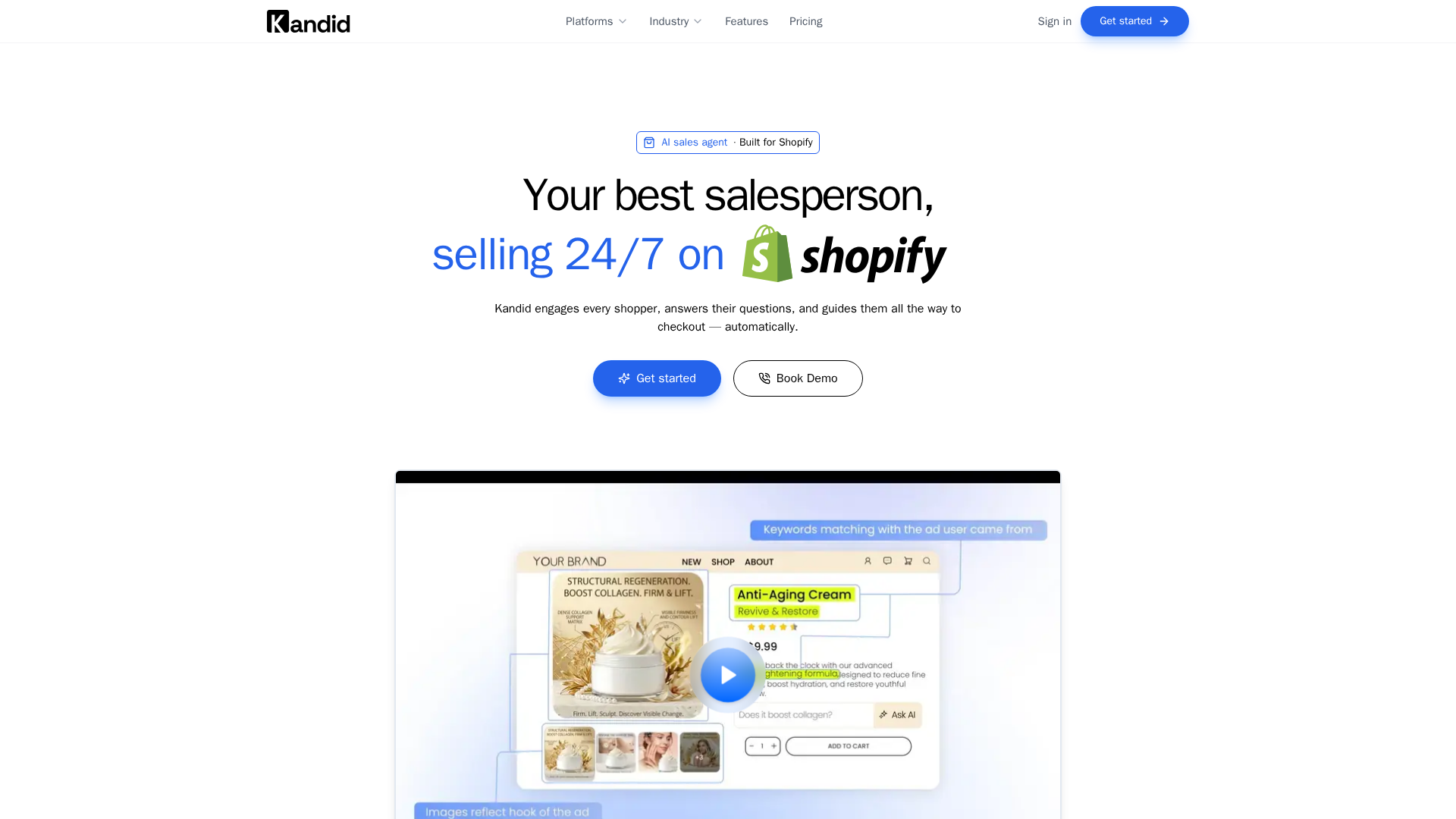
If shoppers still miss the right products, add Kandid to your storefront. It answers questions, compares options, and guides buyers to the best fit in real time.
Frequently Asked Questions
Q1: Find the storefront features that improve browsing and discovery.
Start with site search, filters, category logic, product comparison, personalized recommendations, quizzes, and guided selling. Check bounce rate, search exits, filter use, and product views. If shoppers ask complex fit or spec questions, Kandid can help guide them faster.
Q2: Which feature should I add first?
Add the one that fixes your biggest leak. If shoppers search but do not click, improve search. If they browse too long, tighten filters. If products need explanation, add guided selling or comparison.
Q3: How do I know if discovery is getting better?
Track search conversion rate, filter use, product detail views, add-to-cart rate, and time to product view. Watch assisted revenue too. Better discovery helps shoppers reach the right product with less friction.
Q4: Do dynamic features hurt site speed?
They can if you pile on too many scripts. Load only what supports discovery, test mobile first, and remove weak tools. Fast pages with clear guidance usually beat feature-heavy pages that slow shoppers down.