Real Time Shopping vs Live Commerce: What Fits Your Funnel?
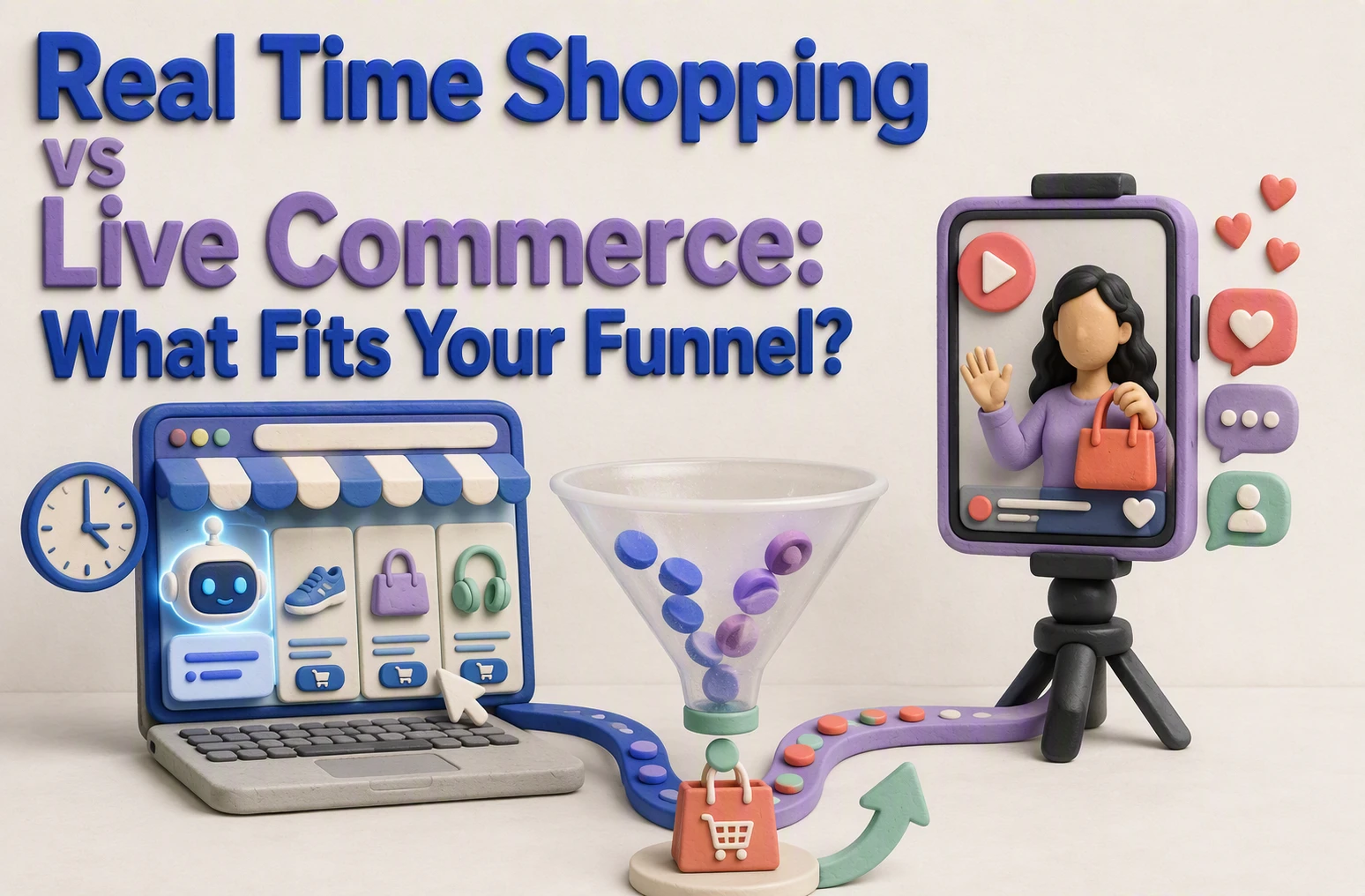
An EV buyer asking about range at 11:47 p.m. will not wait for Saturday's stream. In real time shopping vs live commerce, always-on help solves high-intent questions, while live events create launch buzz. D2C teams must match product needs, traffic, costs, and checkout gaps. This real time shopping vs live commerce comparison maps both models to funnel results.
Real-Time Shopping vs Live Commerce: At a Glance
| Real-time shopping | Live commerce | |
|---|---|---|
| Primary funnel job | Capture and convert active intent | Create attention, excitement, and event-led demand |
| Interaction model | One-to-one AI conversation with human handoff | One-to-many host, audience, and chat interaction |
| Best product fit | Complex, configurable, or consideration-led products | Visual, demonstrable, launchable, or impulse-friendly products |
| Availability | Always on across website and selected messaging channels | Scheduled events with replay or repurposed content afterward |
| Operational model | Catalog-trained automation with ongoing optimization | Host, production, promotion, moderation, and commerce setup |
| Core success metric | Assisted conversion, add-to-cart rate, and revenue per visitor | Qualified viewers, event conversion, sales per stream, and repeat attendance |
How Real-time shopping and Live commerce Compare
Real-time shopping
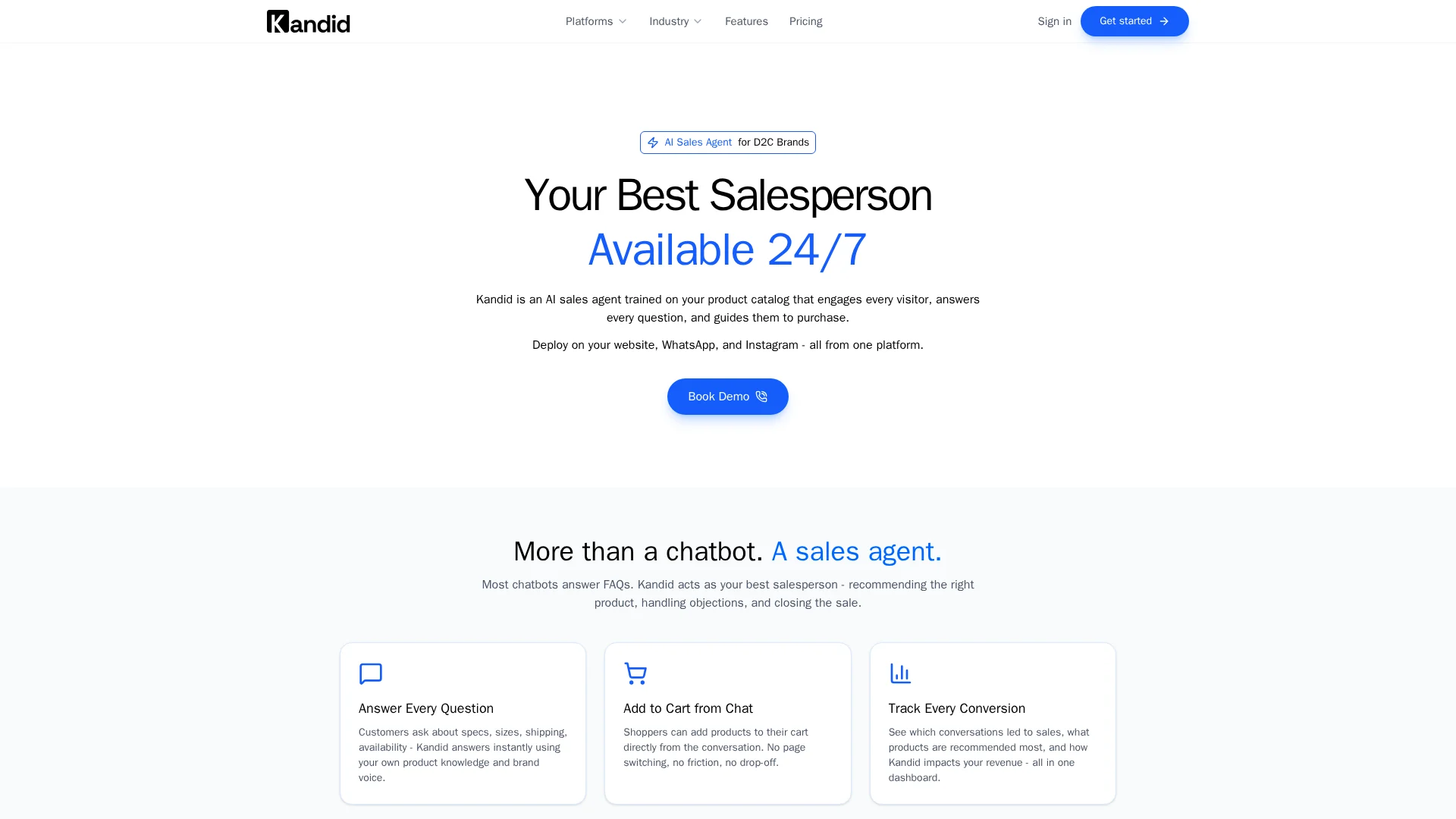
Real-time shopping is an always-on AI sales layer that answers questions, compares options, and guides one shopper toward a cart. It suits brands selling complex or configurable products where intent can appear at any hour.
Key strengths
- One-to-one guidance with human handoff
- Built for assisted conversion and add-to-cart lift
Live commerce
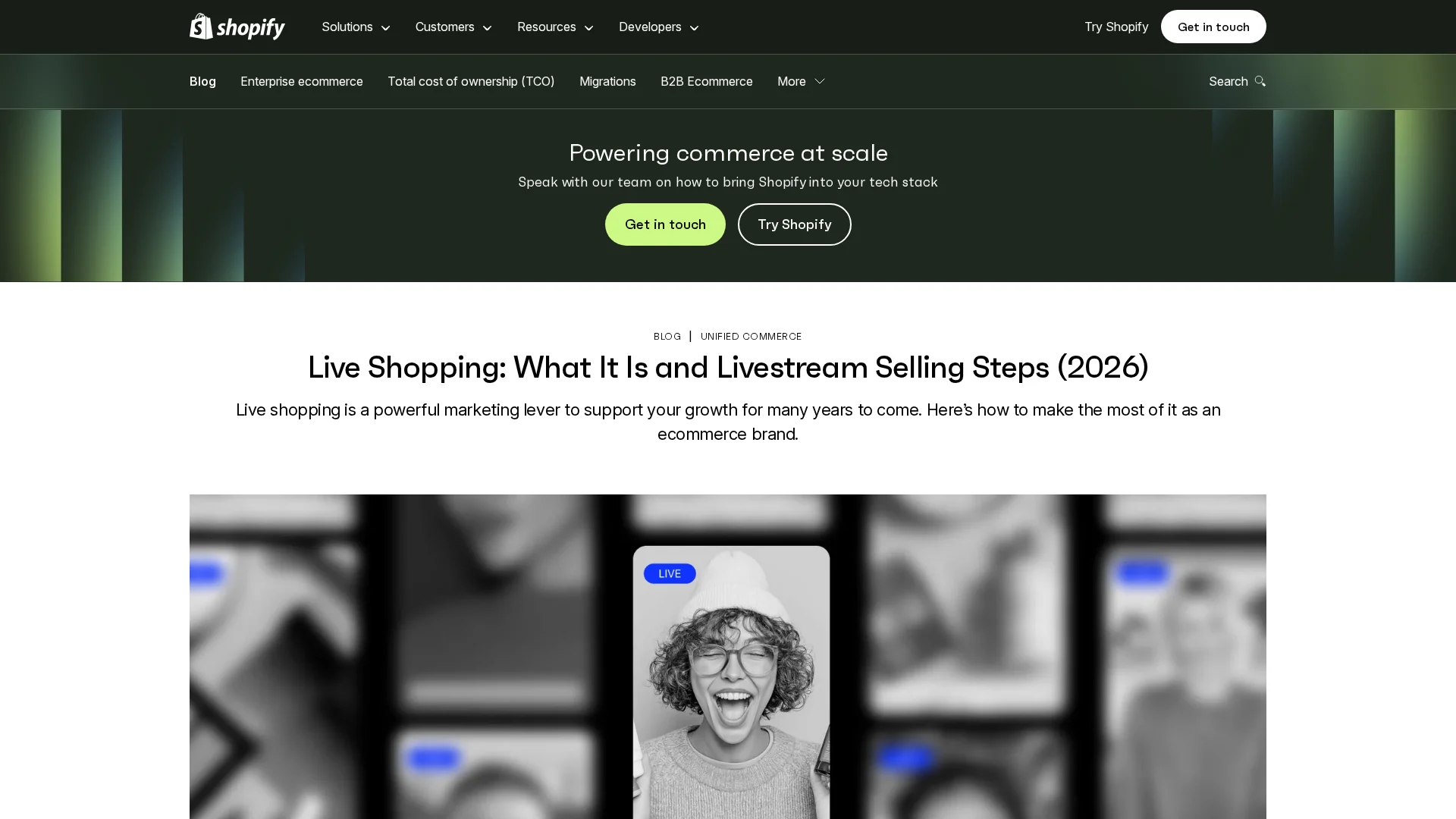
Live commerce is a scheduled, host-led stream where viewers watch demos, chat, and buy in the moment. It fits visual products, launches, and impulse-led drops; Shopify defines it as host-led livestream selling in real time.
Key strengths
- Live demos and shared audience energy
- Strong for event demand and social proof
Which Format Fits Each Funnel Stage?
Use Live Commerce to Create a Buying Moment
Use live commerce at awareness and consideration. A host demo, Q&A, and limited offer give passive viewers a reason to act now. Shopify defines live shopping as real-time video where viewers can buy while watching.
- Launch visual products
- Build social proof
- Create urgency

Treat each stream as a campaign, not an always-on support channel.
Use Real-Time Shopping to Catch Existing Intent
Use real-time shopping at consideration and conversion. It helps shoppers already comparing models, shades, specs, or compatibility. Kandid can answer those questions on-site at any hour, then guide the visitor to the right product.
| Shopper signal | Best format |
|---|---|
| Wants inspiration | Live commerce |
| Needs a precise answer | Real-time shopping |
Also Read: Real Time Shopping vs Static Browsing for Conversion
Where the Economics and Operations Diverge
Event Production Versus Continuous Coverage
Live commerce is a campaign cost. Each event needs a host, brief, promotion, moderation, production, and follow-up. That concentrates attention but creates a fixed workload every time you go live. Firework notes that host capacity and production needs limit event frequency.

| Model | Main operating cost | Best use |
|---|---|---|
| Live commerce | People and event production | Launches and demos |
| Real-time shopping | Catalog upkeep and AI usage | Daily product questions |
- Use live events for peak moments.
- Use continuous coverage for compatibility, sizing, and spec questions.
Kandid fits the second job: it guides high-intent visitors without waiting for an event slot.
Also Read: 15 Real Time Shopping Features Enhancing Customer Engagement
What Should You Measure Before Calling a Winner?
Measure the Job, Not the Format
Set one primary goal before you compare formats. A/B tests need enough data and a planned stopping rule, since early peeking can mislead results, research on large-scale tests warns.
| Buying job | Primary metric | Guardrail |
|---|---|---|
| Resolve product doubts | Conversion rate | Return rate |
| Grow basket size | AOV | Margin |
| Create demand | Revenue per session | CAC |
- Segment new versus returning visitors.
- Compare equal traffic sources and time periods.
- Check chat-to-cart and cart-to-purchase rates.
A live event can win on views yet lose on profit. Call a winner only when the metric matches the job.
Also Read: Real-Time Shopping Setup Guide for Retail Stores
Which Should You Choose: Real-Time Shopping or Live Commerce?
Choose real-time shopping if shoppers need help with fit, specs, bundles, or compatibility at any hour. It fixes friction on product and cart pages.
Choose live commerce for launches, demos, and community-led demand. Live shopping relies on a host, real-time video, and purchasable products.
| Buying problem | Best fit |
|---|---|
| “Which model fits my needs?” | Real-time shopping |
| New product reveal | Live commerce |
Use Kandid for always-on product guidance. Add live events when entertainment and urgency matter.
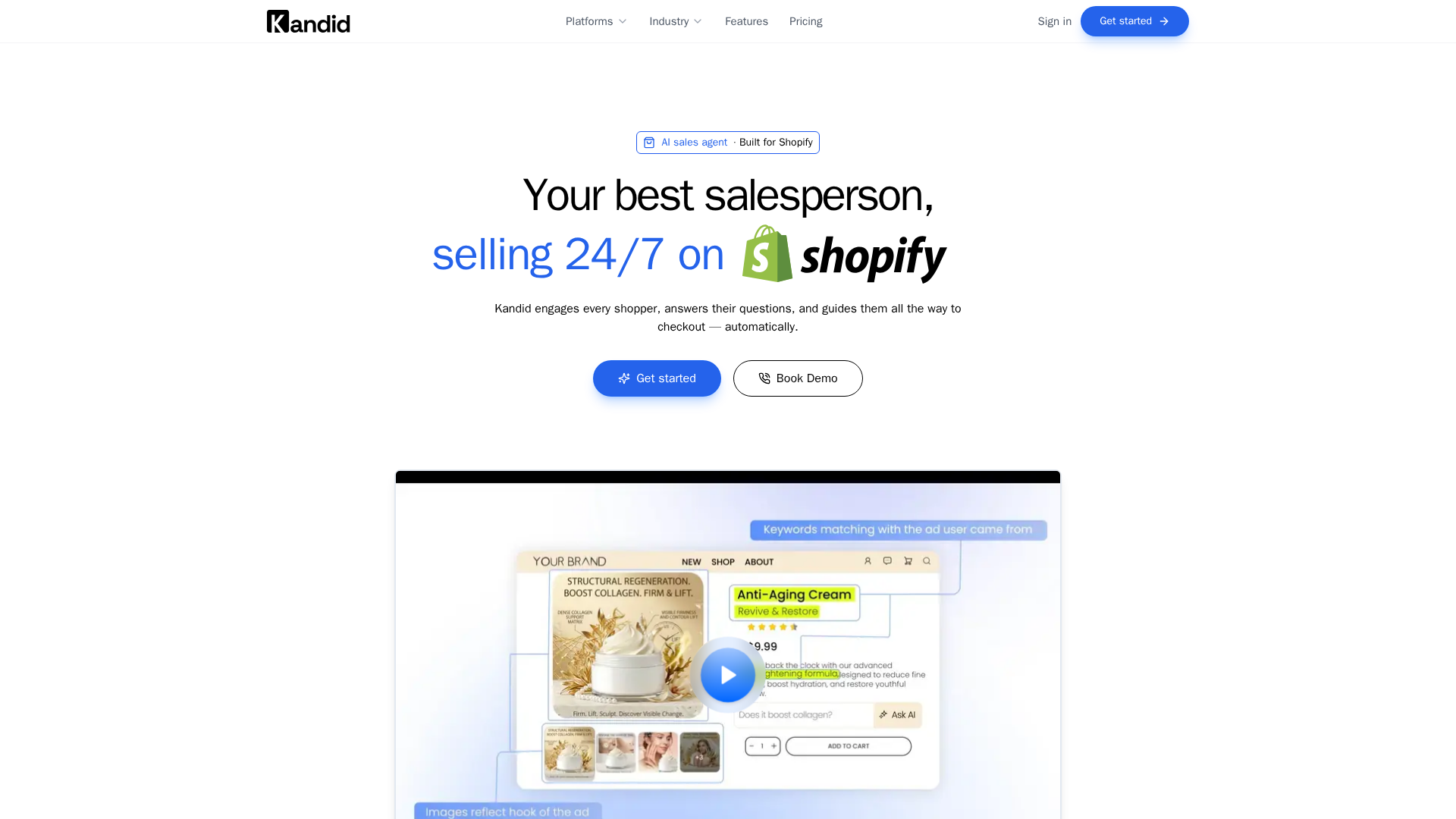
Turn high-intent visits into guided purchases 24/7 with Kandid, your always-on real-time sales agent.
Frequently Asked Questions
Q1: Compare live shopping formats for funnel fit and results.
Live commerce drives event spikes and social reach. Real-time shopping helps high-intent site visitors year-round, answering product questions before checkout.
Q2: Which format works best for complex products?
Use real-time shopping for specs, fit, and compatibility questions. Live events work best for launches and demos.
Q3: Can brands use both?
Yes. Use live commerce to create demand, then real-time AI agents to capture follow-up traffic.
Conclusion
Use live commerce for campaign buzz. Use real-time shopping to remove buyer doubt daily. McKinsey notes event timing can limit live-commerce uptake.