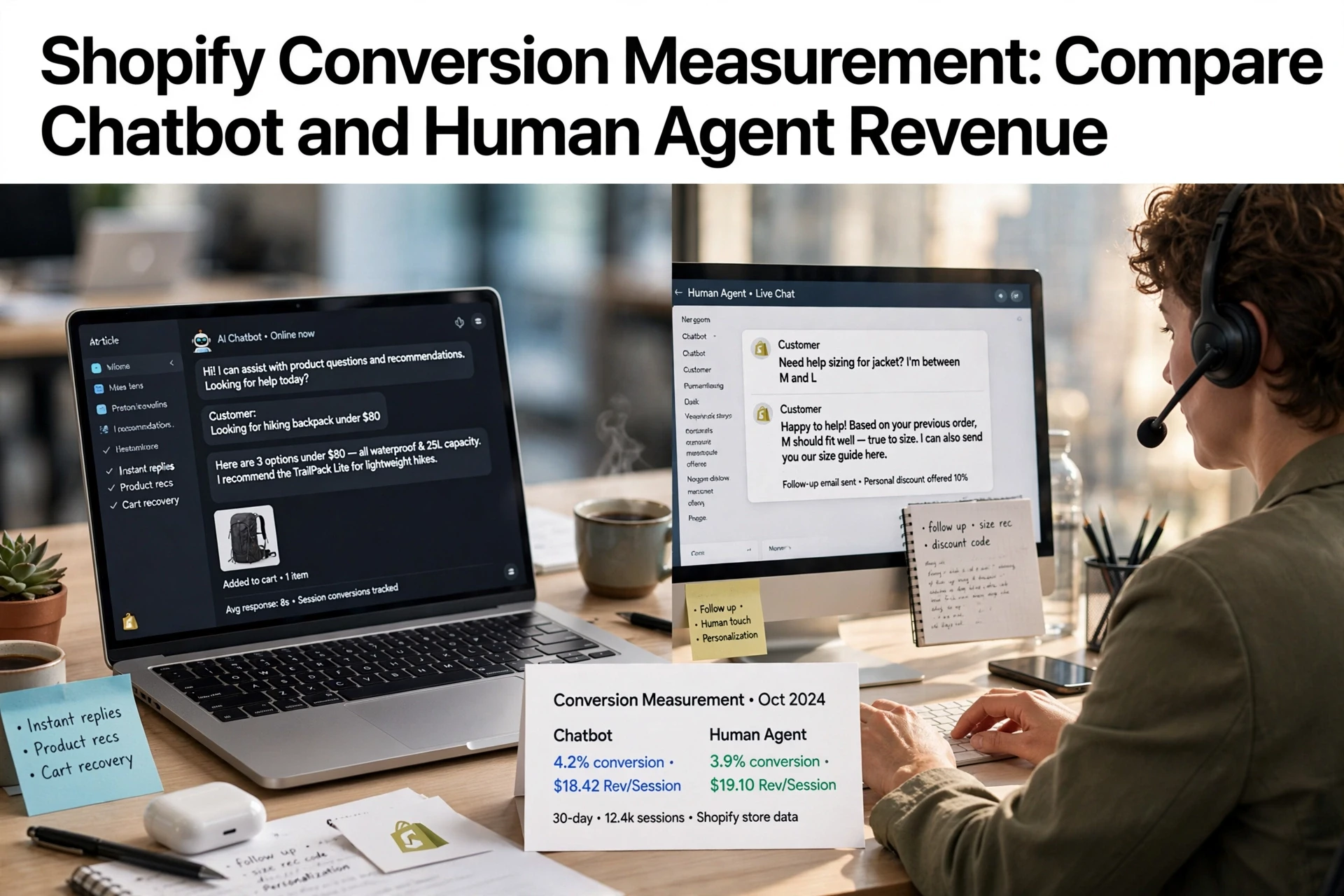
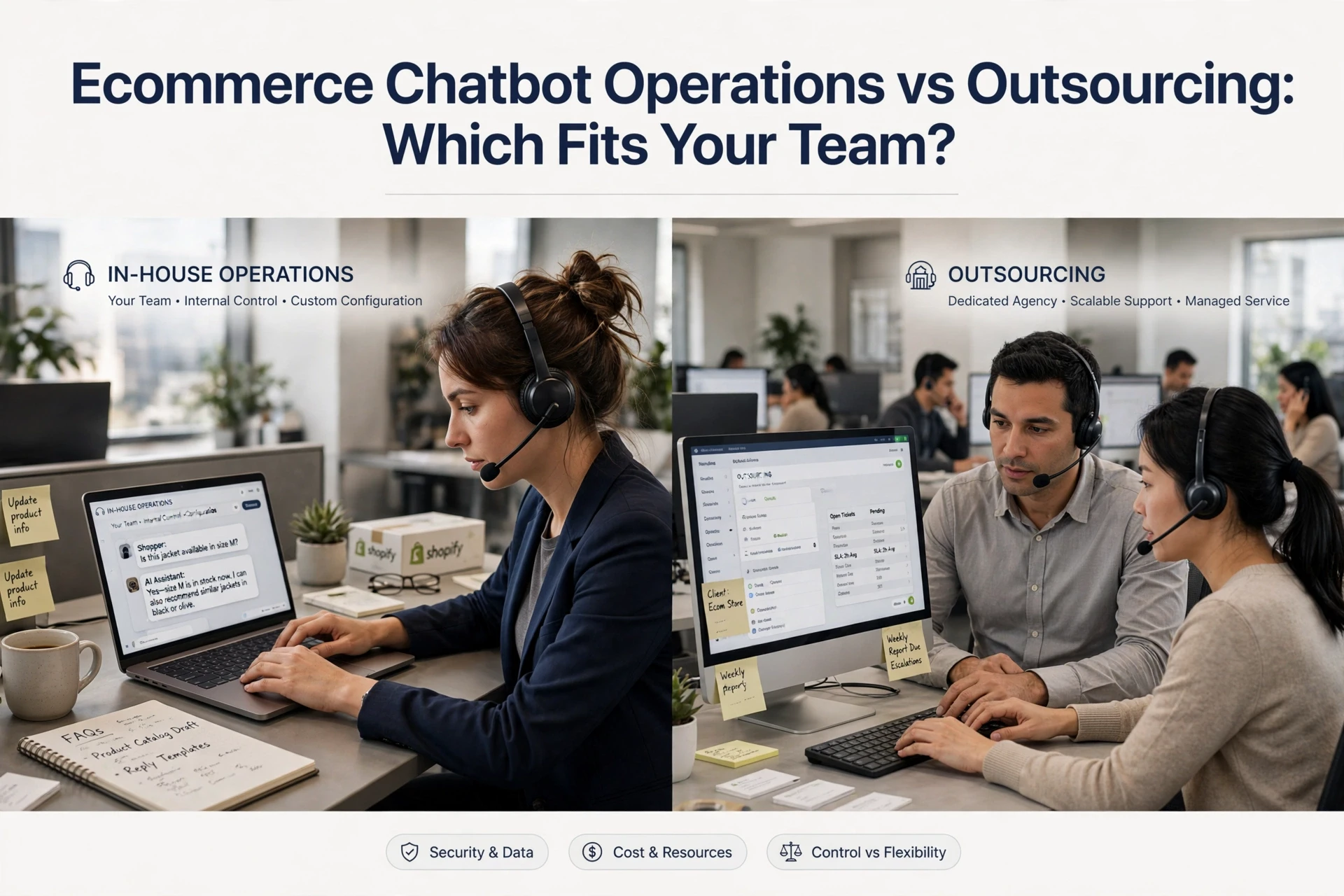
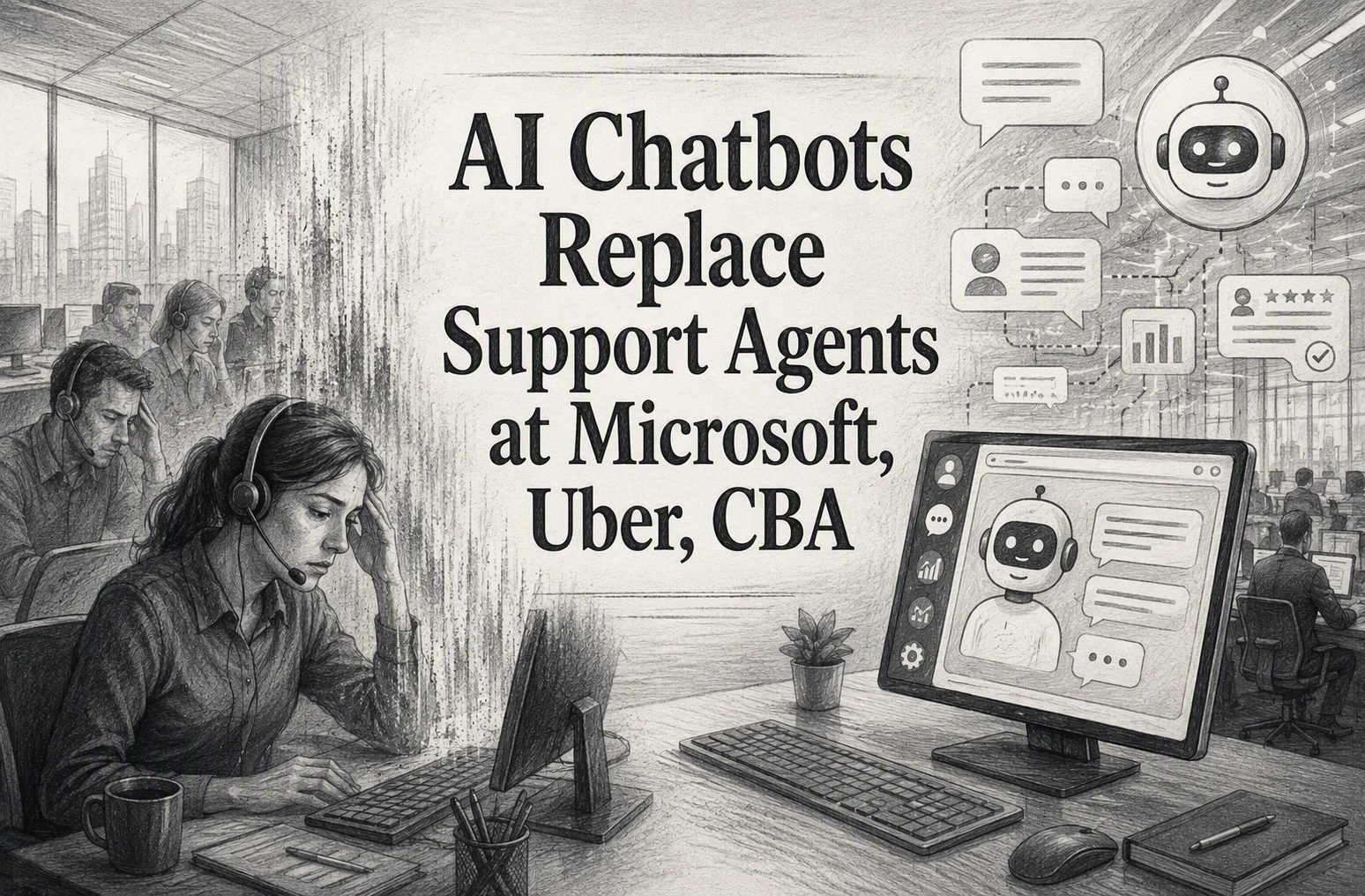
AI Chatbots Replace Support Agents at Microsoft, Uber, CBA
Quick Summary: Major companies like Microsoft, Uber, and CBA are using AI chatbots to handle simple customer support tasks, reducing costs and support staff. AI manages routine issues such as refunds and account questions, while humans focus on complex or sensitive cases. This shift is expected to impact nearly half of customer service roles by 2030, with tier-one support being the first to shrink.
Microsoft, Uber, and Commonwealth Bank of Australia now use AI Support Agents to handle routine chat and phone support, and Bloomberg reported on July 28, 2026 that this shift has already cut or reshaped service teams. That matters now. If Customer Support Chatbots and AI Customer Service solve simple tickets faster and cheaper, brands will keep replacing tier-one work with AI Support Agents. We track where AI Support Agents save money, where humans still lead, and what smart operators should change next.
How Microsoft, Uber, and CBA Are Using AI Support Agents Right Now
These companies are not replacing every agent. They are using AI to absorb tier-one support first - the simple, repeat questions that clog queues.
- Microsoft uses AI to solve routine support issues, including overnight Xbox help, while pushing more basic cases out of human queues. Bloomberg reported Microsoft’s AI is saving about $750 million a year in customer service costs and handling a growing share of simple requests according to Bloomberg.
- Uber now pushes users toward in-app support, where an AI chatbot handles common requests before a human steps in.
- CBA built a central orchestration agent with Microsoft that reads intent, routes easy questions to bots, and sends sensitive cases to staff. In May 2026, 84.6% of self-service messaging interactions were resolved end-to-end in channel according to iTnews.
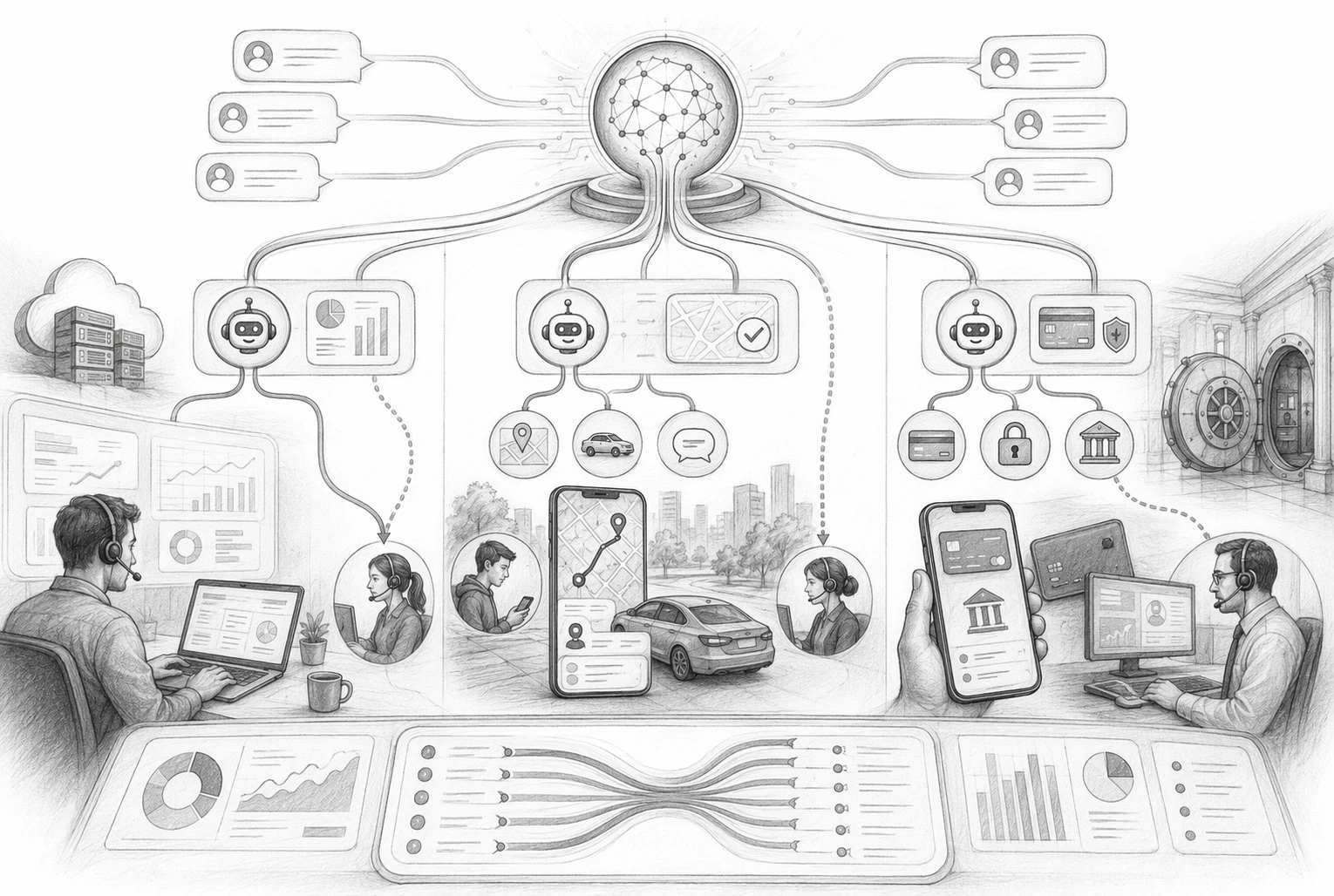
| Company | AI handles first | Human handles next |
|---|---|---|
| Microsoft | Basic product and account issues | Complex technical cases |
| Uber | Common in-app support requests | Exceptions and escalations |
| CBA | Intent triage and simple messaging | Sensitive and regulated cases |
The pattern is clear: automate the boring stuff first, then keep people for risk, nuance, and edge cases.
For executives, the upside is simple:
- lower support cost
- faster first response
- better 24/7 coverage
- smaller pressure on frontline teams
That is why D2C and tech brands are copying this model.
Also Read: Ultimate Guide to Live Chat & AI Chatbot Integration Strategies
Why Tier-One Support Is the First Role to Shrink
Tier-one support goes first because it handles repeatable work. Think order status, password resets, billing checks, receipt requests, and simple policy questions. Microsoft and Commonwealth Bank are already using AI to route easy cases to bots and send sensitive or complex issues to people, with full context passed along, according to Microsoft's customer service case study.
What still needs people:
- Fraud, disputes, and regulated flows
- Angry customers who need calm judgment
- Edge cases with unclear intent
- High-value retention moments
The pattern is simple: AI takes volume first, humans keep nuance.
By 2030, the pressure likely grows. A 2026 report cited by Bloomberg says almost half of customer service roles could be impacted by 2030, with tier-one jobs most exposed as firms like Uber push more support into app-based AI chat and phone flows, per this reported roundup. For D2C brands, that means redesigning support around:
- AI for routine tickets
- Agents for exceptions
- Better handoff rules
Also Read: How Kandid Enhances Customer Support with Live Chat & AI Chatbots
What the Microsoft, Uber, and CBA Cases Reveal About Support Strategy
The Hidden Risk for Brands
Microsoft, Uber, and CBA point to the same playbook: move tier-one support to AI, keep people for edge cases, and cut cost fast. Reports say Microsoft reduced support headcount over time and said AI saves about $750 million a year, while Uber tied support cuts to an AI push and CBA used AI heavily in chat support according to Bloomberg.

The risk is not the bot. The risk is bad escalation design.
- Customers stay calm when AI solves simple issues
- They get angry when it blocks refunds, billing errors, or urgent help
The Most Relevant Lesson for E-commerce Teams
For D2C brands, the lesson is simple: automate repeat questions, not trust-heavy moments. A broad industry report says nearly half of customer service roles may be impacted by 2030 as summarized here.
- Let AI handle order status, returns policy, and product basics
- Route high-value carts, damaged orders, and loyalty complaints to humans
- Track containment rate and escalation satisfaction
- Speed saves money
- Smart handoff protects revenue

Routine support is moving to AI fast. If you want sales help, not just ticket deflection, see how Kandid turns product questions into purchases with fast AI agent setup.
Frequently Asked Questions
Q1: How are AI chatbots transforming customer support in major companies like Microsoft and Uber?
They now handle routine tickets first, like refunds, order updates, account checks, and policy answers. That cuts queue time, lowers cost, and lets human agents focus on edge cases, fraud, escalations, and high-value customer moments.
Q2: What benefits do live AI chatbots provide for D2C brands using Kandid’s platform?
Kandid helps brands turn support-style questions into sales help. It answers product fit, specs, and compatibility in real time, guides shoppers faster, and can lift conversion rate, average order value, and engagement without adding headcount.
Q3: How do AI chatbots ensure secure agent identity and provenance across multiple systems?
Strong setups use role-based access, audit logs, source tagging, approved knowledge bases, and clear handoff rules. That helps teams trace every answer, limit risky actions, and prove which system supplied the response.
Conclusion
Microsoft, Uber, and CBA show the same pattern: AI now absorbs routine support at scale, cutting cost and headcount while humans keep harder cases. Bloomberg reported this shift is already hitting thousands of roles.