AI Sales Agents Review for SDR Teams and Daily Outreach
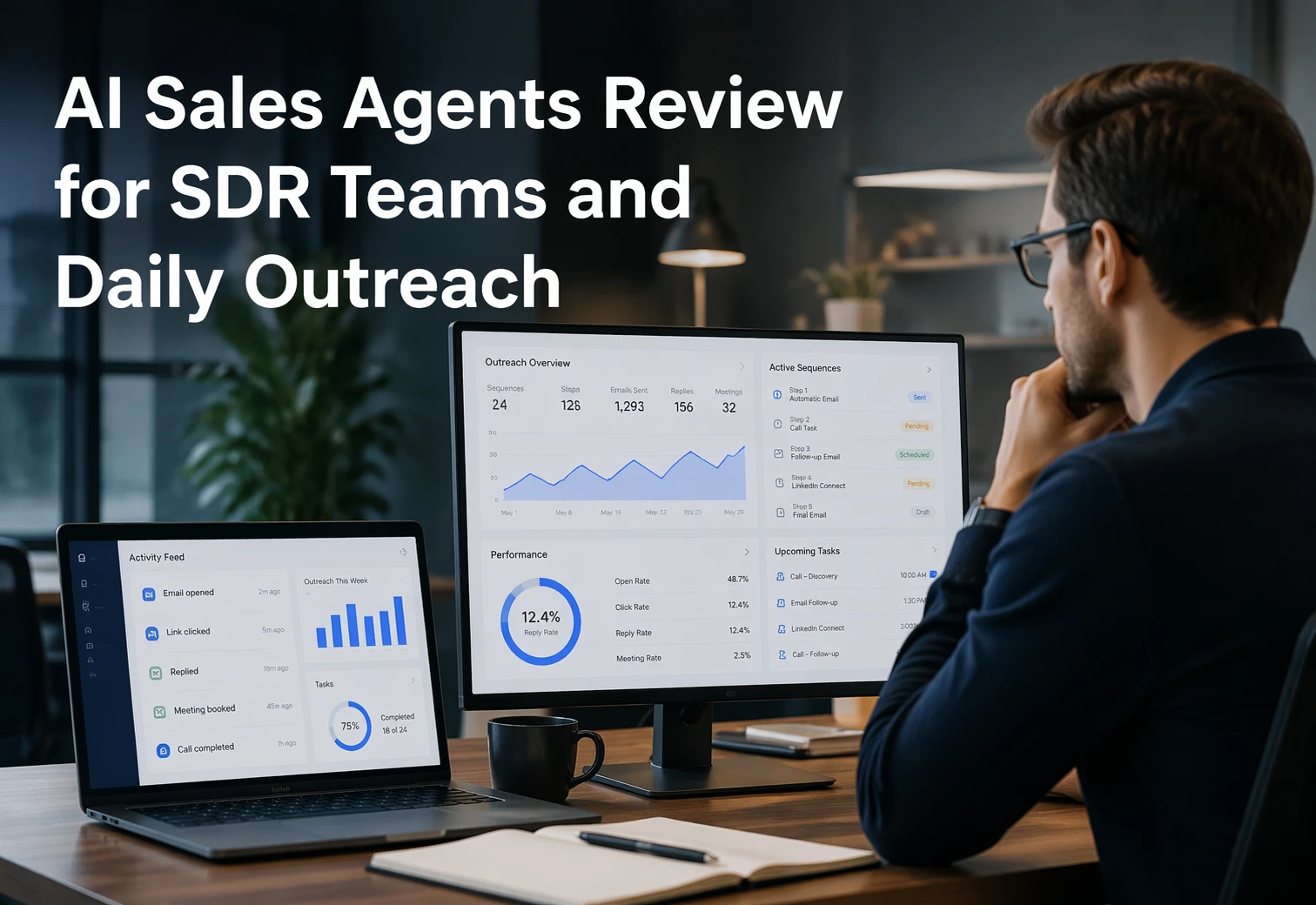
Quick Summary: Kandid is an AI sales agent that improves e-commerce conversions by providing instant, product-specific answers during customer interactions. It works best for high-consideration, technical products on-site, helping shoppers decide and add to cart faster. Unlike generic automation tools, Kandid focuses on real-time engagement rather than outbound outreach, making it ideal for teams aiming to boost conversions on product pages.
A shopper asking about size, fit, or shipping is often one click from leaving. Kandid tries to catch that moment, answer fast, and push the sale forward. This review looks at the real gap between Sales Automation Tools and a buyer-facing D2C Sales Platform. You will see where AI Outreach Software helps, where Sales Automation Tools fall short, and whether Kandid beats generic Sales Automation Tools for daily SDR-style outreach and conversion.
How Kandid Improves Conversion in Daily Outreach
More outreach does not fix slow answers. Fast, useful answers do. That matters because 79% of US consumers say they will switch to a competitor that responds faster, according to Invoca’s 2026 buyer report. Kandid fits this gap by answering product questions in real time, while intent is still high.
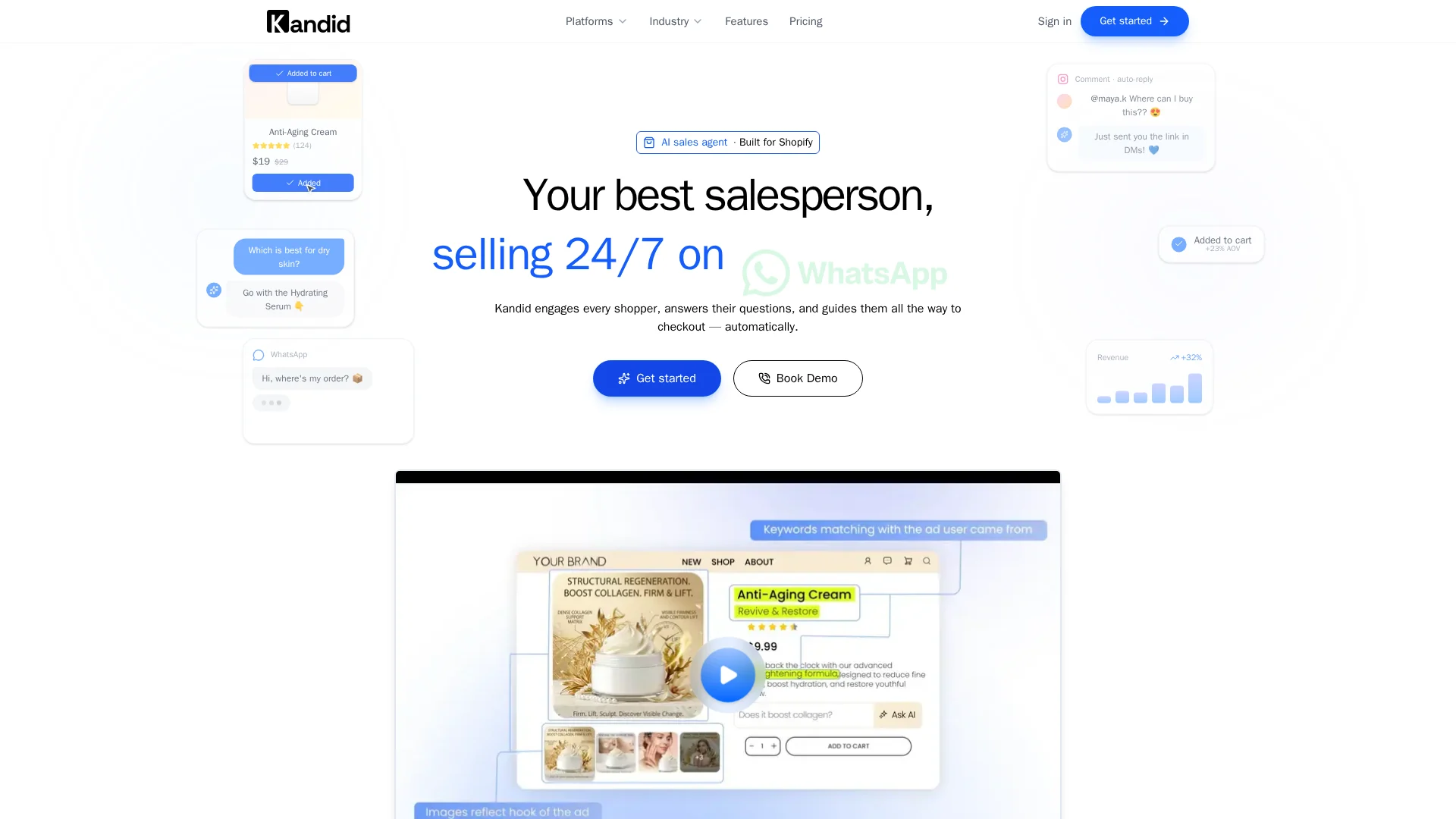
Why fast product answers matter more than more follow-ups
- A buyer asking about fit, specs, or shipping is close to purchase.
- If your team replies hours later, that window is gone.
- Kandid helps by giving instant product-level answers instead of dropping the lead into a queue.
- Gorgias reports AI-handled pre-purchase questions saw a 22-second median first response, vs 11 hours for human queues on the same type of request in its 2026 research.
Add-to-cart and guided recommendations inside the conversation
- The shopper asks a question.
- Kandid narrows the right SKU or bundle.
- It handles doubts like compatibility, use case, or feature tradeoffs.
- It pushes the buyer toward add-to-cart without sending them back to browse alone.
Good outreach works best when the conversation can also close the sale.
What the analytics layer gives growth teams
| Signal | Why it helps |
|---|---|
| Top pre-buy questions | Shows where product pages are weak |
| Recommendation paths | Reveals which prompts move buyers |
| Cart-assist chats | Ties conversation quality to revenue |
Also Read: AI Sales Agents: The Complete Revenue Operations Guide for 2026
Where Kandid Fits Better Than Generic Sales Automation Tools
Versus outbound-first AI SDR tools
Kandid fits better when the buyer is already on your site and needs help now. Outbound-first AI SDR tools chase cold or warm leads by email and sequences. Kandid works inside the session, where product questions block checkout. That matters because Shopify notes real-time personalization adapts to live shopper behavior.
Versus broader shopping or personalization platforms
Broader platforms often optimize pages, segments, or recommendations across the store. Kandid is narrower and more useful for hard buying decisions: specs, compatibility, bundles, and objections. It also fits teams that need trustworthy AI controls, since NIST’s AI RMF stresses transparency, reliability, and risk management in AI systems.

Best-fit use cases and poor-fit use cases
| Fit | Example |
|---|---|
| Best-fit | High-consideration D2C products with technical questions |
| Poor-fit | Simple low-AOV impulse buys or pure email prospecting |
Pick Kandid if your conversion leak happens on product pages, not in top-of-funnel outreach.
Also Read: AI Sales Agents vs Human Reps: Lead Qualification
Pros and Cons
Pros matter if they lift sales without adding headcount.
| Type | What stands out |
|---|---|
| Pros | Kandid can answer product questions fast, handle spec-heavy buying, and stay on 24-7. That fits how embedded shopping AI helps with exploratory tasks and often works alongside search, not instead of it, per arXiv research. |
| Cons | Rollout still depends on clean catalog data, guardrails, and trust. Many brands hit integration issues, and shoppers still hesitate with retail AI chatbots, according to EMARKETER. |
Also Read: Kandid Review 2026: Can This AI Sales Agent Replace Your BDR Team?
Is Kandid Worth It for Your Team?
- Who should choose Kandid now: Pick Kandid if your D2C team sells spec-heavy products, gets repeat pre-buy questions, and wants 24-7 help on site. That fits the shift toward AI-led comparison and decision support noted by McKinsey.

- Who should keep looking: Keep looking if your catalog is simple, your traffic is low intent, or your team mainly needs outbound SDR automation. Retail AI works best where guidance lifts conversion and order value, as EMARKETER reports.
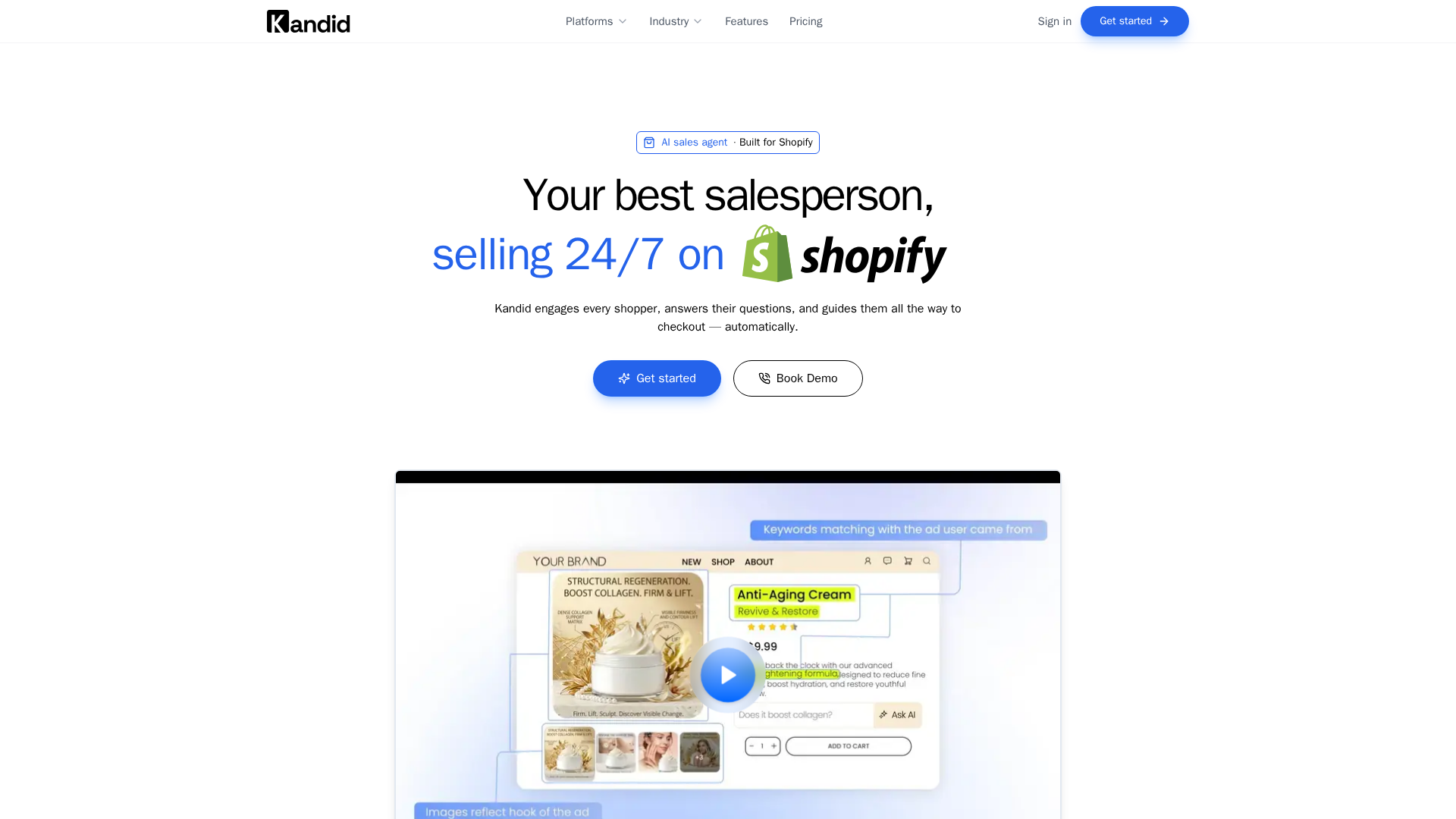
If your SDR-style outreach needs faster replies and better conversion, try Kandid. It gives D2C teams a real-time AI sales agent that answers buyer questions, handles product-fit doubts, and turns high-intent traffic into more revenue.
Frequently Asked Questions
Q1: What are the core benefits of using AI sales agents for SDR teams in 2026?
They reply fast, qualify leads, handle repeat questions, and keep outreach active all day. That gives SDR teams more time for warm prospects and better follow-up.
Q2: How do AI sales agents like Kandid increase conversion rates and ROAS globally?
Kandid answers buyer questions in real time, matches products to need, and removes doubt before checkout. That lifts conversion, average order value, and paid traffic return.
Q3: What features distinguish Kandid's AI sales agents from traditional outreach tools?
It understands catalog details, brand voice, and fit questions on-site. Traditional tools mostly send sequences. Kandid helps shoppers choose and buy, not just book replies.
Conclusion
Kandid looks strongest when you want daily outreach help without losing human control. That fits the broader shift toward AI agents, with 54% of sellers already using them according to Salesforce’s 2026 report. The win is better rep focus, cleaner follow-up, and more consistent conversion.