D2C Product Recommendations vs Static Cross-Sells: Best Results?
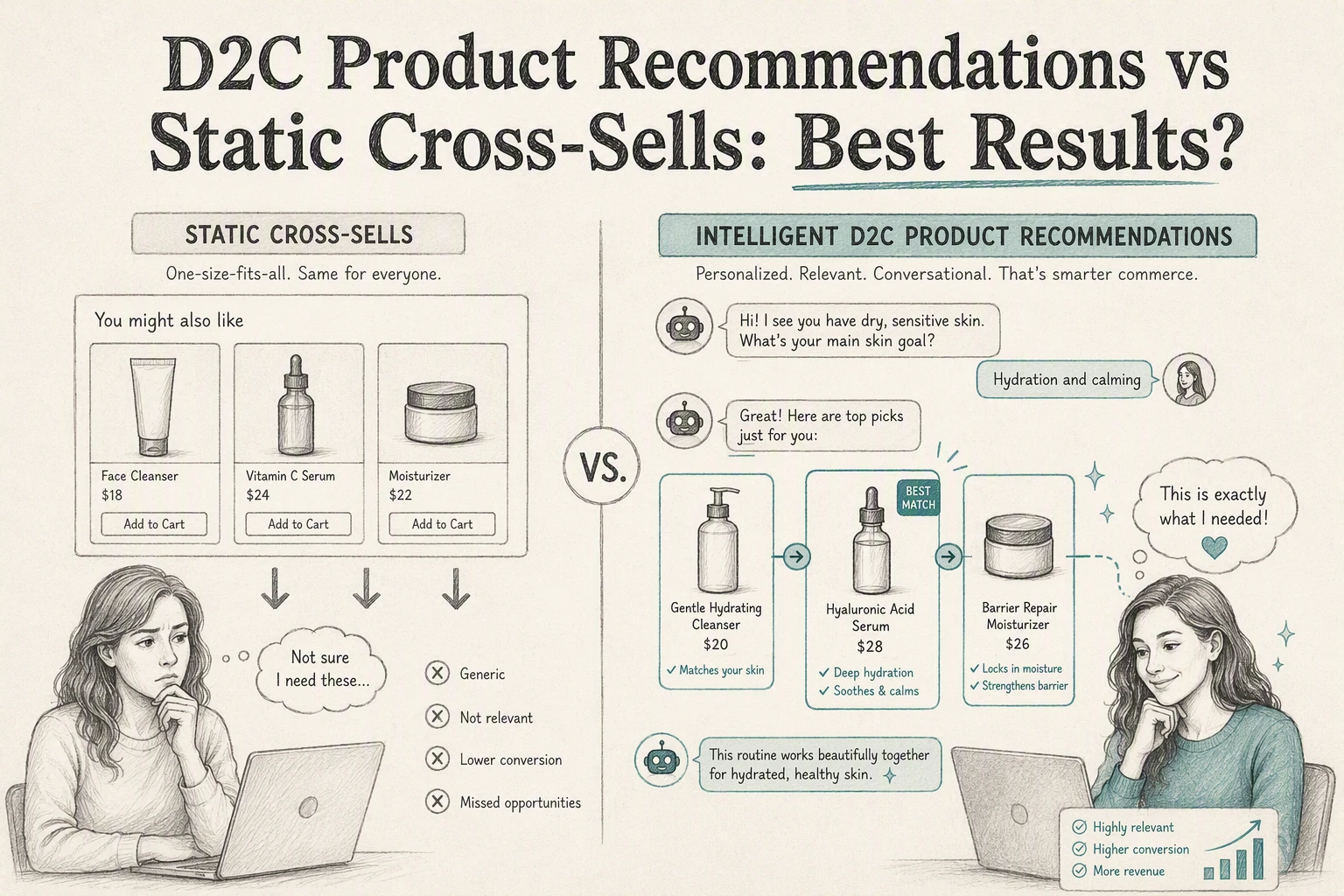
An EV cart may need a vehicle-specific connector, not another generic cable. In D2C product recommendations vs static cross-sells, adaptive logic fits varied needs, while fixed rules protect proven bundles and margins. This comparison helps teams judge relevance, data, control, effort, and true incremental revenue across complex product catalogs.
D2C Product Recommendations vs Static Cross-Sells: At a Glance
| Personalized D2C product recommendations | Static cross-sells | |
|---|---|---|
| Recommendation logic | Behavioral, contextual, catalog, and conversational signals | Predefined product-to-product or merchandising rules |
| Personalization | High; adapts to shopper intent and product fit | Low; generally identical for comparable contexts |
| Merchandising control | Rule-governed, with adaptive ranking | Very high and predictable |
| Data requirement | Catalog data plus events; conversation can enrich intent | Catalog relationships and business rules |
| Best fit | Complex catalogs and uncertain buying decisions | Obvious complements, kits, and mandatory add-ons |
| Primary measurement | Incremental revenue per visitor and conversion lift | Attach rate, margin, and incremental basket value |
How Personalized D2C product recommendations and Static cross-sells Compare
Personalized D2C product recommendations
Adaptive guidance uses catalog data and shopper signals to suggest products that fit current intent. It suits complex catalogs and shoppers who need help choosing.
Static cross-sells
Static cross-sells show fixed pairings or rule-based add-ons. They suit obvious complements, kits, and required extras where teams need tight control.
Relevance and Shopper Decision Quality
When adaptation creates real value
Adaptive recommendations help when the right add-on depends on intent, fit, or live questions. For example, an EV shopper may need a charger that matches their model, while a skincare buyer may need a routine for dry skin.
Kandid can ask, compare specs, and rule out poor matches. Baymard found that irrelevant cart suggestions can make shoppers ignore all recommendations, not just the bad one (research findings).
When a fixed pairing is more trustworthy
Use static cross-sells for universal, proven bundles.
- Camera + required battery
- Razor + replacement blades
- Device + mandatory cable
| Situation | Better choice |
|---|---|
| Fit or compatibility varies | Adaptive recommendation |
| Add-on is always required | Fixed pairing |
Also Read: 9 D2C Cross-Sells That Increase Average Order Value
Data, Control, and Operational Trade-Offs
The cold-start and catalog-quality problem
Adaptive recommendations need clean product facts before shopper behavior can help. Missing fit, compatibility, price, or stock fields produce weak matches. Start with static cross-sells for new launches, then add live signals as they build. NIST notes that data quality includes accuracy, completeness, relevance, and consistency.

Governance matters more than automation
Set guardrails before turning on automation:
- Assign an owner for catalog changes.
- Block unsafe or out-of-stock suggestions.
- Review recommendation logs weekly.
Keep a merchant override. Deterministic rules protect priority products and margin targets.
NIST frames governance as a cross-cutting AI risk function, not a one-time approval step. Its AI RMF Core calls for clear policies, roles, monitoring, and review.
Also Read: D2C Recommendations vs Static Bundles for Higher AOV
Which Approach Produces Better Results?
Measure incremental outcomes, not recommendation clicks
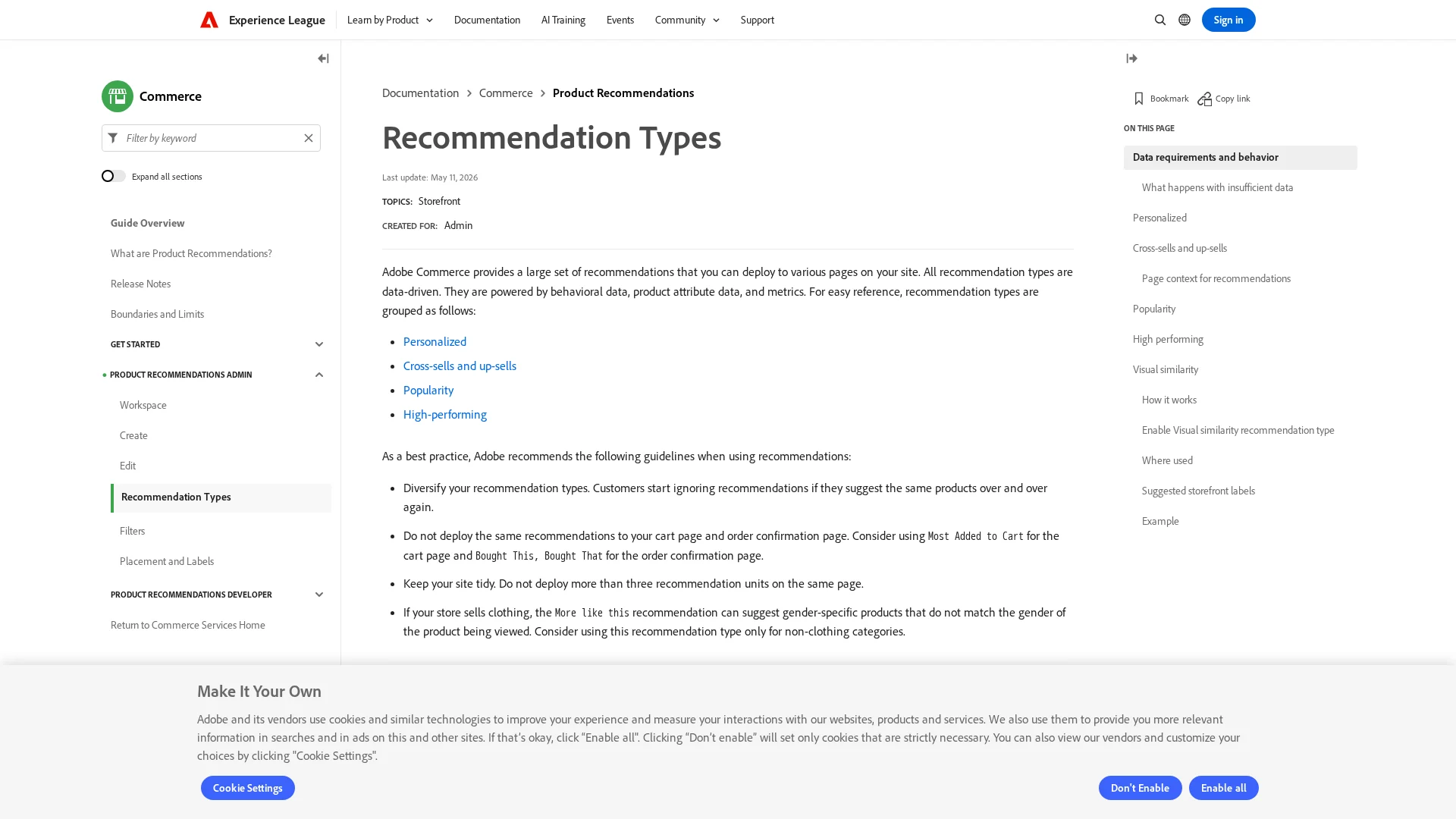
The better approach is the one that creates incremental revenue, not more clicks. Track conversion rate, average order value, revenue per session, returns, and margin. Experimentation experts stress controlled tests and guardrails to protect core business goals.
| Primary metric | Guardrail |
|---|---|
| Revenue per visitor | Return rate |
| Conversion rate | Gross margin |

A clicked suggestion that replaces an organic purchase is not a win.
Design a fair comparison
- Randomly split comparable visitors.
- Keep price, stock, traffic source, and placement identical.
- Run through a full buying cycle.
- Compare total session outcomes, not only recommendation users.
Static cross-sells often win for fixed bundles. Adaptive recommendations should win where fit, specs, or compatibility shape the purchase.
Also Read: D2C Product Recommendation Setup for Higher Store Conversions
Which Should You Choose for Your D2C Store?
Choose static cross-sells for clear, fixed pairings like a refill with its dispenser. Choose adaptive recommendations when fit, specs, or intent change by shopper.
Baymard research finds irrelevant cart suggestions hurt trust.
| Store need | Best choice |
|---|---|
| Simple bundles | Static cross-sells |
| Complex product choice | Adaptive recommendations |
Keep hard compatibility rules in place, even with AI.

Turn static cross-sells into live buying guidance. See how Kandid recommends the right product from each shopper’s questions.
Frequently Asked Questions
Q1: Compare personalized recommendations with fixed cross-sells.
Personalized picks change by shopper intent. Fixed cross-sells give merchandisers reliable control. Use both: rules for must-have add-ons, adaptive suggestions for uncertain choices.
Q2: When should I use fixed cross-sells?
Use them for proven pairs, such as refills, chargers, or matching accessories. Review results often to avoid irrelevant offers.
Q3: How do I measure incremental lift?
Run a holdout test. Compare conversion rate, average order value, and margin between exposed and unexposed shoppers.
Conclusion
Use adaptive recommendations for changing intent and static cross-sells for firm rules. Measure incrementality, not clicks. Baymard research shows irrelevant suggestions can erode trust.