Ecommerce Product Recommendations vs Bundles: Which Raises Profit?
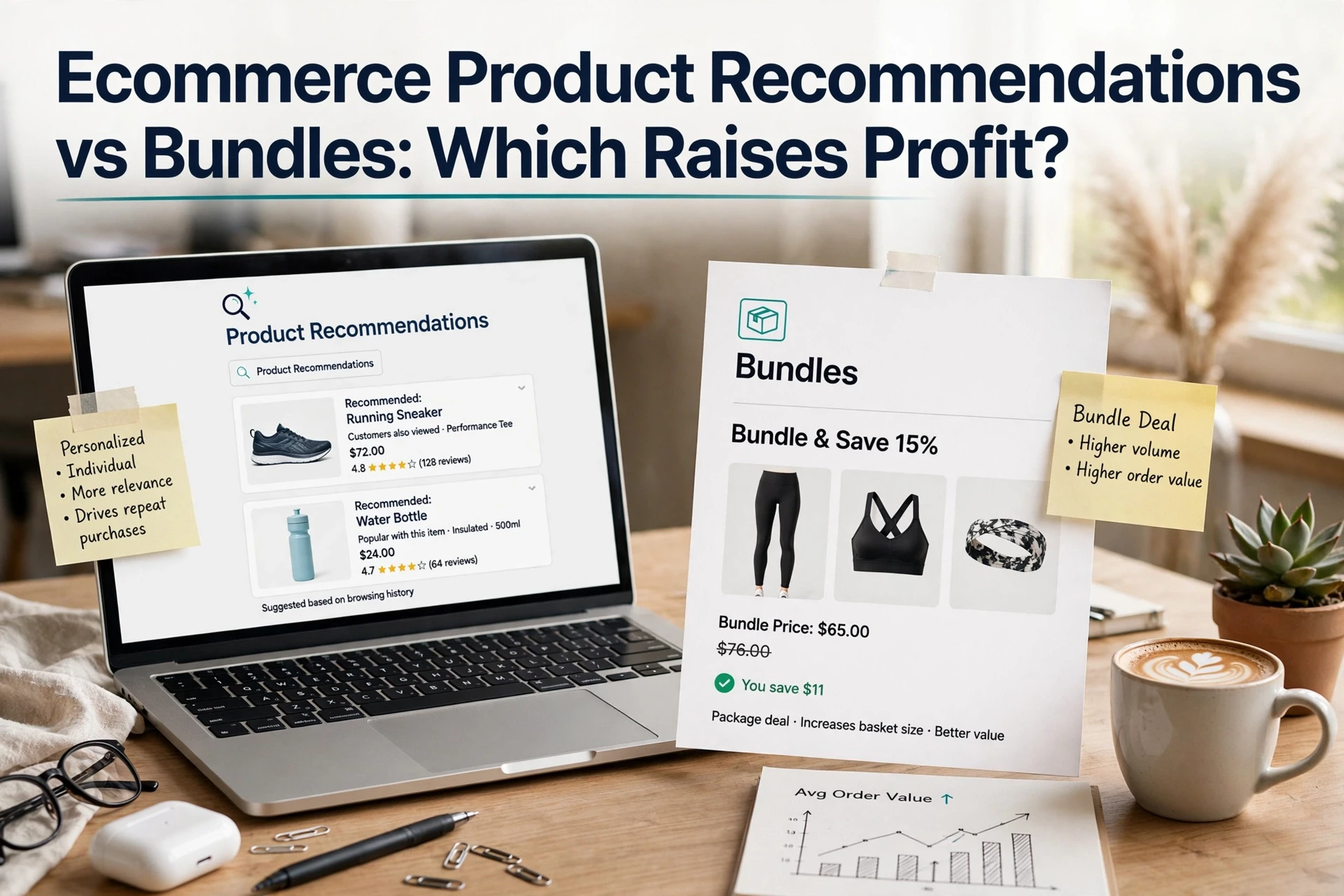
Quick Summary: Product recommendations usually protect profit better than bundles because they sell at full price, while bundles trade margin for volume and risk cannibalizing full-price sales. A 20%-off bundle can cut contribution per order from $52 to $30, so bundles only win with shallow, truly incremental discounts. Test both on your top SKUs for two to four weeks, comparing contribution profit per visitor, not AOV. Most stores do best using both: bundles on hero products and recommendations for discovery.
The product recommendations vs bundles choice trips up most Shopify stores. On a skincare line, a smart moisturizer suggestion often protects margin better than a discounted routine bundle - unless shoppers want the whole set. Judging product recommendations vs bundles fairly means comparing incremental contribution profit, not attributed revenue. This guide settles recommendations vs bundles with a test method.
Product Recommendations vs Bundles: At a Glance
| Ecommerce product recommendations | Fixed product bundles | |
|---|---|---|
| How it works | Suggests related alternatives or complementary items. | Groups two or more products into a set offer. |
| Best fit | Discovery, cross-sells, and shopper-specific choices. | Complete kits, starter sets, or obvious combinations. |
| Discount required | No; recommendations can be offered at listed prices. | Not inherently, though bundles are commonly discounted. |
| Profit measurement | Track recommendation-attributed conversion and compare contribution. | Calculate bundle contribution after component costs and discounts. |
| Shopify setup | Search & Discovery can configure recommendations on supported themes. | A bundles app is required to create Shopify product bundles. |
How Ecommerce product recommendations and Fixed product bundles Compare
Ecommerce product recommendations
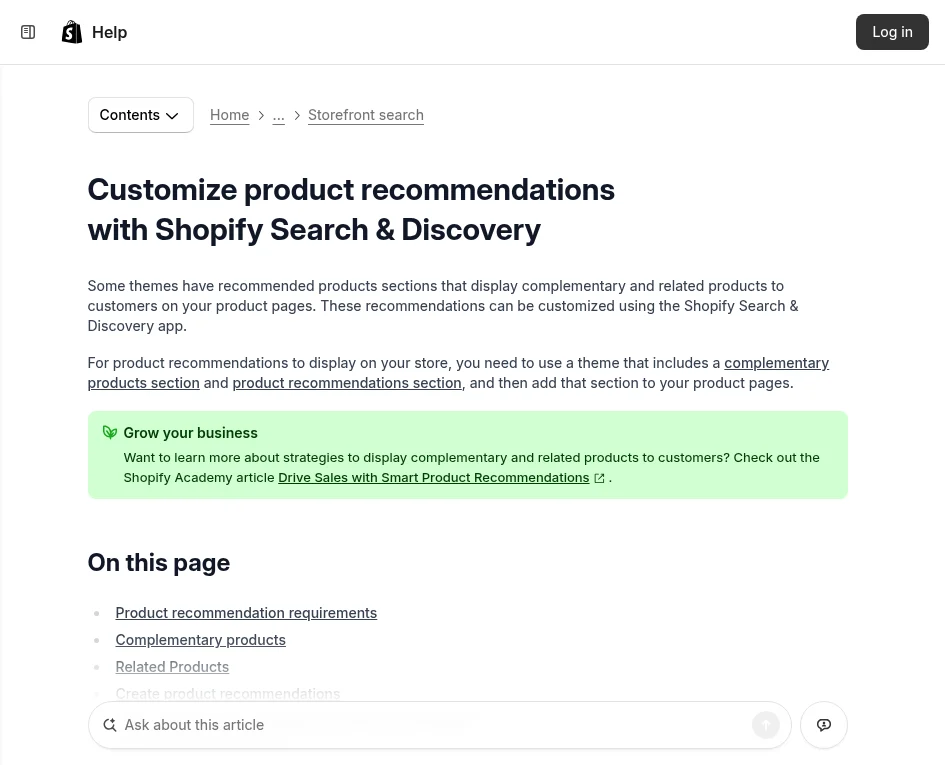
Related or complementary product suggestions that help shoppers discover alternatives or useful add-ons. They work best for discovery, cross-sells, and shopper-specific choices, and can be offered at listed prices with no discount. Shopify's Search & Discovery app can set these up on supported themes.
Key strengths
- Suggests related alternatives or complementary items
- No discount required
- Tracks recommendation-attributed conversion and contribution
Fixed product bundles
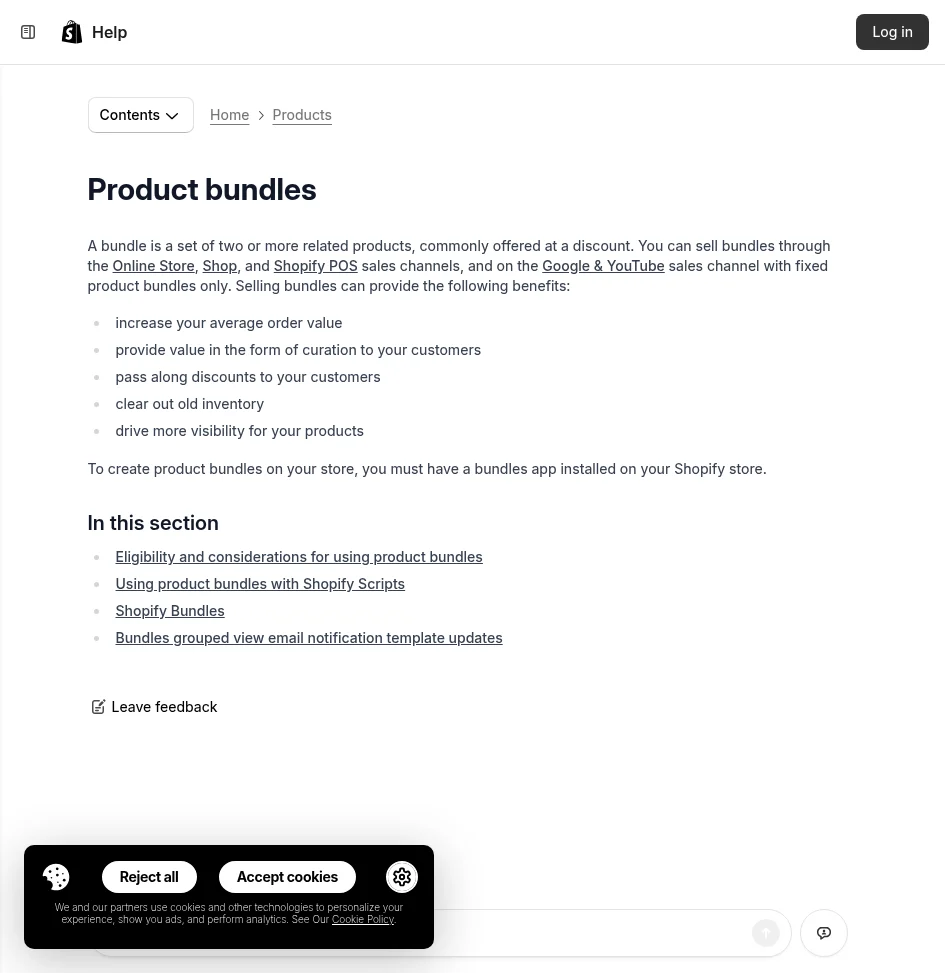
A predetermined set of related products sold together as one offer, usually with a discount. Bundles suit complete kits, starter sets, or obvious pairings. Creating them on Shopify requires a bundles app, and profit comes down to contribution after component costs and discounts.
Key strengths
- Groups two or more products into one set offer
- Fits kits and obvious combinations
- Clear per-bundle profit math
Which Approach Protects More Contribution Profit?
Recommendations usually win here. They sell items at full price, so every extra unit adds margin. Bundles trade margin for volume: the discount cuts contribution per order before anything else happens.
The trap is cannibalization. Buyers who would have paid full price take the cheaper bundle instead, so AOV climbs while profit stays flat. One worked model found a 20%-off bundle cut contribution per order from $52 to $30 versus a full-price cart, per Eightx's margin test.
Bundles only win when the discount is shallow and truly incremental. Run the three-scenario comparison before you pick a discount.
| Factor | Recommendations | Bundles |
|---|---|---|
| Price integrity | Full price held | Discount required |
| Cannibalization risk | Low | High if shallow-margin items |
| Fulfillment saving | None | One parcel, one pick |
| Best for | Discovery, upsells | Kits, refills, gifts |
Test both against contribution dollars per order, never AOV.
Also Read: D2C Recommendations vs Static Bundles for Higher AOV
Shopify Setup, Flexibility, and Trade-Offs
Match the format to the buying task
Shopify's free Bundles app handles fixed bundles and multipacks in minutes. Its limits are real: fixed bundles cap at 30 components, bundles only sell on the Online Store or headless channels, and bundle prices don't auto-update when a component's price changes.
Recommendations are lighter to run. Shopify's Search & Discovery app gives you related and complementary products free, but only two formats and no cart-based rules.
| Choice | Setup effort | Flexibility |
|---|---|---|
| Bundles | Low, but strict rules | Fixed sets only |
| Recommendations | Very low | Limited natively, wider via apps |

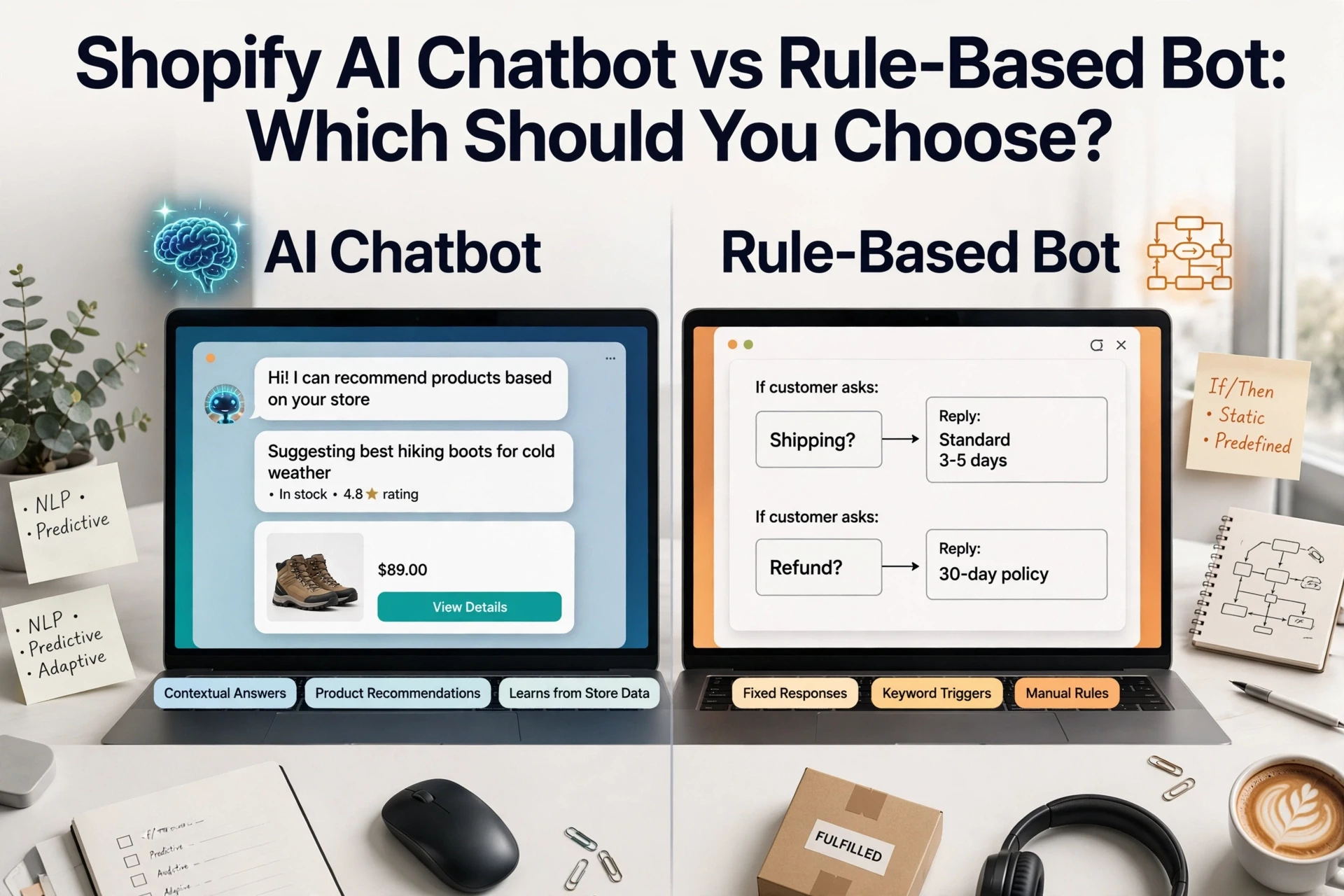
Also Read: Shopify Product Recommendation Apps for Guided Product Discovery
How to Test Which One Makes More Profit
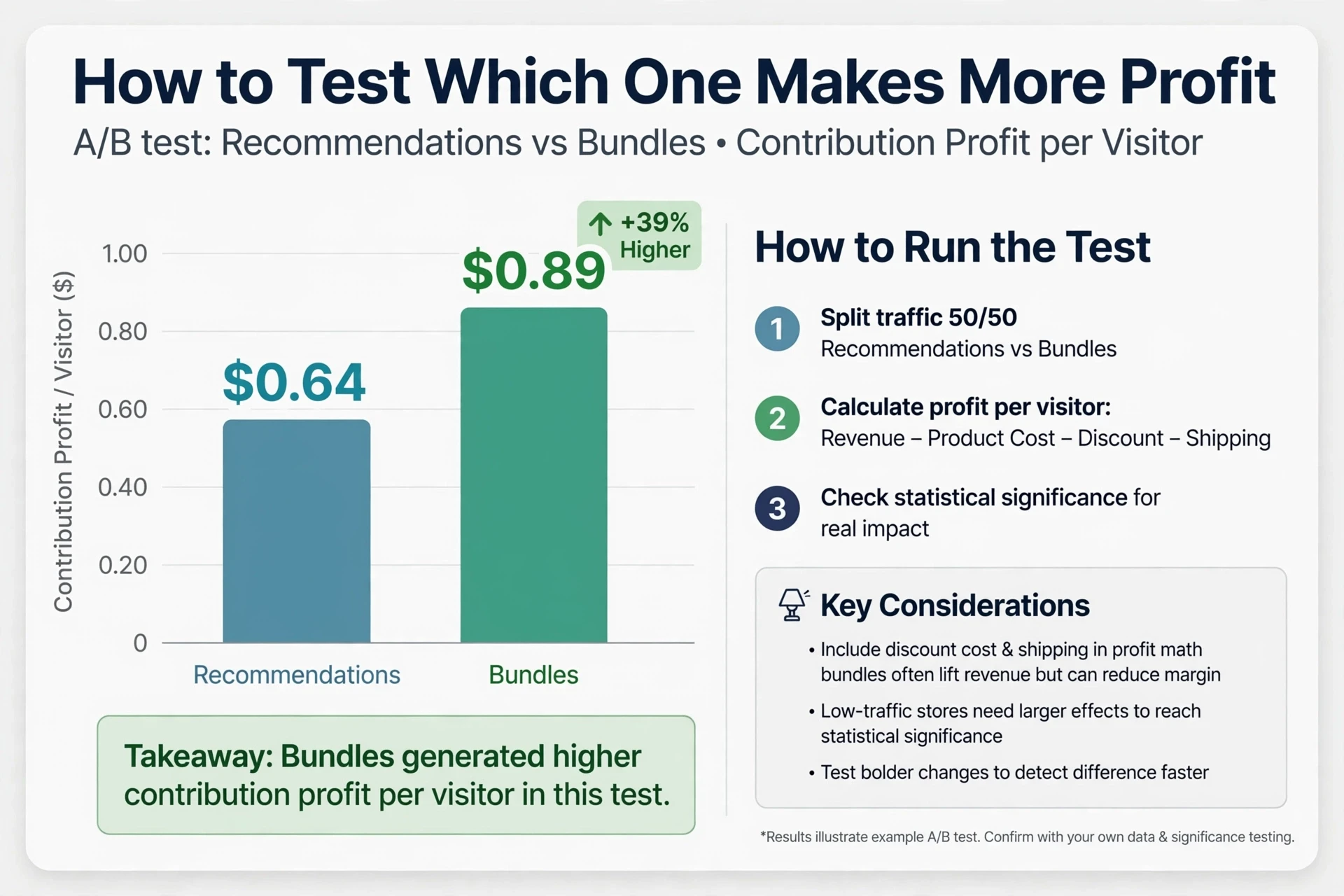
Run a split test instead of guessing. Show recommendations to half your traffic and bundles to the other half for at least two full weeks. Then compare contribution profit per visitor, not just conversion rate.
- Pick one product page or collection as the test ground.
- Set your primary metric before launch: profit per visitor.
- Run the test for two to four weeks, no peeking at daily numbers.
- Call the winner only at 95% confidence, which most testing tools report automatically.
Track discount cost and shipping in your profit math, since bundles often win on revenue but lose on margin. Low-traffic stores may need bigger effects to reach significance, so test bolder changes.
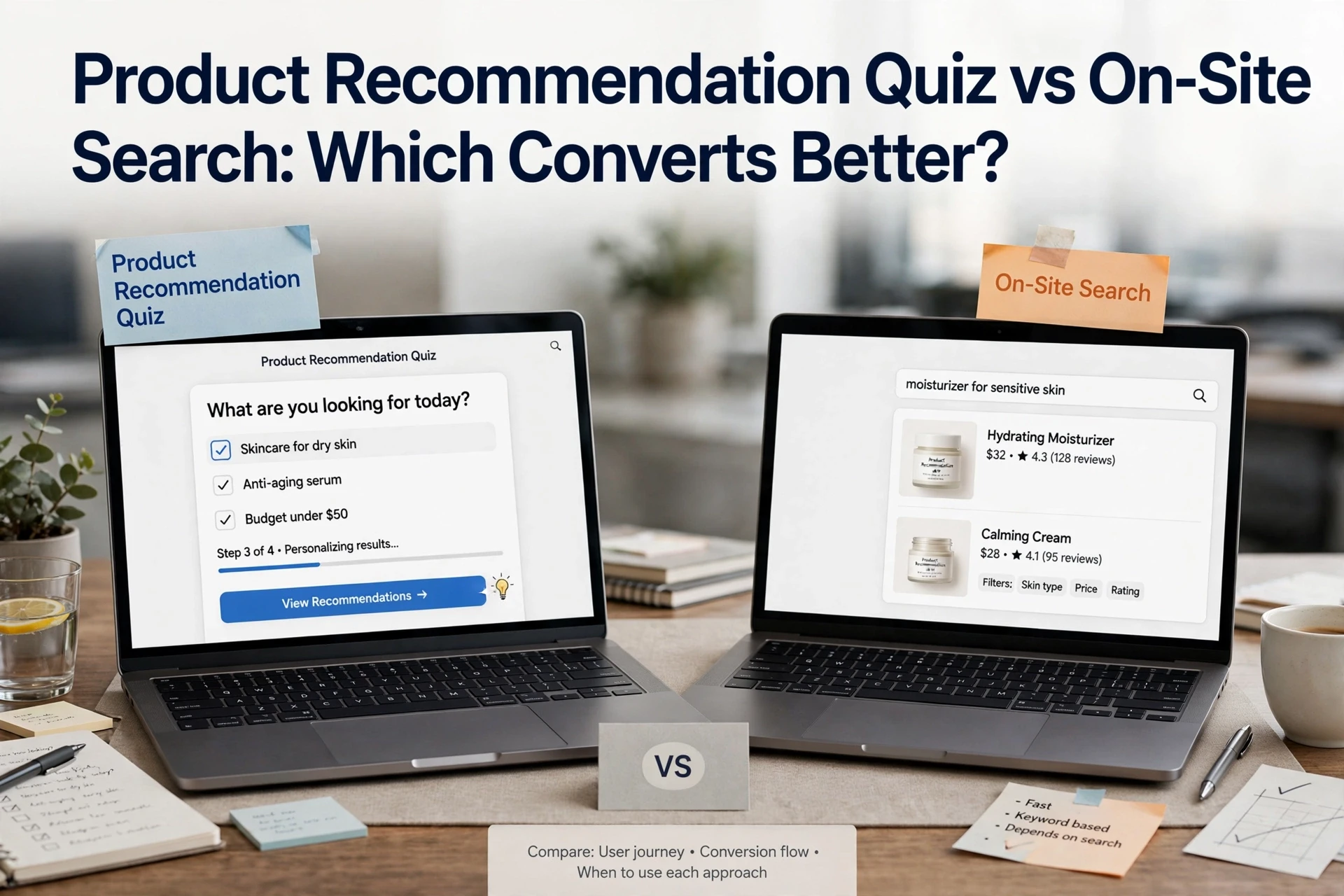
Also Read: Product Recommendation Quiz vs On-Site Search: Which Converts Better?
Which Should You Choose: Recommendations or Bundles?
Pick based on your catalog and margins. Choose bundles when pairings are obvious and you want tight margin control, keeping discounts to 10-20% so contribution per order actually rises. Choose recommendations when shoppers need guidance or your catalog is deep, since they adapt per session. Most growing stores do best with both: bundles on hero products, AI recommendations in cart and chat. Judge the winner by contribution profit, not AOV alone. Bundle pricing guidance and Shopify merchant discussions both point this way.
Whichever strategy you pick, Kandid helps you test it. See how its AI sales assistant delivers both at kandid.ai.
Frequently Asked Questions
Q1: Which increases profit more, recommendations or fixed product bundles?
Usually recommendations, because they adapt to each shopper's intent and carry no discount cost. Bundles win when they raise average order value without cutting margin too much.
Q2: Can I run both without hurting my margins?
Yes. Test bundles on low-margin or slow-moving products, and keep recommendations for full-price discovery so discounts stay limited.
Q3: How long should I test before comparing results?
Run each variant for at least two full weeks, ideally one sales cycle. Measure contribution profit, not just revenue, since discounts distort the picture.
Q4: Do I need a chatbot for recommendations to work?
No. But an AI sales assistant like Kandid can recommend products in chat when shoppers ask questions, which static widgets cannot do.
A Practical Next Step
Bundles win on simple catalogs and tight margin control. Recommendations win when shoppers need guidance. Test both on your top SKUs and judge by contribution profit, not revenue - a large-scale MIT field experiment found tuned bundling lifted revenue per visit by 35% over basic co-purchase rules.