Live Chat vs AI Chatbot: Which Increases Demo Conversions?
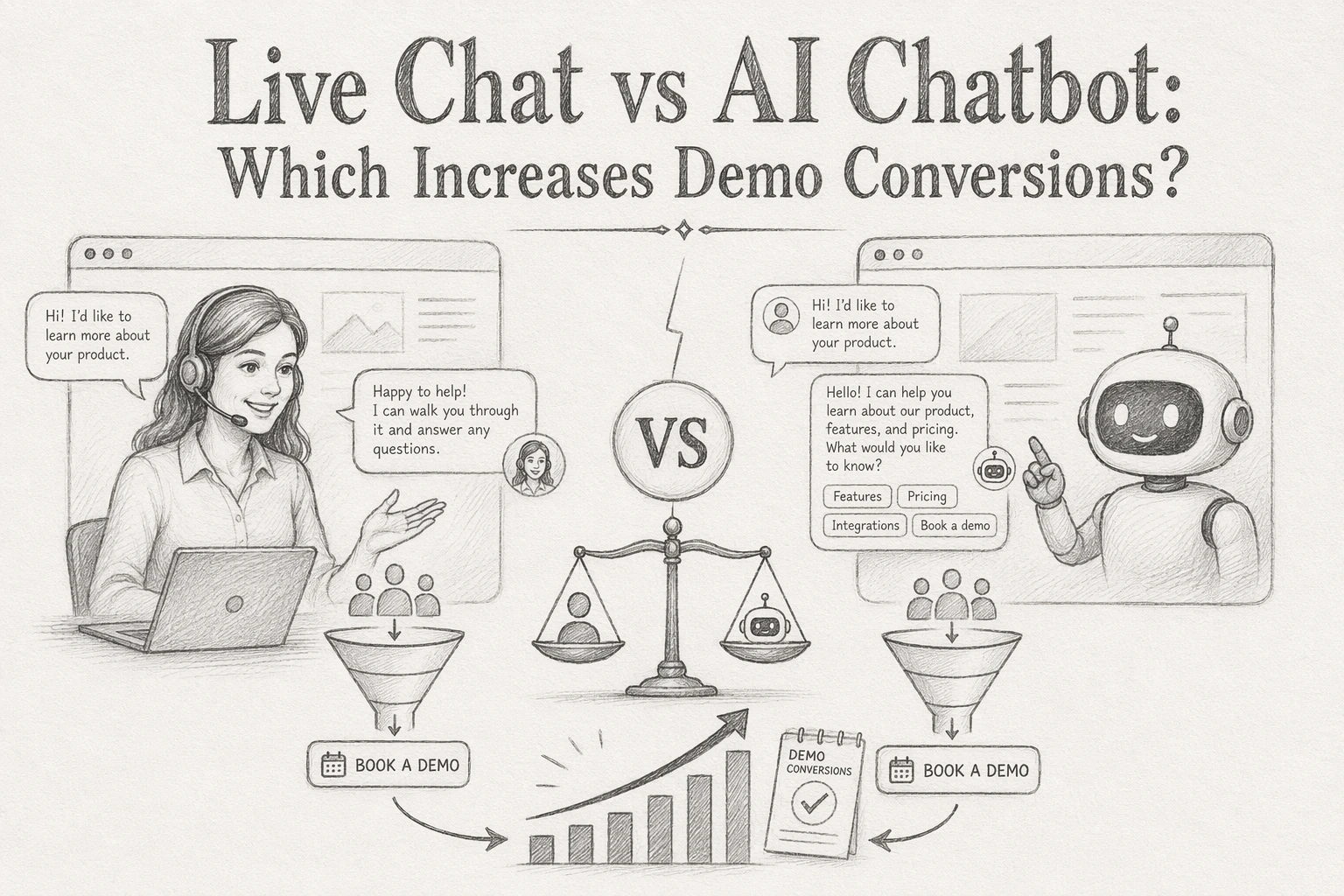
Quick Summary: AI chatbots often generate more demo bookings because they reply instantly and are available 24/7, making them ideal for high-volume and after-hours lead capture. Live chat builds trust and handles complex, high-stakes questions better, but responds slower. Combining both in a hybrid approach offers the best chance to increase demo conversions by balancing speed and trust.
For demo-led D2C, EV, and tech brands, AI chatbots often book more demos because they reply at once and catch after-hours intent. Live chat still helps when buyers want real human reassurance. We study AI Chatbot Effects, Chatbot Conversion Rates, and Conversion Boost Strategies through response speed, qualification, objections, and handoff quality. Our work with high-consideration funnels shows where AI Chatbot Effects raise booked demos, and where AI Chatbot Effects stall.
Live Chat vs AI Chatbot for Demo Conversion: At a Glance
| Live chat | AI chatbot | |
|---|---|---|
| Response speed | Fast during staffed hours | Instant, 24/7 |
| Availability | Business-hours dependent | Always on |
| Demo qualification depth | High for nuanced discovery | High when trained on product and intent data |
| Human trust signal | Very high | Moderate, improved with handoff |
| Scalability | Limited by agent capacity | Unlimited concurrent chats |
| Best fit | High-consideration sales with complex objections | Volume-driven demo capture and after-hours lead recovery |
How Live chat and AI chatbot Compare
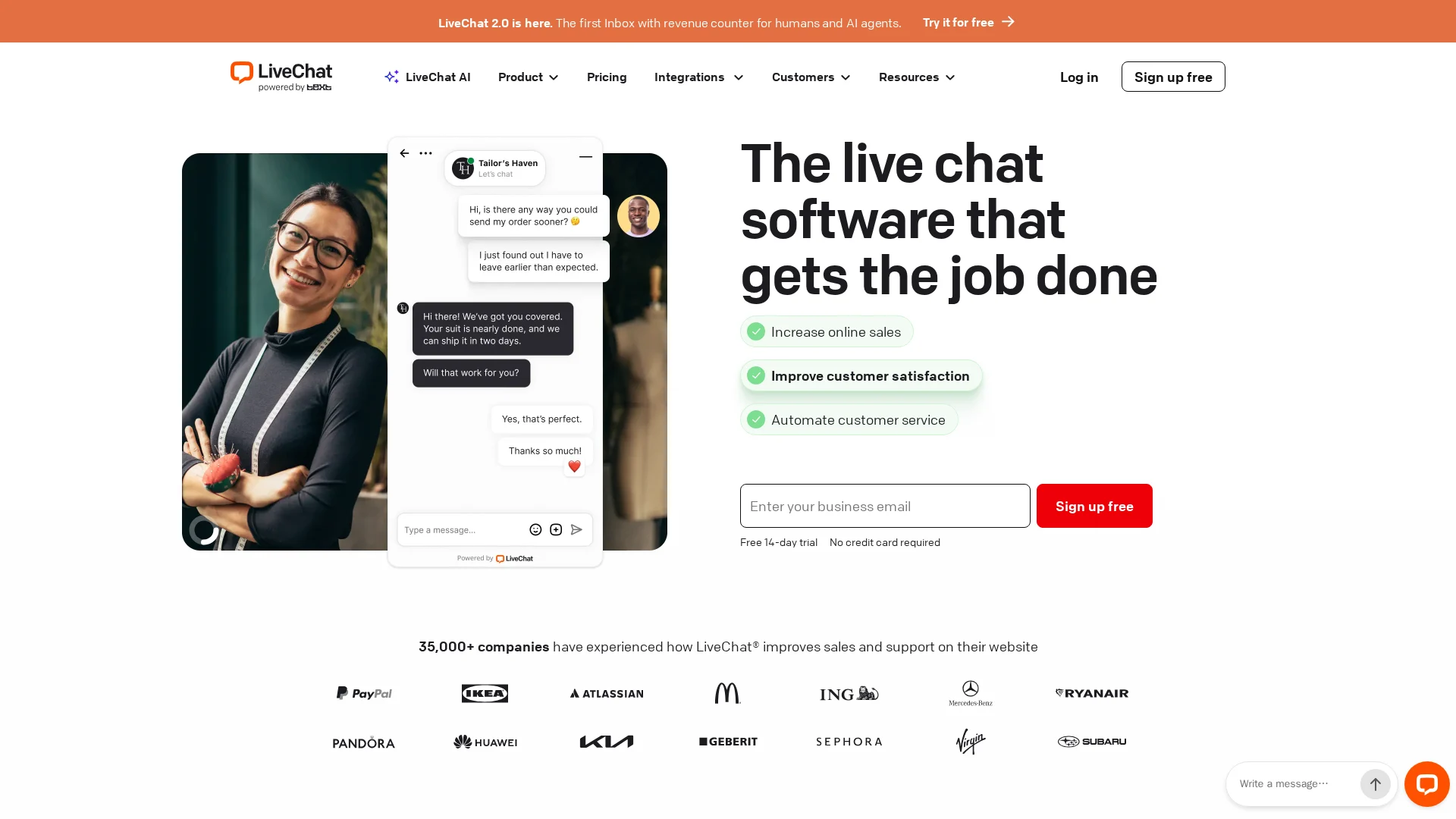
Live chat
Live chat puts a real person in the conversation. It fits brands selling complex products, where buyers want nuance, reassurance, and custom answers before booking a demo.
Key strengths
- Strong trust signal
- Deep qualification for complex needs
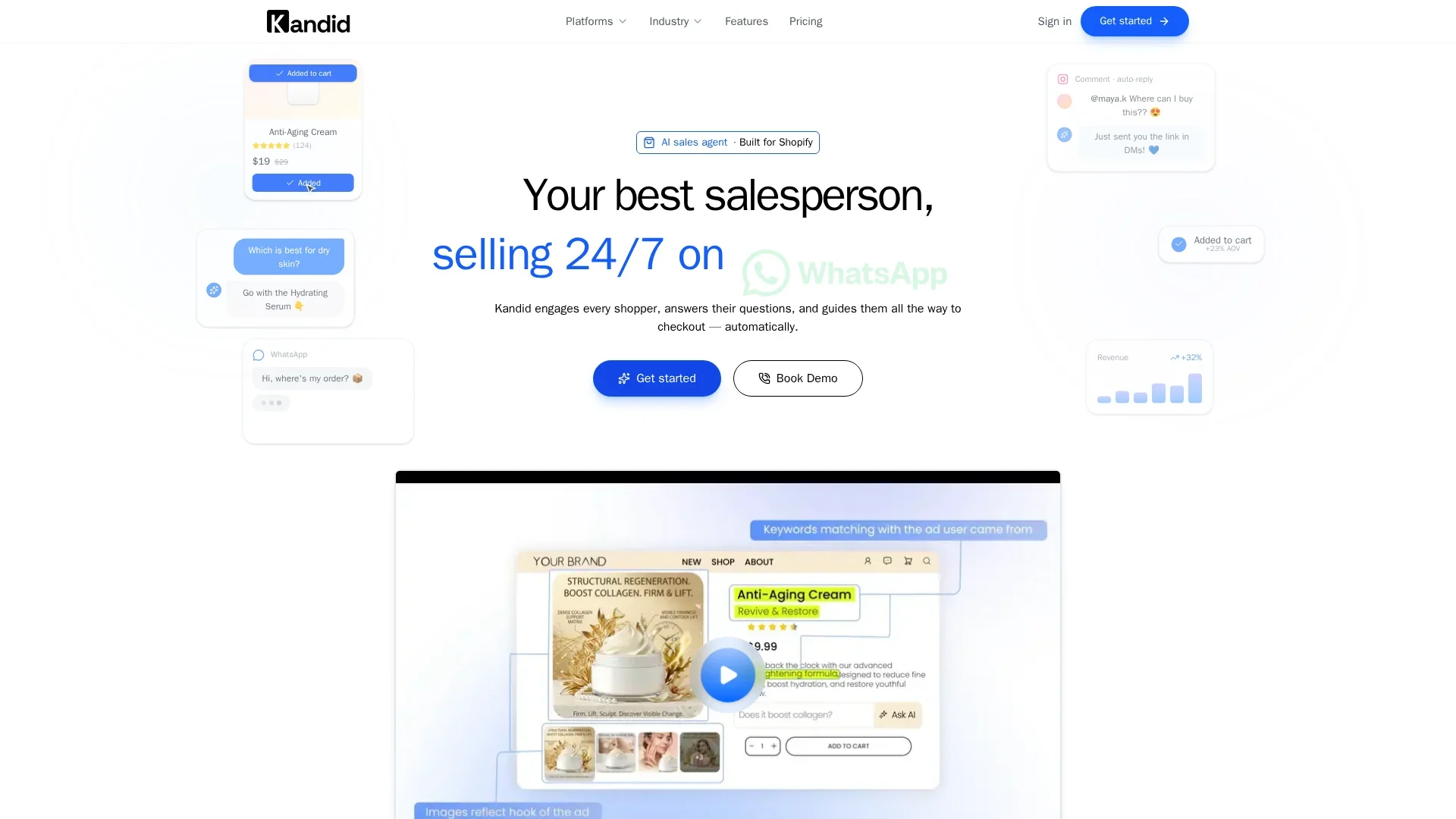
AI chatbot
AI chatbot uses automation to answer fast, qualify visitors, and keep demo capture running all day. It fits teams that need instant replies, higher chat volume, and fewer missed leads after hours, a pattern backed by IBM's response-time analysis.
Key strengths
- Instant 24-7 replies
- Scales across unlimited chats
Response Speed and Intent Capture
Speed shapes intent. If a shopper asks about fit, charging time, ingredients, or compatibility, they are close to action. Waiting kills that moment. Recent benchmarks put average live chat first reply around 1 minute 35 seconds, while AI-handled chat can answer in under 3 seconds according to Zipchat's 2026 benchmark roundup.
Live chat still wins when the first question needs empathy, edge-case judgment, or a high-stakes answer fast. That includes financing concerns, order problems, or technical setup fear. A strong human rep can calm risk in one line. But if no one replies in time, that advantage disappears.
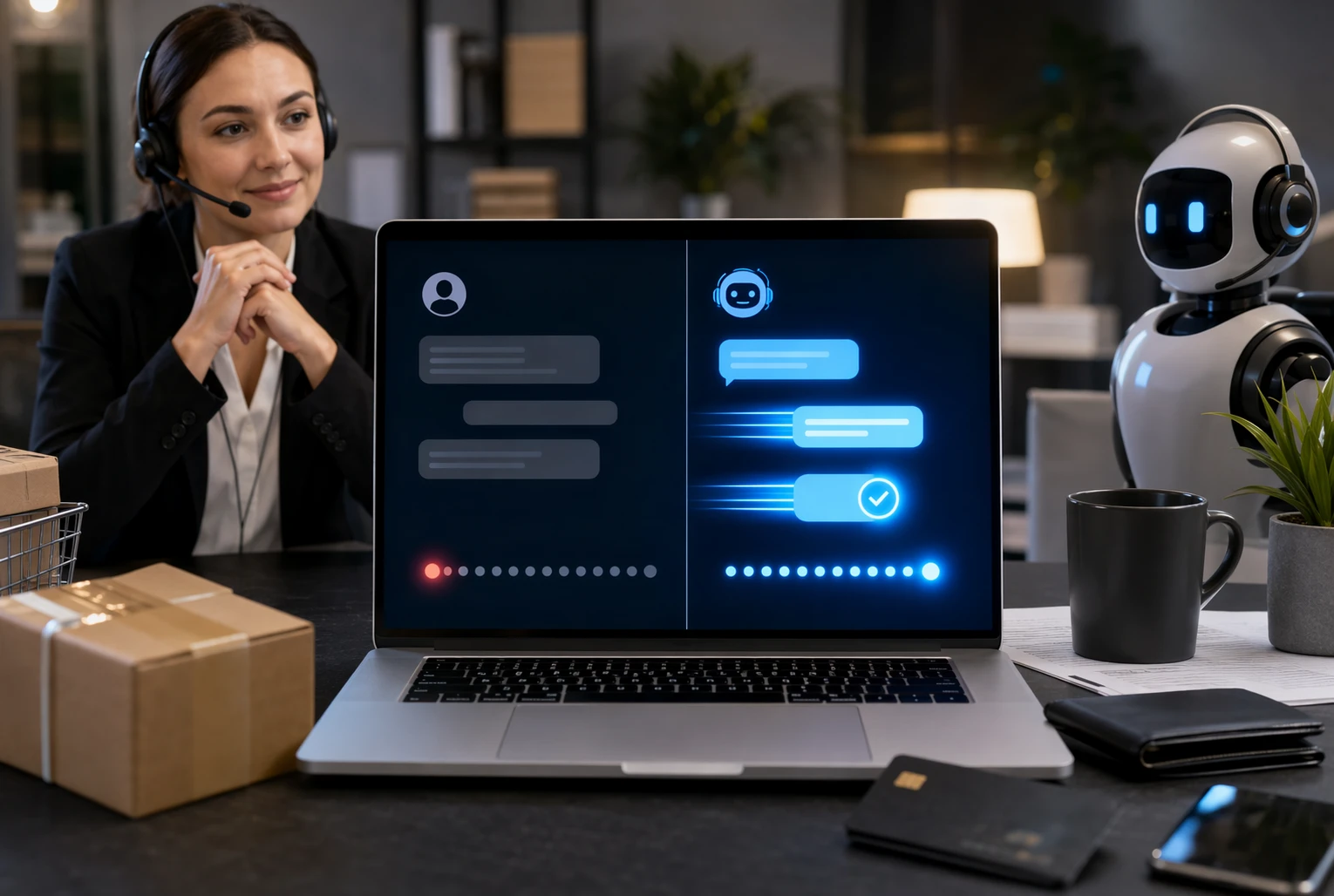
Turn speed into booked demos with a simple flow:
- Reply instantly.
- Ask one intent question.
- Qualify budget, use case, or timeline.
- Offer the demo link only when fit is clear.
- Fast replies catch interest.
- Smart follow-up captures buying signals.
- Better routing gets sales involved sooner.
For high-consideration brands, the best setup is often AI first touch, human handoff second.
For the full comparison, read the pillar guide on live chat vs AI chatbot demo conversion strategy.
Also Read: Ultimate Guide to Live Chat & AI Chatbot Integration Strategies
Trust, Qualification, and Sales Complexity
Complex questions need more than a fast reply. A shopper asking about fit, compatibility, warranty, or delivery risk is testing your expertise. Trust rises when answers feel accurate, clear, and tailored. Recent research ties chatbot trust to reliability, transparency, and responsiveness in Scientific Reports.
Where AI chatbots now close the gap is qualification. Good systems can ask follow-up questions, spot buying intent, and route visitors by product need, budget, or urgency. In high-consideration sales, that matters. Strong customer service AI also needs context, low hallucination risk, and policy control, not just speed according to ACL research.

Hybrid handoff is usually the conversion unlock.
- Let AI handle first-touch questions and qualification
- Send rich context to a human for edge cases
- Keep the visitor from repeating themselves
Also Read: Live Chat & AI Chatbot Comparison: Which Boosts Customer Engagement?
Which Should You Choose for More Demo Conversions?
Pick based on speed, trust, and question depth. Conversational commerce works because buyers get answers in real time, according to GoDaddy’s 2026 overview.
- Choose AI chatbot when
- You get repeat pre-demo questions, need 24-7 coverage, and want instant qualification. AI works best when specs, pricing logic, and routing rules are clear.
- Choose live chat when
- Buyers ask complex, emotional, or high-risk questions. Human reps build trust faster when prospects need reassurance, custom answers, or stakeholder buy-in.
- Choose hybrid when
- You want both. Google Cloud notes AI can guide discovery, while humans step in for nuance and closing. This usually gives the best demo conversion lift.
Want faster replies and better demo qualification? Try Kandid to turn more high-intent visitors into booked demos.
Frequently Asked Questions
Q1: How does AI chatbot responsiveness compare to live chat in increasing website conversion rates?
AI chatbots reply at once, day or night. That speed captures intent fast. Live chat can build more trust, but only if reps answer quickly.
Q2: What are the key advantages of integrating a hybrid live chat and AI chatbot support system?
A hybrid setup gives you both speed and human trust. AI handles first questions and qualification. Reps step in for nuance, objections, and closing demo intent.
Q3: In what scenarios does live chat outperform AI chatbots for demo or high-value sales conversions?
Live chat wins when buyers have complex questions, want proof, or need reassurance. It also works better when pricing, integration, or risk concerns block the next step.
Conclusion
Live chat builds trust on complex demos. AI chatbots win on speed and coverage. Best results usually come from hybrid setups, backed by 2026 chatbot research.