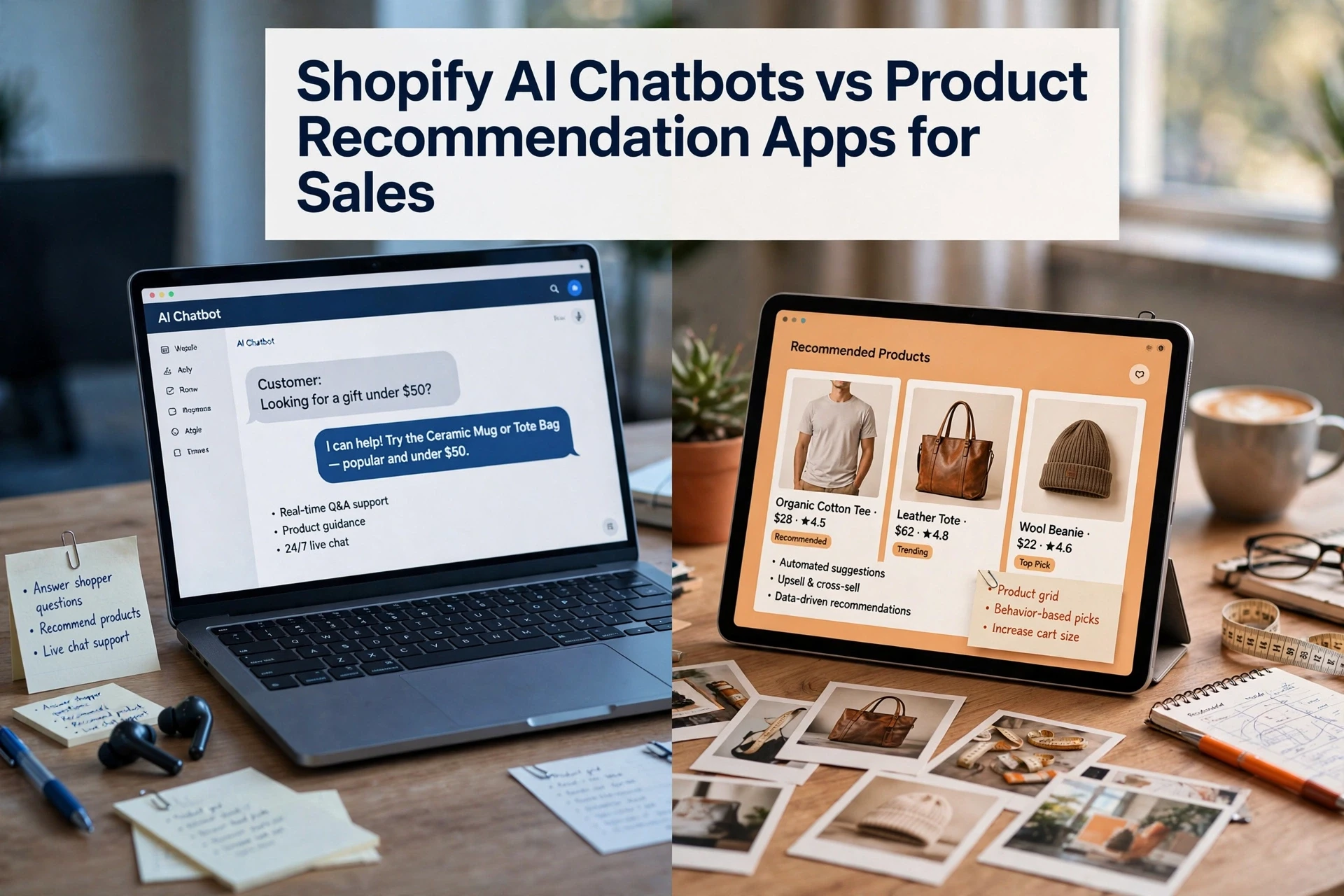
Ecommerce Chatbot Comparisons: Evaluate Features Beyond Demo Quality
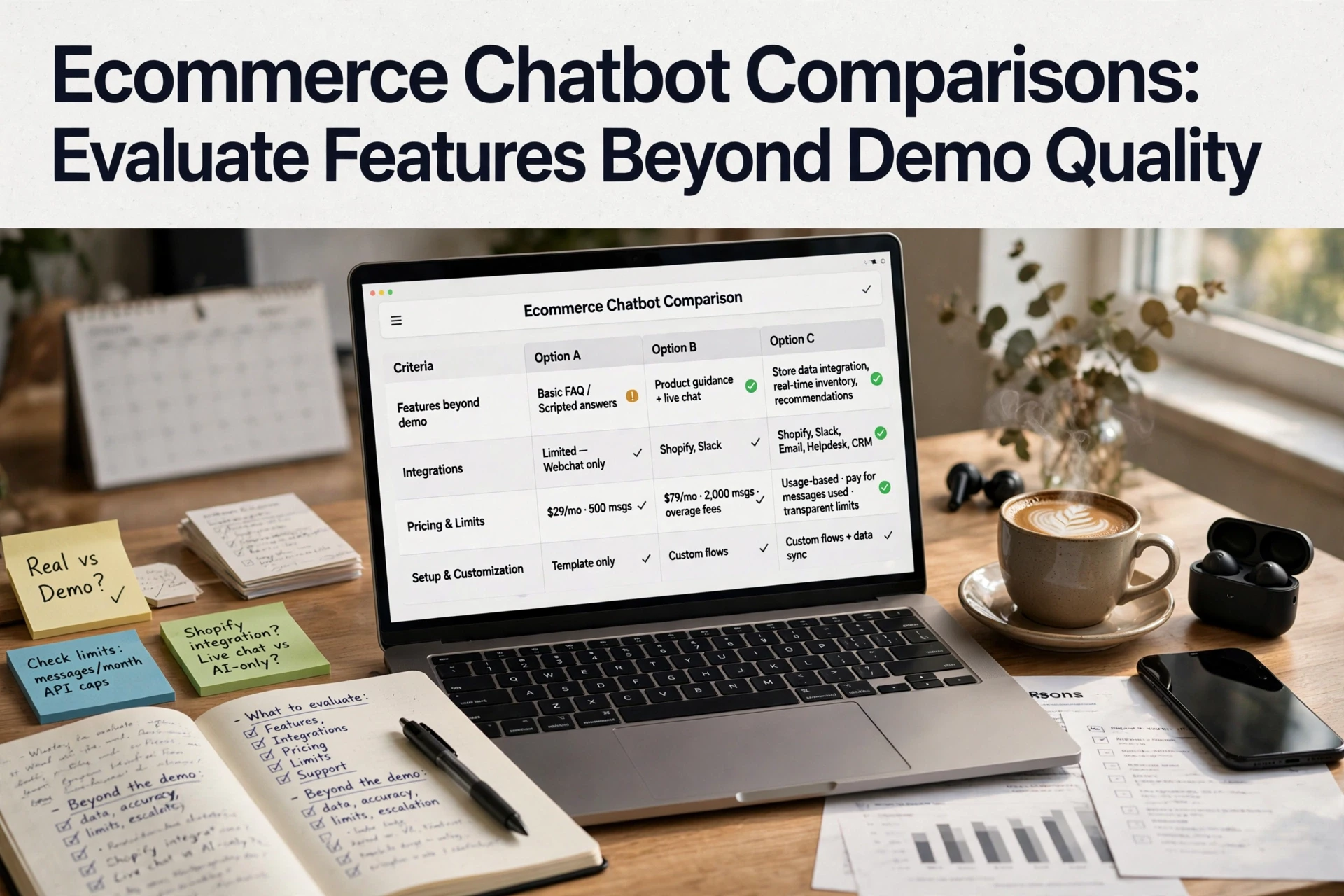
Quick Summary: Don't judge an ecommerce chatbot by its demo; test it on real Shopify tasks like product discovery, order support, and human handoff. Compare platforms like Kandid, Gorgias, Zipchat, and BiteSpeed using your own catalog and messy shopper questions, not polished queries. Check hidden costs like per-conversation fees and seat charges, and measure results over 30 days with your own metrics. A slick demo proves nothing, so run a small pilot before committing.
A polished demo can hide the truth: an ecommerce chatbot may recommend the wrong product or lose order context at handoff. This ecommerce chatbot feature comparison tests platforms on real Shopify tasks - discovery, order support, escalation, limits. Our ecommerce chatbot feature comparison criteria cover Kandid, Gorgias, Zipchat, BiteSpeed, and Rep AI, with a test plan you can run before committing.
Ecommerce Chatbot Features Compared
| Kandid | Gorgias | Zipchat | BiteSpeed | |
|---|---|---|---|---|
| Primary use case | Shopify sales assistance and live chat | Unified ecommerce support and AI automation | Agentic selling, support, and omnichannel engagement | Omnichannel marketing, sales, and support |
| Shopify and store data | Products, pages, FAQs, blogs, and custom content | Shopify orders, customers, products, and connected tools | Catalog, collections, policies, customers, and orders | Ecommerce customer, campaign, and conversation workflows |
| Product discovery | Catalog answers and relevant product recommendations | Recommendations and upsells within support and shopping flows | Semantic catalog search and recommendations | Recommendations through WhatsApp, social, and website agents |
| Support and human handoff | Order queries, repetitive questions, and escalation capability | Order actions, automation, routing, and shared inbox handoff | Order support, actions, escalation, and conversation context | Support inbox, automated queries, and workflow routing |
| Channels and integrations | Shopify plus listed email, Instagram, Messenger, and WhatsApp support | Email, chat, SMS, WhatsApp, Instagram, Facebook, and integrations | Website, WhatsApp, Instagram, Messenger, email, and AI search | WhatsApp, voice, email, SMS, Instagram, push, and social |
| Measurement and pricing | Conversation analytics, conversion tracking, usage-based Shopify plans | AI resolved-interaction pricing plus helpdesk plan and reporting | Conversion and operational reporting; verify current plan limits | Campaign and agent analytics; verify channel-based charges |
Meet the Contenders
This ecommerce chatbot feature comparison looks at four platforms built around different jobs: selling, support, and messaging.
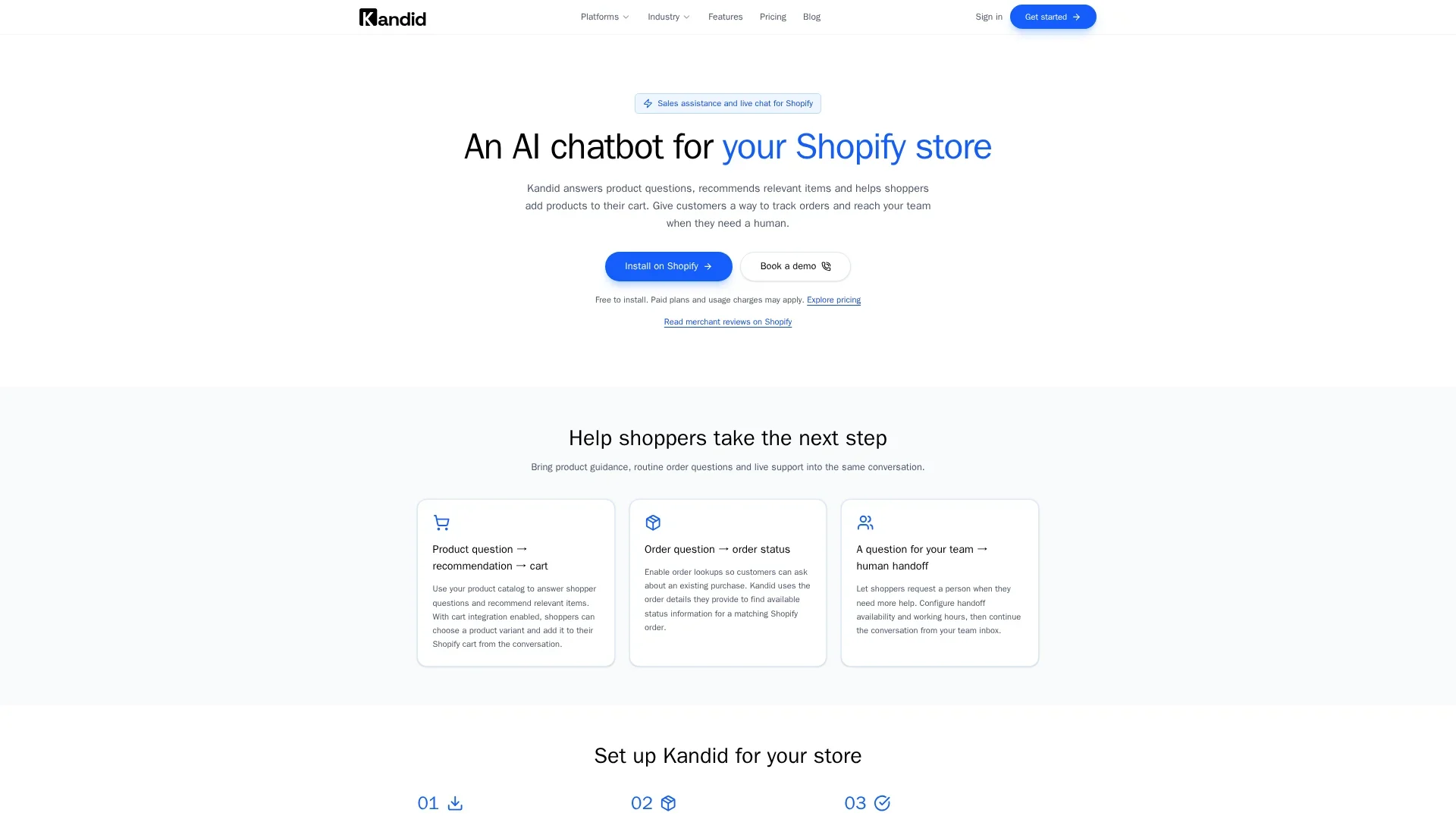
Kandid
A Shopify AI sales assistant for product discovery, recommendations, order questions, and handoff.
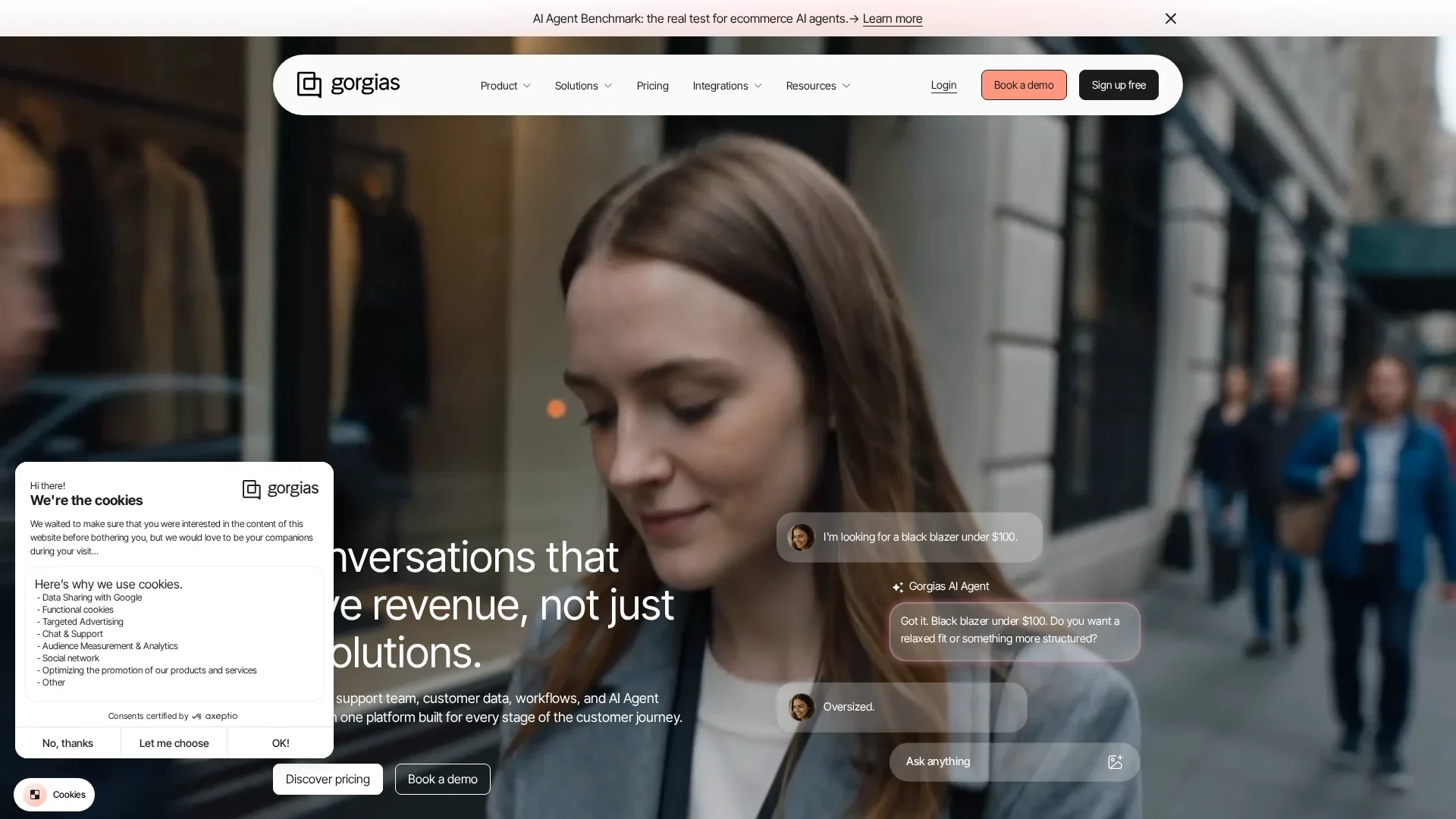
Gorgias
An ecommerce helpdesk with an AI agent, shared customer context, and an omnichannel support inbox.
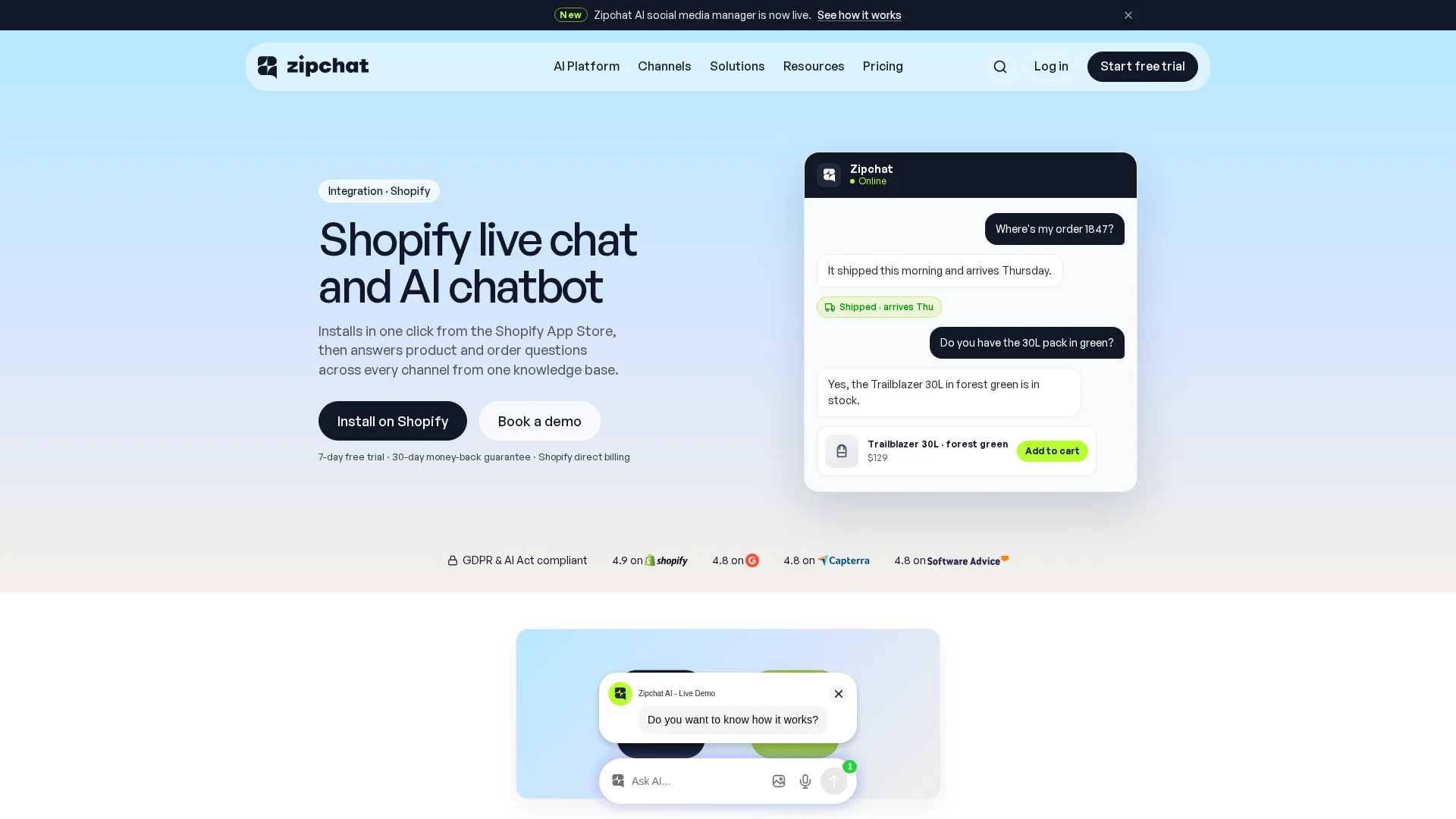
Zipchat
An agentic ecommerce AI for catalog discovery, support actions, and proactive shopper engagement across channels.
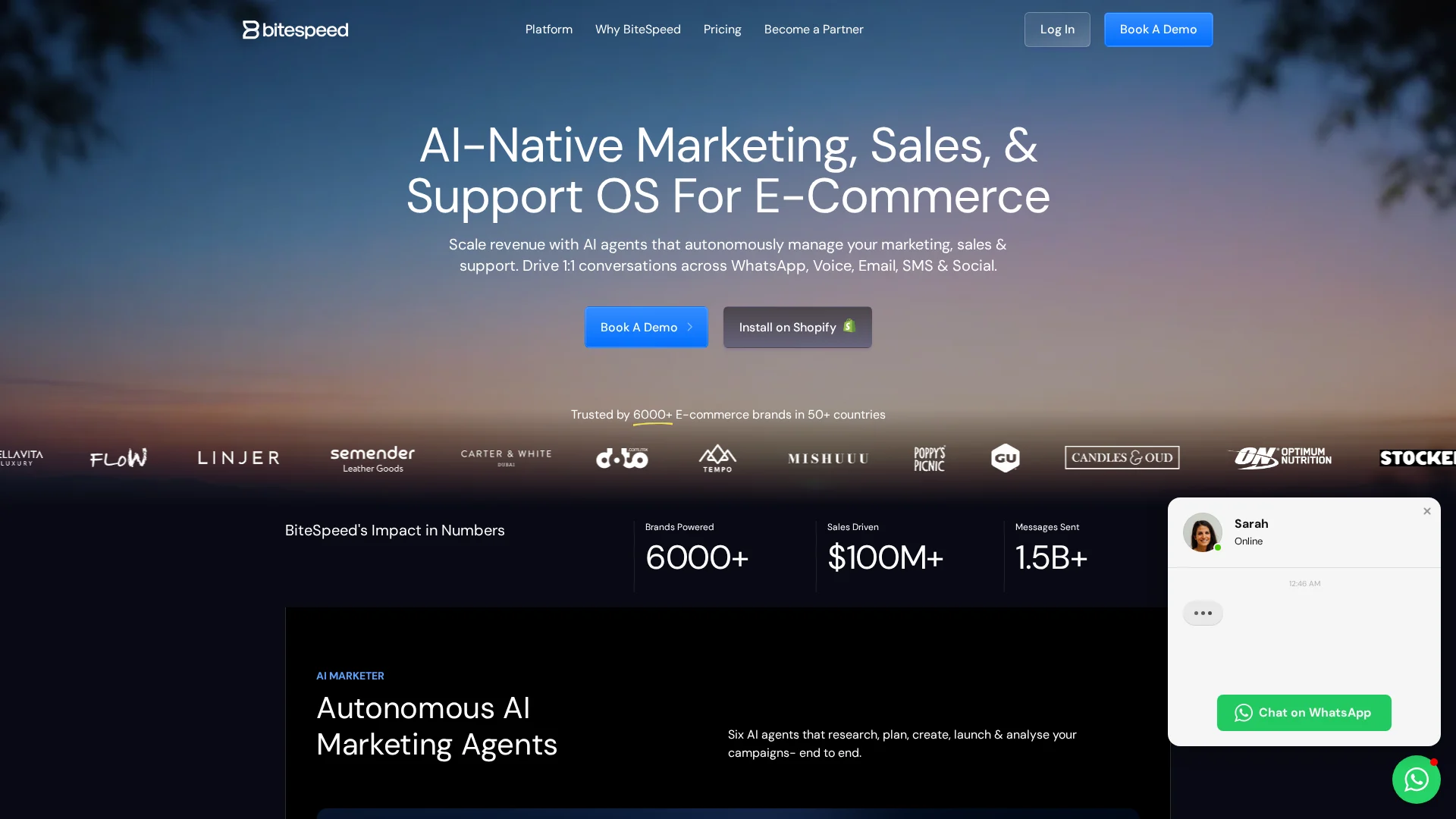
BiteSpeed
An ecommerce platform centered on WhatsApp, voice, social messaging, lifecycle campaigns, and conversational agents.
Which Ecommerce Chatbot Features Matter Most?
Two features separate a sales tool from a chat widget: product discovery and store knowledge. Score both before trusting any demo. The 2026 ecommerce chatbot comparisons treat catalog grounding and answer accuracy as top evaluation criteria, ahead of reply speed or design.
Test Product Discovery With Real Shopper Questions
Ask the bot what real shoppers ask: "I need a gift under $50 for a runner." A strong tool searches your live catalog, filters by budget, and explains its picks. Weak bots return canned FAQs. Test product discovery with ten messy questions, not one polished query.
Check Store Knowledge and Shopify Context
Good bots know variants, stock, prices, and policies, not just product names. Ask about an out-of-stock size or return window. If answers drift from your actual data, the demo is lying.
Also Read: Ecommerce Chatbot Product Discovery Features Compared for Shopify Stores
Compare Operations, Handoff, and Channel Fit
Demos hide the messy parts. Test how a bot handles real support load, human handoff, and the channels your shoppers use.
Human Handoff Is a Workflow, Not a Button
Ask each vendor: when does the bot hand off, who sees the ticket, and where does order history appear? Strong tools like Gorgias and Tidio route chats with context attached. A bot that dumps a bare transcript into email adds work, not relief.

Match Channels to How Customers Actually Buy
List where your buyers ask questions: onsite chat, WhatsApp, Instagram, email. In India, WhatsApp often drives sales; US shoppers lean on onsite chat. Pick a platform that covers your top two channels well, not six channels poorly.
Also Read: Kandid vs Gorgias: Which Ecommerce Sales Assistant Fits Shopify?
Measure Value Without Overreading Demo or Revenue Claims
A demo proves the bot works; it does not prove it will sell for you. Judge results after launch, with your own data.
Use a Measurement Plan Before Launch
Pick three or four metrics: resolved chats, handoffs, product clicks from chat, and attributed revenue. Set a baseline for each before you install anything. Then compare like for like across a 30-day window, and treat vendor case studies as directional, not proof.
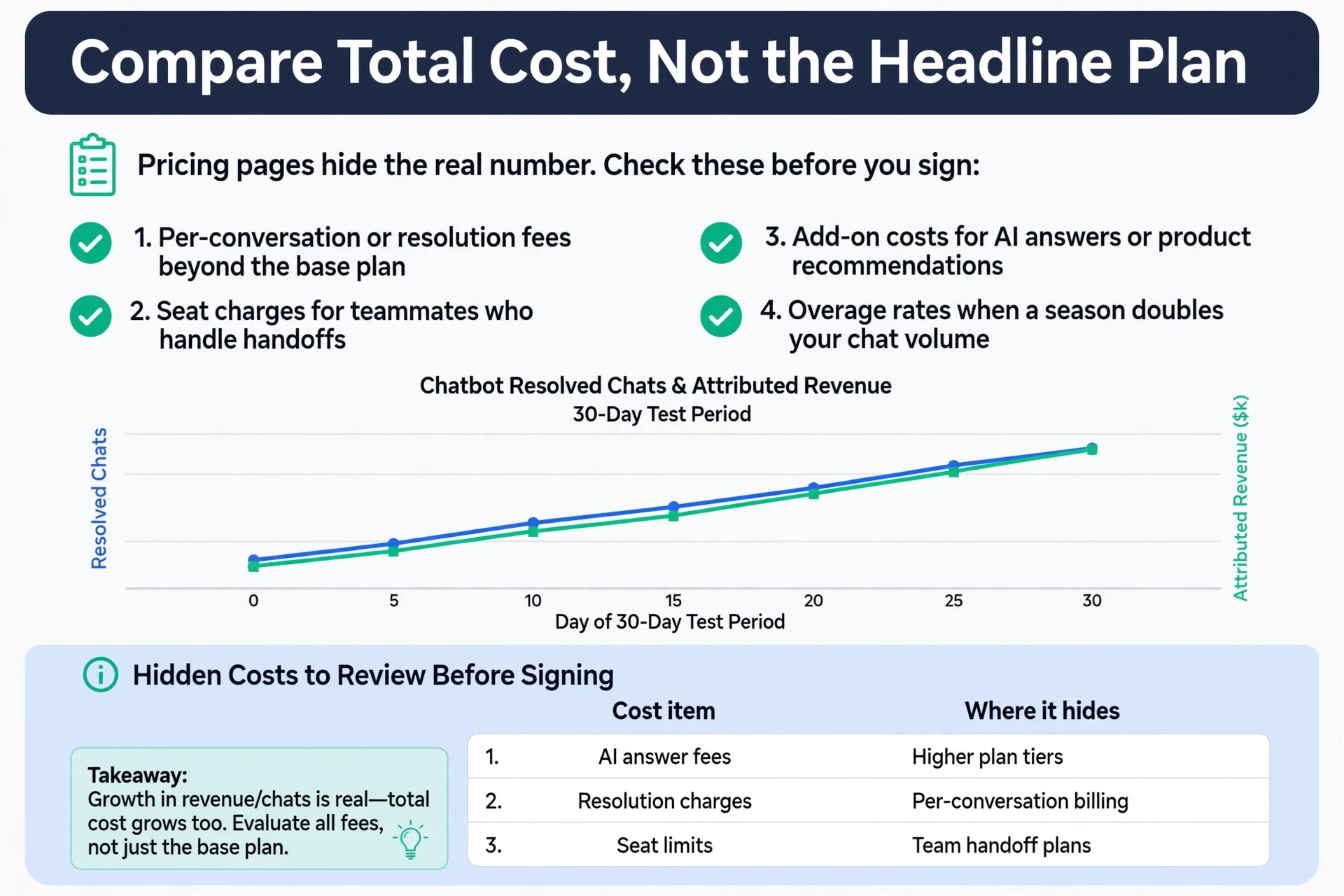
Compare Total Cost, Not the Headline Plan
Pricing pages hide the real number. Check these before you sign:
- Per-conversation or resolution fees beyond the base plan
- Seat charges for teammates who handle handoffs
- Add-on costs for AI answers or product recommendations
- Overage rates when a season doubles your chat volume
| Cost item | Where it hides |
|---|---|
| AI answer fees | Higher plan tiers |
| Resolution charges | Per-conversation billing |
| Seat limits | Team handoff plans |
Also Read: Rep AI Alternatives for Shopify Product Discovery: Key Features Compared
Which Ecommerce Chatbot Should You Choose?
Match the tool to your main job. If you want sales help, pick an AI sales assistant that knows your catalog and recommends products, like Kandid, Rep AI, or Zipchat AI. If support is the pain point, Gorgias or Tidio fit better.
Judge each option on real Shopify tasks: product discovery, order tracking, human handoff, setup time, and limits. A slick demo proves nothing. Test with your own products and questions, then measure assisted revenue for 30 days.
Small catalogs with repeat questions do fine with a simple, cheap bot.
Ready to judge a chatbot on real store tasks, not demos? See how Kandid handles Shopify product discovery and order support.
Frequently Asked Questions
Q1: Which evaluation criteria matter when comparing ecommerce chatbot platforms?
Judge product discovery, order support, human handoff, setup time, and reporting. Demos rarely show these.
Q2: How do I test a chatbot beyond its demo?
Use real SKUs and real order questions. Test handoff too.
Q3: Do demo results predict store performance?
No. Your catalog and traffic differ. Run a small pilot first.
Conclusion
Judge chatbots on Shopify tasks, not demo polish: product discovery, order support, handoff, setup, and measurement. As Salesforce data shows, one bad reply loses customers.