How to Choose an Ecommerce Chatbot Platform
Quick Summary: Choose an ecommerce chatbot by defining the job, scoring three to five tools, and testing two finalists on live traffic for two to four weeks. Compare total cost and overage fees, catalog grounding, human handoff, order lookup, reporting, and Shopify fit using your real store data and questions. Kandid is presented as covering catalog-grounded answers, order tracking, and human handoff, but pilot results and verified revenue lift should decide the choice.
Two Shopify stores can install an app labeled "AI chatbot" and end up with very different tools. One reads your catalog and can pull up an order; the other only plays a scripted welcome message. Both listings can sound identical.
That gap is the real problem when picking an ecommerce chatbot platform. This guide gives you a clear set of buying criteria, a shortlist method, and a pilot plan so the ecommerce chatbot platform you choose fits your store, not the demo.
What an Ecommerce Chatbot Platform Actually Does
An ecommerce chatbot platform runs automated conversations with shoppers on your store. It answers questions, looks up orders, and suggests products so your small team does not answer every "where is my package?" message by hand.

Three Capability Families to Look For
Judge any Shopify AI chatbot on three families: answering shopper questions, order tracking and support, and ecommerce product recommendations that guide discovery. Most tools cover one or two well. Fewer cover all three without clumsy handoffs.
What Chatbots Do Not Do for You
A chatbot does not fix a broken checkout, weak product photos, or slow shipping. It also will not guarantee more sales. Treat it as a tool that handles routine chats; measure whether revenue actually moves.
Why Your Product Data Sets the Ceiling
Every bot leans on your product feed: titles, descriptions, inventory. Thin or outdated data produces thin answers, so clean that up before comparing vendors. Kandid grounds its assistant in store and product information for this reason.
The Buying Criteria That Separate Platforms
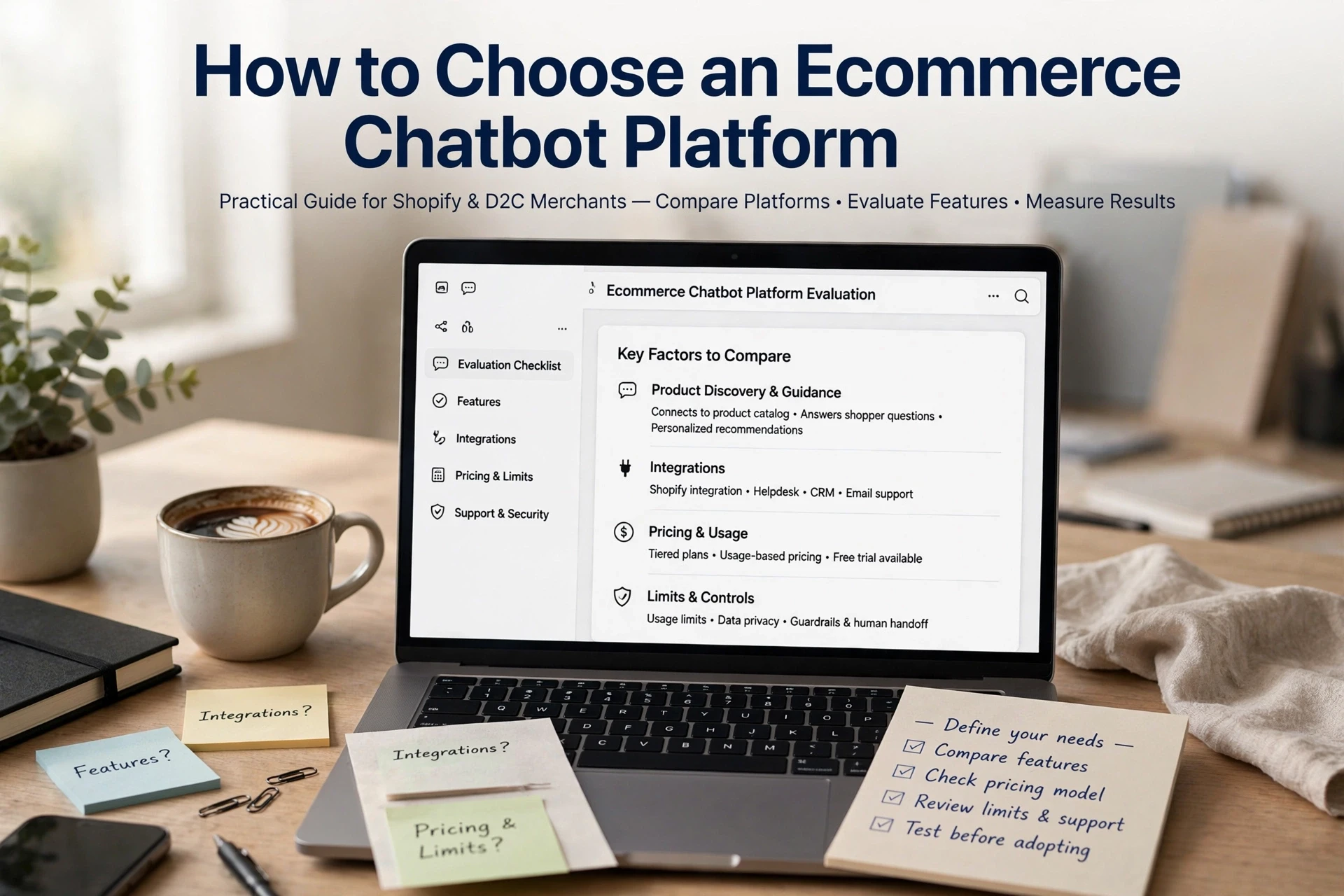
Compare any two platforms on five criteria: total cost with overage terms, how well the bot knows your catalog, human handoff and order lookup, reporting you can verify, and Shopify-specific fit. Verify each one during a two-week pilot, not from a sales page.
Total Cost, Not the Headline Price
Ecommerce chatbot pricing runs on monthly subscriptions, per-resolution AI pricing, or conversation allowances with overage fees. A $49 plan can cost more than a $99 one once you exceed its chat limit. Ask for the overage rate in writing.
Catalog Grounding and Recommendation Quality
A bot that answers from your product feed can recommend relevant items and flag out-of-stock products. One trained on generic scripts cannot. Test it with specific questions about your actual SKUs, since ecommerce product recommendations depend on product feed data quality.
Human Handoff and Order Lookup
Yes, you need human handoff. Shoppers abandon chats when a bot loops on a question it cannot answer. Check that chatbot human handoff routing moves conversations to a person, and that an ecommerce order tracking chatbot pulls real order status. Kandid covers both on Shopify.
What You Can Actually Report
Ask each vendor to show revenue attributed to chat, not just chat volume. Insist on a conversion rate measurement control group or at least a baseline from your pre-chatbot period, so you can tell real lift from correlation.
How to Choose: A Shortlist and Pilot Process
Pick your ecommerce chatbot platform in three moves: define the job, score a shortlist, then pilot on live traffic.

- Write down the job you need done before looking at features.
- Score three to five tools against your own weighted criteria.
- Run a short pilot on your real store before committing.
Step 1: Write Down the Job Before the Feature List
List your top three outcomes, such as faster order tracking or better product recommendations. Ignore anything that does not serve them.
Step 2: Build a Weighted Shortlist
Give each criterion a weight, then score candidates like Tidio, Gorgias and Rep AI against it. Weigh Shopify fit and human handoff heavily for most stores.
Step 3: Run a Time-Boxed Pilot on Your Own Store
Test two finalists for two to four weeks each on real traffic. Seed it with your twenty most common shopper questions, including order status and returns. Check response accuracy, handoff quality and answer deflection honestly. Track assisted conversion against a control group, so you measure revenue lift rather than vendor dashboards alone. Then decide with data, not demos.
Common Mistakes to Avoid
Buying on Rankings, Marketing Language and Unverifiable Numbers
Ranked lists and "30% more sales" claims are marketing, not evidence. Vendors pick their own benchmarks, and few disclose the sample or period behind them. Ignore anyone who cannot show you the method behind a number.
Buying More Channels Than You Can Support
WhatsApp, Instagram, email and web chat sound impressive together. Each channel adds setup work, message limits and unanswered conversations. Start with the one channel where your shoppers already ask questions, prove it works, then expand. A lean team that supports web chat well beats a team that half-supports four channels.
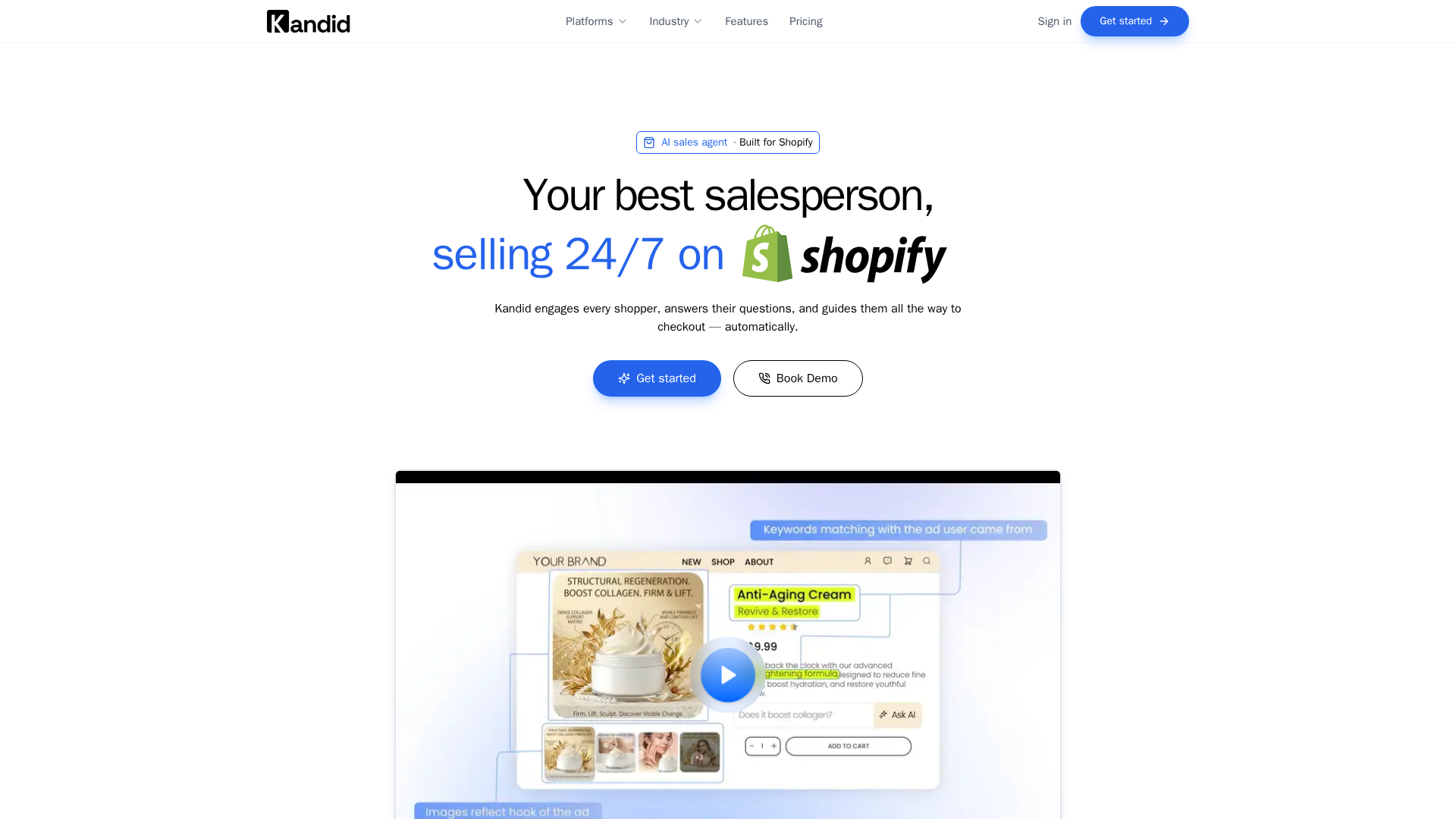
Once you've shortlisted platforms, see how Kandid's AI sales agent answers real shopper questions on your store. Compare it against your pilot results at Kandid and keep the tool that earns its keep.
Frequently Asked Questions
Q1: how to choose the right ecommerce chatbot platform
Write down the job first, score three to five tools against weighted criteria, then pilot two finalists on live traffic. Judge cost with overage terms, catalog grounding, human handoff, reporting and Shopify fit, verified in a two-week test.
Q2: How much should a Shopify chatbot cost?
Small stores often pay $30-$100 monthly, but the headline price misleads. Per-resolution AI pricing or chat limits can push costs higher, so ask for overage rates in writing before signing.
Q3: Can a chatbot handle returns and order tracking?
Yes, if it connects to your Shopify orders. An ecommerce order tracking chatbot pulls real status, and good ones route complex return cases to a person through human handoff.
Q4: How long before I see results?
Plan a two to four week pilot per finalist. Measure assisted conversions against a control group or your pre-chatbot baseline, since vendor dashboards alone can't separate real lift from correlation.
Conclusion
Choosing an ecommerce chatbot platform comes down to defining the job, scoring a shortlist, and piloting on real traffic. Judge cost with overage terms, catalog grounding, human handoff and verified reporting, then let pilot data, not demos, make the decision.