Rep AI vs Kandid: Product Recommendation Engines
Quick Summary: Kandid is the better fit for question-heavy Shopify stores under 20,000 SKUs that want product recommendations, order lookup, and human handoff in one chat. Rep AI suits larger catalogs and proactive, behavior-driven sales outreach. Compare 12-month costs by sessions and SKUs, and clean product titles, attributes, and collections first, since poor feed data drives bad recommendations.
This Rep AI vs Kandid comparison exists because both apps answer shopper questions and recommend products from your Shopify catalog, yet they bill on different bases. The cheaper pick for a 4,000-SKU catalog can cost more in a 40,000-session month. Written by the Kandid team, this guide scores both on pricing basis, catalog handling, recommendation placement and measurement, then names the better fit for your store.
Rep AI vs Kandid: Product Recommendation Engines at a Glance
| Rep AI | Kandid | |
|---|---|---|
| Pricing basis | Free to install, paid tiers billed monthly or annually (Starter listed at $104/month or $995/year on the App Store listing at the time of checking) | Free to install option (1,000 visitors, up to 100 products), paid monthly plans from $19 with a seven-day trial; usage charges apply |
| Catalog size fit | Tiered catalog allowances that scale with plan, with larger catalogs needing higher tiers | Suited to small and mid-sized catalogs, with higher products and visitor allowances on paid plans |
| Where recommendations appear | On-site chat widget plus proactive AI engagement, including outbound-style AI sales agent flows | In the on-site chat widget beside products and checkout, with order lookup and human handoff in the same thread |
| Measurement and reporting | In-app analytics dashboard covering chat and store performance, plus conversation review | Conversation review and purchase attribution in-app, separating chatbot-influenced orders from total store revenue |
How Rep AI and Kandid Compare
Rep AI
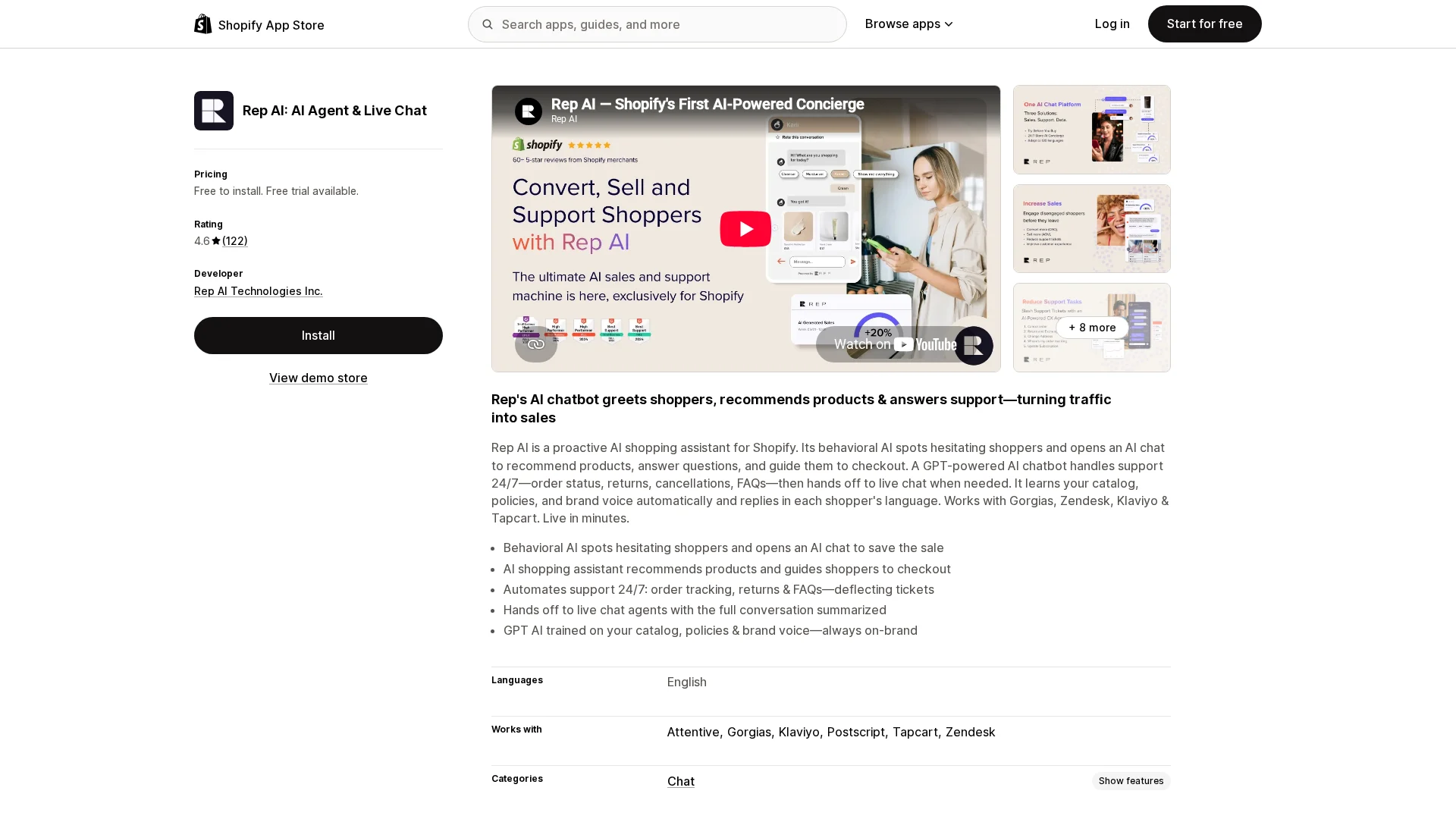
Rep AI positions itself as an agentic commerce platform for Shopify stores. It pairs an AI sales agent with proactive outreach and analytics, priced by plan tier and store sessions, with catalog allowances that grow as you upgrade.
Key strengths
- AI chat plus proactive AI engagement flows
- In-app analytics dashboard for chat and store performance
- Tiered plans for larger catalogs
Kandid
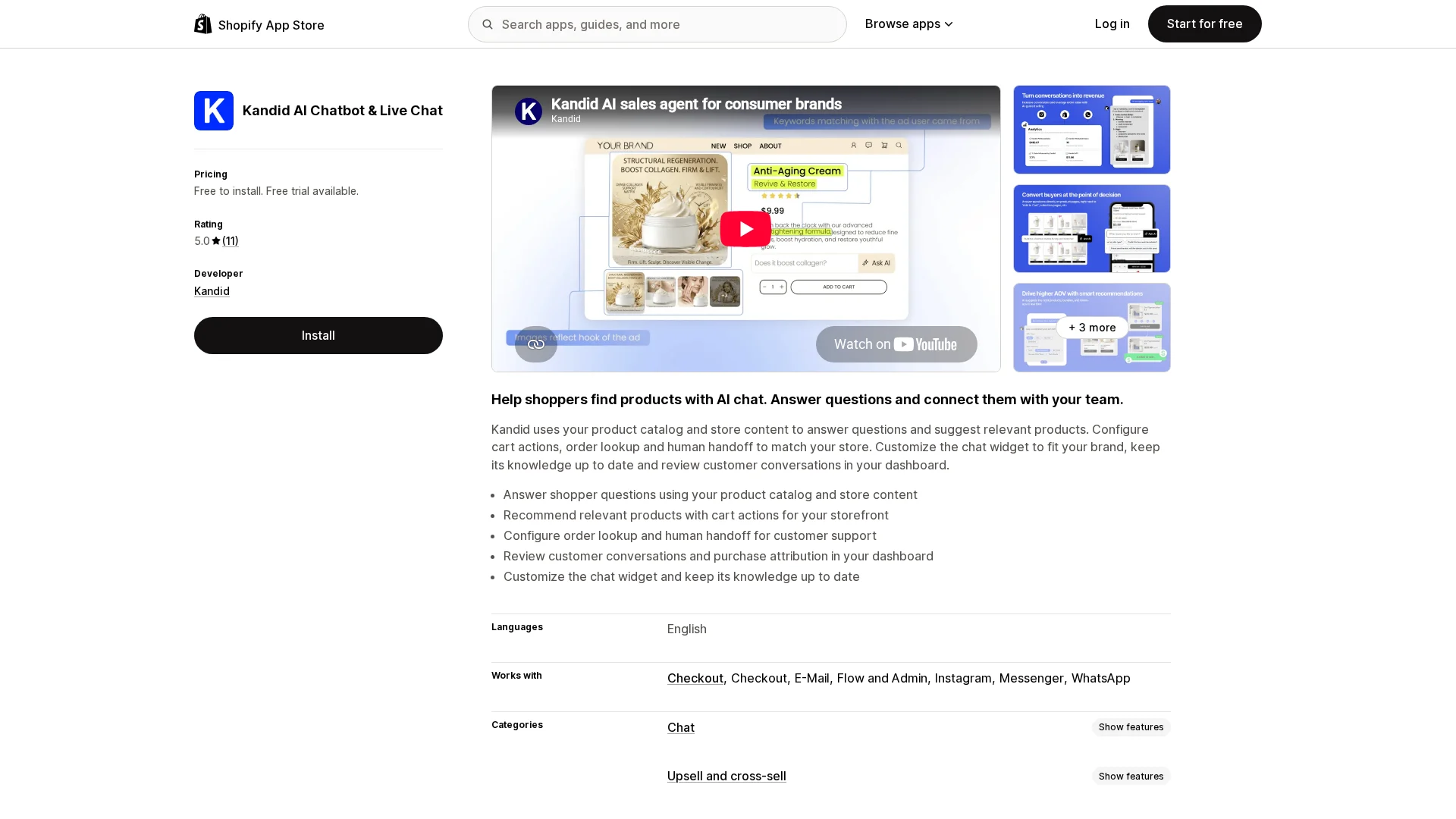
Kandid is an AI chatbot and live chat platform built for Shopify merchants. It answers product questions, recommends products from synced store data, and hands conversations to a human when needed.
Key strengths
- Recommendations in chat beside products and checkout
- Order lookup and human handoff in one thread
- Purchase attribution separating chat-influenced orders from total revenue
Pricing basis and what a recommendation engine really costs you
How to model cost per visitor and per SKU
Most tools charge a flat monthly fee, so your real cost swings with traffic. Divide the monthly plan by sessions to get cost per visitor, then by SKUs to see how catalog size affects value. A tool like Rep AI prices by tier, which works well for small catalogs but gets expensive as SKUs and sessions grow. A flat-fee setup rewards large catalogs instead.

Run both numbers at your 12-month traffic forecast, not last month's. You can pair this with a view of product recommendation strategies to judge whether the spend earns its keep.
Catalog handling and recommendation quality
Data hygiene before you pick either tool
Both engines are only as good as the feed they read. Before installing Rep AI or Kandid, fix three things: product titles people actually search, complete attribute fields (size, material, use case) and clean collections with no duplicates or retired stock. A chatbot recommending a sold-out jacket costs more trust than it earns.
Most "bad AI recommendations" trace back to catalog errors, not the model.
Run a quick audit: check for missing descriptions, variant gaps and mismatched tags. Tools that sync straight from Shopify read your collections, so tidy ones surface better picks. Then compare outputs on your real store, not a demo feed.
Reactive chat versus proactive AI outreach
Reactive chat waits for a shopper to type. Proactive AI watches behavior, like time on a product page or an abandoned cart, and opens the conversation first. Most tools, including Rep AI, blend both. The reactive half is easy to judge; the proactive half is where results vary most, because a badly timed nudge annoys shoppers instead of helping them.

Where a human handoff still decides the outcome
A bot that recommends well but cannot pass a complex order to your team loses the sale at the finish line. Test the handoff before you compare pricing: does the chat pull in order history, notify a real agent fast, and keep the transcript intact? Run it against your three most common pre-purchase questions. If escalation takes minutes instead of seconds, no recommendation engine will save the conversion.
Which Should You Choose: Rep AI or Kandid?
Choose Rep AI when catalog size drives your sales and you want AI trained mainly on shopper behavior patterns. Choose Kandid when your buyers ask product questions before adding to cart and you want answers, product discovery, and live chat in one place. Most stores under 20,000 SKUs fit the second case. Whichever way you lean, run both tools' pricing against your 12-month traffic forecast before you commit. If you're still deciding how a chatbot should handle recommendations, our guide to choosing an AI chatbot for Shopify product recommendations breaks down the criteria in more depth.
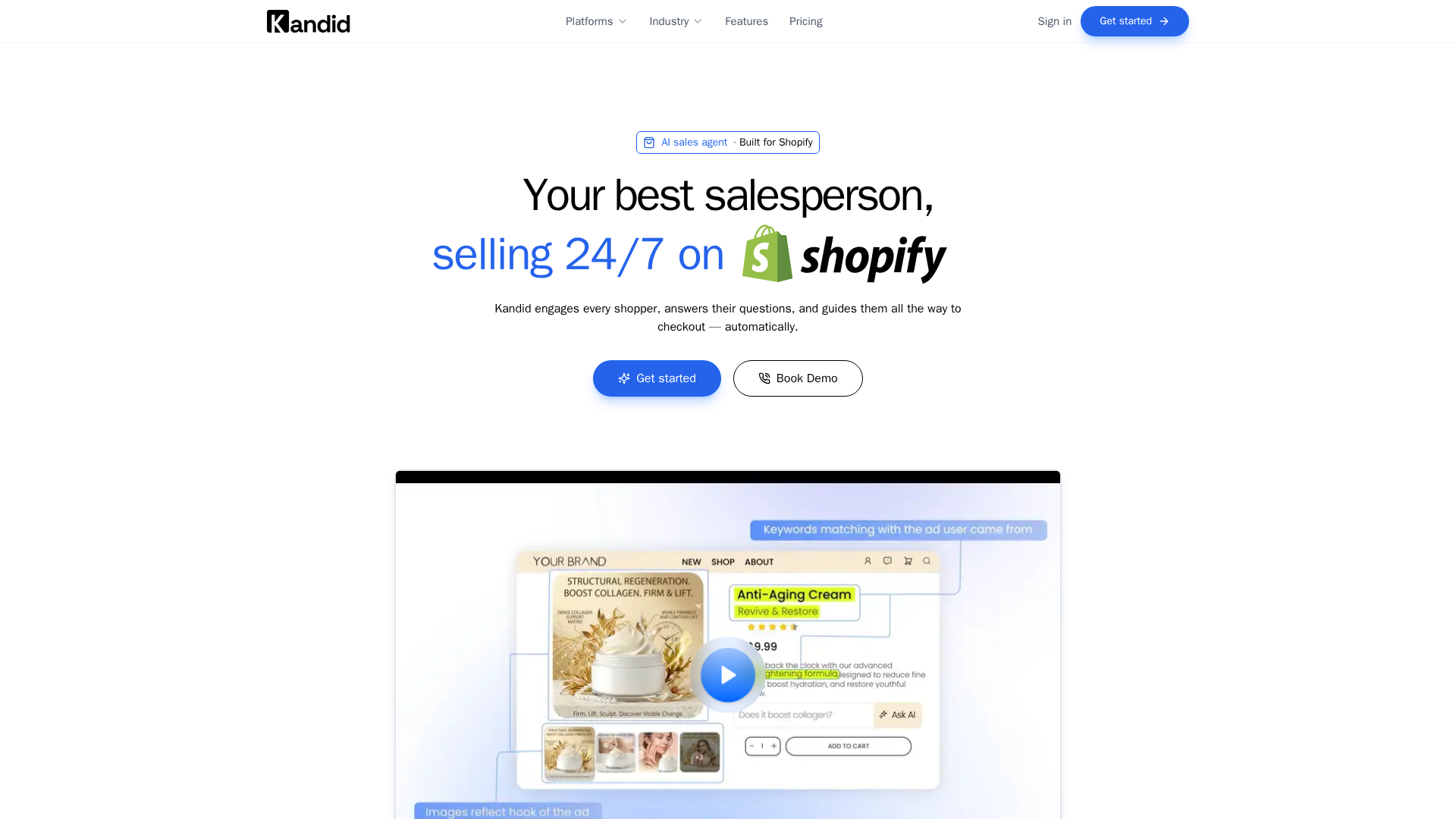
If your recommendation engine should do more than match products, see how Kandid guides shoppers in conversation and recommend it on your own catalog.
Frequently Asked Questions
Q1: rep ai vs kandid product recommendation engine comparison
Rep AI prices by tier and suits behavior-driven proactive sales. Kandid fits question-heavy catalogs under 20,000 SKUs, with chat, order lookup, and human handoff together.
Q2: Which is cheaper for a large catalog?
Run monthly plan cost divided by your forecasted sessions and SKU count. Flat-fee tools often win at scale.
Q3: Do I need to clean my catalog first?
Yes. Fix titles, attributes, and collections before either tool syncs, since bad feed data drives most poor recommendations.
Conclusion
Rep AI suits larger catalogs and proactive sales. Kandid suits question-heavy Shopify stores wanting chat, recommendations and handoff together. Model both against your 12-month traffic, and clean your catalog first.