Jotform AI Chatbot vs Tidio: Which for Small Stores?

Quick Summary: Tidio is usually the better fit for small Shopify stores because it bundles live chat, ticketing, and the Lyro AI agent in one shared inbox, though its Starter plan shares a single pool of 50 AI and human conversations a month ($33 per month billed annually) and costs scale per agent seat. Jotform AI Chatbot suits low-volume shops wanting cheap AI volume and training control, offering a free tier with 100 conversations plus 50 voice minutes, paid plans around $34-$39 a month, and agent-to-human handoff paired with form and lead capture, but with lighter helpdesk features. On Shopify, Tidio syncs product data directly on paid plans so recommendations stay current, while Jotform relies on uploaded or configured catalog data that needs manual refreshing during sales. The broader catalog with predictable, low-cost AI volume favors Jotform; narrow catalogs needing quick human handoff favor Tidio.
For a small store, the Jotform AI Chatbot vs Tidio choice comes down to cost per chat and control. Jotform usually costs less and gives you more training control. Tidio bundles live chat, ticketing and Lyro AI with deeper native Shopify actions, so it suits narrow catalogs that need quick human handoff. Broader catalogs and predictable low-cost AI volume favor Jotform. This comparison uses five fixed criteria, based on each vendor's pricing pages as reviewed in September 2026, and states plainly where each tool fits better.
Jotform AI Chatbot vs Tidio: At a Glance
| Jotform AI Chatbot | Tidio | |
|---|---|---|
| Entry pricing | Free starter tier; paid AI plans listed from roughly $34-$39 per month | Starter $33/mo billed annually ($390/yr); Growth from $63/mo ($750/yr); Plus from $300/mo plus usage |
| AI conversation allowance | Free tier reported at 100 conversations plus 50 voice minutes per month | Starter includes 50 AI and human conversations per month, drawn from one shared quota |
| Shopify integration | Embed code, Shopify app and native store data integrations | Native Shopify actions in Growth tier, plus a dedicated Shopify App Store listing |
| Human handoff and live chat | Agent-to-human handoff supported alongside form and lead capture workflows | Live chat, ticketing, email and social channels with routing and quick replies |
| Product discovery support | Trains on product and catalog data with recommendation-style ecommerce use cases | Product recommendations and Flows included from the Starter tier |
| Best for | Small stores wanting low-cost AI volume and training control across site pages and forms | Stores wanting an all-in-one support inbox with AI resolution and handoff in one tool |
How Jotform AI Chatbot and Tidio Compare
Jotform AI Chatbot
A no-code AI agent builder from Jotform that trains agents on your site pages, documents and Q&A pairs, then embeds them anywhere. It suits small stores that want low-cost AI volume plus training control across pages and forms.
Key strengths
- Free starter tier with 100 conversations and 50 voice minutes monthly
- Embed code, Shopify app and store data integrations
- Agent-to-human handoff alongside lead capture workflows
Tidio
Tidio is a support-first live chat and ticketing platform. Its Lyro AI Agent answers shoppers alongside your human team, with native Shopify actions and product recommendations on higher tiers. It fits stores that want an all-in-one support inbox with AI resolution and handoff in one tool.
Key strengths
- Live chat, ticketing, email and social channels with routing
- Shared 50 AI and human conversations per month on Starter
- Product recommendations and Flows from the Starter tier
Pricing and Cost at Low Volume
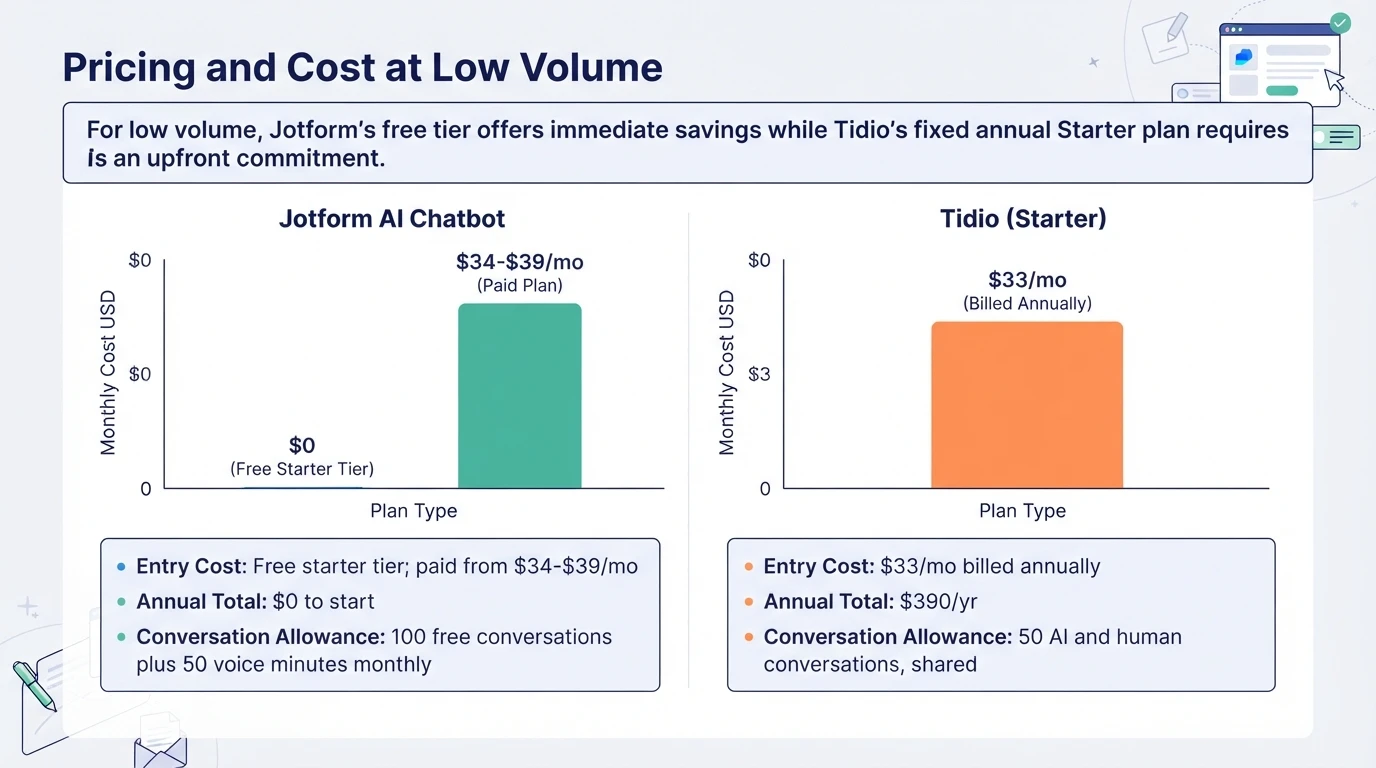
For a small store, Jotform AI Chatbot pricing vs Tidio pricing comes down to billing model. Jotform uses a free tier plus monthly plans; Tidio charges per agent seat with annual totals.
| Tool | Entry Cost | Annual Total | Conversation Allowance |
|---|---|---|---|
| Jotform AI Chatbot | Free starter tier; paid from $34-$39/mo | $0 to start | 100 free conversations plus 50 voice minutes monthly |
| Tidio (Starter) | $33/mo billed annually | $390/yr | 50 AI and human conversations, shared |
How Conversation Limits Work in Practice
A shared quota means AI replies and human agent chats draw from one pool; separate limits mean each has its own count. Tidio's Starter pool is shared, so heavy AI use eats your live chat allowance. Tidio Lyro pricing for a small store scales only as conversations climb. If traffic spikes worry you, see how chatbots handle more traffic before you commit. Figures come from vendor pages checked in 2026.
Shopify Integration and Product Discovery

General Ecommerce Features vs Shopify-Native Behavior
Do both tools support product recommendations on Shopify? Yes, but at different depths:
- Jotform AI Chatbot: general-purpose builder; product recommendations work through custom AI agents you configure with your catalog data
- Tidio: Shopify-native app with direct store sync on paid plans, so Lyro can pull product data automatically
That distinction matters. A tool synced to your catalog updates recommendations when prices or stock change. Tools that rely on uploaded data need manual refreshes, which risks stale answers during a sale. If product discovery drives your store's revenue, Jotform AI Chatbot for ecommerce product recommendations is worth comparing against synced apps on accuracy, not just price.
Handoff, Support Channels, and Setup Effort
What Happens When the Bot Should Not Answer
Refunds, damaged parcels and angry customers need a person. Both tools handle this, but differently. Tidio pairs its AI agent Lyro with built-in live chat and a shared inbox, so conversations move from bot to agent without leaving the tool. Jotform AI Chatbot relies more on escalation settings and email handoff, which works but feels lighter on helpdesk features. For a solo operator, Tidio's inbox saves you adding a second tool. Neither replaces a real ticketing system if your team grows past two or three people handling support together daily.
Which Is Best for Small Stores: Jotform AI Chatbot or Tidio?
Tidio is usually the better fit for small Shopify stores, while Jotform AI Chatbot suits teams wanting a cheap, form-focused bot.
- Choose Tidio if you need live chat, ticketing and AI replies in one support desk.
- Choose Jotform AI Chatbot if you mainly want a no-code bot on a free tier.
Kandid's comparison of Tidio vs Chatty traffic handling covers what conversation limits mean at scale.
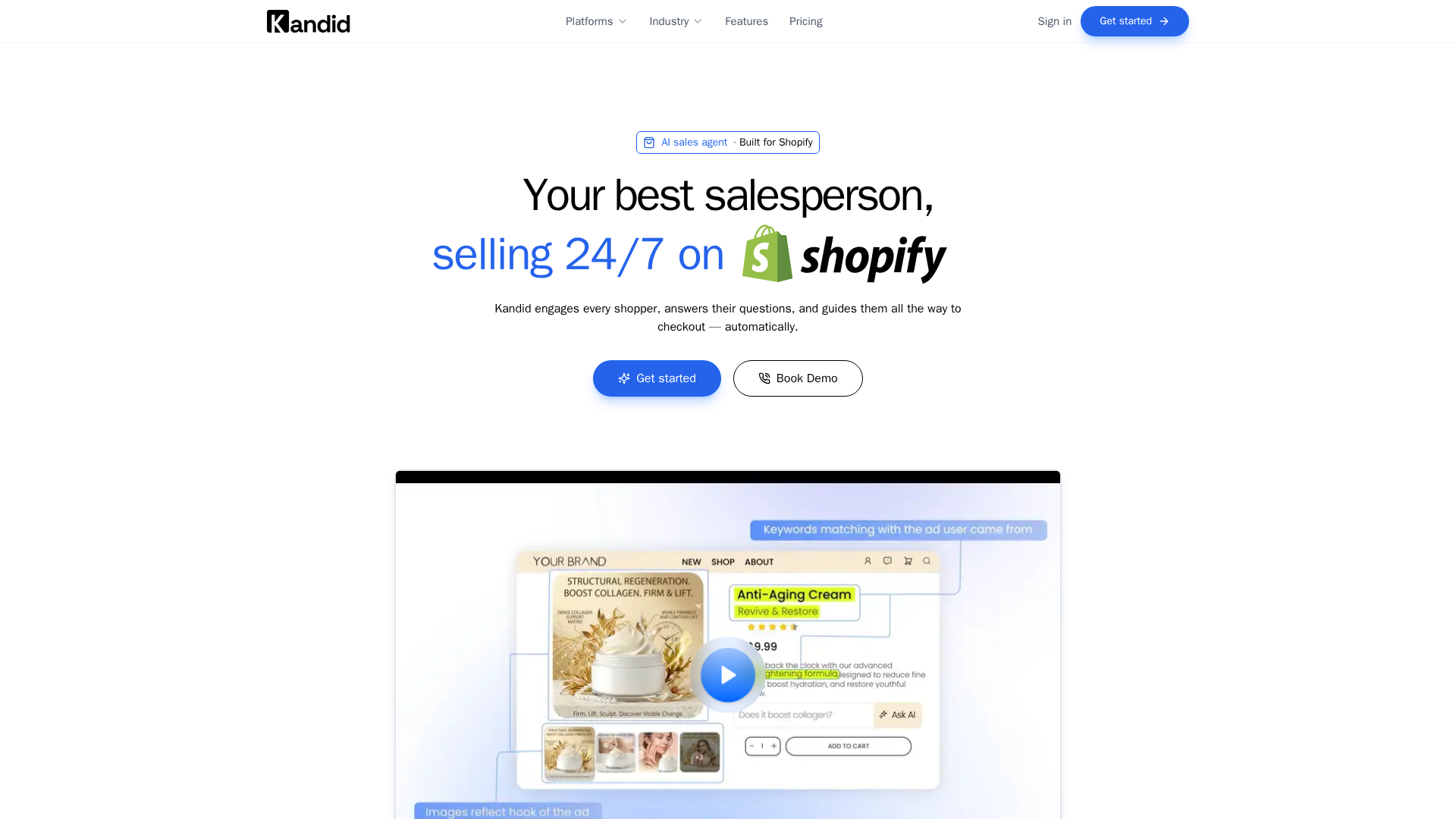
Still comparing? See how Kandid handles Shopify product questions and recommendations, then pick the tool that fits your store.
Frequently Asked Questions
Q1: Which is best for small stores, Jotform AI Chatbot or Tidio?
Tidio usually fits small Shopify stores needing live chat plus AI in one inbox. Jotform wins if you want a free tier and more training control at low cost.
Q2: Is Jotform AI Chatbot's free tier enough for a small store?
Often yes. Its 100 monthly conversations cover many low-volume shops, though it lacks Tidio's built-in helpdesk tools.
Q3: Do both tools sync with Shopify product data automatically?
Tidio syncs on paid plans. Jotform relies on configured or uploaded catalog data, so refresh recommendations manually during sales.
Conclusion
Tidio fits stores wanting one support inbox with built-in live chat and handoff. Jotform suits low-volume shops needing a free tier and training control.