QuickChat vs Kandid: Ecommerce Chatbot Platforms
Quick Summary: Kandid is the stronger fit for Shopify and D2C stores that need direct product recommendations, cart actions, order lookup, and predictable visitor-based pricing. QuickChat AI suits teams deploying one agent across websites, support channels, and multiple knowledge sources, with pricing based on monthly AI credits. Both support human handoff, and product data quality determines how useful either assistant can be.
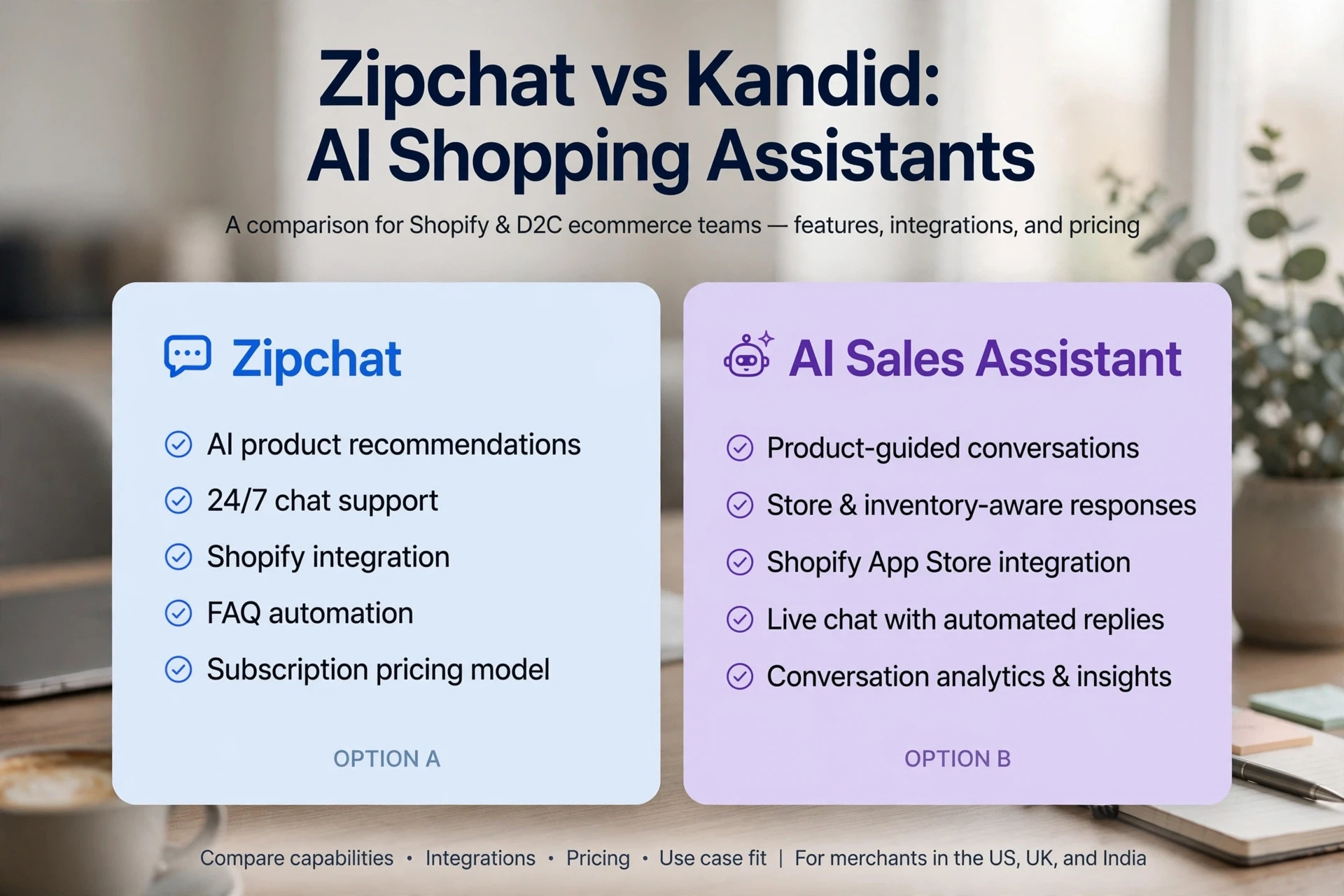
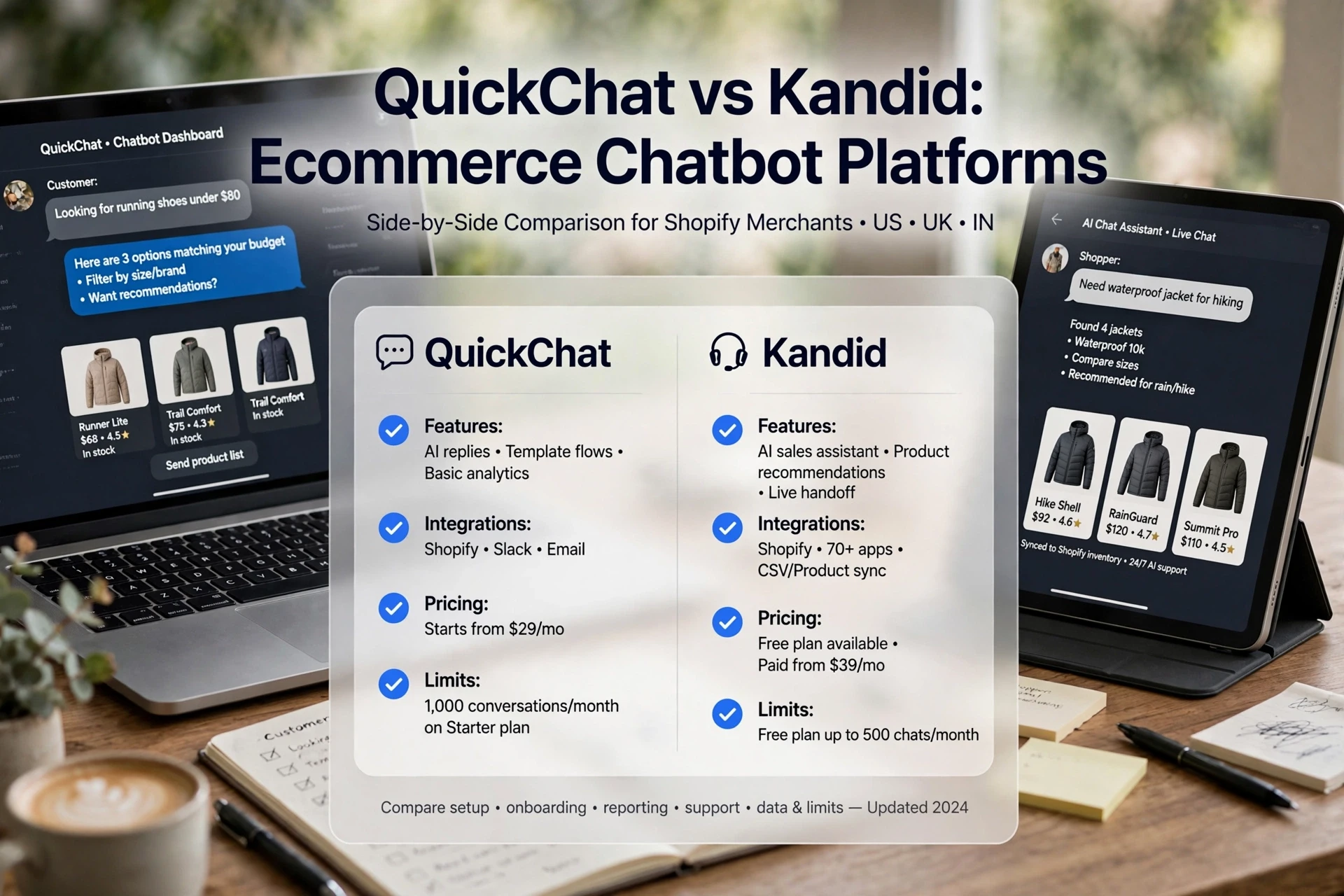
QuickChat vs Kandid comes down to fit: Kandid suits storefront-focused Shopify stores that want product recommendations and cart actions, while QuickChat AI fits teams deploying one agent across many channels. This QuickChat vs Kandid comparison prices real usage from each vendor's published pages, then maps each platform to the store it serves best.
QuickChat vs Kandid: Side-by-Side Comparison
| QuickChat AI | Kandid | |
|---|---|---|
| Pricing structure | Free tier, then $9, $29, $99, $299 and $999 per month; Enterprise from $0.50 per resolution | Free-to-install option with 1,000 visitors and up to 100 products; paid plans from $19 per month with a seven-day trial |
| Usage metering | AI credits per month (50 to 30,000), plus knowledge base article limits from 50 to 2,000 | Visitor-based allowance on the Shopify listing, with usage charges applying beyond plan limits |
| Product discovery and cart actions | Shopify shopping agent searches the live catalog and returns product cards; AI Actions available on all tiers | Catalog and store-content answers, product recommendations and configurable cart actions |
| Human handoff and support | Human handoff to support staff, team roles, conversation export on Business tier | Order lookup, conversation review and human handoff to the merchant's team |
| Best for | Multi-channel teams and builders needing an AI agent across many knowledge sources | Shopify and D2C stores wanting storefront product discovery and cart actions in one assistant |
How QuickChat AI and Kandid Compare
QuickChat AI
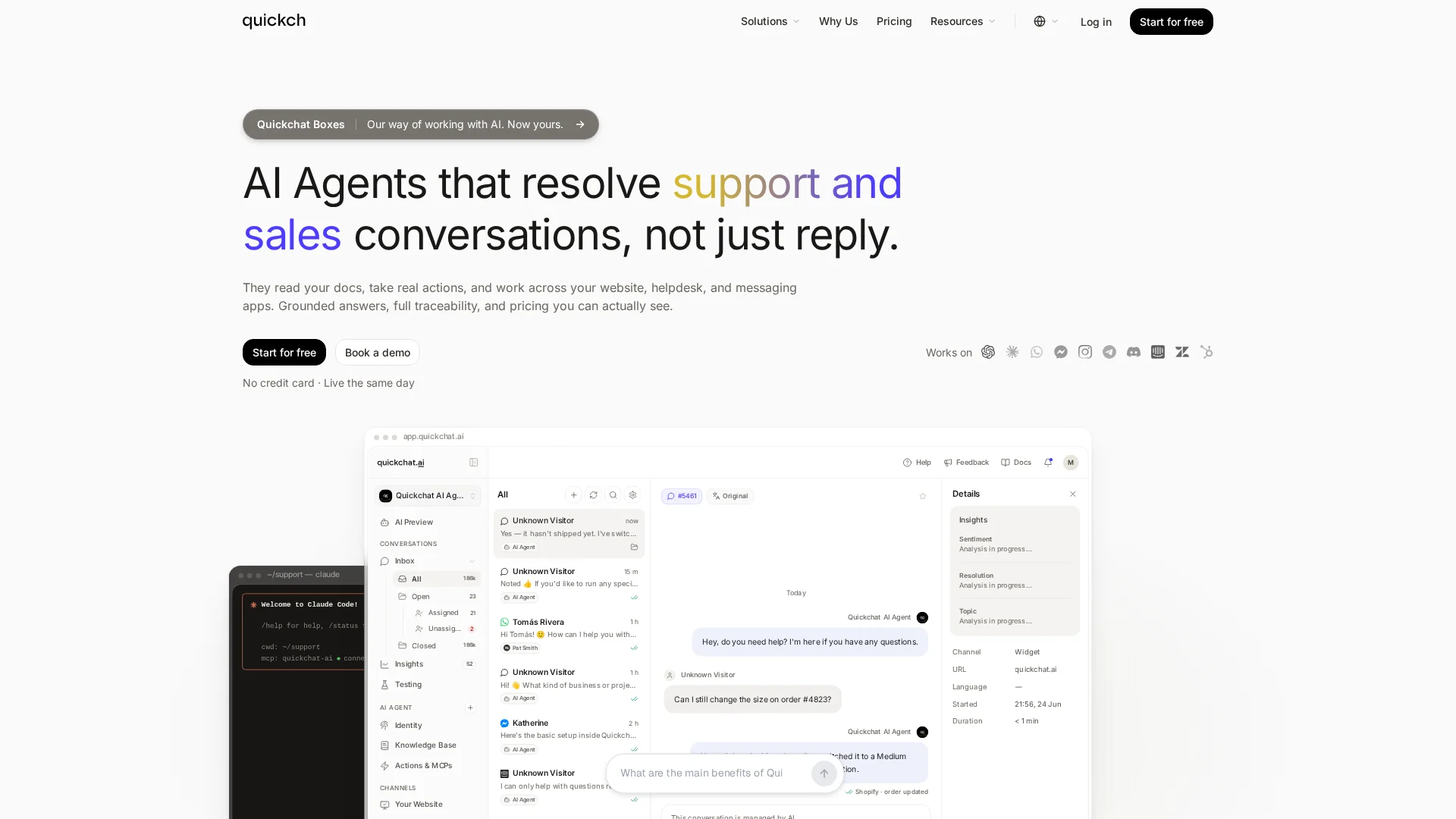
QuickChat AI is a no-code platform for building AI agents across websites and support channels, with a Shopify shopping agent as one of many uses. It suits multi-channel teams and builders who need one agent trained on many knowledge sources, billed through monthly AI credits.
Key strengths
- Shopify shopping agent that searches the live catalog and returns product cards
- AI Actions available on every tier, plus human handoff and team roles
- Free tier and a wide plan ladder, from $9 to $999 per month
Kandid
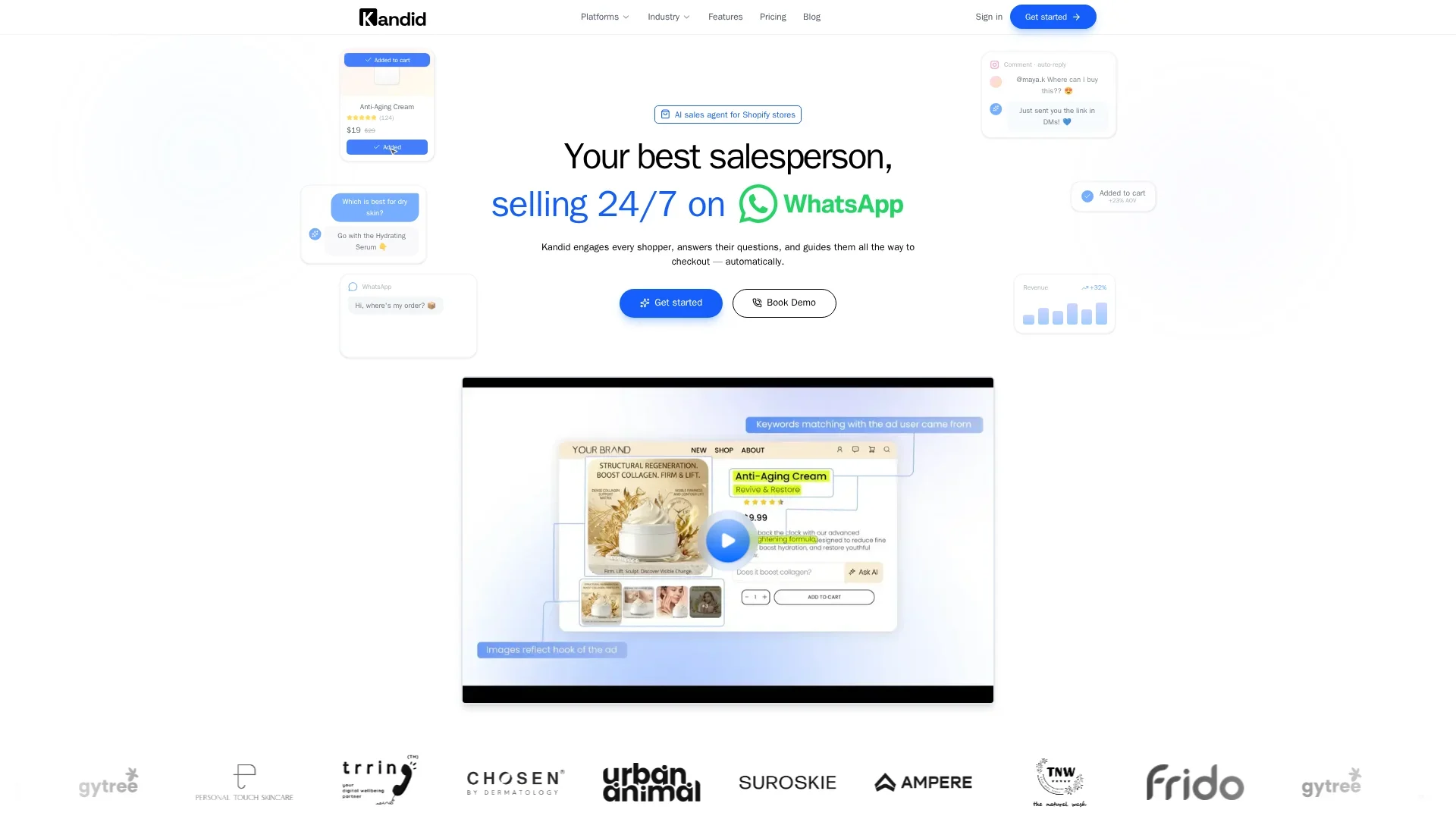
Kandid is a Shopify-focused AI sales assistant and live chat platform built around storefront selling tasks. It answers catalog and store-content questions, recommends products and handles cart actions, order lookup and human handoff in one assistant for Shopify and D2C stores.
Key strengths
- Free-to-install option with 1,000 visitors and up to 100 products; paid plans from $19 per month
- Product discovery and configurable cart actions built for the Shopify storefront
- Order lookup and conversation review before handoff to the merchant's team
Pricing Models and What Traffic Actually Costs
Credit-Based Metering Versus Visitor Allowances
QuickChat AI prices on a plan ladder of AI credits: a free tier with 50 credits per month, paid plans from $9 to $999 per month carrying 50 to 30,000 credits, and Enterprise from $0.50 per resolution. Your bill rises with conversation volume, not store traffic. Kandid meters by visitors instead: free to install with a 1,000-visitor allowance and paid plans from $19 per month, so traffic is predictable while heavy chatters cost nothing extra. Estimate your monthly sessions, then pick the model matching your curve.
Shopify Product Discovery and Cart Actions
Product discovery is where a Shopify sales assistant earns its keep. QuickChat draws on uploaded knowledge sources, so recommendations depend on how much product detail you feed it. Kandid connects to the store catalog directly, reads product and collection data, and handles cart actions and order lookup inside the chat. For a Shopify product recommendation chatbot, that makes Kandid the stronger default; QuickChat fits better when you need one agent across web, help docs and other channels.

How Recommendations Depend on Product Data Quality
Either way, the quality of your product data sets the ceiling. Fix titles, options and descriptions before you evaluate any bot. A sparse catalog produces vague answers on both platforms, while rich, structured descriptions let the assistant match shoppers to the right variant.
Support Automation, Human Handoff and Team Controls

Order Questions Versus Proactive Order Updates
Both platforms answer "where is my order?" questions. QuickChat pulls from your connected knowledge sources, while Kandid's Shopify listing documents order lookup and human handoff inside one assistant, so a shopper's question moves to your team when the AI cannot resolve it.
| Capability | QuickChat AI | Kandid |
|---|---|---|
| Order status answers | Via connected sources | Order lookup in the Shopify assistant |
| Handoff to human agents | Configurable transfer | Handoff plus conversation review for the team |
| Team review tools | Conversation history | Conversation review and purchase attribution |
Note the limit: neither listing documents proactive shipping notifications by default. Answering an inbound question is not the same as pushing updates, so check current documentation if outbound alerts matter to you.
Which Should You Choose: QuickChat or Kandid?
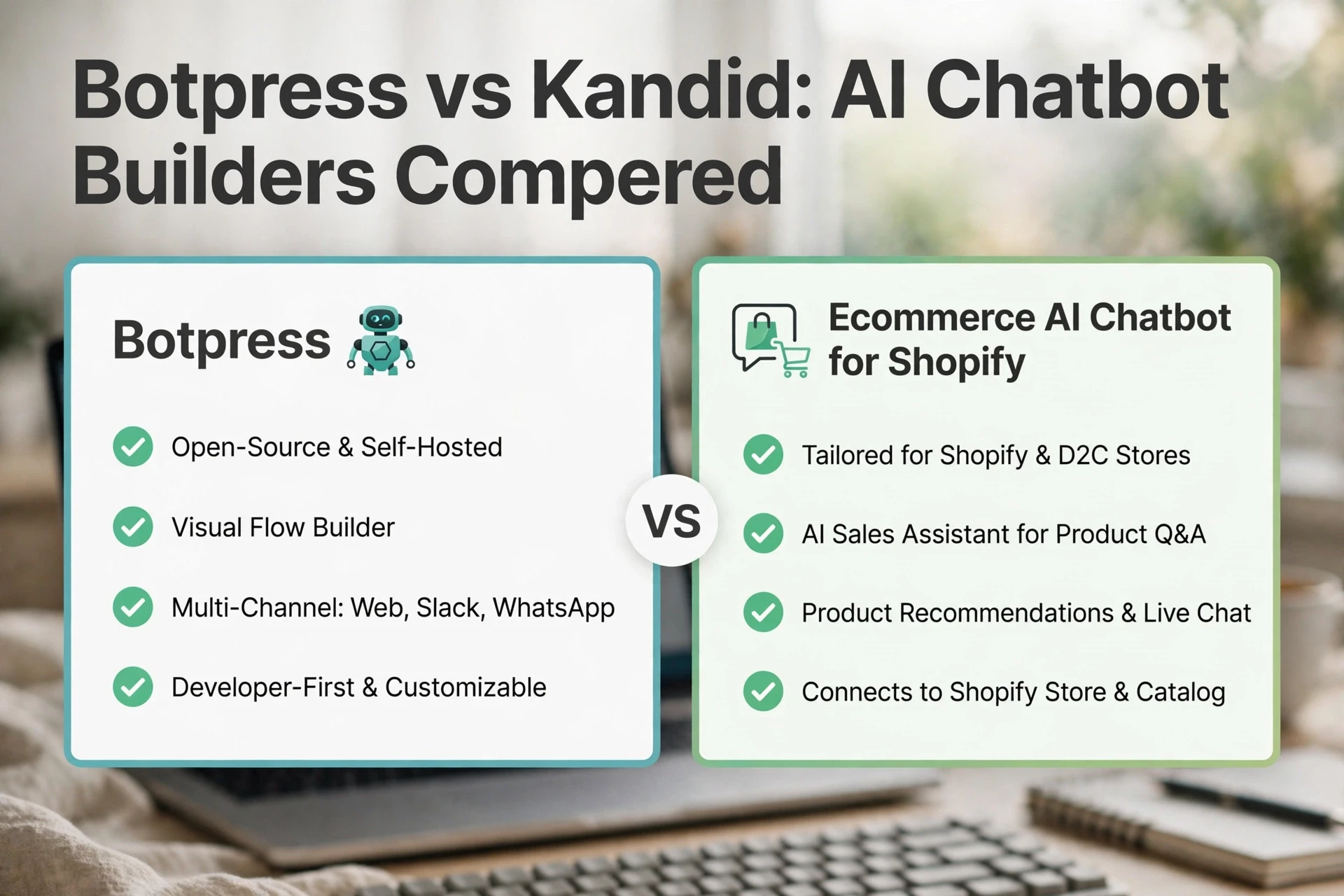
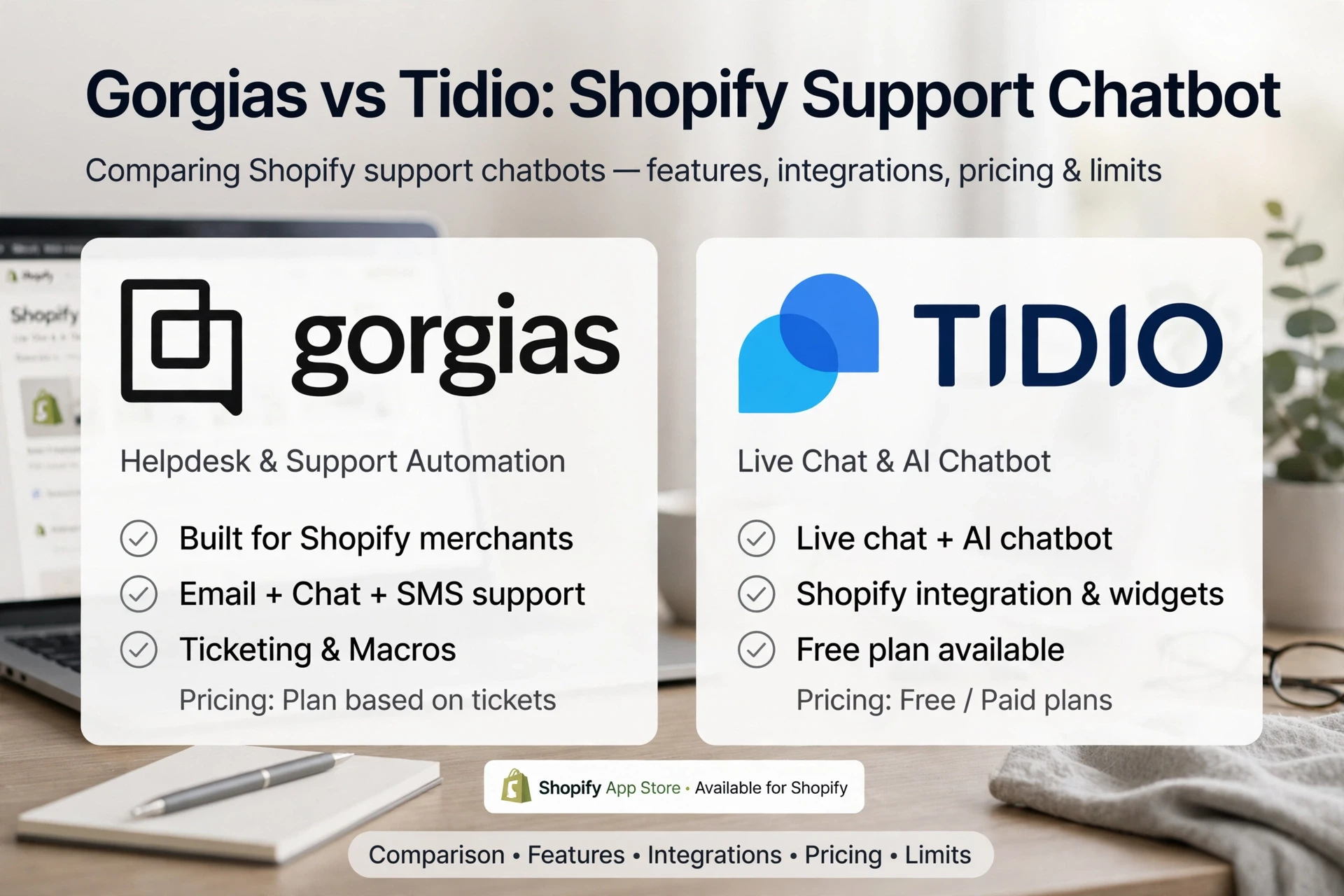
For a Shopify store, pick Kandid if you want storefront product discovery, cart actions and order lookup in one assistant with predictable per-visitor pricing. Pick QuickChat AI if you run support and sales across many channels and need a flexible AI agent on a wide plan ladder. If neither fits, options like Tidio or Gorgias cover helpdesk-first teams, and heavier builders may prefer Botpress.
When Another Route Fits Better
Kandid fits Shopify-first sellers; QuickChat AI fits multi-channel teams. But your case may sit outside both. If chat is mainly a support inbox with tickets and macros, a helpdesk tool like Gorgias handles that better. If you're building custom agents beyond ecommerce, Botpress wins. And if multilingual support is your priority, start with how to choose a bot for multilingual support.
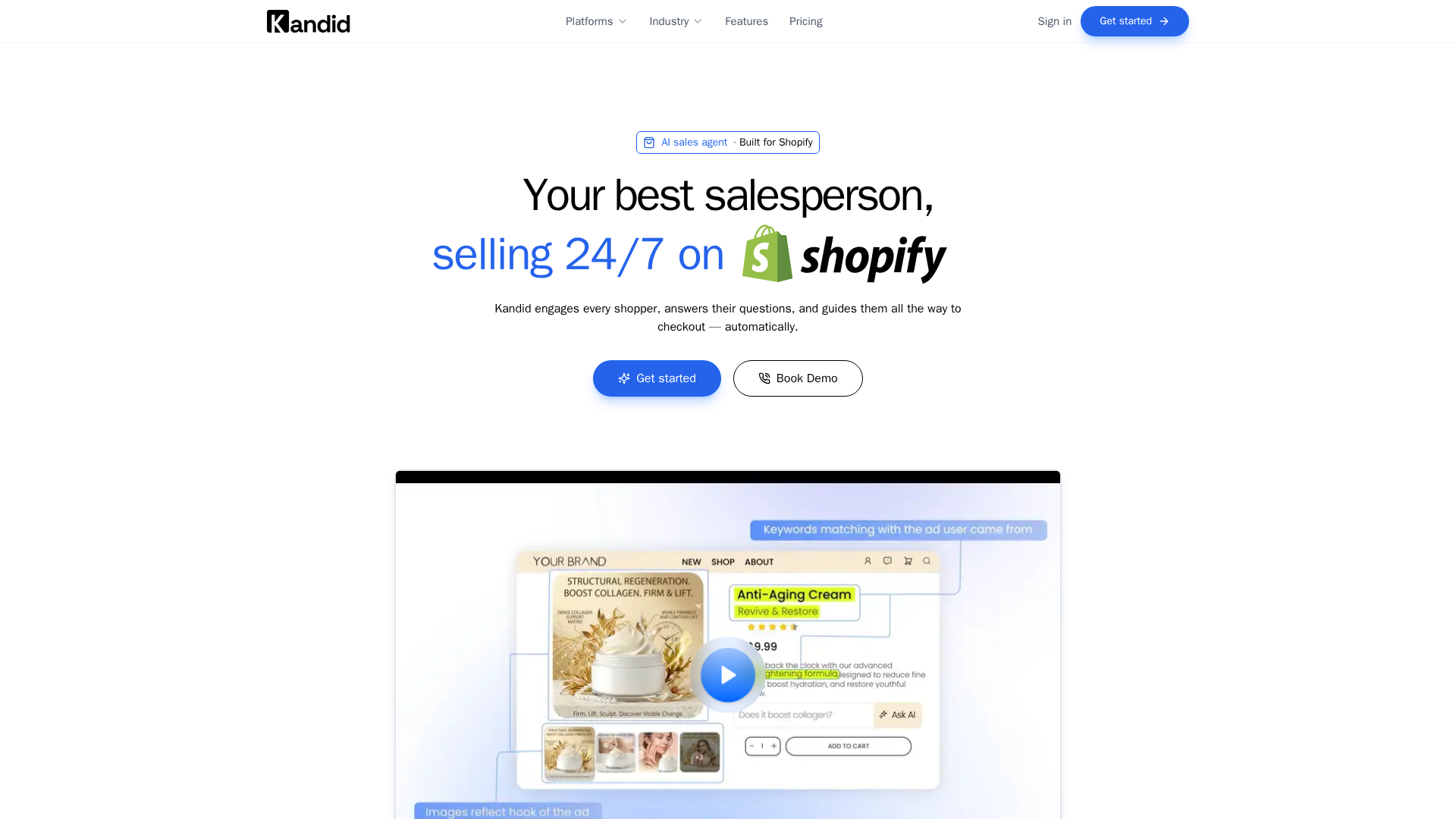
Still weighing chatbot platforms? See how Kandid handles product discovery and cart actions for your Shopify store, then try the free tier and compare real results.
Frequently Asked Questions
Q1: How does the QuickChat vs Kandid ecommerce chatbot comparison differ?
QuickChat AI bills AI credits and suits multi-channel teams. Kandid uses visitor-based pricing and focuses on Shopify product discovery and cart actions.
Q2: Which is cheaper for a low-traffic Shopify store?
Kandid is free to install with 1,000 visitors; QuickChat's free tier offers 50 credits monthly.
Q3: Do both support human handoff?
Yes. Both transfer chats to your team, though QuickChat's conversation export starts on the Business tier.
Conclusion
QuickChat AI fits multi-channel teams on a credit ladder; Kandid suits Shopify stores that want product discovery, cart actions and order lookup with visitor-based pricing. Match the pricing model to your traffic, fix product data first, and trial each on your own store.