Ecommerce Chatbots: Choose a Bot for Multilingual Support
Quick Summary: Quickchat AI is the clearest pick for broad advertised language coverage (100+ languages), while Chatifai works if its published list (English, German, Dutch, Spanish, French, Italian, Japanese, Korean) matches your customers. Kandid fits Shopify stores that want product discovery and order lookup grounded in store data, but its language coverage isn't verified, so confirm that first. The article's real point: a language count means little, so test order tracking, returns and human handoff in each target language before buying, and remember a multilingual bot does not translate your storefront.
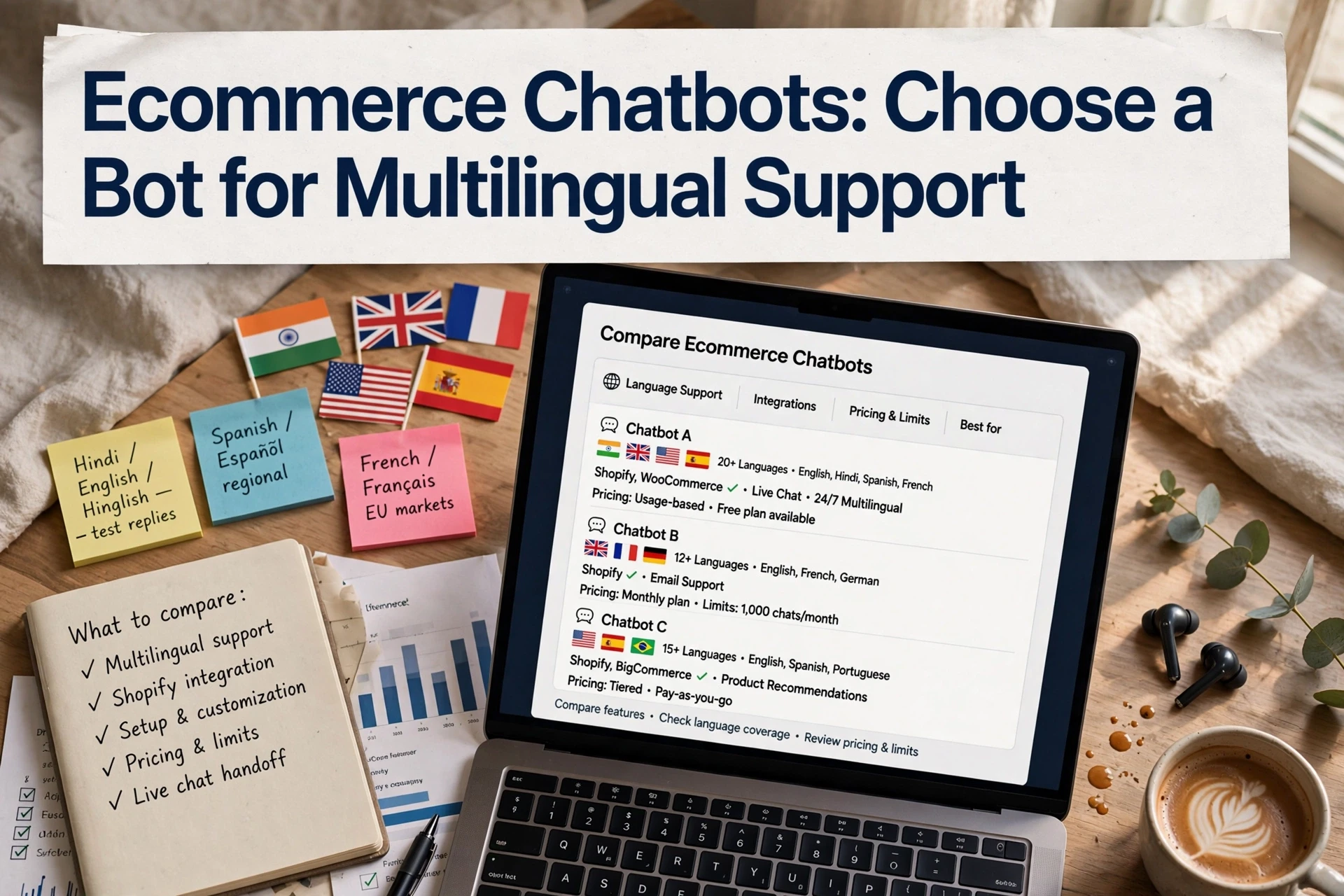
This ecommerce chatbot multilingual support comparison finds Quickchat AI the clearest fit for broad stated language coverage, with Chatifai a defined alternative if its listed languages match your customers. Kandid may suit Shopify teams wanting store-informed sales and support, but confirm its current language coverage first. A language count alone hides how well product discovery, order questions and handoffs actually work, so this ecommerce chatbot multilingual support comparison tests verifiable claims against real workflows and ends with a pre-rollout checklist. It is published by Kandid, and every ecommerce chatbot multilingual support claim should be checked against current vendor documentation and a store-specific demo.
Multilingual Ecommerce Chatbots: At a Glance
| Kandid | Quickchat AI | Chatifai | |
|---|---|---|---|
| Language evidence | Specific language coverage not verified; confirm before choosing. | Listing advertises 100+ languages; verify quality for target languages. | Listing names English, German, Dutch, Spanish, French, Italian, Japanese, and Korean. |
| Shopify commerce context | Verified capabilities include product answers, recommendations, and order lookup. | Listing describes product recommendations and order, shipping, and returns answers. | Listing describes product answers, recommendations, and order tracking. |
| Human handoff | Available, subject to configuration and channel. | Listing describes handoff to the support team. | Listing describes live-agent handoff. |
| Best for | Shopify merchants prioritizing store-informed product discovery and support workflows. | Merchants prioritizing broad advertised language coverage with Shopify sales and support workflows. | Stores whose target languages are among the languages explicitly listed. |
Meet the Contenders
This ecommerce chatbot multilingual support comparison looks at three tools built for Shopify stores. Each one handles shopper questions differently, so start by seeing where they stand.
Kandid
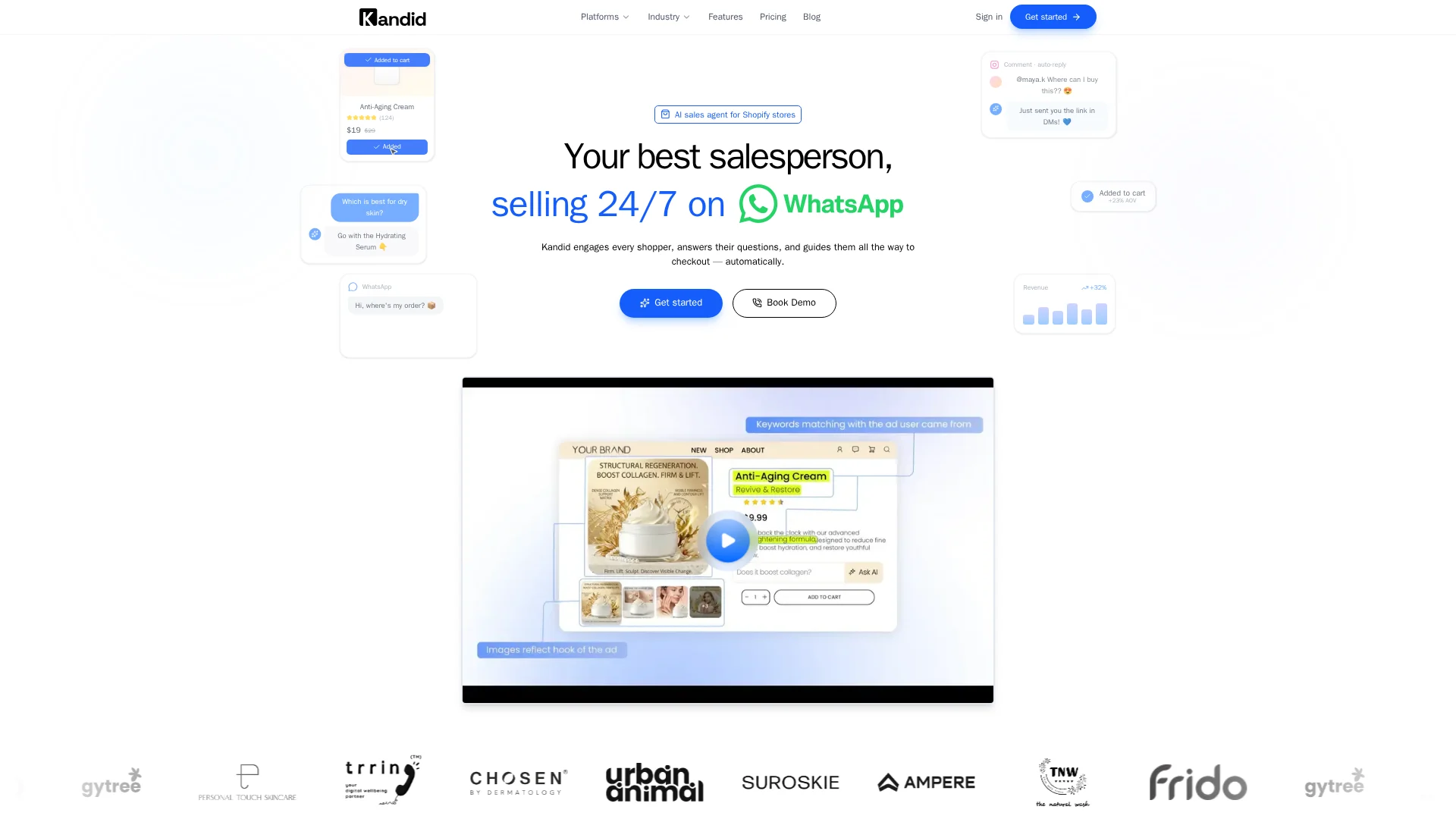
Kandid is a Shopify-focused AI chatbot and live chat platform. It uses your store and product information to answer questions, guide product discovery, and look up orders.
Key strengths
- Product answers, recommendations, and order lookup
- Human handoff available with setup
- Built for store-informed product discovery
Quickchat AI
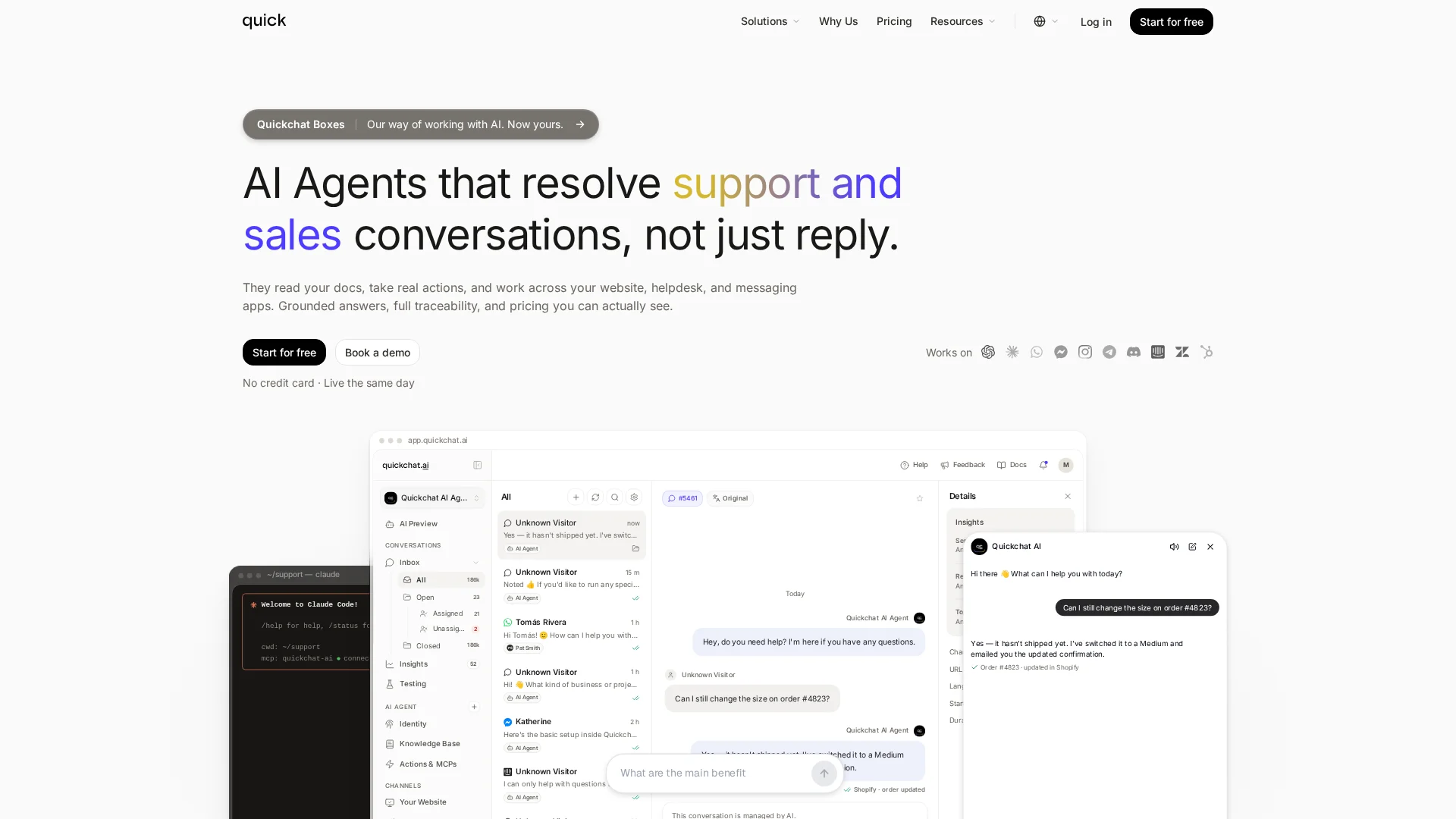
Quickchat AI is a Shopify agent whose app listing advertises support in 100+ languages. It covers product recommendations plus order, shipping, and returns answers.
Key strengths
- Advertised 100+ language coverage
- Sales and support workflows on Shopify
- Handoff to your support team
Chatifai
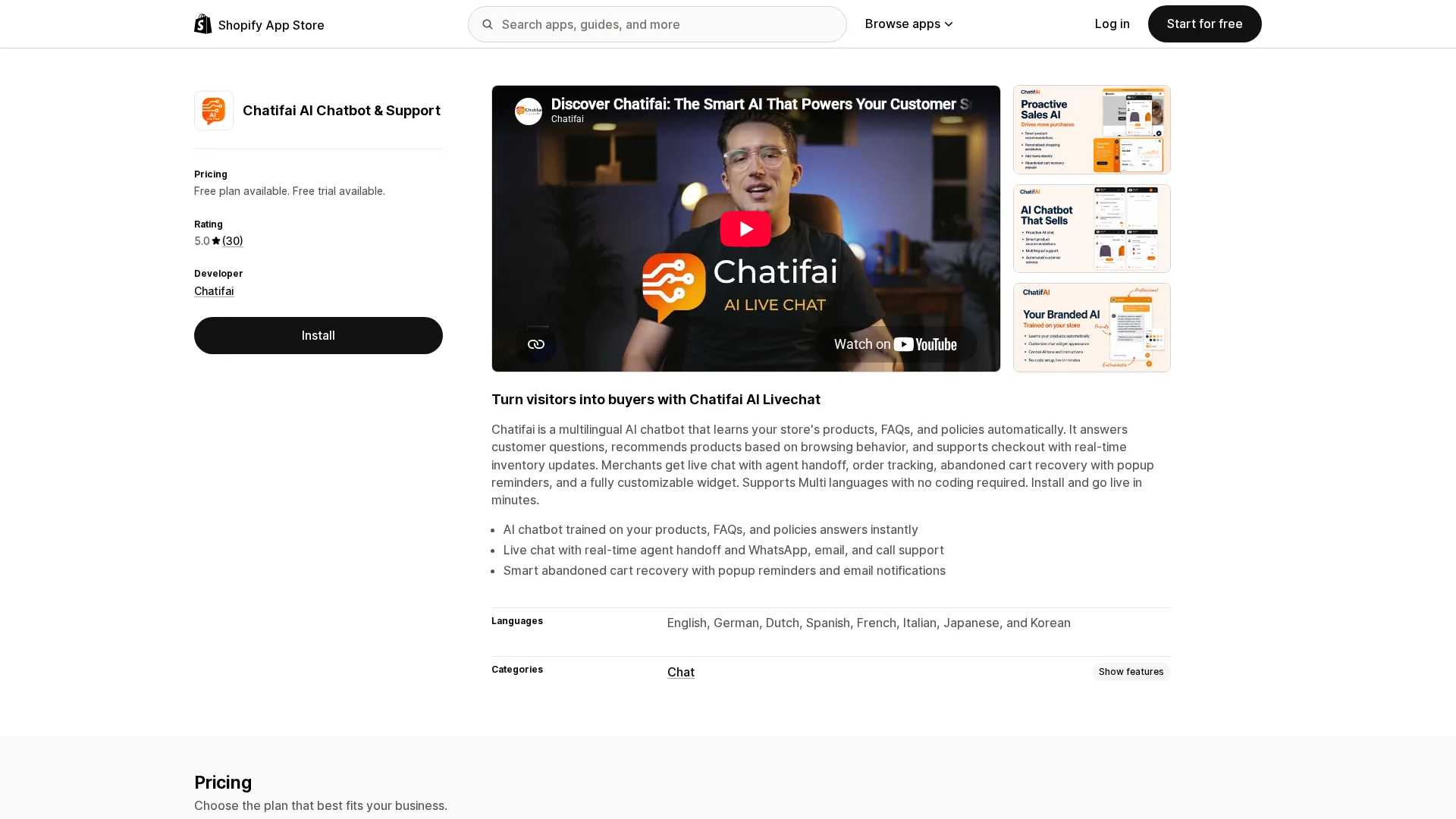
Chatifai is a Shopify chatbot with a published list of supported languages, including English, German, Dutch, Spanish, French, Italian, Japanese, and Korean. It suits stores whose target languages are named explicitly.
Key strengths
- Explicit, published language list
- Product answers, recommendations, and order tracking
- Live-agent handoff
How to Compare Multilingual Chatbots for Ecommerce
Judge chatbots on what they can actually do in each language, not on the number of languages they list. Two checks matter most.
Check Actual Language Workflows, Not Just Language Counts
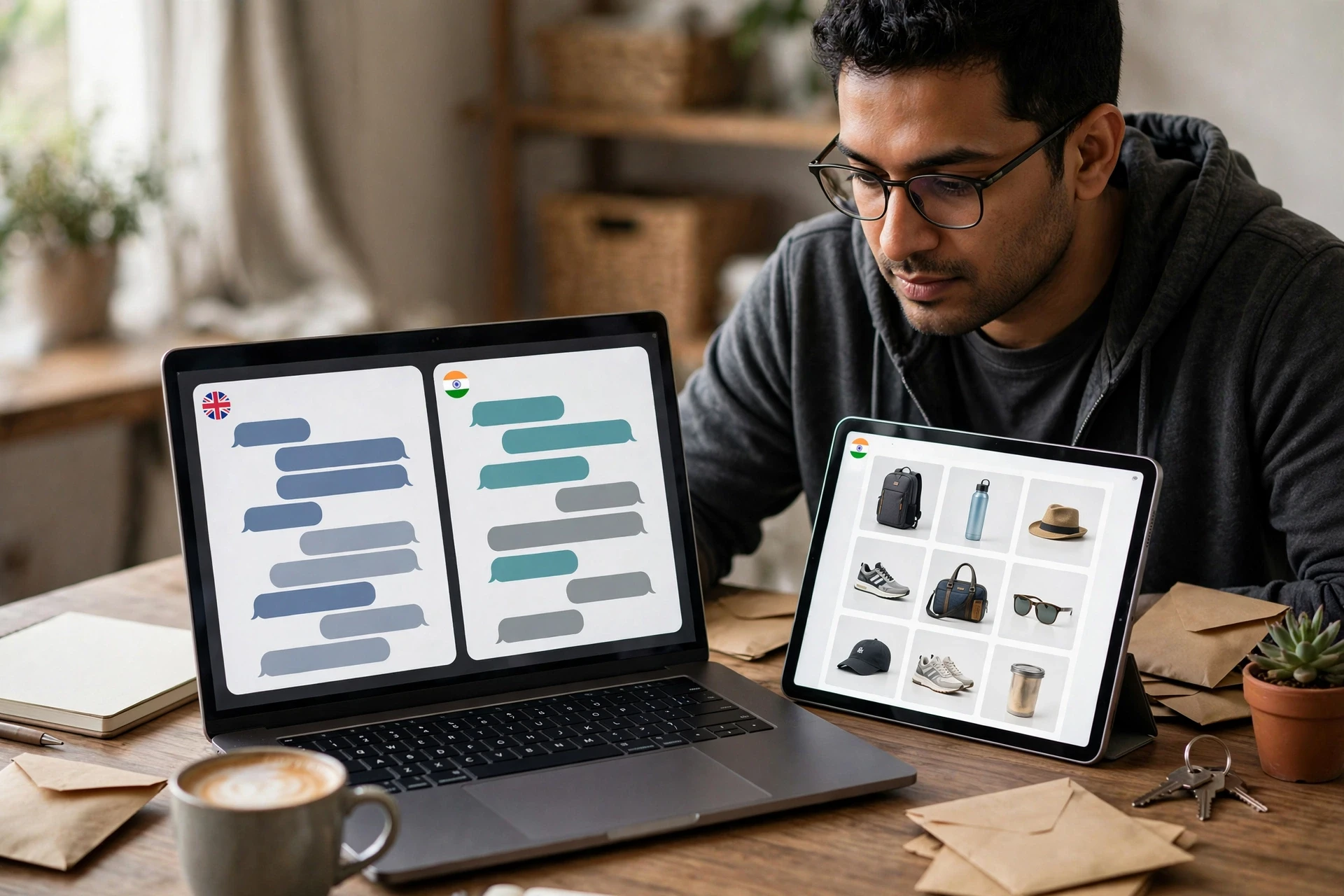
A vendor may claim 50 languages, but ask which tasks work in each one. Test the questions shoppers really ask: order tracking, returns, shipping, sizing. Some bots answer FAQs in Spanish yet force customers back to English for order status. Run your own test messages in each market language before you buy.
Separate Chat Support From Storefront Localization
A multilingual chatbot does not translate your store. Your product pages, checkout and emails need their own localization through apps or native Shopify themes. Confirm both pieces before launch. Many tools like Tidio handle chat only, so pair them with a translation app or check whether your AI sales assistant covers everything.
Language Coverage and Shopify Store Context
A vendor claiming "40 languages" tells you little. What matters is whether the bot answers shopper questions in each language using your actual product data. Marketing numbers rarely split which languages are fully supported versus partially handled.

Published claims usually measure the AI model, not your store. A bot may speak fluent Spanish yet fail on your shipping policy because that content is English-only. Chatbot language support is not the same as a translated storefront. If your product pages, FAQs and order pages stay in one language, the bot translates answers on the fly or reverts to English mid-chat.
Test with real questions before you trust any list. Ask about sizing, returns and delivery in your shoppers' languages, then judge whether the answers stay accurate. A platform such as Kandid's Shopify AI sales agent grounds replies in store data, so check each language against that data too.
Product Questions, Order Support, and Human Handoff
A chatbot that speaks a language must also handle real store tasks in it. Many bots answer "where is my order" in English but fumble the same question in Hindi or Spanish. Test each skill separately.
Test a Complete Shopper Journey in Each Priority Language
Run one shopper through the full path in every language you plan to support. Ask a product question, then an order-status question, then request a human agent. Check three things: the answer uses your product data, order details come through correctly, and the handoff passes the chat history to your team without forcing the shopper to repeat anything.
Tip: Some tools translate answers instead of thinking in the language, so sizing or stock answers can drift. Tools like Kandid and Gorgias handle order lookup through Shopify directly, which makes multilingual order support more reliable.
If a bot fails one step, that language needs more than a label fix. Multilingual chatbot language support covers the chat only, not your storefront, so verify each flow before launch.
For setup details, see our Shopify AI sales agent.
Which Multilingual Ecommerce Chatbot Should You Choose?
Pick the bot that proves its language support in writing and handles real Shopify tasks like order tracking and product questions. Test two or three shortlisted tools, including Kandid's Shopify AI sales agent, in your top shopper languages before you commit.
Need a bot that answers shoppers in more than one language? See how Kandid handles multilingual support on Shopify.
Frequently Asked Questions
Q1: Which ecommerce chatbot is best for multilingual customer support?
It depends on your markets and tasks. Verify claimed language counts and test real order-tracking and product questions in each language before buying.
Q2: Does a multilingual chatbot translate my storefront?
No. Chatbot language support handles conversations only; translated product pages still need a translation app.
Q3: How many languages do ecommerce chatbots support?
Most major tools cover 20-100+ languages. Always confirm your specific languages in current vendor documentation, since claims vary widely.
Choosing a Multilingual Chatbot With Confidence
Verify each tool's actual language claims, test it on real Shopify support tasks, and remember that a multilingual chatbot is not the same as a translated storefront. Pick the bot that fits your shoppers, then see how an AI sales agent handles both.