9 Ecommerce Chatbots With Shopify Cart Recovery Features
Quick Summary: Kandid stands out for Shopify brands because it resolves product doubts while shoppers are still on-site, not after they abandon. It syncs live catalog data, lets users add items directly from chat, and triggers during browsing or cart hesitation-unlike tools that only recover lost carts later via email or SMS. The article highlights its edge in preventing drop-offs by answering fit, spec, and comparison questions in real time, making it ideal for DTC brands with complex product lines. Timing matters most: on-site recovery converts faster than post-exit follow-ups.
A shopper may need one answer on shipping, fit, payment, or returns to buy. Shopify chatbot cart recovery acts before they leave. Emails arrive later, and many bots only answer FAQs. This list ranks nine Shopify chatbot cart recovery tools by timing, cart data, follow-up, and handoff controls. See our ecommerce chatbots guide for broader setup advice.
Shopify Cart Recovery Chatbot Comparison
| Chatbot | Best for | Recovery timing | Primary channel | Shopify context |
|---|---|---|---|---|
| Kandid | Shopify-first DTC brands with product-led buying questions | During product browsing, cart hesitation, and triggered on-site sessions | Shopify storefront chat and product pages | Catalog, variants, prices, cart, order status, and purchase attribution |
| Tidio | Small and midsize Shopify teams wanting visual automation | At add-to-cart, during cart abandonment, and after support questions | Storefront chat, live chat, email, Instagram, and WhatsApp | Cart, products, availability, coupons, orders, and shipping zones |
| Zipchat | Stores with meaningful traffic and identifiable hesitation signals | Before exit, during cart or checkout stalls, and after exit | Website chat, WhatsApp, Instagram, Messenger, and email | Live catalog, inventory, cart behavior, checkout signals, and order data |
| BiteSpeed | Brands with WhatsApp or omnichannel customer audiences | Primarily after abandonment, with campaign and journey triggers | WhatsApp, voice, email, SMS, Instagram, push, and website | Cart events, customer segments, product data, orders, and campaign audiences |
What Shopify cart recovery chatbots actually do
A Shopify chatbot cart recovery tool can act before checkout fails. It answers doubts, suggests a better fit, or offers a controlled incentive while the shopper is still on-site.
Some tools work after the shopper leaves. They send a checkout link through SMS, WhatsApp, email, or a campaign flow.
The key difference is timing: preventing abandonment on-site is not the same as recovering a lost cart later.
1. Kandid
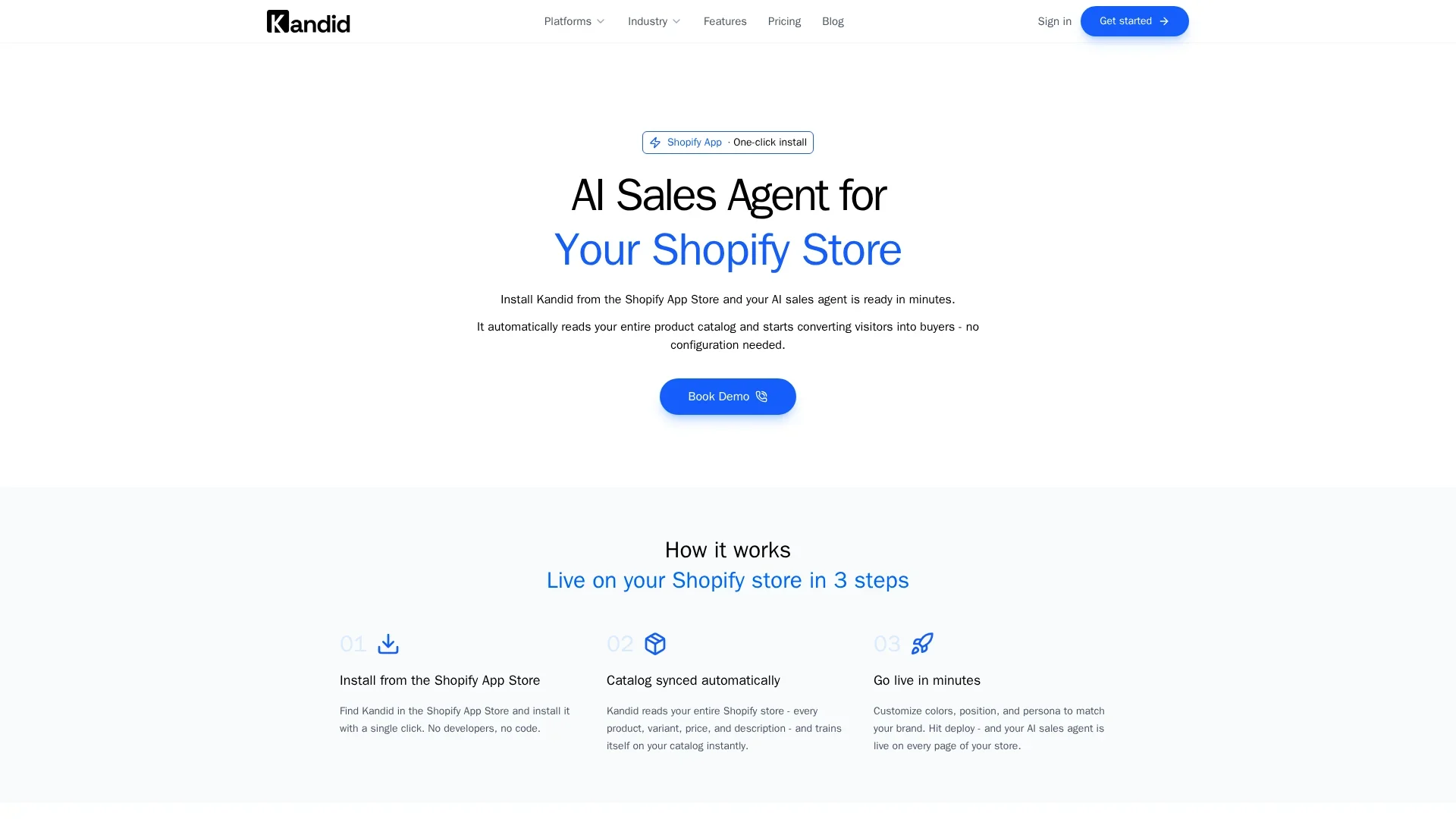
Kandid suits Shopify brands that prevent cart abandonment through better buying guidance. It syncs catalog data and lets shoppers add products to cart from chat.
Highlights
- Catalog sync, Ask AI prompts, cart actions, and pop-up triggers.
- Human handoff and purchase attribution.
Specs
- Best for: Product-led DTC questions
- Recovery timing: Browsing and cart hesitation
- Channel: Storefront chat and product pages
Pros
- Connects answers to cart action.
Cons
- Needs accurate product data.
It ranks first because it resolves product doubt before shoppers exit.
Last updated: August 24, 2026
Also Read: Ultimate Guide to Live Chat & AI Chatbot Integration Strategies
2. Tidio
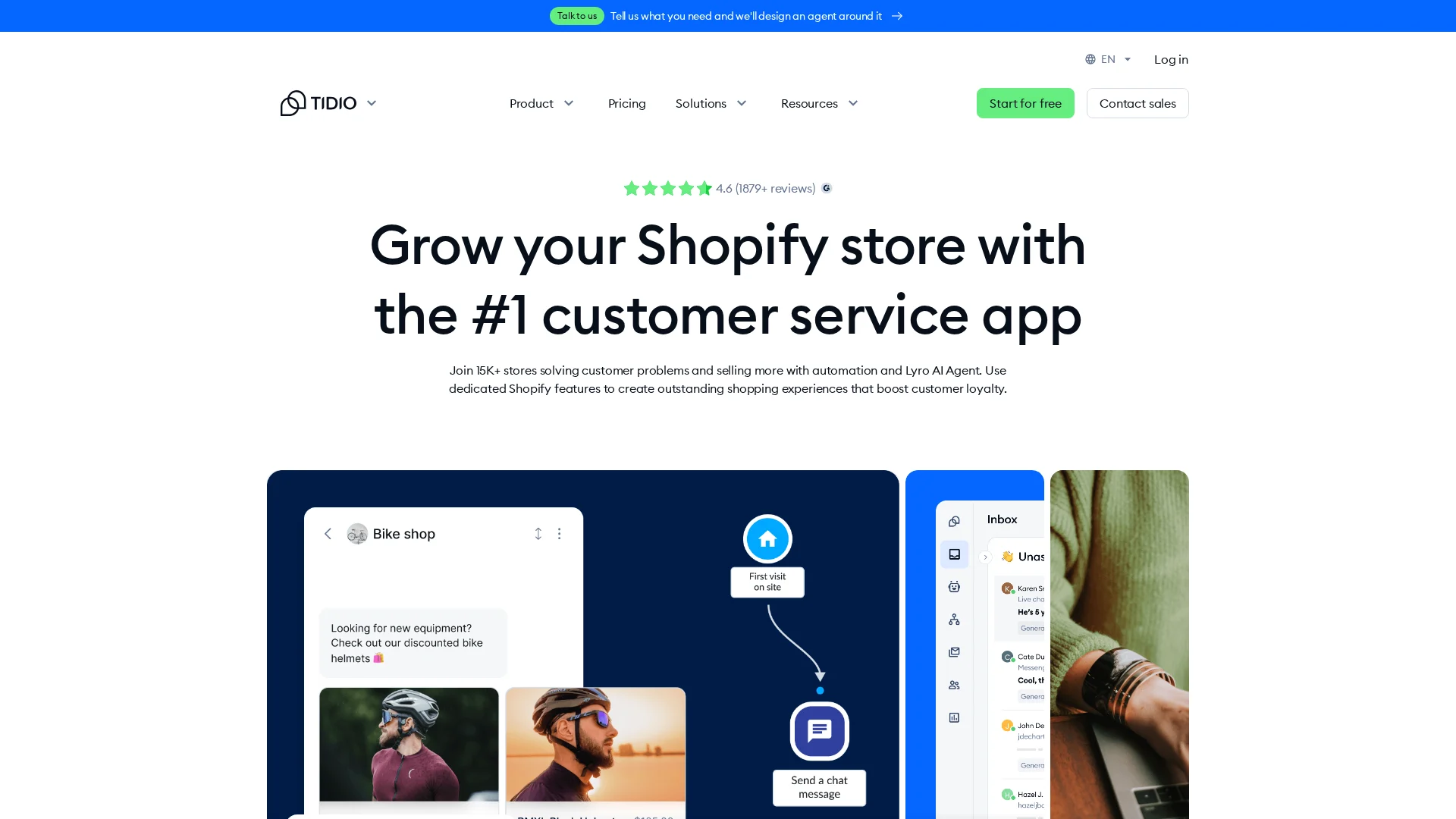
Tidio suits lean Shopify teams that need visual cart flows plus AI and live support. Its Shopify tracking supports add-to-cart and abandoned-cart triggers without code.
Highlights
- Shopify-specific flows cover cart abandonment, coupons, availability, shipping, and product suggestions.
- Cart tracking starts from add-to-cart through abandonment.
Pros
- Clear visual templates and AI-human inbox.
Cons
- Set discount rules to protect margin.
It ranks here for simple, configurable Tidio Shopify cart recovery.
Last updated: August 24, 2026
Also Read: How Kandid Enhances Customer Support with Live Chat & AI Chatbots
3. Zipchat
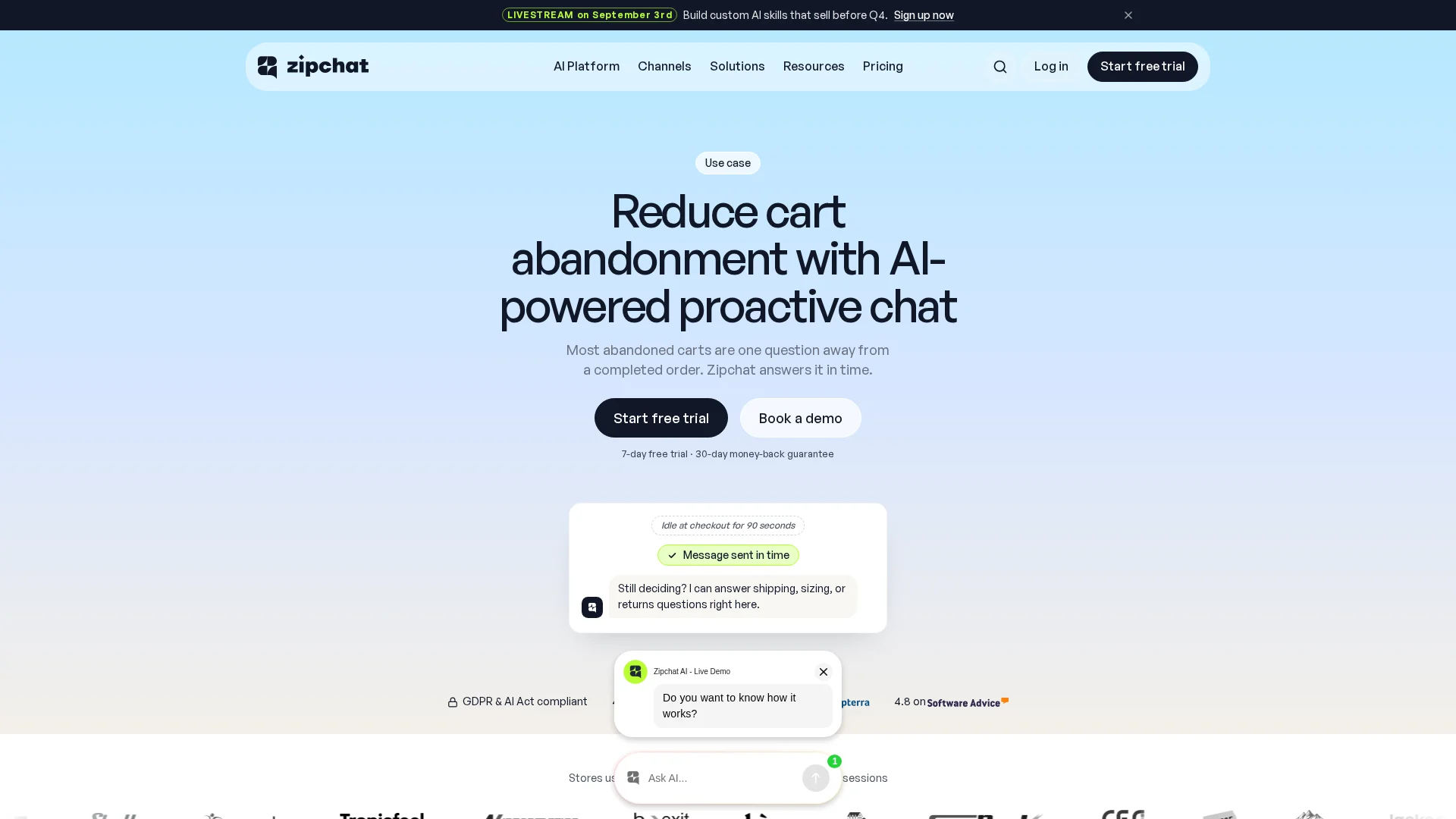
Zipchat is best for stopping abandonment while shopper intent is still active. Its proactive chat triggers respond to cart stalls, repeat views, and checkout idling before shoppers leave.
Highlights
- Behavior-based chat, product upsells, and human handoff
- WhatsApp recovery after exit Specs
- Best for: Stores with clear hesitation signals
- Channels: Website, WhatsApp, Instagram, Messenger, email Pros
- Prevents exits and follows up later Cons
- Trigger timing needs testing It ranks third for its clear prevention-first approach.
Last updated: August 24, 2026
Also Read: Live Chat vs AI Chatbot: Which One Actually Converts Better in 2026?
4. BiteSpeed
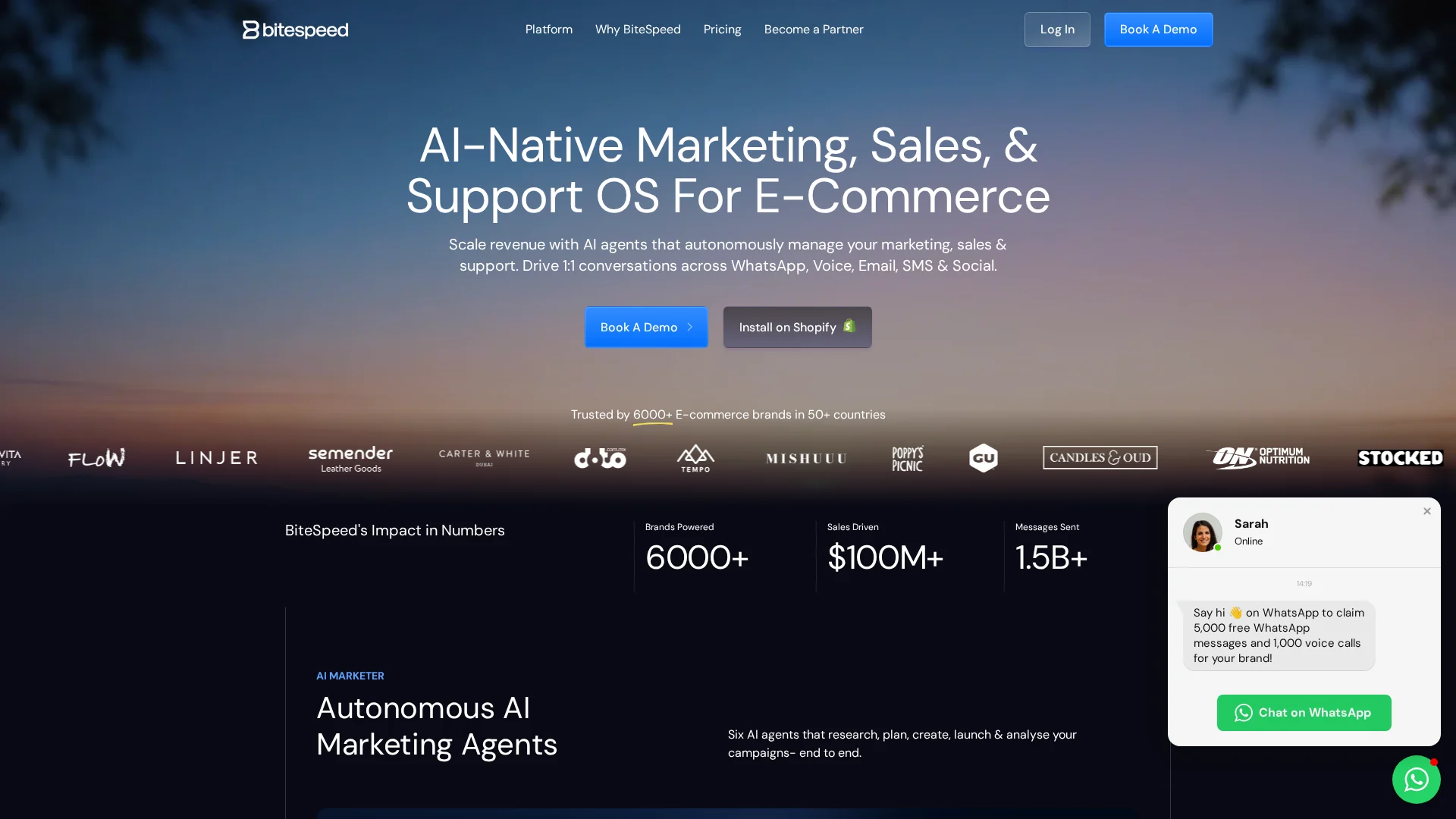
BiteSpeed is best for WhatsApp-led, omnichannel cart recovery after a shopper exits. Its Shopify app supports recovery, broadcasts, upsells, and support.
Highlights
- WhatsApp, voice, email, SMS, Instagram, and push journeys.
- AI segmentation and RFM tools support targeted follow-up.
Specs
- Best for: Brands with opted-in messaging audiences.
- Recovery timing: After abandonment through triggered campaigns.
Pros
- Broad post-exit reach.
Cons
- Consent, delivery, and campaign costs need care.
It ranks fourth for strong owned-channel recovery, not on-site chat.
Last updated: August 24, 2026
More Shopify Chatbots Worth Considering
These tools fit the brief but have narrower recovery flows or less public proof than the top four.
- Gorgias - Helpdesk with AI shopping help and handoff.
- Rep AI - Sales concierge for intent and abandonment.
- Chatty - Pro plan includes cart recovery.
- Chatifai - Recovery via popups and email.
- Ochatbot - Recovery, recommendations, carts, and analytics.
How to choose the right Shopify cart recovery chatbot
Pick based on where shoppers drop off:
- Before exit: Kandid is the standout for complex catalogs. It answers fit, spec, and comparison questions while intent is high.
- After exit: Choose email, SMS, or WhatsApp flows for follow-up.
- Shopify data: Confirm access to variants, stock, prices, cart items, and checkout status.
- Recovery action: Look for cart adds, checkout links, safe discounts, and human handoff.
- Measurement: Track recovered revenue, conversion lift, AOV, discount cost, and margin.
Test guardrails for refunds, payment questions, and wrong product answers before launch.
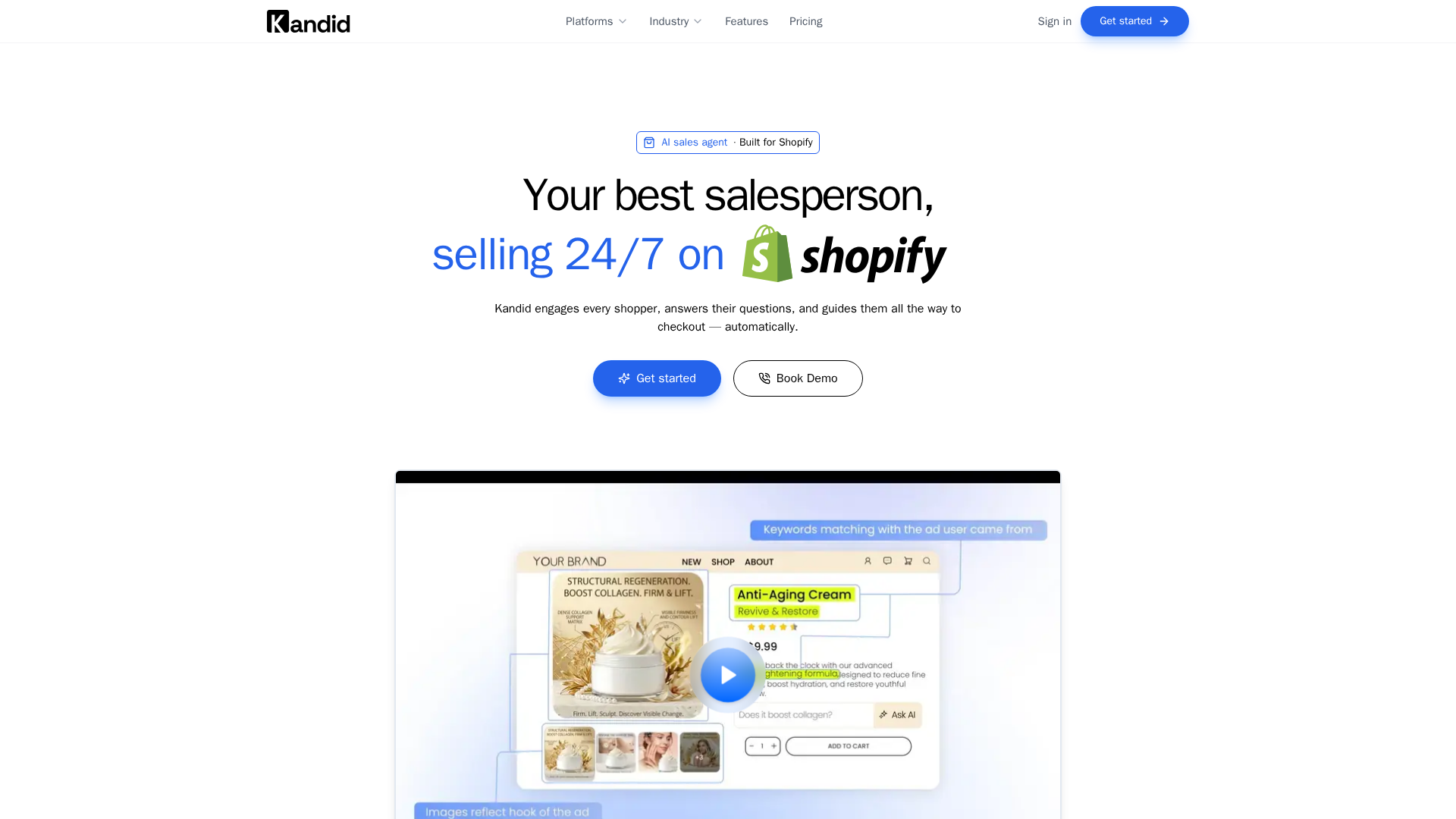
Stop losing high-intent shoppers to unanswered questions. Kandid guides buyers to the right product before they abandon cart.
Frequently Asked Questions
Q1: Which ecommerce chatbots recover abandoned Shopify carts?
Tools with true recovery trigger a message after a shopper leaves checkout. Others only prevent exits with live chat. Confirm Shopify event tracking, consent rules, timing controls, and follow-up channels before choosing.
Q2: Can a chatbot recover carts without email?
Yes. It can use SMS or WhatsApp when shoppers have opted in. On-site chat also saves carts by answering doubts before exit.
Q3: What should a cart recovery message include?
Use the product name, cart link, and one clear reason to return. Offer help first. Add a discount only if margin allows.