Ecommerce Product Recommendations: Suggest Alternatives When Items Sell Out

Quick Summary: Sold-out product pages don't have to be dead ends if you set up real substitutes instead of generic bestsellers. Tag each SKU with two to four hand-picked alternatives in a substitute_products metafield, stay within a 70-130% price band, and show one clear option on the PDP and cart drawer rather than a grid of guesses. Keep a fallback collection for items with no clean match, and use a chat assistant like Kandid to answer "is there something like this?" with live, in-stock picks. Track click-through and add-to-cart weekly so weak placement or price bands show up fast.A shopper finds your best-selling item, sees the sold-out label, and leaves in seconds. That loss is avoidable with ecommerce recommendations for sold-out products. This guide shows how to pick true substitutes, handle upsells, and use conversational AI to answer "is there something like this?" when static widgets fall short. It covers practical ecommerce recommendations for sold-out products your Shopify store can run today.
Step 1: Define What Counts as an Alternative for Your Store
Before you set up ecommerce recommendations for sold-out products, decide what "similar" actually means for each product page. If every widget just shows bestsellers, shoppers notice, and they stop trusting the suggestions.
Substitute, Accessory, or Bundle - Pick One per PDP
Three types of suggestions belong on a sold-out page, and they serve different shoppers:
- Substitute: a near-identical item, same category and purpose. Use this when the shopper came for that exact product.
- Accessory: something that pairs with it. Only makes sense if the shopper might still buy the original later.
- Bundle: the sold-out item plus complements, which works when stock returns soon.
Pick one role per product detail page (PDP). Mixing all three muddies the message.
Set a Price Band So "Similar" Does Not Mean "Cheaper or Pricier"

Price is the fastest filter a shopper applies. Set a band around the sold-out item's price, usually 70-130%, and only recommend inside it. A ₹2,000 kurta suggesting a ₹6,000 one feels like upselling, not helping. Keep the band tight for staples, wider for fashion where style matters more.
This is also where a conversational assistant like Kandid's AI sales agent helps, because it can respect the band while answering "is there something like this?" in plain language.
Step 2: Configure Your Store Data So Alternatives Fire Automatically
Tag or Metafield Every SKU With Its Substitute
Machine recommendations guess; a hand-picked substitute is certain. For each product, add a Shopify metafield like substitute_products listing two to four true alternatives: same category, size run, and price band (70-130% of the original). Staff pick these in ten minutes per product, and any tool that reads metafields, including an AI sales assistant, can serve them instantly. Tag dead SKUs too, so widgets skip them.
Keep a Curated Fallback Collection for Edge Cases
Some items sell out with no clean match: limited drops, seasonal colors, discontinued lines. Create a collection called "Similar to sold-out items" filled with flexible picks: gift cards, closest-category products, or bestsellers in the same price band. Configure your recommendation logic to fall back to this collection whenever the metafield is empty, so shoppers always see something useful instead of a dead end.
Step 3: Show the Alternative in the Right Places
PDP, Cart Drawer, and Chat - Three Surfaces, One Rule
Put the substitute where the shopper already is. On the product page, replace "Sold out" with a similar products block near the buy button. In the cart drawer, swap the dead line item with its alternative in one tap. The rule is the same everywhere: one clear substitute, shown immediately, never a grid of ten guesses. If you personalize by category, the cross-sell logic works the same way.

When a Chat Assistant Handles "Is There Something Similar?"
Static widgets fail when shoppers ask in their own words. A conversational assistant reads the question, checks live stock, and answers with one in-stock pick from your substitute metafields. Tools like Kandid use your store data to do this, and the reply can also confirm size availability before the shopper bounces. That beats a widget guessing at keywords.
Want the full picture on where these slots live? See our guide to chat surfaces and product discovery.
Step 4: Review What Happens After the Alternative is Shown
Track Click-Through, Add-to-Cart, and Influenced Orders
Recommendations only earn their place if shoppers act on them. Track three numbers weekly: how often people click the suggested item, how often that click becomes an add-to-cart, and orders that included the alternative after viewing a sold-out product. If clicks are high but carts stay low, your price band or fit is off. Low clicks usually mean weak placement. Chat tools that log these answers per conversation, such as Kandid, make the review faster, but any analytics setup with UTM tags on suggested products will show the same signal.
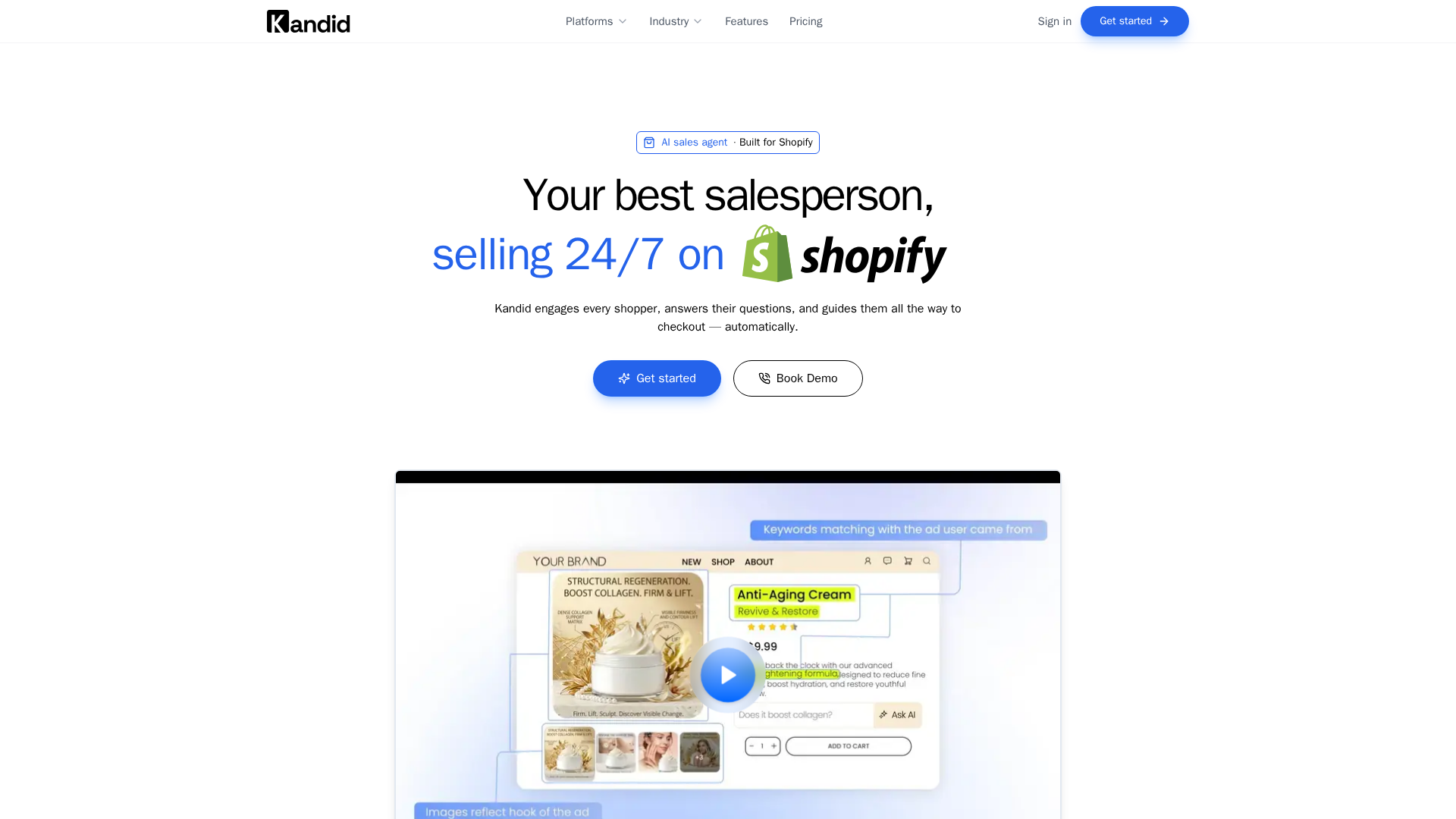
When a bestseller sells out, don't send shoppers to a dead end. See how Kandid answers "is there something similar?" with real alternatives, then explore Kandid for your store.
Frequently Asked Questions
Q1: How can ecommerce stores recommend useful alternatives when products are out of stock?
Add a substitute_products metafield to each SKU, set a 70-130% price band, show one substitute on the PDP and cart drawer, and let a chat assistant check live stock.
Q2: What price band should sold-out suggestions follow?
Most stores keep it at 70-130% of the original price. Tighten it for staples, widen it for fashion.
Q3: What if no similar product exists?
Fall back to a curated collection: gift cards, closest-category picks, or same-band bestsellers, so shoppers never hit a dead end.
Conclusion
Sold-out pages can still sell. Pick one suggestion type per product, tag true substitutes in metafields, keep a tight price band, show one alternative on the PDP and cart drawer, then track clicks and add-to-carts weekly. A chat assistant handles the rest, answering "is there something similar?" when widgets can't.