AI Sales Agent vs Rule-Based Bot: Which Drives Better Sales?
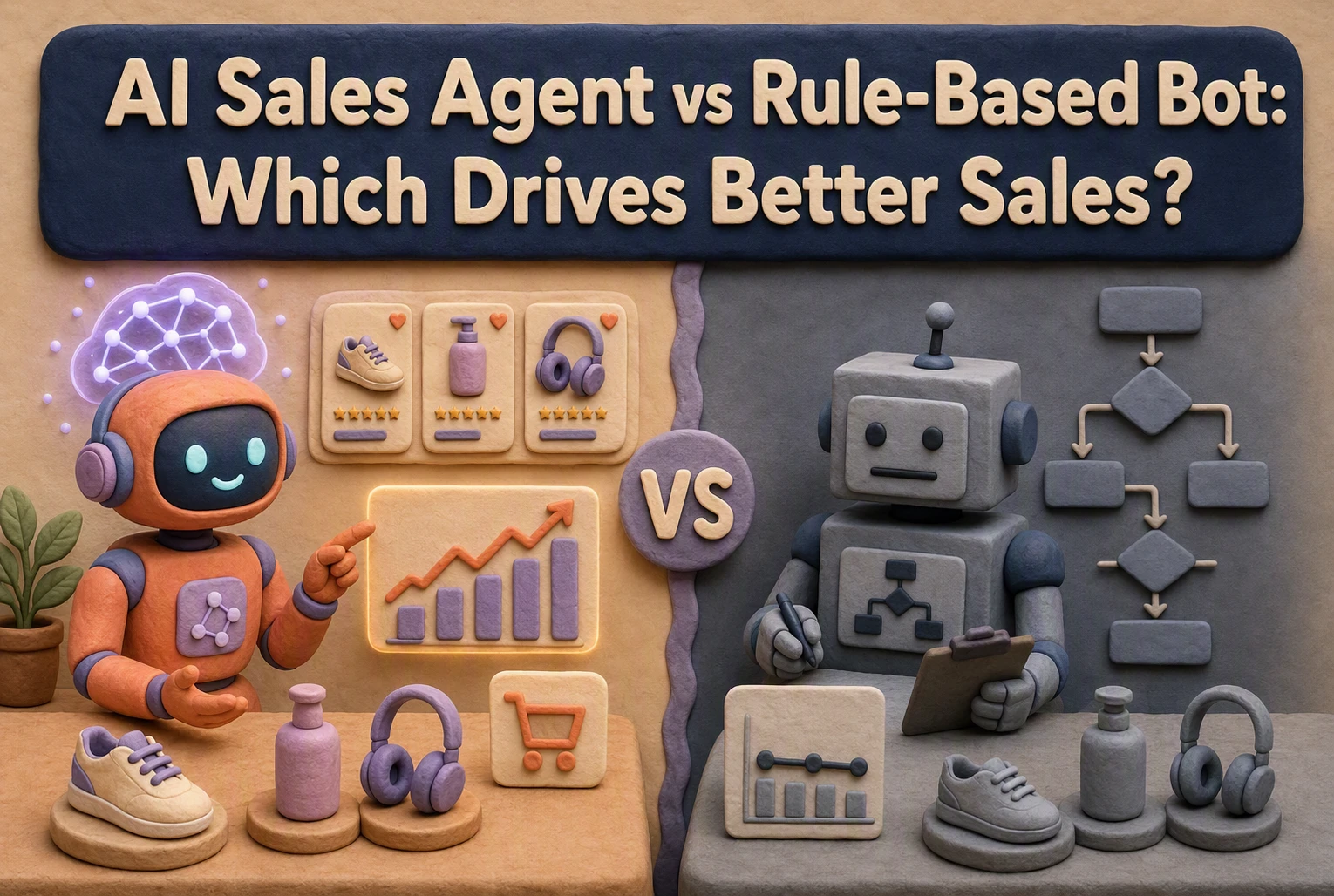
A shopper asks which bundle fits their needs. A scripted bot shows menus. An AI sales agent compares items and helps add one to cart. In the AI sales agent vs rule based bot debate, the right choice affects revenue and trust. This comparison tests intent, recommendations, actions, control, upkeep, and results for Shopify stores.
AI Sales Agent vs Rule-Based Bot: At a Glance
| AI sales agent | Rule-based sales bot | |
|---|---|---|
| Primary sales role | Consultative product guidance and conversion support | Structured qualification, FAQ delivery, and routing |
| Product questions | Handles natural-language, follow-up, comparison, and intent-based questions | Works best for anticipated questions with defined answers |
| Commerce actions | Can recommend products, add items to cart, and support order tracking | Depends on configured integrations and workflow triggers |
| Control and consistency | Requires knowledge grounding, instructions, testing, and escalation rules | High control over every response and path |
| Maintenance | Catalog and knowledge updates can reduce manual flow maintenance | Manual updates required as products, policies, and scenarios change |
| Best fit | Growing catalogs and shoppers who need buying guidance | Simple catalogs and narrow, repeatable customer journeys |
How AI sales agent and Rule-based sales bot Compare
AI sales agent
An AI sales agent uses store data to answer natural questions, compare products, and guide a shopper toward purchase. In the AI sales agent vs rule based bot choice, it fits growing catalogs where buyer needs vary.
Rule-based sales bot
A rule-based sales bot follows preset menus, triggers, and replies. For the AI sales agent vs rule based bot decision, it suits simple catalogs with repeat questions and tightly controlled paths.
Where AI Sales Agents Create More Selling Value
When Product Discovery Is the Bottleneck
AI sales agents earn their keep when shoppers ask nuanced questions: “Which size fits a narrow foot?” or “Will this cable work with my model?” They can compare live catalog details and narrow choices fast. Shopify notes that search users are 2 to 3 times more likely to convert.
Tip: Start with pages that get repeated product, fit, or compatibility questions.
From Answering Questions to Moving the Cart
A sales agent should do more than reply. It should recommend the right variant, suggest a useful add-on, and guide the shopper toward checkout. Kandid can turn product questions into guided choices instead of a dead-end help chat. Track assisted conversion, add-to-cart rate, and AOV against a control period.
Also Read: AI Sales Agents: 7 Metrics to Prove Revenue Impact
Where Rule-Based Bots Still Win
Best Uses for Deterministic Flows
Rule-based bots win when every shopper needs the same approved path:
- Order tracking
- Return eligibility
- Age gates
- Coupon rules
- Warranty registration
Each input triggers a known reply. NIST notes that rule systems can be tested against the combinations that drive a decision, making fixed flows easier to verify. NIST guidance

Use rules for policy enforcement, not open-ended product advice.
The Cost of Going Off Script
A rigid bot fails when shoppers ask mixed or vague questions.
| Shopper need | Rule-based result |
|---|---|
| Compare two products | Requires many branches |
| Check fit or compatibility | Misses context |
Each new SKU, exception, or phrasing adds upkeep. That cost grows fast.
Also Read: AI Sales Agents: The Complete Revenue Operations Guide for 2026
How to Choose for Your Shopify Store
Choose a Rule-Based Bot If
- Most chats cover returns, shipping, tracking, or one clear policy.
- You need fixed answers and strict control.
- Your catalog is small and shoppers rarely compare products.
Shopify’s instant answers use predefined replies, which suits repeat questions.

Tip: Review missed questions monthly. A rigid bot fails when shoppers phrase the same need differently.
Choose an AI Sales Agent If
- Buyers ask fit, size, compatibility, or product comparison questions.
- Your catalog has variants, bundles, or technical details.
- You want guided product picks and assisted-order reporting.
Shopify notes AI chat can clarify questions and use store data, while rule-based bots follow fixed paths. Read the comparison.
Also Read: AI Sales Agents vs Human-Only Support: Performance Reality
Which Should You Choose: An AI Sales Agent or Rule-Based Bot?
Choose a rule-based bot if most chats are simple: order status, returns, and a few fixed FAQs. It gives tight control but needs new rules as questions change.
Choose an AI sales agent if shoppers compare products, ask fit or compatibility questions, or need help picking variants. Shopify notes that AI agents can interpret intent and use live store data, unlike scripted bots. See Shopify's comparison
Start with clear product data and test answers before sending traffic to the agent.
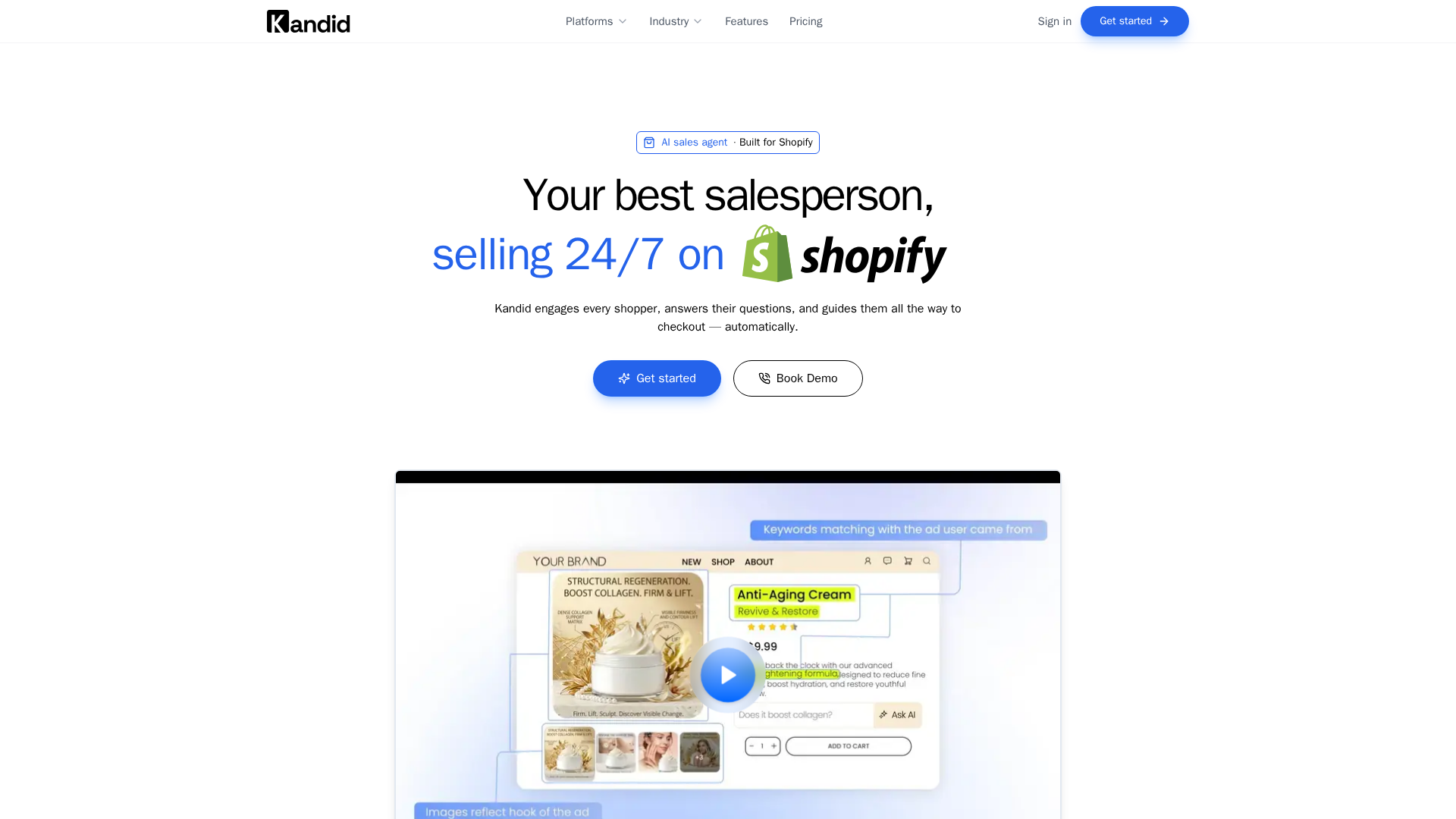
Turn product questions into guided sales conversations. See how Kandid helps Shopify shoppers compare, decide, and add the right item to cart.
Frequently Asked Questions
Q1: Should brands choose an AI sales agent or rule-based sales bot?
Choose AI for complex catalogs and varied questions. Choose rules for simple, fixed flows.
Q2: Can a rule-based bot increase sales?
Yes, for order tracking, FAQs, and basic offers. It struggles with product fit questions.
Q3: What should brands measure after launch?
Track conversion rate, add-to-cart rate, AOV, assisted revenue, and unanswered questions.
Conclusion
Choose rules for fixed, low-risk tasks. Choose an AI sales agent for guided product choices and cart help. Shopify reports AI-driven orders grew 15x in 2025, making measurement and guardrails essential.