D2C Product Recommendations Strategy for Higher Average Order Value
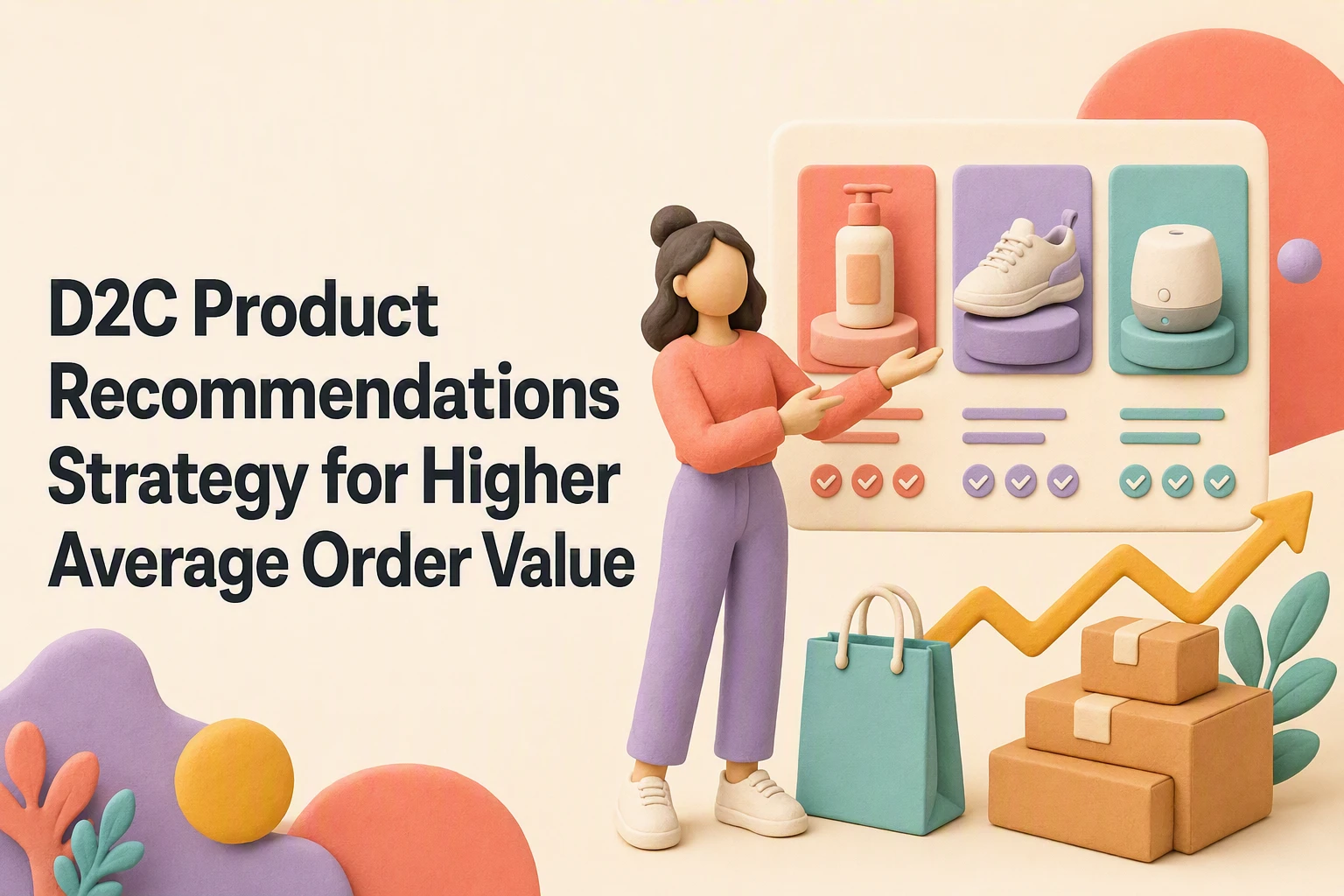
Quick Summary: Relevant product recommendations-like pairing a cleanser with a moisturizer-boost average order value when tied to actual shopper needs, not random bestsellers. The strategy hinges on matching recommendation types (complements, upgrades, bundles) to the buying stage, using clean first-party data (like past purchases or cart items), and placing suggestions on product pages and carts with strict guardrails (e.g., blocking out-of-stock items). Testing incremental revenue-not just clicks-and refining based on metrics like attach rate and returns ensures long-term success, as Baymard’s research confirms irrelevant cross-sells hurt conversions. A shopper adding cleanser may also need moisturizer. An EV owner buying a home charger may need a compatible cable or installation, not a random bestseller. That useful next step is the heart of a D2C product recommendations strategy.
Many brands show generic add-ons that miss shopper intent. This guide gives a practical D2C product recommendations strategy for choosing logic, placement, data, guardrails, and metrics that raise average order value.
1. Match Recommendation Types to the Buying Moment
Use Complements After Primary Intent Is Clear
Show complements only after shoppers choose a main item. A cleanser buyer may need a moisturizer, not another cleanser. Baymard research stresses that cart cross-sells must be relevant.
Tip: Use live questions, cart items, and compatibility rules to keep suggestions useful.
Use Upsells and Bundles to Increase Basket Value
Offer an upgrade when it solves the same need better, such as a larger size or full routine. Use bundles when products work together. Keep the choice simple:
- One clear upgrade
- One relevant bundle
- A plain value message
Also Read: D2C Product Recommendations: 15 Personalization Rules That Work
2. Build Recommendations from Useful Signals and Product Rules
Start with Catalog Quality and First-Party Signals
Clean catalog data makes recommendations useful. Keep titles, variants, ingredients, skin concerns, price, stock, and compatibility fields current. Then use first-party signals:
- Products viewed or added to cart
- Past purchases and replenishment timing
- Answers given in onsite chats
NIST warns that stale or poor-fit data can weaken AI results and trustworthiness. Its guidance supports regular data review.

Add Guardrails Before Automating
Set rules before any model suggests products. Block out-of-stock items, unsafe pairings, duplicate subscriptions, and low-margin bundles.
| Rule | Shopper benefit |
|---|---|
| Compatibility check | Avoids wrong product choices |
| Inventory filter | Prevents broken promises |
Review recommendation logs weekly. NIST recommends clear oversight roles for AI systems. See its human-AI guidance.
Also Read: D2C Product Recommendations Engine: Build Your First Model
3. Place Recommendations Where They Can Grow AOV
Prioritize Product Pages and Cart Surfaces
Show add-ons on product pages, then confirm them in the cart. Product-page suggestions should include both alternatives and complementary items, according to Baymard research.
- Pair a serum with its matching moisturizer.
- Offer a larger size or refill as an upgrade.
- Keep cart picks relevant to items already added.

Limit each slot to three strong choices. Too many options slow the purchase.
Extend the Strategy After Checkout
Use the thank-you page and order emails for products that fit the completed order. Keep the message helpful, not urgent.
- Recommend replenishment items.
- Suggest a routine step the shopper skipped.
- Offer a post-purchase add-on only when fulfillment allows it.
Baymard's cart research warns that irrelevant cross-sells distract shoppers, so exclude items they already bought.
Also Read: D2C Product Recommendations vs One-Size-Fits-All Bundles
4. Measure Incremental Value and Improve the System
Track the Metrics That Explain Revenue
Measure incremental revenue, not clicks alone. Compare visitors who saw recommendations with a similar holdout group. Track AOV, conversion rate, revenue per session, attach rate, margin, and returns.
| Metric | What it tells you |
|---|---|
| Revenue per session | Total commercial lift |
| Attach rate | Whether add-ons are relevant |
| Return rate | Whether recommendations fit shopper needs |
A higher AOV is not a win if discounts, returns, or lower conversion erase the gain.
Run Controlled Tests and Refresh the Logic
Test one change at a time: placement, product rules, message, or audience. Define the success threshold before launch and keep traffic splits stable. NIST guidance notes that sample size and confidence shape reliable test decisions.
- Keep a control group.
- Review results by intent and device.
- Remove weak pairings and refresh catalog inputs.
Use shopper questions, out-of-stock data, and returns to refine logic weekly.
Turn live shopper questions into smarter bundles and upgrades. See how Kandid raises AOV with real-time, brand-aware product guidance.
Frequently Asked Questions
Q1: Use recommendations to raise AOV in D2C stores.
Show add-ons that solve the next need, not random bestsellers. Match price, stock, and product fit. Test cart and product-page offers separately.
Q2: Which recommendation type should we test first?
Start with frequently bought-together items. It is easy to explain, low risk, and works well for bundles.
Q3: How do we prevent irrelevant recommendations?
Exclude out-of-stock items, duplicates, low-margin products, and incompatible variants. Use shopper behavior and product rules together.
Conclusion
Higher AOV comes from relevant offers, clear placement, sound data, and firm guardrails. Baymard’s research supports showing cross-sells that fit the cart, not generic extras. Track profit and shopper response, then refine.