Ecommerce Product Recommendations: Guide Buyers Through Size Selection
Quick Summary: Size questions drive cart drop-off and apparel returns, so ecommerce stores need fit guidance built into discovery rather than left for checkout. Best practice means showing size charts and fit notes on product pages, answering sizing in chat with an assistant like Kandid, and keeping the logic consistent across every touchpoint. Measure success over eight weeks using size-related return rate, chat volume, conversion on guided sessions and RPV on apparel pages, while flagging new products as provisional until return data confirms the fit.
Shoppers abandon carts when they cannot answer one question: which size fits me? Returns pile up, support tickets grow, and revenue quietly leaks away. Smart ecommerce recommendations for size selection fix this by asking fit questions, reading product details, and suggesting the right size before checkout. This guide walks through how to build that flow step by step, using tools like Kandid's AI sales agent, and it covers the edge cases most stores miss.
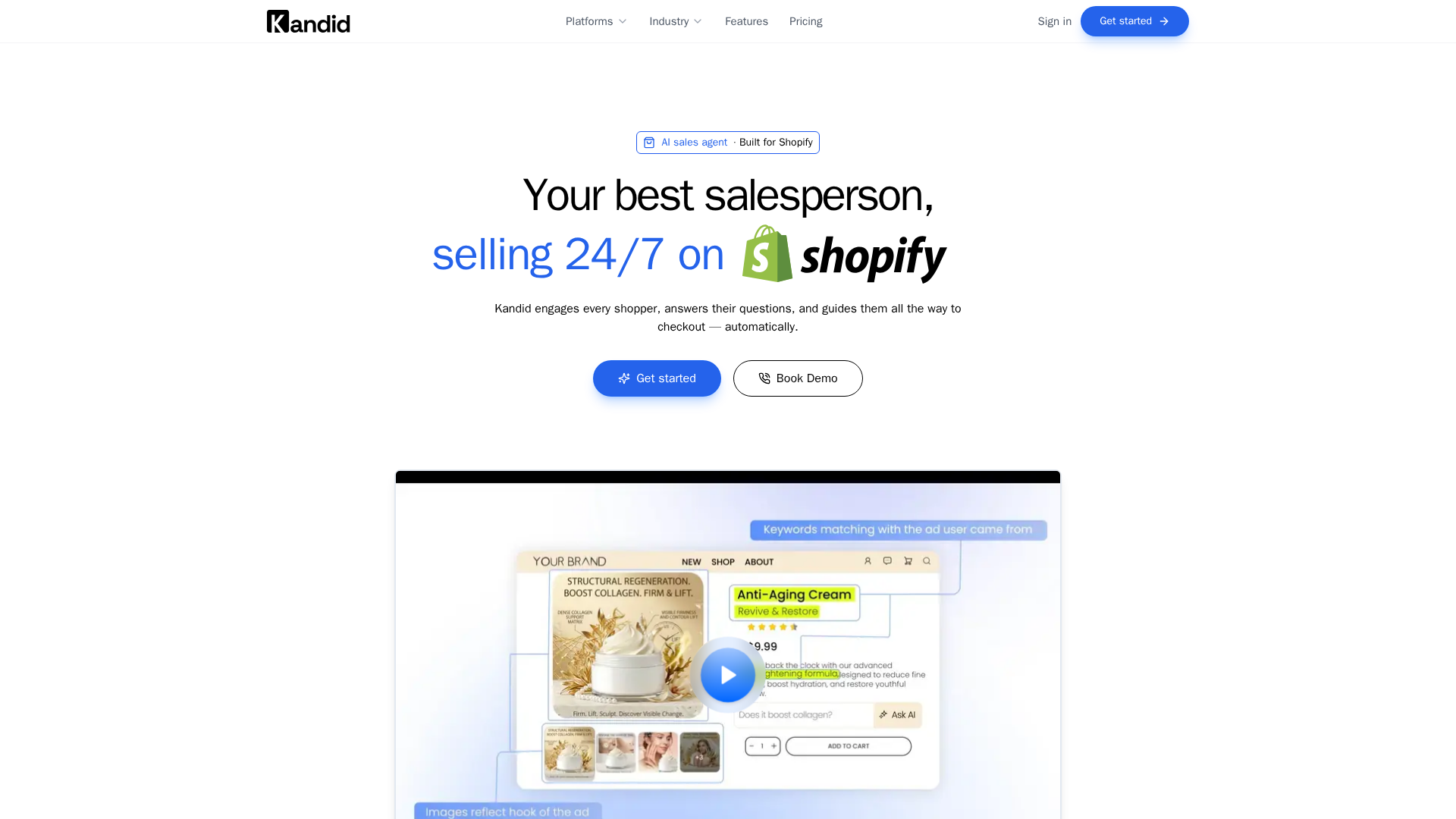
Size questions stall carts and drive returns, but ecommerce recommendations for size selection can answer them instantly. Kandid's AI sales assistant guides shoppers to the right fit before they hesitate. See how it works at Kandid.
Frequently Asked Questions
Q1: How can product recommendations help ecommerce shoppers choose the right size?
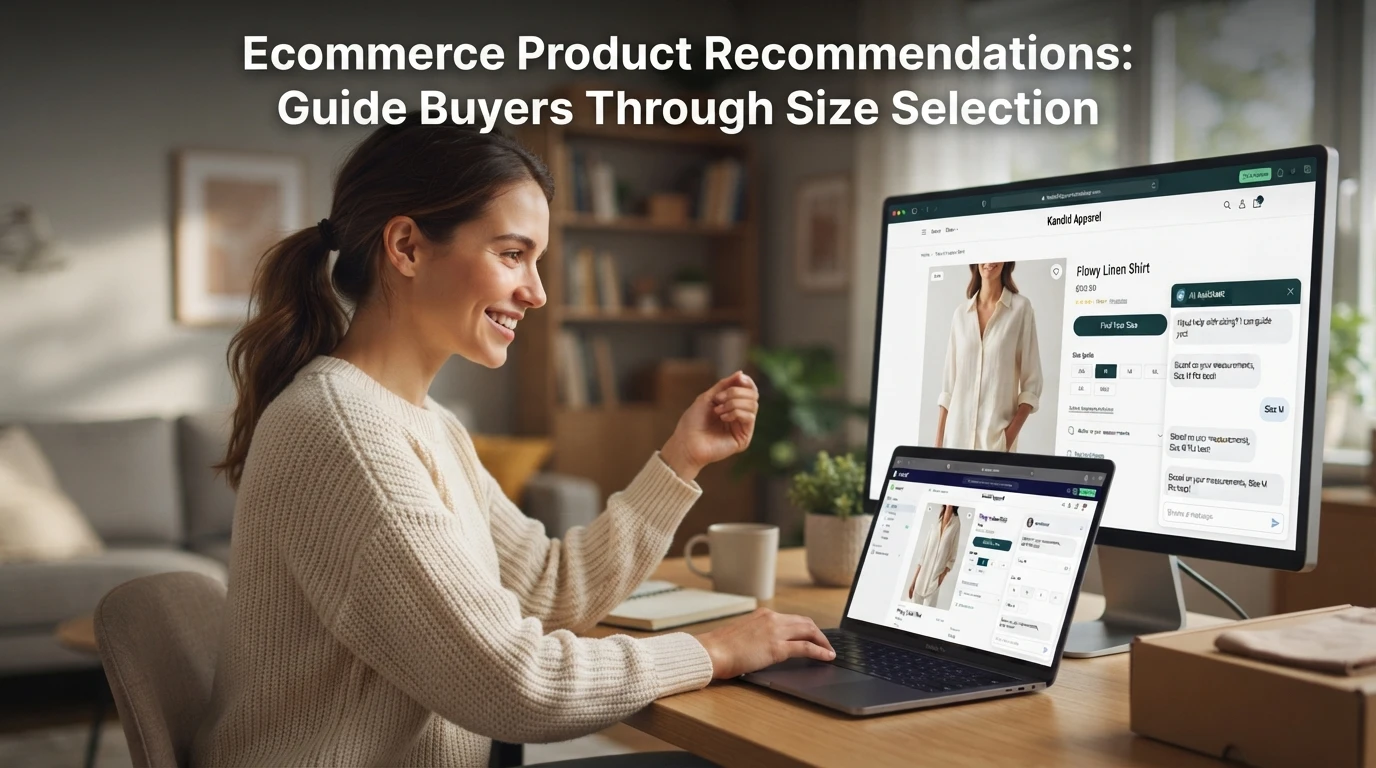
Size confusion causes most apparel returns, so good recommendations reduce it in two ways. First, an AI assistant can ask a shopper two or three questions, like usual fit, preferred style or measurements, then point to the size that matches your size chart. Second, product recommendations for size selection can surface fit notes beside each product: "runs small, size up" or "true to size." When shoppers see that guidance during discovery instead of at checkout, they commit to a size with more confidence and abandon fewer carts over sizing doubt.
Q2: Where should size guidance appear in my store?
Show it at three points. On the product page, put the size chart and fit notes close to the size selector so shoppers never have to scroll away. In chat, let your assistant answer "what size should I get?" instantly using your chart and past fit data. In recommendations, add a fit label to each suggested item. The key is consistency: the same fit logic everywhere. If your chatbot says one thing and your product page says another, shoppers lose trust and either size up blindly or leave.
Q3: What data do I need before automating size recommendations?
Start with three inputs. An accurate size chart for every product, including unit conversions for US, UK and Indian shoppers. Fit history, which you can build from returns data and reviews that mention sizing. And a short set of qualifying questions your assistant will ask, kept to two or three so shoppers answer them. If a product is new, mark its guidance as provisional and update it after the first return cycle. Never let a chatbot guess a size from data you have not verified.
Q4: How do I measure whether size-focused recommendations are working?
Track four numbers over a fixed period, such as eight weeks: size-related return rate, chat conversations about sizing, conversion rate on size-guided sessions and revenue per visitor on apparel pages. Compare against the period before you launched the guidance, and note anything else that changed, like a sale or new ad campaign, so you attribute results fairly. Small sample sizes lie, so look at trends rather than single-week spikes. Segment by product category too, because jeans and t-shirts behave very differently.
Q5: Should I use a dedicated size quiz or an AI chat assistant?
A size quiz works well for simple, one-product decisions, but it adds a step shoppers must complete before buying. A chat assistant answers sizing inside the flow of shopping, handles follow-up questions like "will this shrink?" and can combine sizing with product discovery. Many stores use both: a quiz link on complex categories like bras or shoes, and an assistant for everything else. Tools like Kandid fit the assistant role on Shopify, pulling product data so sizing answers match what shoppers actually see in your catalog.
Conclusion
Size questions kill sales when shoppers guess. Strong ecommerce recommendations for size selection use fit data, past orders and shopper questions to suggest the right option at the right moment. Set clear fit rules, answer sizing doubts in chat, and offer smart swaps when an item runs small or large. For a deeper look at category-level tactics, see our guide to personalizing cross-sells by category.