How to Build AI Sales Agent Guardrails for D2C Commerce
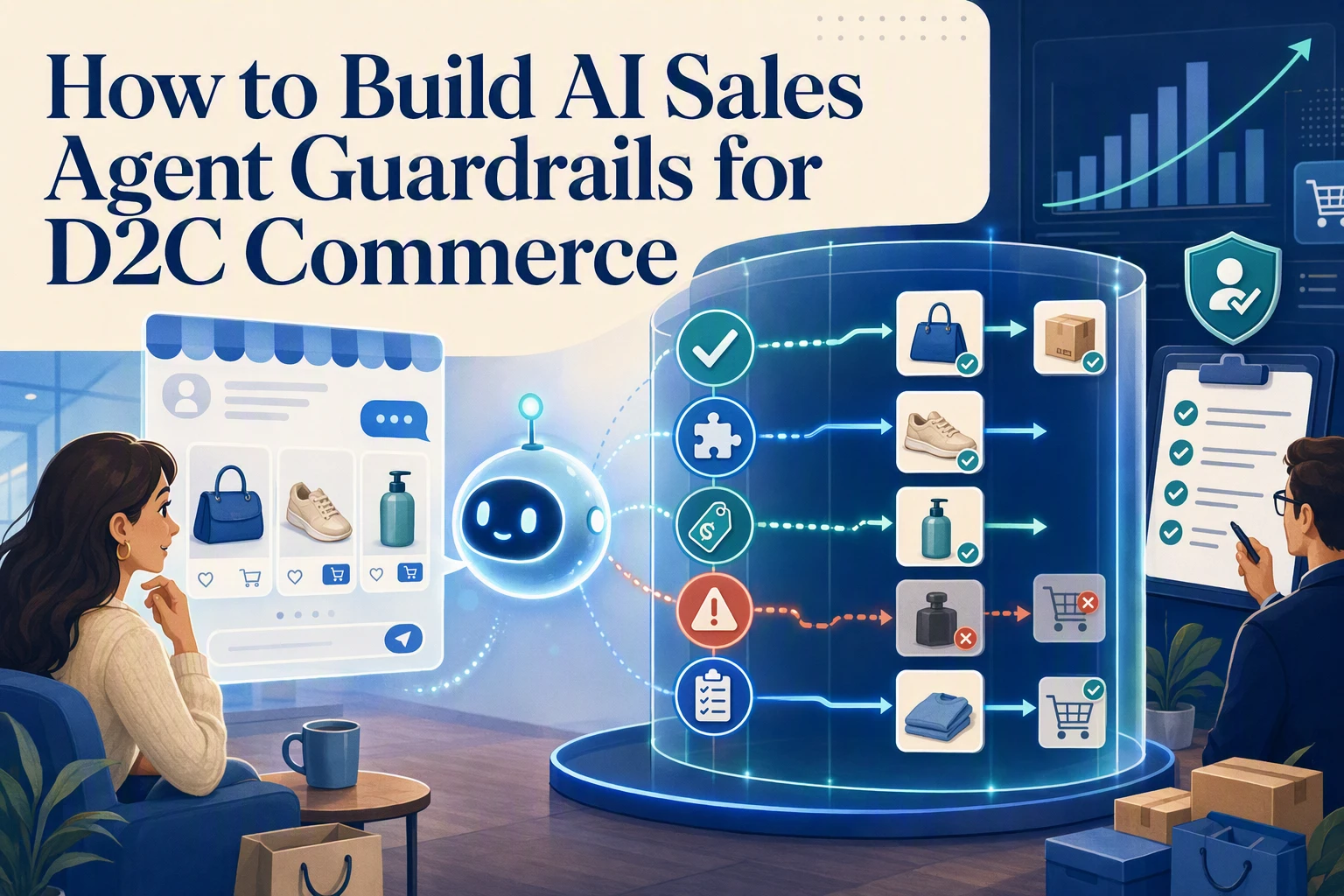
A shopper asks for a moisturizer under $40. Your agent suggests an out-of-stock item, makes up a fragrance-free claim, then cuts the price past margin. AI sales agent guardrails D2C prevent that costly chain of errors.
This guide gives Shopify teams a practical control plan for catalog facts, product advice, discounts, orders, refunds, and handoffs. Strong AI sales agent guardrails D2C keep helpful selling within rules your store can trust.
Step 1: Define the Agent's Job and Risk Boundary
Use an Autonomy Ladder
Set one clear job before you give an agent store access: answer product questions and guide shoppers to the right item. AI sales agent guardrails D2C work when each action has a risk level and a named owner.
| Level | Agent action | Control |
|---|---|---|
| 1 | Explain catalog facts | Use approved product data |
| 2 | Recommend products | Follow fit and stock rules |
| 3 | Offer discounts | Cap value and require approval |
| 4 | Change orders or refunds | Hand off to support |
- List allowed actions.
- Block payment, refund, and order edits by default.
- Define when the agent must escalate.
NIST advises teams to define human roles and oversight clearly in AI systems. Read its guidance.
Also Read: AI Sales Agents: 7 Metrics to Prove Revenue Impact
Step 2: Lock Down Data, Tools, and Commerce Actions
Apply Least Privilege to Customer and Store Data
Give your agent only the data it needs for the current task. Product catalog access can be broad, but customer data should be limited to the active shopper and order context. NIST flags identity and authorization as core controls when agents access data and tools (NIST guidance).
- Allow: product details, inventory, shipping rules
- Restrict: full customer exports, payment data, staff records
- Log every tool call and data lookup
Put Business Rules Around Every Action
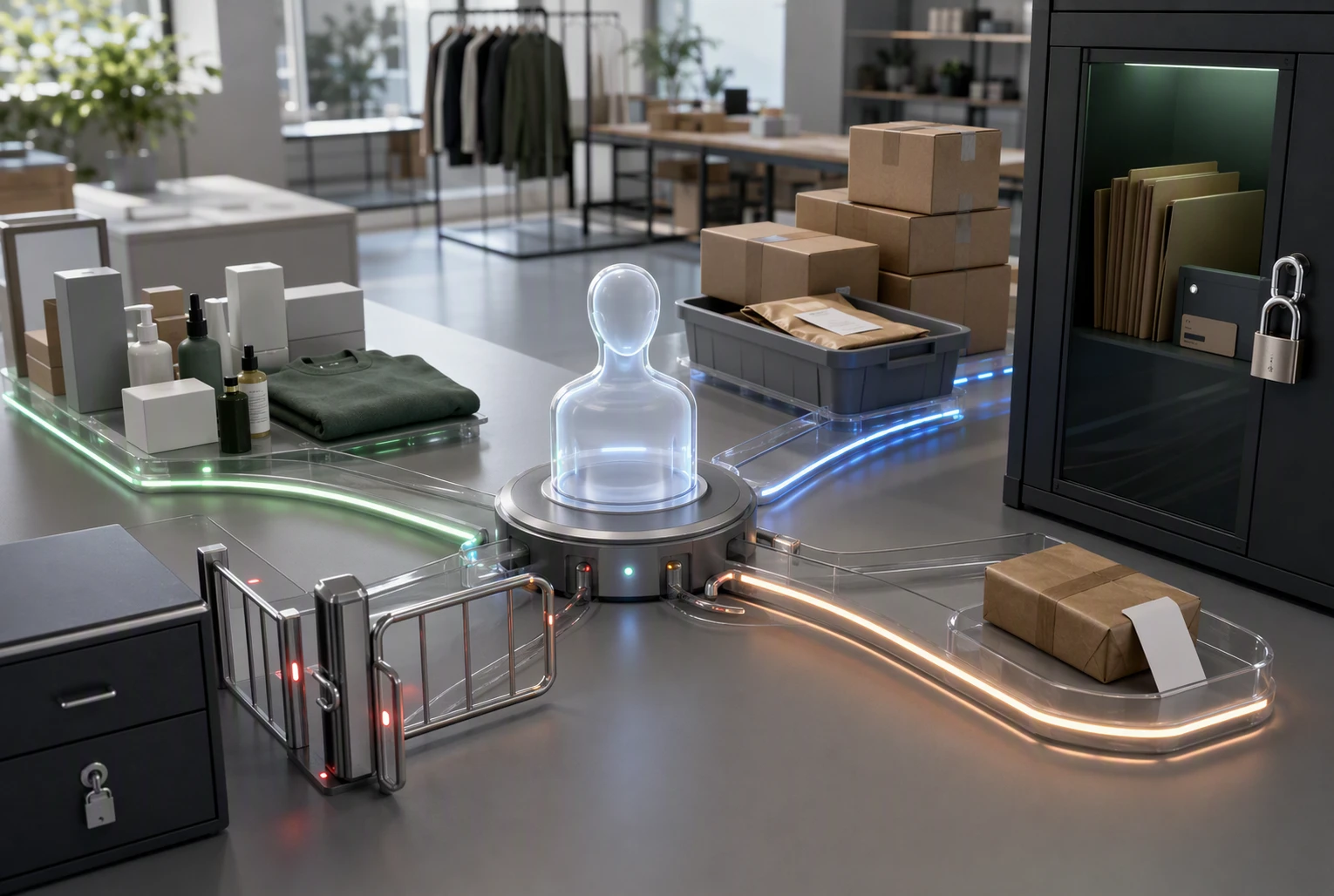
The agent can recommend products freely, but actions need hard limits.
| Action | Guardrail |
|---|---|
| Discount | Cap by percentage and campaign |
| Refund | Require staff approval |
| Order edit | Limit to address changes before fulfillment |
Treat every write action as a risk event. Set approval paths, dollar limits, and an audit trail before launch.
Also Read: AI Sales Agents Setup: Build a Trustworthy Checkout Assist
Step 3: Ground Every Recommendation in Trusted Commerce Data
Create an Approved Knowledge Layer
Your agent should answer from approved store data, not open-web guesses. NIST recommends documented controls and ongoing review for trustworthy AI systems through its AI Risk Management Framework.
Use a single source of truth for:
- Product titles, specs, variants, and compatibility
- Current price, stock, shipping, and return rules
- Approved comparison claims and brand language

| Data type | Agent action |
|---|---|
| Live Shopify catalog | Recommend only active, in-stock variants |
| Policy pages | Explain rules without making exceptions |
Warning: If the agent cannot find a trusted answer, it should say so and hand off.
Also Read: AI Sales Agents vs Human-Only Support: Performance Reality
Step 4: Test, Monitor, and Improve the Guardrails
Run a Pre-Launch Test Set
Test the agent against real shopper questions before it goes live. Include edge cases that could trigger wrong product claims, unsafe discount offers, order changes, or refund promises.
- Create cases for catalog gaps, out-of-stock items, bundle rules, and angry customers.
- Define a pass rule for each case: answer, refuse, or escalate.
- Have support and merchandising staff review failures.
NIST recommends documenting test sets and metrics, then reassessing controls as risks change.
Monitor Production Behavior
Review live chats each week, especially conversations that led to escalation, refunds, or no sale. Track:
- Incorrect product facts
- Discount or policy violations
- Escalation rate
- Repeat customer complaints
Fix the source first: catalog data, policy rules, or prompt guidance. Then retest the affected cases before release.
Put guardrails into practice with Kandid, an AI sales agent built to follow your catalog, brand voice, and shopper rules.
Frequently Asked Questions
Q1: How should D2C brands build guardrails for AI sales agents?
Start with catalog, pricing, order, and refund rules. Set clear approval limits, route risky requests to staff, test common edge cases, and review agent logs weekly.
Q2: Can an AI sales agent issue discounts?
Yes, but cap discount values, limit eligible products, and block stacking with other offers. Require human approval for exceptions or high-value carts.
Q3: What should trigger human escalation?
Escalate refund disputes, payment issues, safety claims, angry customers, and unclear product fit. The agent should state what it knows, not guess.
Conclusion
Set clear limits for catalog data, discounts, orders, refunds, and handoffs. Test edge cases, log every action, and review results often. This matches NIST's risk framework: govern, map, measure, and manage AI risk continuously.