Kandid vs Tidio: Which Ecommerce Chatbot Supports Growing Stores?
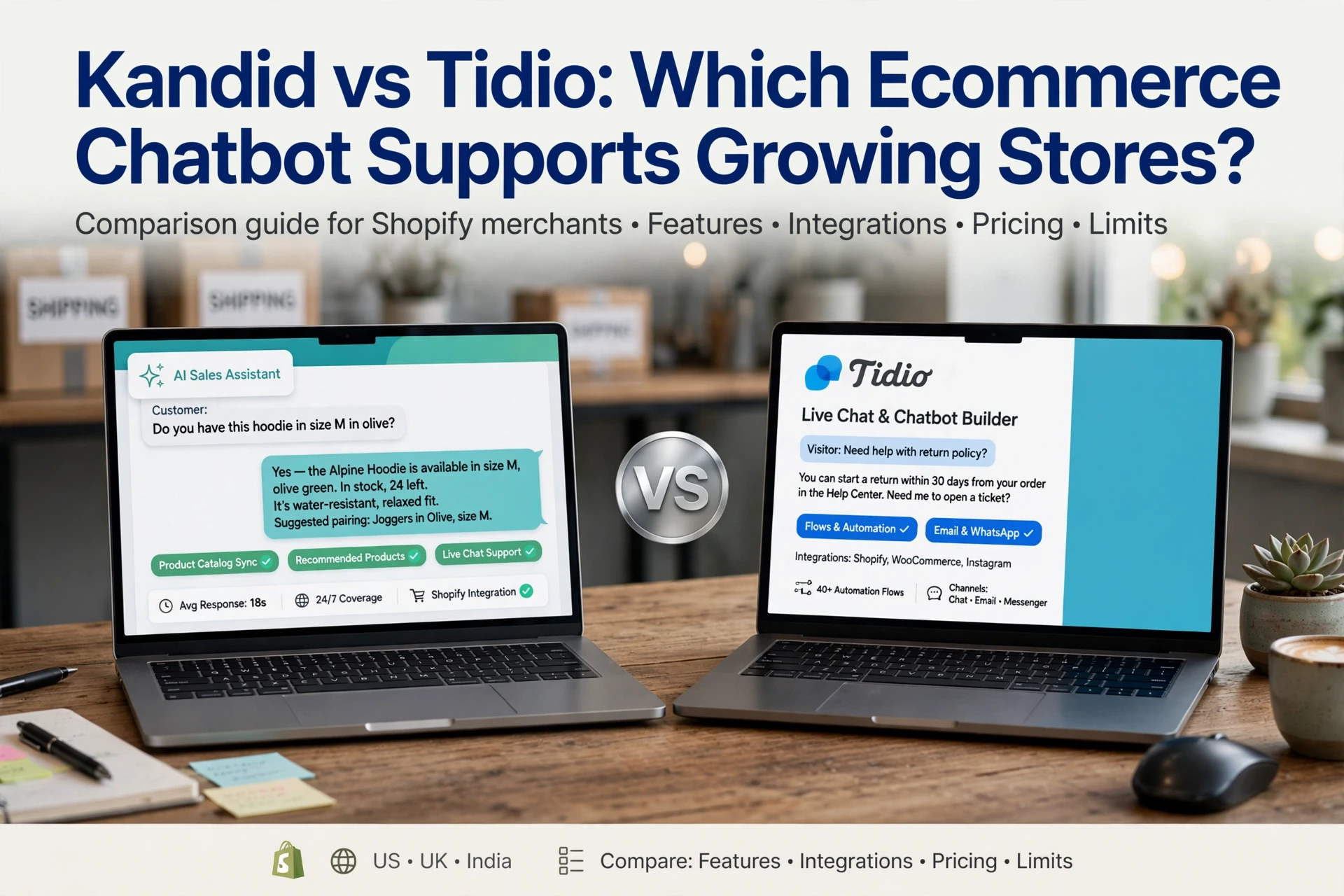
Quick Summary: Kandid is the better fit for Shopify stores whose growth depends on product discovery and sales conversations, while Tidio suits teams needing a broader support inbox. Kandid focuses on guided recommendations, comparisons, and purchase attribution, with pricing from $19 monthly, whereas Tidio's support-first approach can jump to about $749 per month at the Plus tier. Choose based on whether your bottleneck is selling or support, and design human handoff rules before launch.
This Kandid vs Tidio comparison answers one question: is your store limited by product discovery or support volume? Kandid, which publishes this comparison, fits sales-first Shopify stores; Tidio fits broader service teams. We checked both vendors' current sources on September 5, 2026, and revalidated them before publication. Read on for the full Kandid vs Tidio breakdown.
Kandid vs Tidio: Shopify Growth Comparison
| Kandid | Tidio | |
|---|---|---|
| Primary role | AI sales agent for Shopify and D2C stores | AI-assisted customer support and sales inbox |
| Product discovery | Catalog answers, recommendations, comparisons, and cart guidance | Product recommendations, comparisons, product cards, and add-to-cart actions |
| Support and order workflows | Store-content answers and order-related queries, subject to configuration | Order status, refunds, cancellations, edits, ticketing, and support automation |
| Human handoff | Available when configured for conversations requiring staff | Live-agent escalation through the Tidio inbox |
| Growth pricing model | Free installation, visitor and product allowances, paid plans from $19 monthly on the reviewed listing | Separate plans and usage limits for live chat, flows, and Lyro AI |
| Revenue measurement | Conversion tracking, conversation analytics, and purchase attribution capabilities | Lyro product recommendation and assisted-sales analytics described by Tidio |
How Kandid and Tidio Compare
Kandid
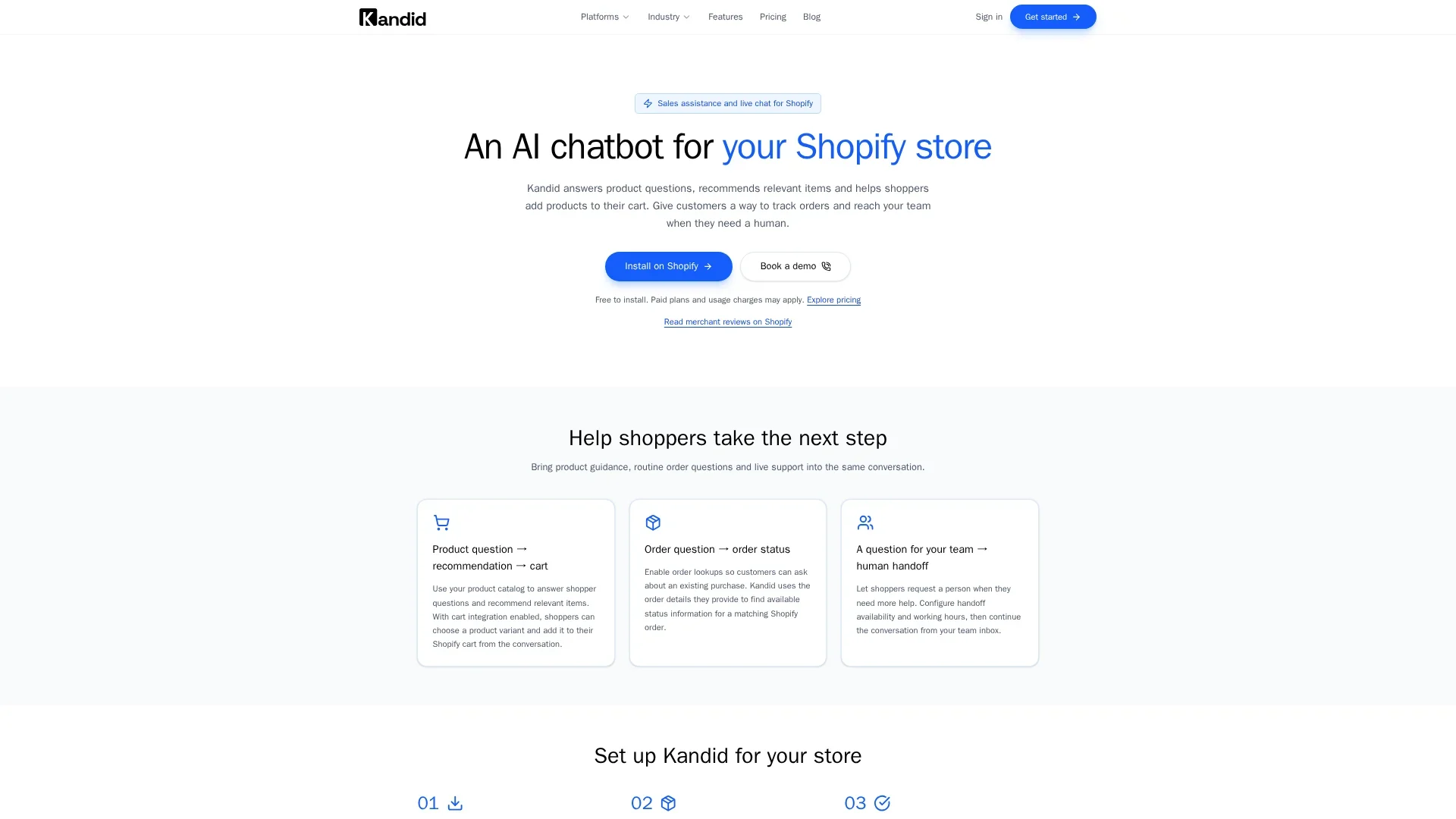
Kandid is an AI sales agent built for Shopify and D2C stores. It answers shopper questions from catalog and store content, recommends products, handles order queries, and measures sales from conversations. Free to install, with paid plans from $19 monthly on the reviewed listing.
Key strengths
- Product discovery with comparisons and cart guidance
- Conversation analytics and purchase attribution
- Human handoff when configured
Tidio
Tidio is a broader customer-conversation platform combining live chat, ticketing, social channels, and the Lyro AI agent. It suits teams that want support automation and sales features in one inbox. Pricing is split across live chat, flows, and Lyro AI plans with separate usage limits.
Key strengths
- Live-agent escalation through the Tidio inbox
- Order status, refunds, and ticketing workflows
- Lyro product recommendations with assisted-sales analytics
Product Discovery and Sales Conversations Compared
When Product Complexity Becomes the Growth Bottleneck
Your catalog starts simple. Twenty products, easy to browse. Then you add variants, bundles, and seasonal lines. Shoppers now ask things like "which of these works for sensitive skin?" and no static menu can answer that. This is where chatbots split into two camps.
Tidio's Lyro supports product discovery through catalog sync and conversation-based suggestions. On Shopify, it shows product cards, detects out-of-stock items, sees the cart, and lets shoppers add to cart from chat. That's a solid support-first flow.
Kandid takes a sales-first angle: its AI agent is built around guided product discovery and recommendations as the core job, not an add-on to support tickets. If most of your questions are "help me choose," that difference matters.

Also Read: Kandid vs Gorgias: Which Ecommerce Chatbot Fits Lean Teams?
Support Operations, Order Questions, and Human Handoff
Design the Handoff Before Launch
Order questions are the top support driver, so test how each tool answers "where is my order?" before you buy. Tidio's Lyro pulls order status, fulfillment, and tracking from Shopify after verifying the shopper with their email and order ID, and its Check Order Status flow hands off to a human when an order is unfulfilled. Kandid follows the same principle: answer from store data first, then pass the full chat to a person with context intact.
Set handoff rules in writing:
- shopper asks for a human
- refund, cancel, or edit request
- no confident answer after two tries
Also Read: Tidio Alternatives for Small Shopify Stores: Sales Chatbot Comparison
What Scaling Costs and Measurement Really Look Like
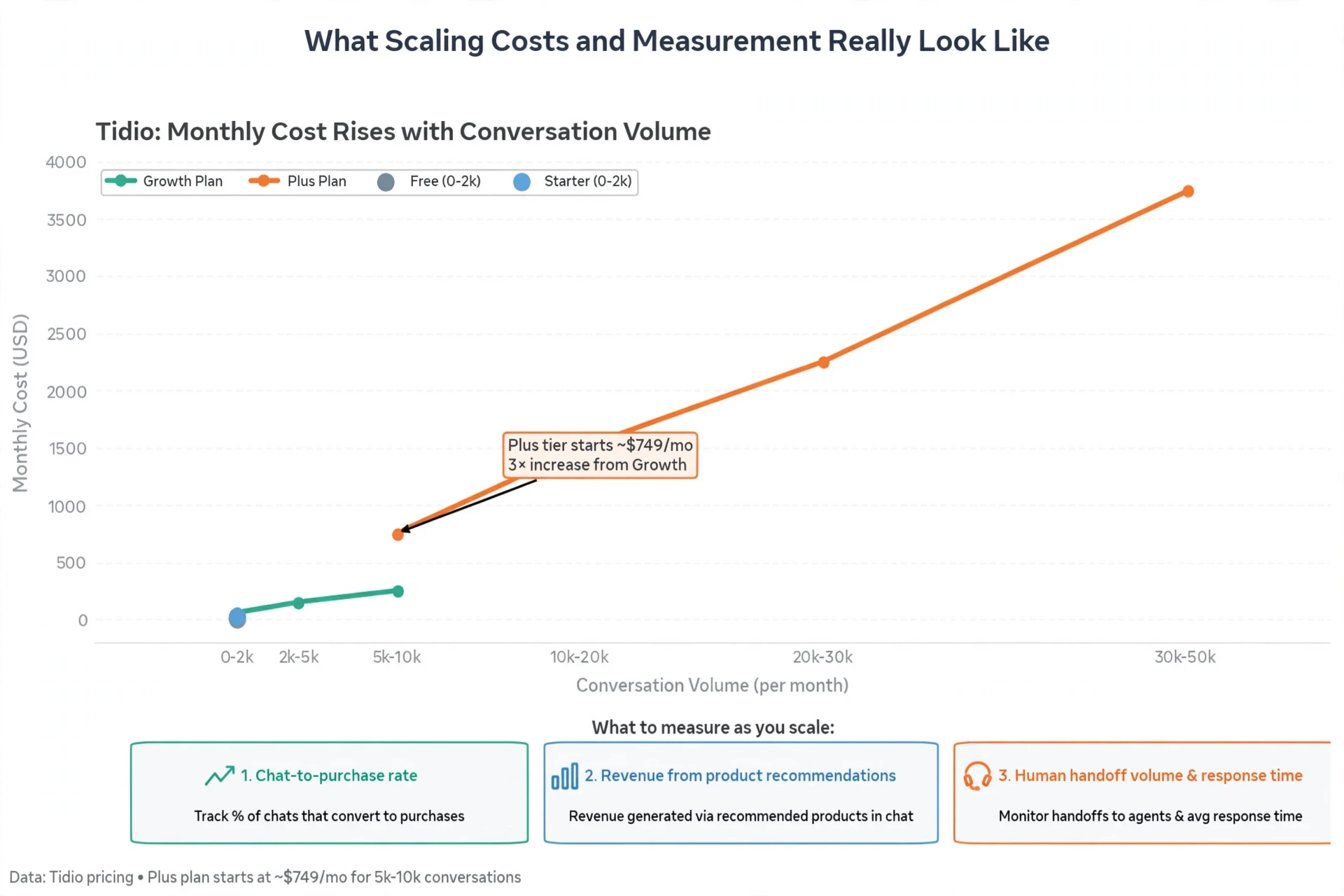
Tidio's base plan looks cheap, but three separate quotas grow as you scale: billable conversations, Lyro AI conversations, and Flows visitors. Its own pricing page lists Growth at 250+ conversations with AI sold as an add-on, and the next tier, Plus, starts at about $749 per month. That jump catches many growing stores off guard.
Budget for usage-based billing, then measure what matters:
- Chat-to-purchase rate
- Revenue from product recommendations
- Human handoff volume and response time
Kandid keeps pricing tied to outcomes and reports revenue attribution out of the box.
Also Read: 7 Best Chatbots for Shopify Stores to Increase Sales
Which Should You Choose: Kandid or Tidio?
Pick Tidio if your main job is support: one inbox for chat, email, and social, with Lyro handling FAQs and order questions.
Pick Kandid if growth comes from selling: a Shopify AI sales agent built for product discovery, comparisons, and real-time recommendations that turn browsers into buyers.
Running both jobs? Start with the sales gap. Revenue usually pays first. See how Kandid fits.

If Kandid fits how your store works, see how its AI sales agent for Shopify handles product questions as you grow.
Frequently Asked Questions
Q1: Which chatbot better supports a growing store, Kandid or Tidio?
Kandid fits Shopify stores scaling product discovery and sales automation. Tidio suits teams needing broader support channels. Match the tool to your growth stage.
Q2: Can I switch chatbots without losing conversations?
Most platforms let you export transcripts before migration. Test the new bot on a few product questions first.
Q3: Do these chatbots handle order tracking?
Yes, both connect to Shopify order data, so shoppers can check delivery status inside chat without agent help.
Conclusion
Kandid fits stores focused on AI-driven sales and product discovery, while Tidio suits teams wanting an all-in-one support inbox. Match the tool to your growth stage.