Retailers Keep Their Own AI Ahead of ChatGPT in Ecommerce
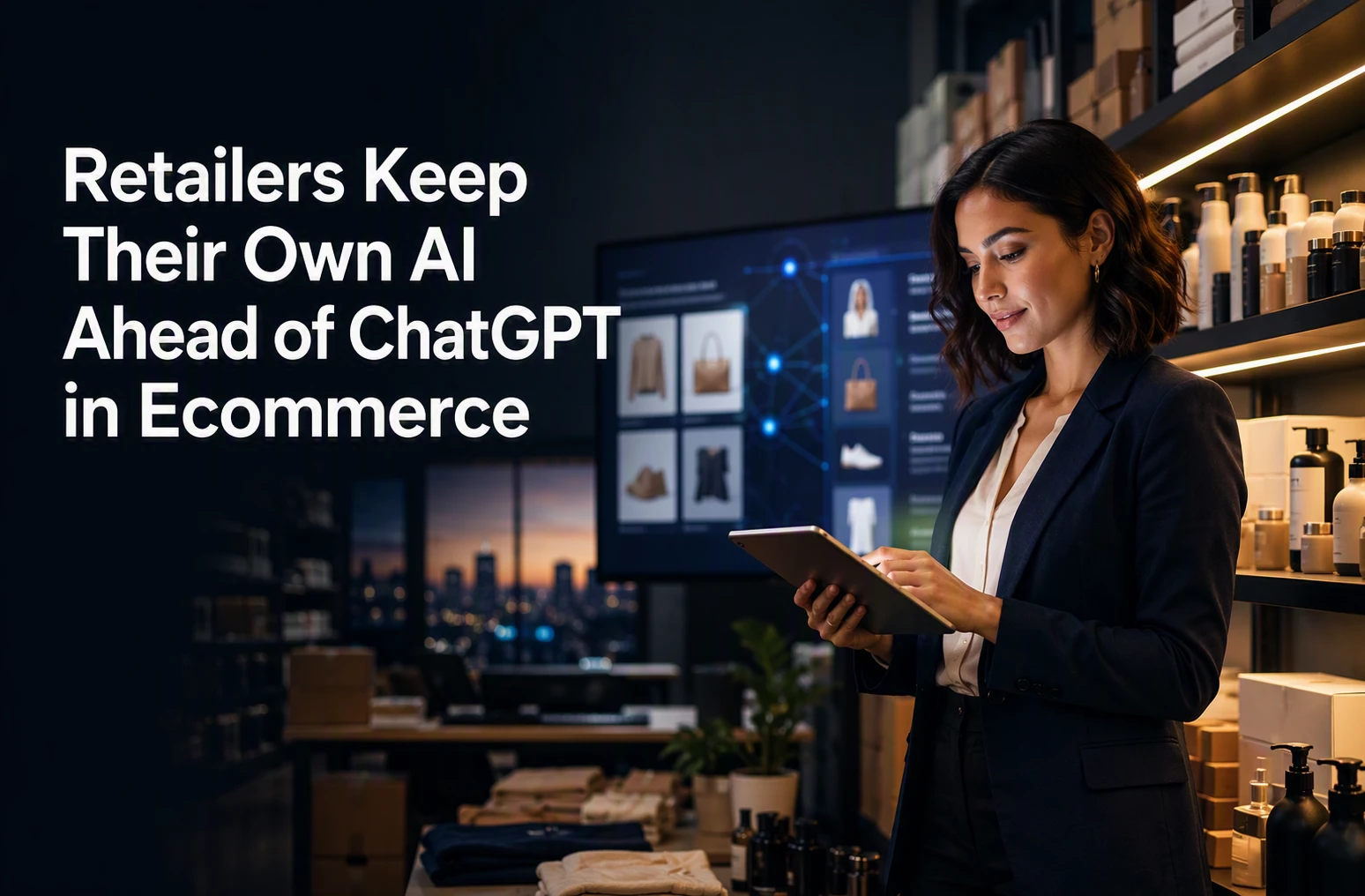
AI platforms now shape product discovery, but shoppers still prefer retailer sites to buy. EMARKETER projects retailer-owned AI ecommerce will drive 54.1% of U.S. AI-led sales in 2026. Only 10% finish on an AI platform, while 69% return to a retailer site or app. Retailer-owned AI ecommerce protects data, margin, and loyalty. This report examines the evidence, OpenAI Instant Checkout's reversal, and practical rules for retailer-owned AI ecommerce.
Retailers Are Reclaiming the Transaction From General-Purpose AI
The Discovery-to-Checkout Split
ChatGPT can start product discovery, but retailers still need to own the moment a shopper decides. OpenAI now supports direct purchases for Etsy sellers and plans Shopify access, according to the Associated Press.
The smart move is not to fight AI discovery. It is to bring shoppers onto a store experience that answers product questions and protects your customer data.
| General AI | Retailer-owned AI |
|---|---|
| Broad product suggestions | Catalog-aware advice |
| Limited brand control | Brand voice and rules |
| Can send traffic away | Guides toward checkout |
- Make product facts easy for AI to read.
- Use an on-site sales agent for comparisons and fit questions.
- Keep checkout, service, and post-purchase data in your store.
Tip: Kandid can help turn AI-referred visits into guided conversations before shoppers leave.
Also Read: Live Chat vs AI Chatbot: Which One Actually Converts Better in 2026?
First-Party Data and Trust Give Retailer AI an Advantage
Why Retail Context Improves Recommendations
A store AI knows what a general chatbot cannot: live stock, product specs, bundle rules, shipping limits, and the brand's own return policy. That context makes its advice easier to trust and act on.
YouGov research found 59% of Americans trust AI to help find items, but only 14% trust it to place orders. Keep shoppers in control.

| Retailer AI knows | Why it helps |
|---|---|
| Live catalog and inventory | Avoids suggesting unavailable items |
| Product fit and compatibility | Gives answers tied to real specs |
| Store policies | Sets clear delivery and return expectations |
- Ask only for data that improves the answer.
- Explain why a recommendation fits.
- Offer a human help path for edge cases.
Trust grows when recommendations are useful, clear, and easy to question.
Also Read: Recent Developments in Live Chat and AI Chatbot Technology Worldwide
Retailers Are Still Partnering With ChatGPT and Gemini
The Emerging Hybrid Model
Retailers are not choosing between their own AI and ChatGPT or Gemini. They are using both. Walmart’s OpenAI deal lets shoppers buy products inside ChatGPT, while Walmart also runs its own Sparky assistant in its app, according to Reuters.
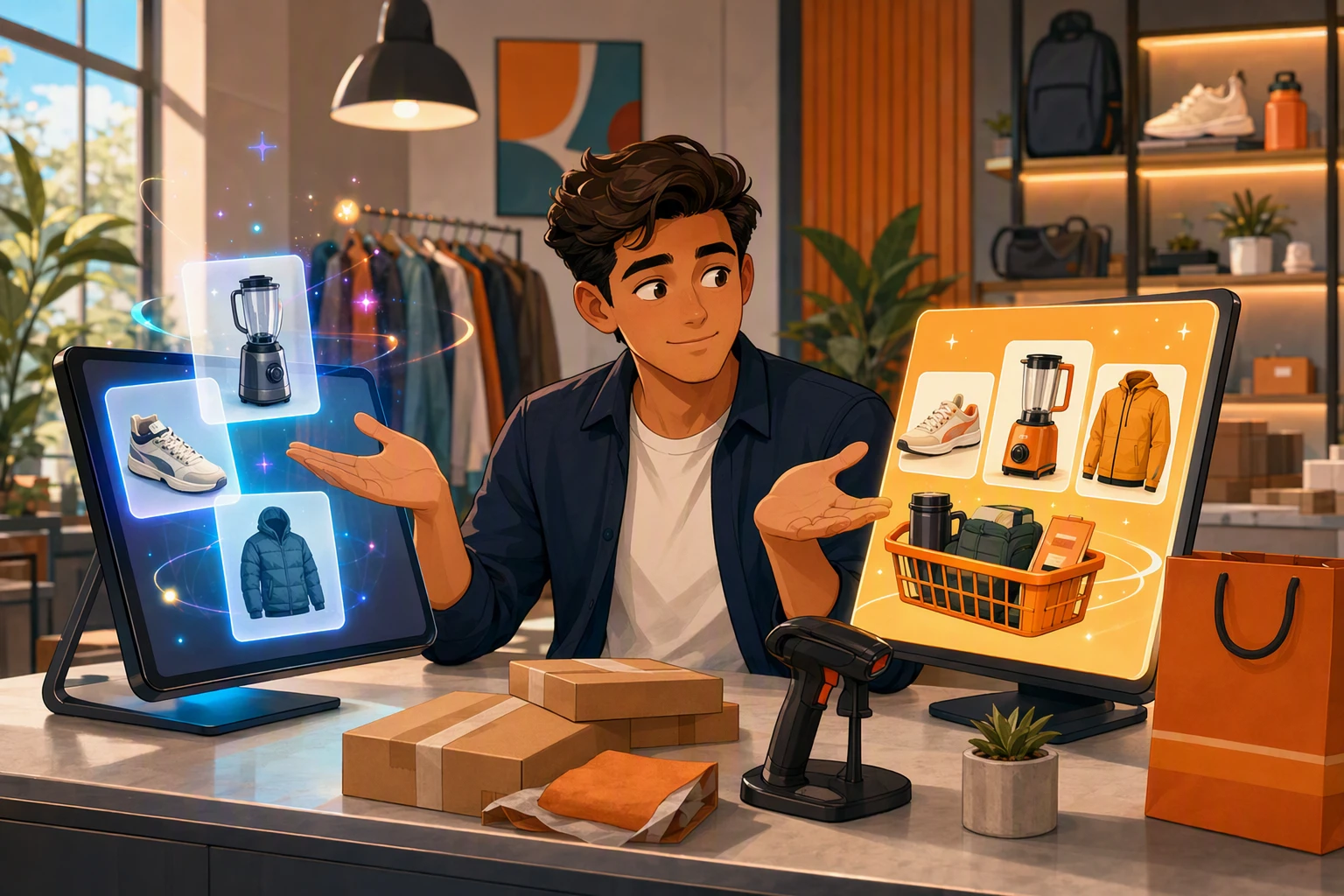
The split is simple:
- ChatGPT and Gemini help brands show up where shoppers begin research.
- Store-owned AI answers catalog, fit, bundle, and policy questions on-site.
- Owned checkout and data keep the customer relationship in your control.
| Channel | Best role |
|---|---|
| ChatGPT or Gemini | Product discovery |
| Your Shopify site | Guided selling and checkout |
Treat outside AI as a new traffic source, not a replacement for your storefront.
For D2C stores, an AI sales agent such as Kandid can carry the brand-specific conversation after the click.
Also Read: Ultimate Guide to Live Chat & AI Chatbot Integration Strategies
What Shopify Merchants Should Build Now
A Practical Readiness Checklist
Build a helpful on-site sales agent, not a bot that pushes a checkout. Shoppers trust AI more for research than for buying on their behalf. YouGov found 65% trust price comparison, but only 14% trust AI to place orders.
- Feed it clean product facts, stock status, fit notes, and return rules.
- Set firm guardrails for claims, discounts, and when to hand off to support.
- Make every answer explain why a product fits the shopper’s need.
- Track questions that end without a sale, then fix the product page or knowledge gap.
- Keep checkout and customer data on your own store.
| Build first | Why it matters |
|---|---|
| Product comparison | Shoppers want clear choices |
| Human handoff | Trust rises when help is available |
Test for accurate answers before chasing automation.
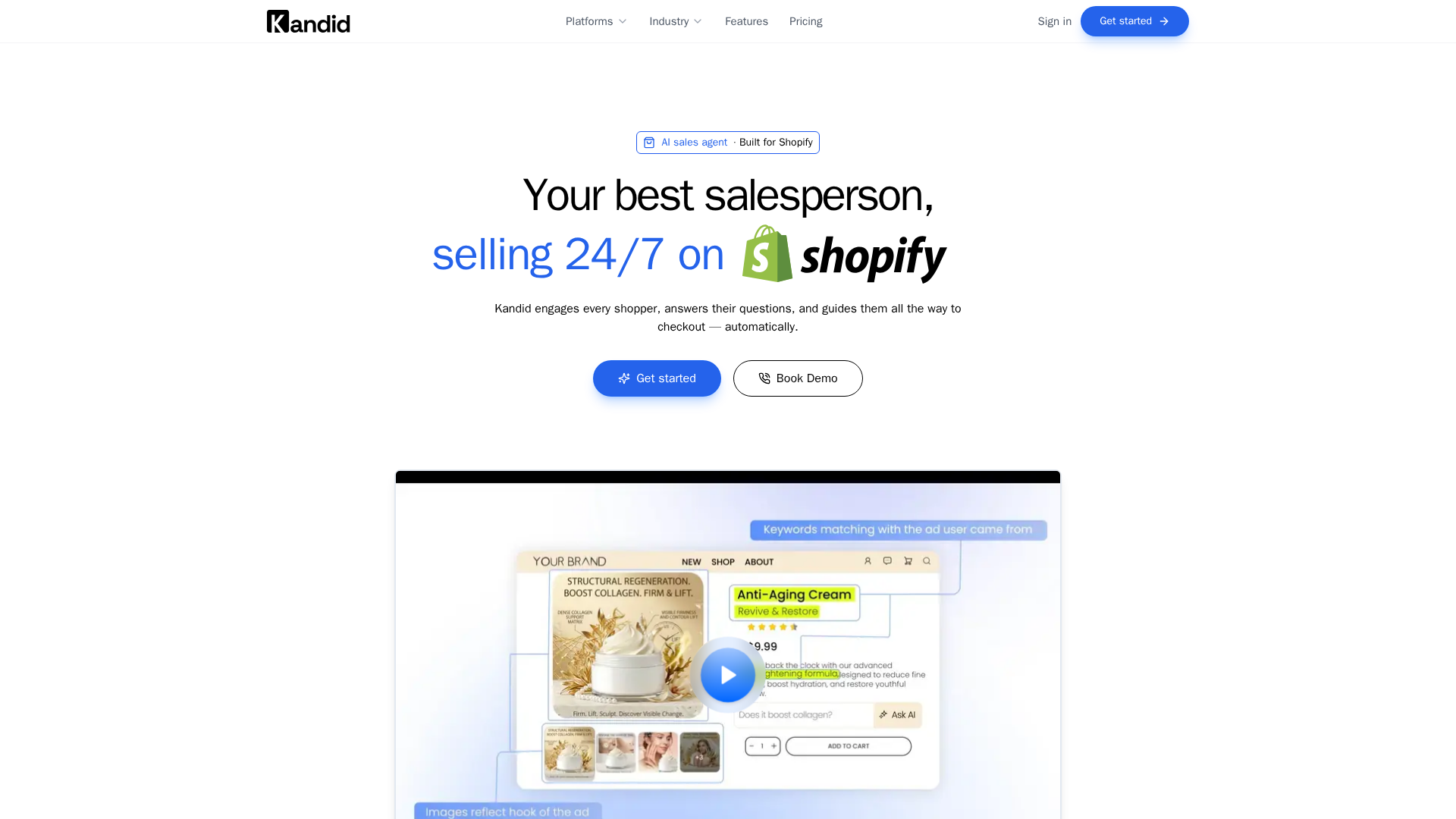
Put your store’s AI in charge. Kandid answers product questions, compares options, and guides high-intent shoppers to purchase.
Frequently Asked Questions
Q1: Why are retailers keeping shopping AI on their own websites?
They control product facts, tone, customer data, and the path to checkout. A store-owned agent can answer live questions without sending shoppers to a general AI tool.
Q2: Can a Shopify store use ChatGPT for sales?
Yes, but it needs tight catalog controls. A store AI is often safer for product advice, stock rules, bundles, and brand-specific answers.
Q3: What should merchants measure after launch?
Track conversion rate, assisted revenue, average order value, chat-to-cart rate, and unresolved questions. Review wrong answers weekly and improve the agent's product knowledge.
Conclusion
Retailers keep AI on their own sites to protect brand control, shopper data, and trust. YouGov research shows shoppers prefer AI help with research, not final decisions.