Retailers Report Bigger Baskets From AI Shopping Assistants
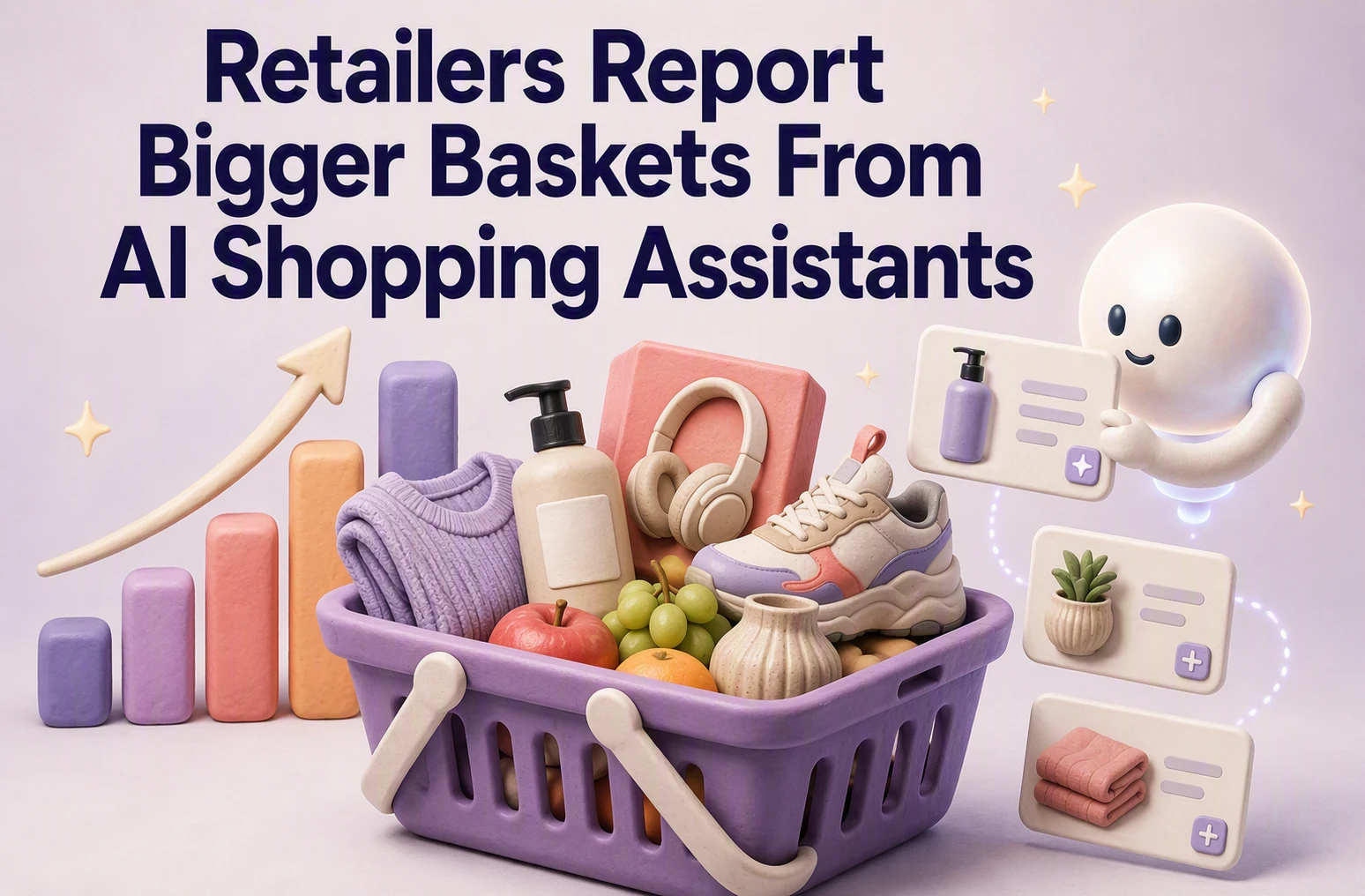
Retailers see bigger orders from AI shoppers. Walmart reports Sparky users spend about 35% more, while Albertsons cites gains from 10% to 26%. That does not prove every AI shopping assistant basket size lift is causal. Higher-intent shoppers may self-select. We compare the evidence and set a test standard for Shopify teams before treating AI shopping assistant basket size gains as new revenue.
Retailers Are Reporting Larger AI-Assisted Orders
Walmart and Albertsons Show the Clearest Early Signals
Walmart says shoppers using Sparky build baskets about 35% larger than non-users. Albertsons reports a 10% lift for customers using Ask AI search. Its more detailed recipe and dietary help has reached a 26% lift, according to retailer reporting.
| Retailer | AI experience | Reported basket result |
|---|---|---|
| Walmart | Sparky shopping assistant | About 35% higher |
| Albertsons | Ask AI search | 10% higher |
| Albertsons | Recipe and dietary help | 26% higher |
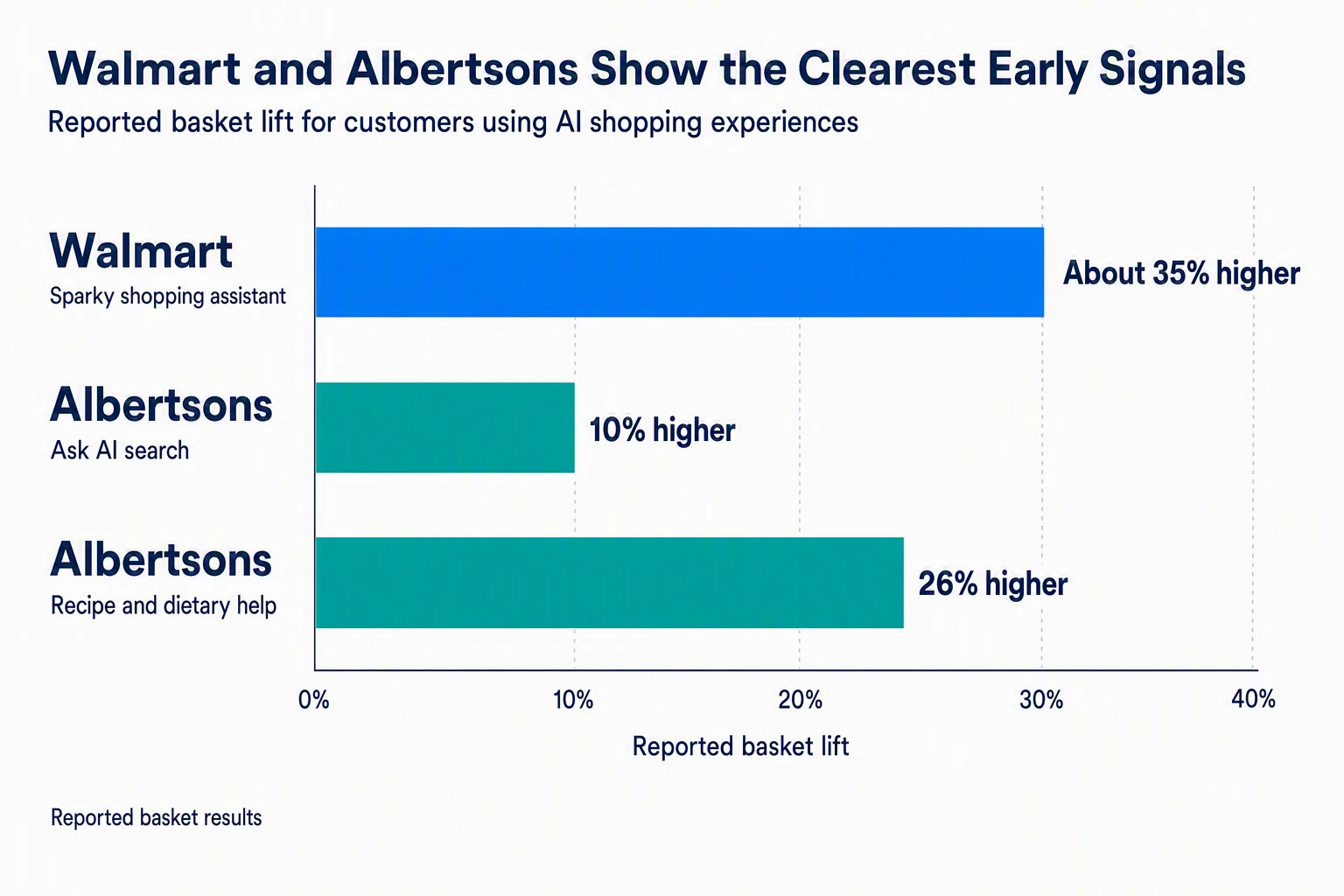
These are associations, not causal proof. People who try assistants may already intend to buy more.
Track AI shopping assistant basket size against a matched non-user group before calling it incremental revenue.
For Shopify stores, test agents on bundle-heavy questions, product fit, and “what goes with this?” prompts. Those moments can add useful items without pushing junk.
Also Read: AI Sales Agents: 7 Metrics to Prove Revenue Impact
The Broader Data Supports an Uplift, With Important Limits
What the Platform Benchmarks Actually Measure
Retailer benchmarks show an association, not clean proof that an assistant caused each larger basket. Walmart says Sparky users have 35% higher order values, while Albertsons reports a 10% lift from conversational search and up to 26% from fuller meal-planning help, according to recent retail reporting.
| Reported metric | What it shows | What it cannot prove |
|---|---|---|
| Higher AOV for assistant users | Assisted shoppers spend more | AI alone created the gain |
| More items per order | Better product discovery may help | Profit and repeat purchase improved |
| Usage growth | Shoppers will try the feature | All visitor segments will adopt it |

Watch for self-selection. Shoppers who ask for help planning a meal or bundle may already intend to spend more.
Test against a matched control group, then track margin, conversion, and returns.
Also Read: AI Sales Agents: 12 Use Cases for D2C Growth
Why AI Can Expand a Basket, and Where It May Not
Mission-Based Shopping Is the Strongest Use Case
AI helps most when shoppers arrive with a clear job: find a compatible cable, build a skincare routine, or buy a complete gift. It can compare specs, answer doubts, and suggest the missing item. McKinsey notes that AI agents can help shoppers assemble baskets and resolve trade-offs in these moments. Read the research.
Test assistants on high-intent product questions first, not every site visitor.
Habitual and Discovery-Led Shopping Remain Open Questions
Repeat buyers may simply reorder. Browsers may enjoy exploring without a guided prompt. AI recommendations can also shrink baskets if they steer buyers to one best-fit item.
| Shopping mode | Likely basket effect |
|---|---|
| Clear mission | More relevant add-ons |
| Routine reorder | Little change |
| Open-ended browsing | Uncertain |
- Track assisted AOV against a matched control group.
- Check return rates and profit, not AOV alone.
Also Read: AI Sales Agents: The Complete Revenue Operations Guide for 2026
What Shopify Store Owners Should Measure Before Scaling
Track a matched test before you expand. AI-referred shoppers generated 53% more revenue per visit than non-AI sources in Adobe data reported by Reuters, but that does not prove your assistant caused the lift.
| Metric | Compare | Why it matters |
|---|---|---|
| Conversion rate | Assisted vs. similar unassisted sessions | Checks purchase lift |
| AOV | Both groups | Tests basket growth |
| Gross margin | Orders after discounts and returns | Protects profit |
| Answer accuracy | Sampled chats | Prevents bad advice |
- Segment by traffic source, device, and product type.
- Track return rate for assisted orders.
Scale only after the lift holds for at least two full sales cycles.
Turn shopper questions into smarter bundles and larger carts. Try Kandid to guide buyers to the right products in real time.
Frequently Asked Questions
Q1: Are AI shopping assistants increasing retail basket sizes?
Some retailers report larger baskets, but results vary. Assistants can raise order value by comparing products, suggesting add-ons, and answering fit questions. Treat this as a testable claim, not proof.
Q2: What should Shopify stores measure?
Track average order value, conversion rate, attach rate, and revenue per visitor. Compare assistant sessions with a matched control group.
Q3: Which products benefit most?
High-consideration items benefit most, especially products with bundles, compatibility needs, or confusing specs.
Conclusion
Retailers report bigger baskets, but usage does not prove causation. AI-referred shoppers generated more revenue per visit. Test guided bundles against a holdout group, especially for repeat-buy products.