Shopify AI Chatbot Pricing Models Compared for Growing Stores
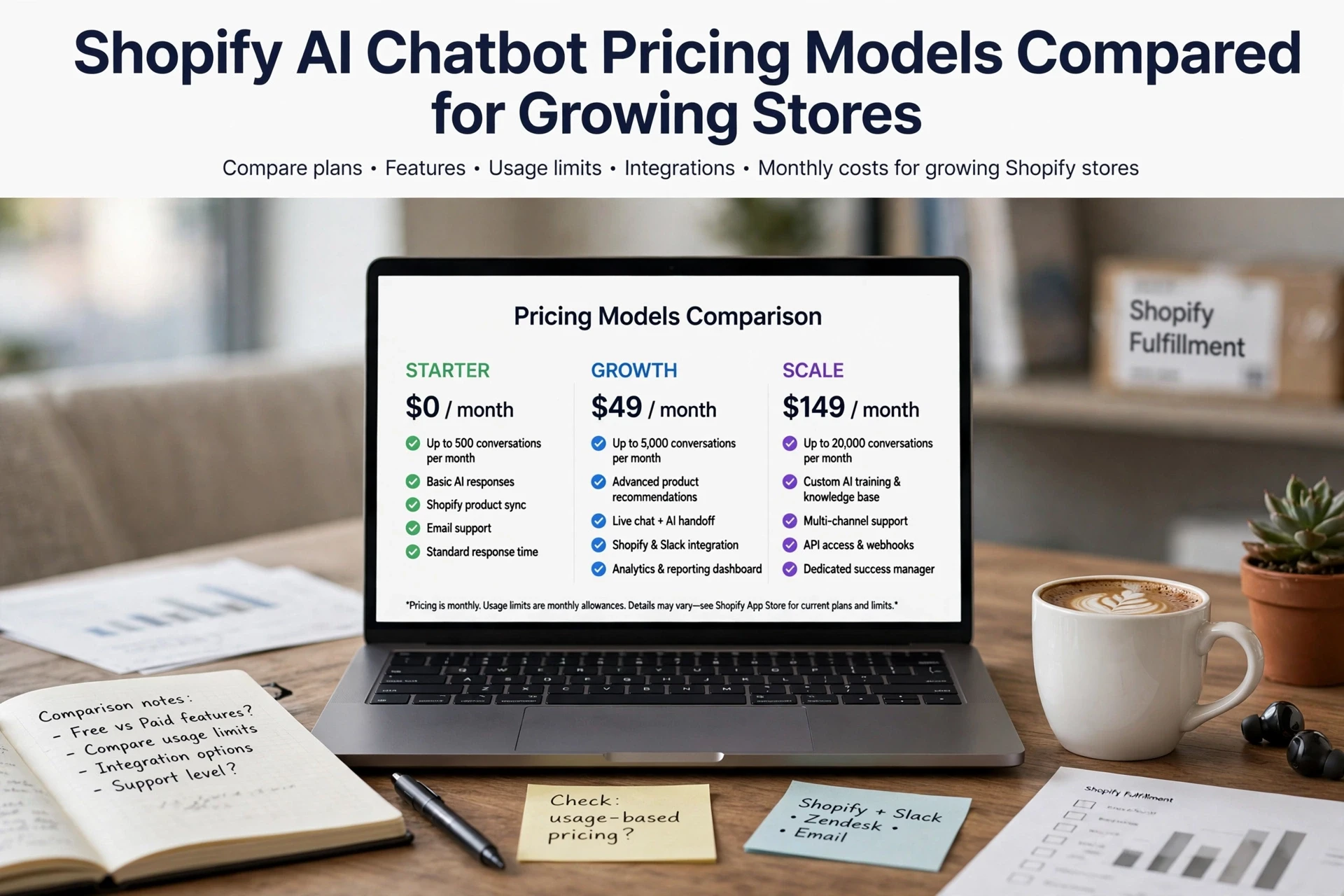
Quick Summary: Shopify AI chatbot pricing depends on the billing meter, not the sticker price, so a $19 plan can cost more than a $49 one as traffic grows. The article compares Kandid, Tidio, Gorgias, and Zipchat, noting that per-conversation or per-resolution models like Gorgias can double costs during spikes, while flat tiers like Kandid's stay predictable. It advises forecasting peak-month scenarios before upgrading, since landed costs often run two to three times the advertised price.
A $19 Shopify AI chatbot can cost more than a $49 one once your store grows from 10,000 to 25,000 monthly visitors. It depends on whether the vendor bills visitors, AI replies, conversations, or tickets. This comparison of Shopify AI chatbot pricing breaks down Kandid, Tidio, Gorgias, and Zipchat by real cost drivers, with a quick worksheet for normal months and peak season.
Shopify AI Chatbot Pricing Models at a Glance
| Kandid | Tidio | Gorgias | Zipchat AI | |
|---|---|---|---|---|
| Billing unit | Monthly visitors | Users, conversations, and AI plan usage | Support tickets plus AI interactions | AI replies |
| Published entry price | Free to install; paid from $19/month | Free; paid plans from $29/month | Verify current plan on vendor pricing page | $49/month |
| Usage limit or allowance | 1,000 free visitors; paid tiers up to 50,000 visitors | Free plan includes 50 chat users; Lyro tier includes 200 conversations | Ticket allowance varies by plan | 500 AI replies on Starter |
| Growth cost risk | Visitor overages and tier upgrades | Conversation-tier upgrades and add-on structure | Ticket overages and per-AI-resolution charges | Reply overages and higher usage tiers |
| Shopify sales and support fit | Catalog recommendations, cart actions, order lookup, handoff, analytics | Chat, social inbox, product recommendations, Shopify actions | Deep helpdesk and order-support workflows | Chat, email, WhatsApp, Instagram, Messenger, escalation |
| Best for | Growing Shopify stores with measurable product-guidance goals | Small stores validating chat and AI support | Established teams managing substantial support volume | Stores needing multichannel AI and reply-based budgeting |
Meet the Contenders
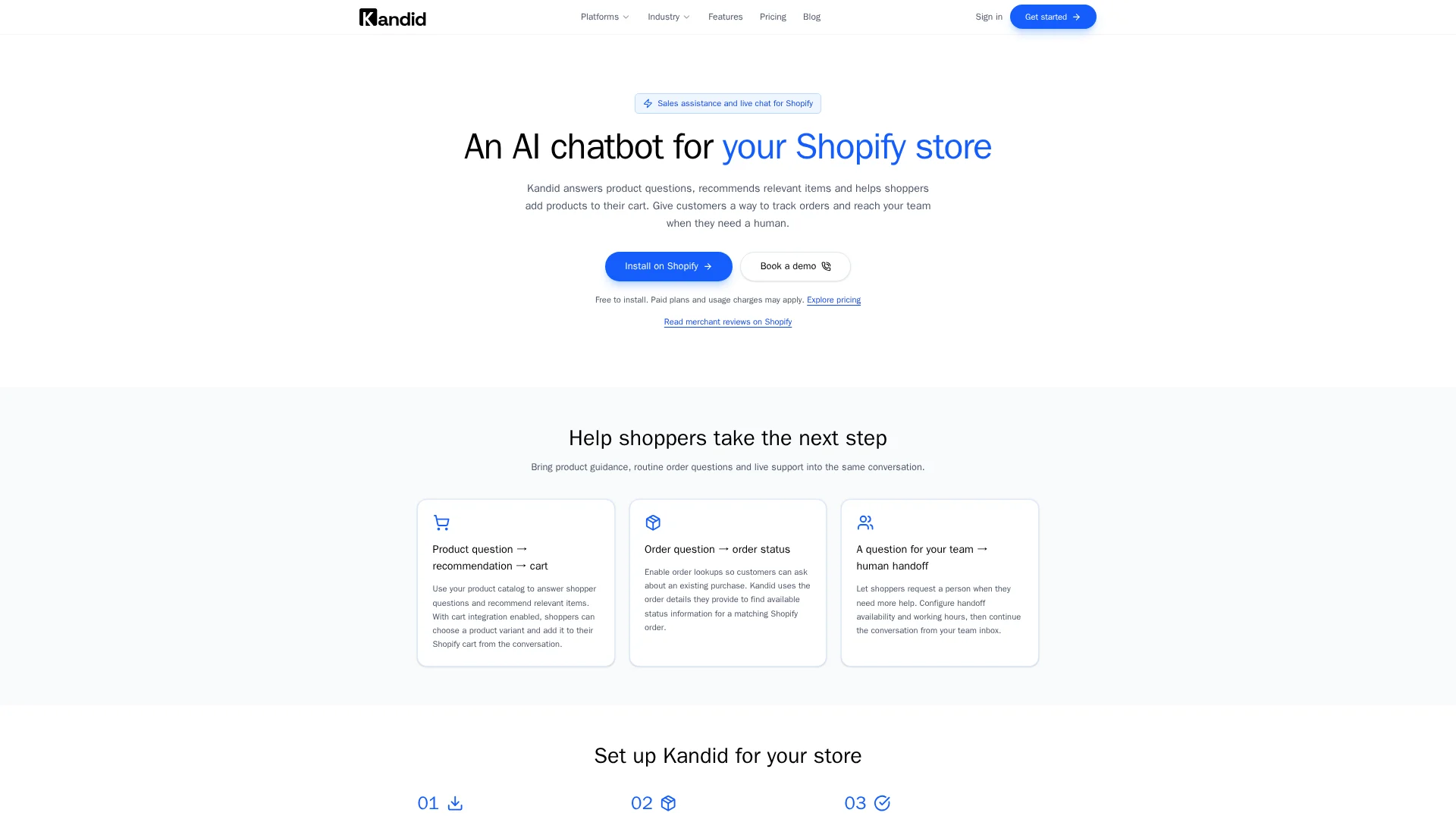
Kandid
Kandid is a Shopify-first AI sales agent billed on monthly visitors. It handles product discovery, order lookup, and handoff, with paid tiers starting at $19/month.
Tidio
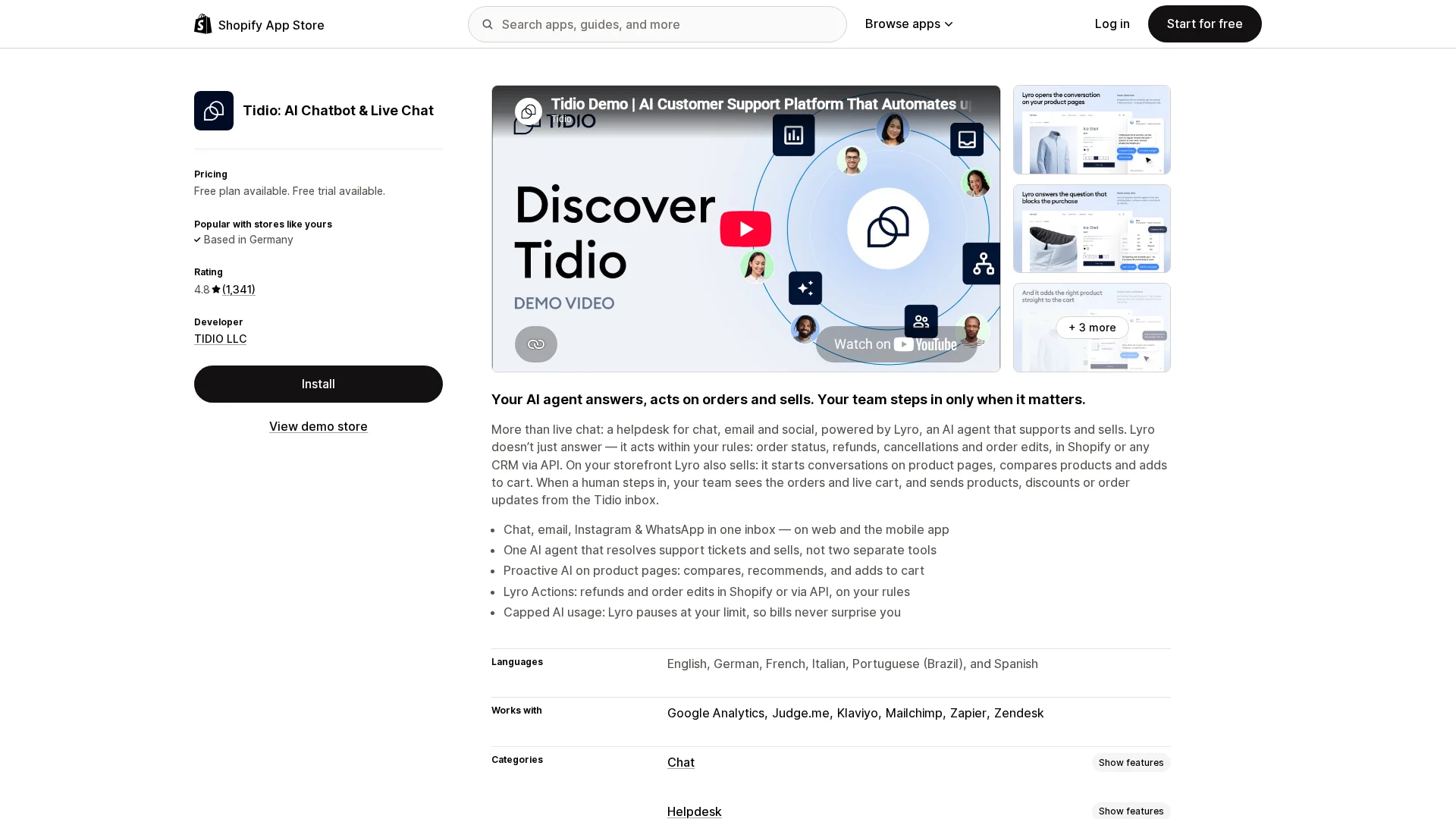
Tidio combines live chat, a shared inbox, and its Lyro AI with a free plan. Pricing runs on users, conversations, and AI usage, suiting small stores testing support.
Gorgias
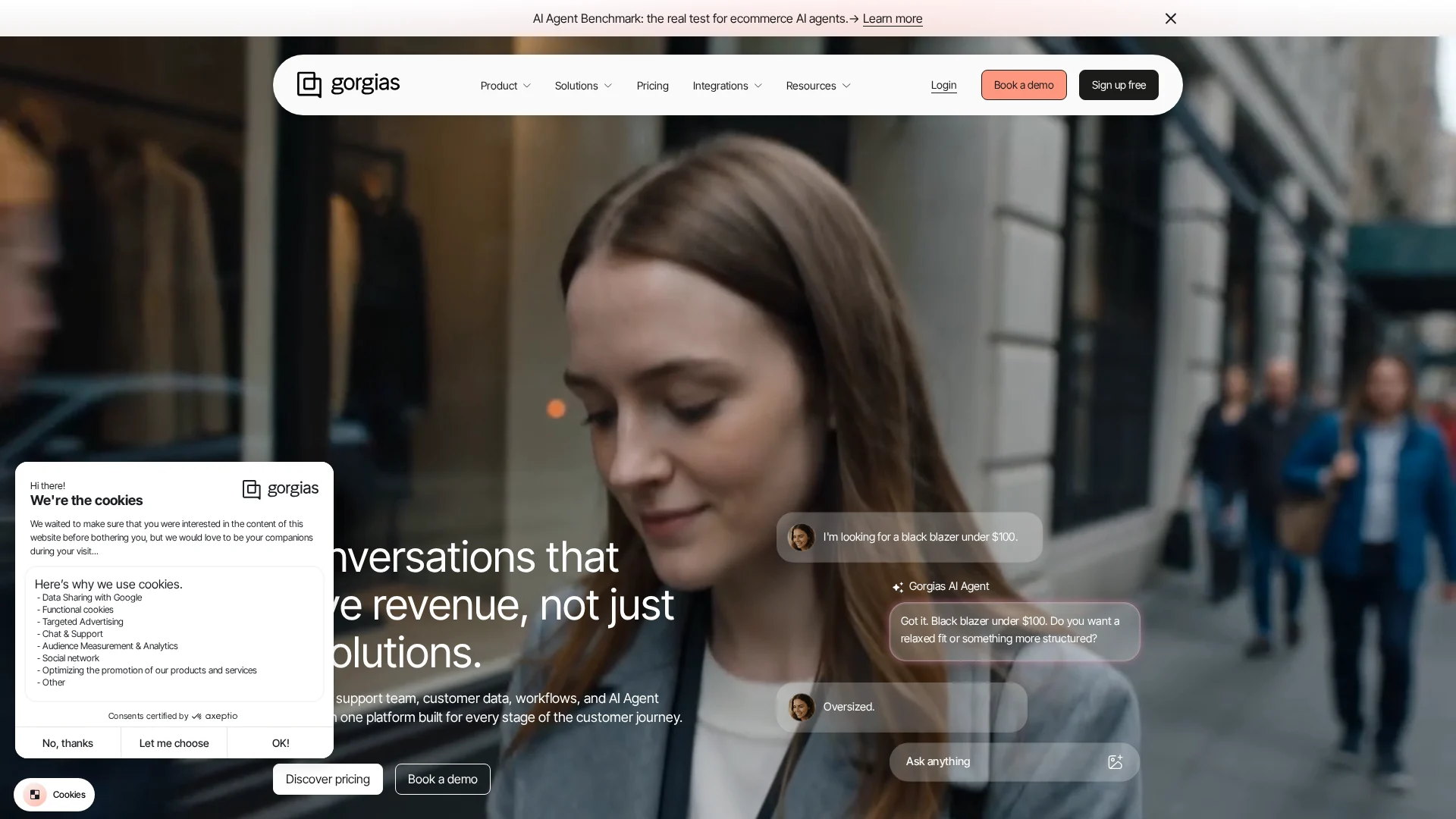
Gorgias is an ecommerce helpdesk priced on ticket volume, with AI charges layered on top. It fits established teams handling heavy support loads and order workflows.
Zipchat AI
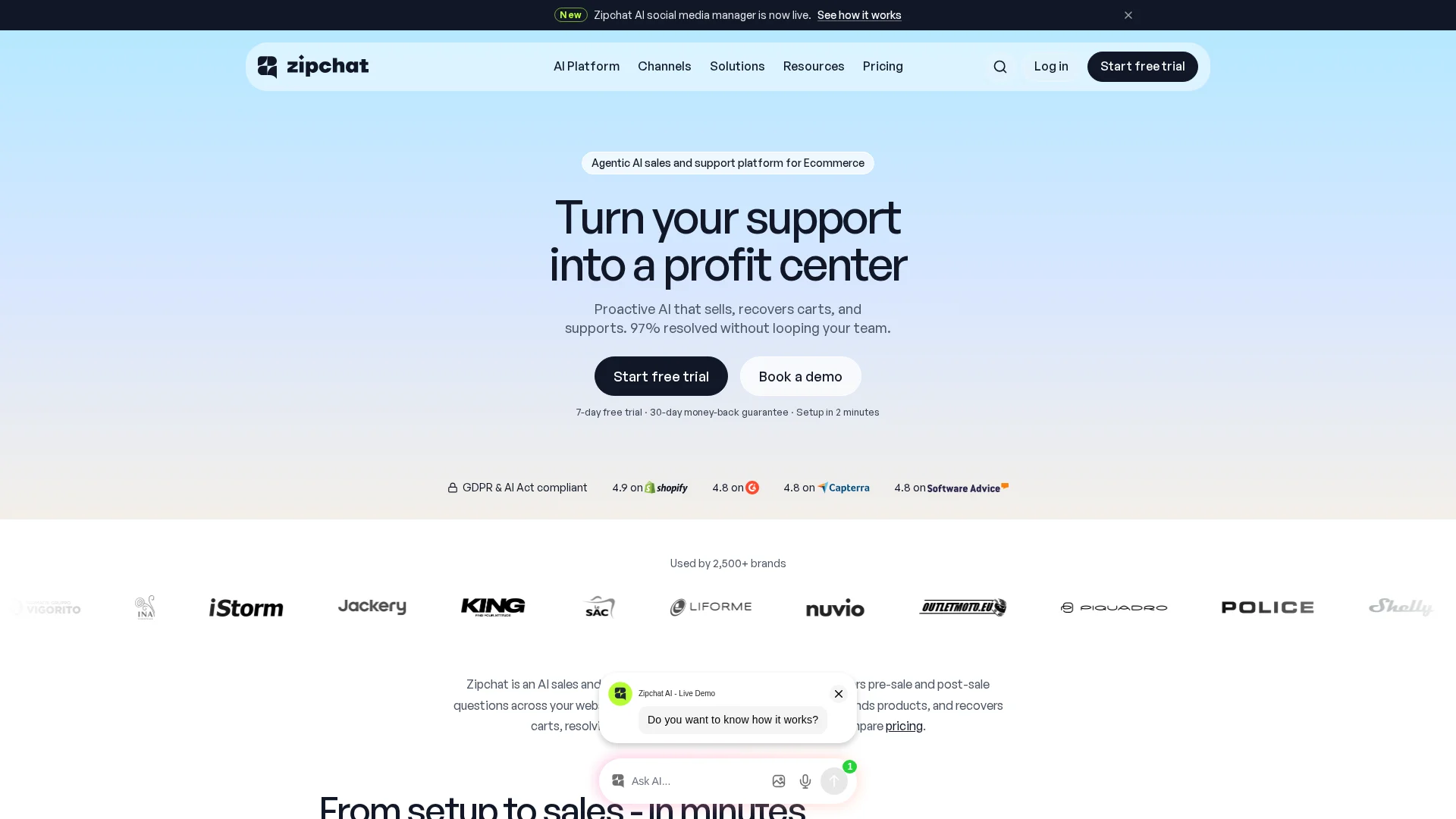
Zipchat AI is a multichannel agent billed on AI replies, with 500 replies on its $49 Starter plan. It covers chat, email, WhatsApp, Instagram, and Messenger.
The Five Shopify AI Chatbot Pricing Models That Change Your Bill
The sticker price tells you almost nothing. What matters is the meter: what the vendor counts when you use it.
Visitor-Based Pricing
You pay based on monthly store traffic. Busy months cost more, quiet months cost less. Rep AI uses this model. It works well when traffic predicts support load, but a viral spike or Black Friday rush inflates your bill even if nobody chats. Check whether overage fees apply before you commit.
Reply, Conversation, Ticket, and Seat Pricing
These four models bill differently:
- Conversation-based: Tidio charges per conversation, so AI chat that escalates to a human can double-count.
- Ticket-based: Gorgias bills per ticket, around $0.90-$1.00 per AI resolution on top of plan fees, so automation adds cost instead of cutting it.
- Per-reply: common on flat plans, though AI usage is often a separate add-on.
- Per-seat: Zendesk and Intercom bill per agent, which punishes seasonal hiring.
| Model | Example | Bill grows with |
|---|---|---|
| Traffic | Rep AI | Store visitors |
| Conversation | Tidio | Chats started |
| Ticket + AI resolution | Gorgias | Support volume |
| Seat | Intercom | Team size |
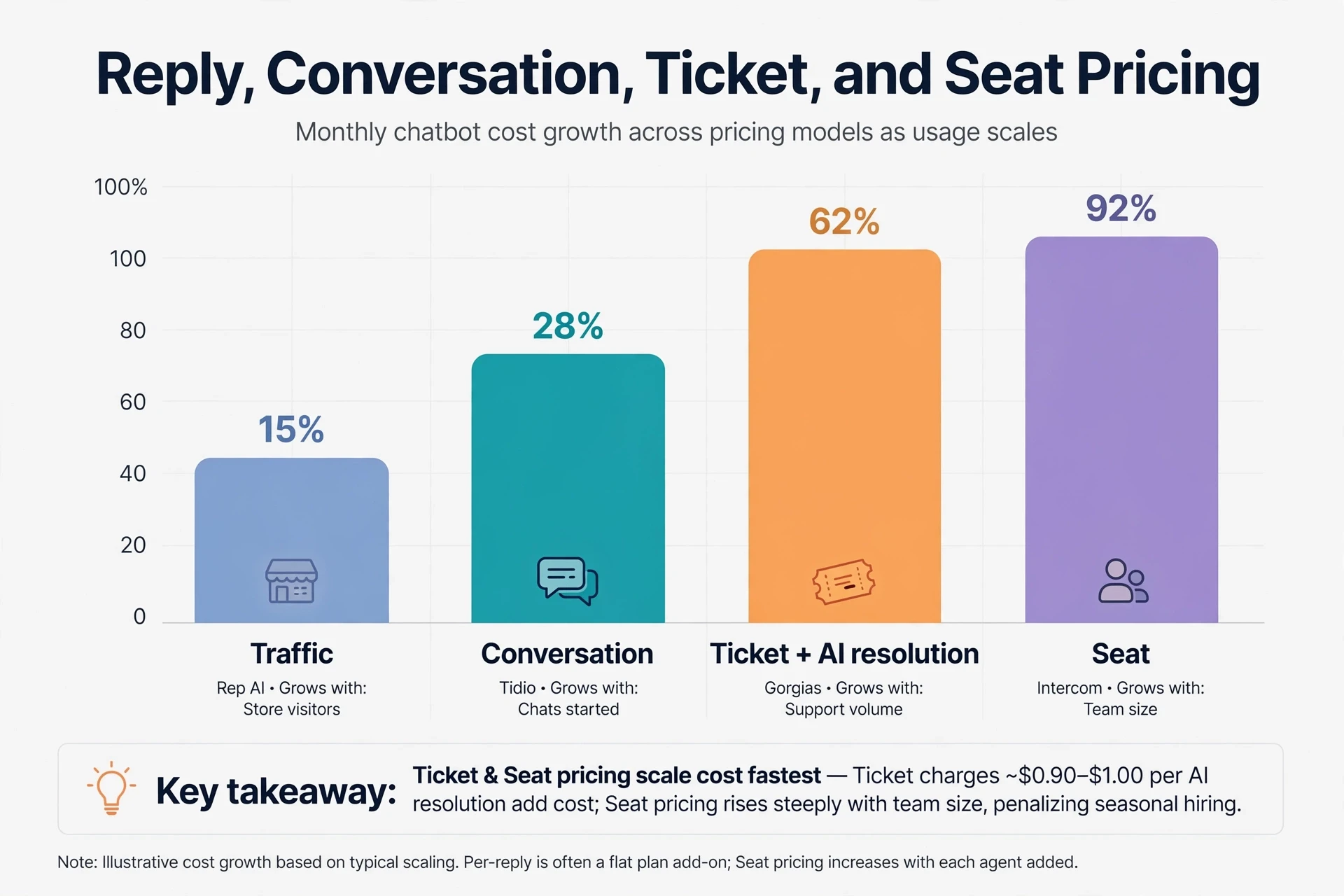
Per-resolution pricing means your bill climbs exactly when your store performs. Flat plans avoid that trap, which is the model Kandid uses.
Also Read: Kandid Ecommerce Chatbot Review: Features, Pricing, and Fit
Kandid vs Tidio, Gorgias, and Zipchat: Which Pricing Model Fits Growth?
Compare the Meter Before the Feature List
Each tool bills differently. Gorgias charges per ticket, and its AI resolutions count against that quota too, so automation gets billed twice (Ecom AI Insights, 2026). Tidio's Lyro AI is a separate add-on, so real cost runs 2-3x the base plan. Zipchat uses flat per-reply tiers. Kandid keeps AI product answers and recommendations included, so your invoice tracks plan tier, not chat volume.
Match Pricing to the Operating Job
Pick by workload, not headline price:
- High ticket volume, big team: Gorgias helps, but model the double-billing first.
- Small team, low volume: Tidio's free tier is a fair start.
- Growth-stage stores: Flat models like Zipchat or Kandid predict costs during seasonal spikes.
Also Read: Ecommerce Chatbot Review: Features, Pricing, Benefits, and Limitations
How to Forecast Your Shopify AI Chatbot Cost Before You Upgrade
Landed costs often run two to three times the advertised price once AI fees, seats, and overages stack up. Forecast before you upgrade, not after the invoice.
Build Three Traffic and Usage Scenarios
Model three months: slow, average, and peak (think Black Friday). For each, estimate conversations, AI resolution rate, and seats. Per-resolution and per-conversation bills climb with traffic, so a peak-month scenario exposes the real ceiling. Flat-rate plans hold steady here, which is the whole point.

Measure Cost Against the Right Revenue Signal
Judge cost per resolved conversation against your own support numbers, not vendor claims. Count deflected tickets at your true fully loaded cost per conversation, then treat conversion lift as upside, not the base case.
Also Read: 7 Shopify Chatbot Apps That Help Stores Convert More Visitors
Which Shopify AI Chatbot Pricing Model Should You Choose?
Match the model to your volume shape. Flat monthly tiers suit steady traffic and tight budgets. Per-conversation pricing works when chats are short and rare, but sales spikes can double your bill. Per-resolution pricing favors low volume, yet success raises the cost - one 2026 analysis calls this the most expensive mistake. Model your peak month, not your quiet one, before you sign. If you want predictable costs while scaling, Kandid's Shopify AI sales agent is built for growing stores.
Ready to see how a pricing model fits your store? Check out Kandid and compare plans for your team.
Frequently Asked Questions
Q1: How do Shopify AI chatbot pricing models compare for growing stores?
Most tools charge per conversation, per resolution, or flat monthly seats. Per-conversation plans scale best while traffic is small; flat pricing wins once volume grows.
Q2: Which pricing model is cheapest for high chat volume?
Flat monthly plans usually win at scale. Tools like Tidio or Gorgias bill on seats or tickets, so check per-chat fees before committing.
Q3: Do free plans handle a growing Shopify store?
Free tiers cap conversations or AI replies. Fine for testing, but most growing stores outgrow them within a few months.
Conclusion
The pricing model, not the headline price, decides your bill. Flat tiers stay predictable through peak season spikes, while per-resolution billing can double costs as your store grows.