Shopify AI Chatbots vs Product Recommendation Apps for Sales
Quick Summary: The core choice between a Shopify AI chatbot and a product recommendation app depends on whether shoppers need help deciding or just need products placed in front of them. Chatbots excel at guiding complex, high-consideration purchases through conversation, while recommendation apps are better for passive discovery and high-intent surfaces like cart drawers and post-purchase pages. The article advises picking based on your store's bottleneck, noting that many stores run both tools together, and stresses measuring influenced sales rather than vanity metrics.
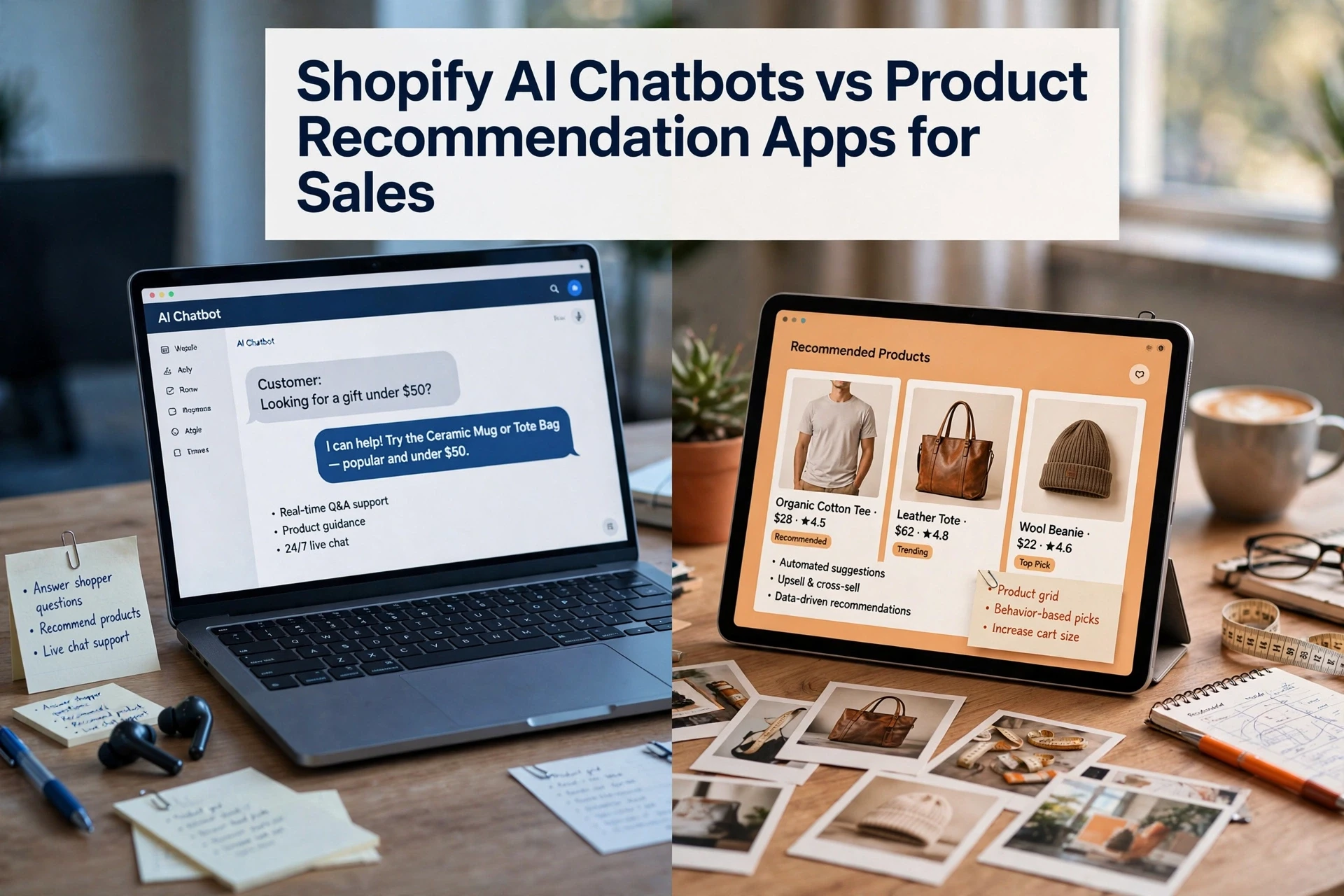
A shopper hunting for a moisturizer for sensitive skin doesn't want more product tiles. A Shopify AI chatbot vs recommendation app comes down to this: chatbots ask follow-up questions and explain trade-offs, while recommendation apps quietly place related products with minimal interaction. Pick wrong, and you pay for complexity without fixing why shoppers hesitate. This guide compares both on guidance, Shopify fit, setup, and measurement. Kandid authors this comparison. Research date: September 15, 2026.
Shopify AI Chatbot vs Recommendation App: At a Glance
| Shopify AI chatbot | Product recommendation app | |
|---|---|---|
| Primary sales job | Resolve uncertainty and guide product choice | Increase product discovery and add-on exposure |
| Shopper interaction | Two-way conversation with follow-up questions | Mostly passive product browsing |
| Shopify actions | Recommendations, cart actions, order lookup, handoff | Product blocks, related items, complementary items |
| Setup and maintenance | Requires knowledge, workflow, and escalation review | Requires placement, rules, catalog, and inventory checks |
| Best fit | Complex catalogs or high-consideration purchases | Broad catalogs and low-friction merchandising |
| Measurement | Conversations, influenced purchases, and funnel events | Impressions, clicks, add-to-cart, and attributed orders |
How Shopify AI chatbot and Product recommendation app Compare
The Shopify AI chatbot vs recommendation app choice comes down to how shoppers get help. Here is what each contender actually is.
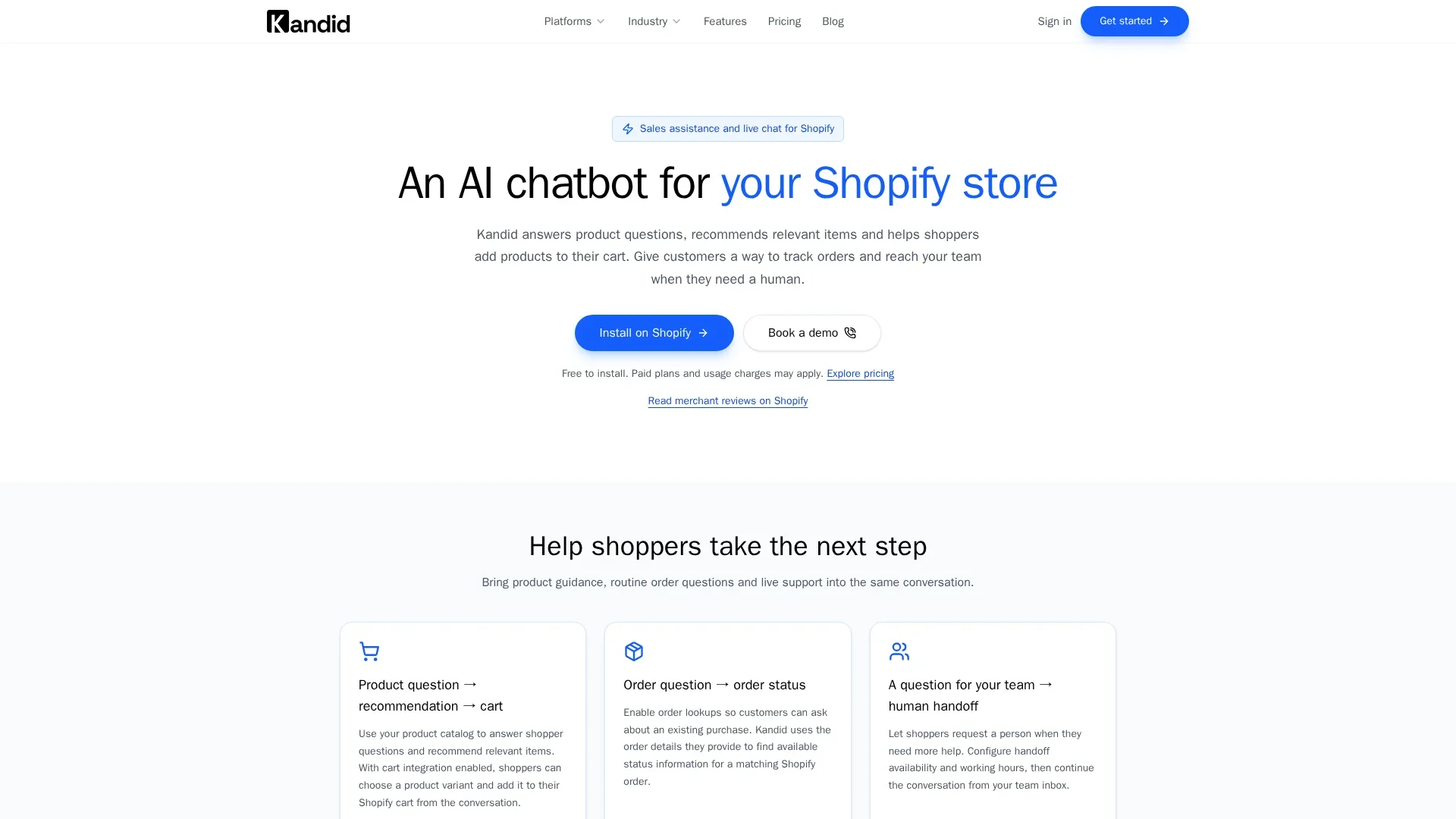
Shopify AI chatbot
A conversational sales assistant that answers questions using your store and catalog data. It talks with shoppers, asks follow-up questions, and guides product choice in real time.
Key strengths
- Two-way conversation with cart actions, order lookup, and handoff
- Suits complex catalogs and high-consideration purchases
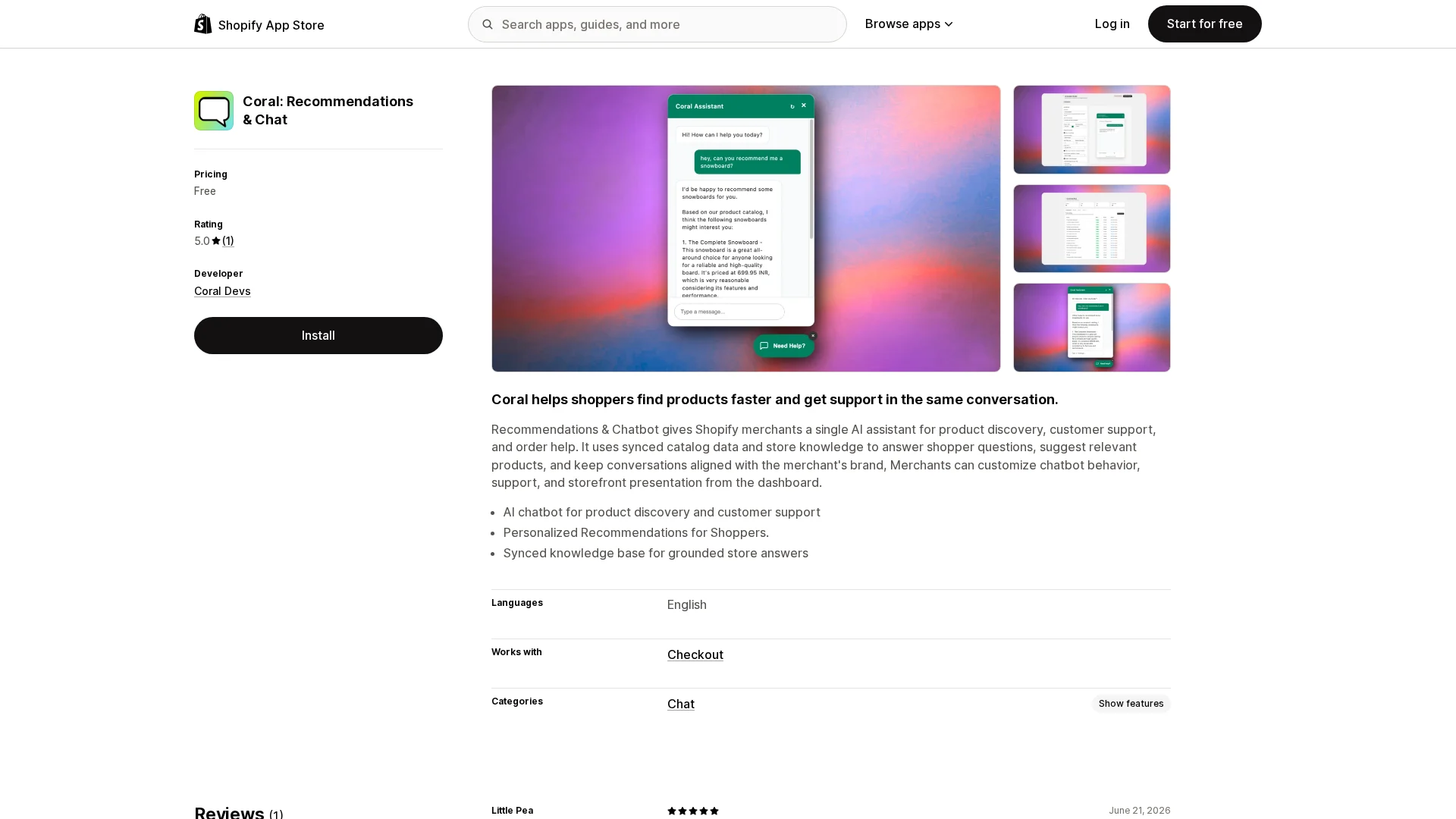
Product recommendation app
A merchandising tool that shows related or personalized products near the buying path. Shoppers browse passively, so discovery depends on placement and catalog rules.
Key strengths
- Increases product discovery and add-on exposure
- Fits broad catalogs and low-friction merchandising
Assisted Sales Capability: Conversation or Placement?
When shoppers need help choosing
Recommendation apps show products. Chatbots sell them. A widget on a product page can only react to what a shopper clicks. An AI assistant can ask about budget, use case, and preferences, then narrow the catalog down to two or three options. That gap matters most for considered purchases. Gorgias's 2026 research found assisted orders averaged 47% higher order value than unassisted ones, with the biggest lifts in spec-heavy categories like electronics and furniture. Salesforce research on conversational recommenders makes a similar point: shoppers buying complex products need education, not just a list. A widget cannot answer "will this fit my room?" A chatbot can.

Also Read: Ecommerce Chatbot Setup Guide for Shopify Catalog and Storefront Sales
Shopify Execution: Cart, Orders, and Human Handoff
Where recommendation apps remain stronger
Chatbots can suggest products mid-conversation, but recommendation apps still win in three Shopify-specific spots:
- Cart drawers. Native or app-based upsells sit right above the checkout button with one-click add. The cart is your highest-intent surface, and a chat widget is easy to overlook there.
- Post-purchase pages. Offers between checkout and the thank-you page convert at 3-8%, according to Carryup's placement benchmarks. Chatbots have no surface there.
- Hands-off automation. Widgets and cart upsells run 24/7 with no setup drift. Chatbots need testing, and AI can misfire on pricing or stock questions.
Chatbots add live order tracking and human handoff to agents, which cart upsell guides treat as separate workflows.

Also Read: Ecommerce Chatbot Product Recommendations and Add-to-Cart Setup Guide
Setup, Cost, and Revenue Measurement
Both tools install from the Shopify App Store in minutes. The cost gap shows up after install: most AI chatbots, like Chatty, price by AI conversation volume, while recommendation apps usually charge a flat monthly fee.
A practical measurement plan
- Tag chat-driven traffic with UTM links.
- Track assisted orders - sales within 24-72 hours after a chat.
- Compare conversion on pages with the tool vs pages without it.
- Review a simple monthly dashboard.
Report chat results as influenced, not caused, since ads and email also claim credit - a distinction vendors like Carti stress for honest attribution. Chatbot plans like Chatty start near $19.99/month with per-conversation overages.
Also Read: Ecommerce Chatbot Product Discovery Features Compared for Shopify Stores
Which Should You Choose for Shopify Assisted Sales?
Pick based on your bottleneck. If shoppers struggle to compare or choose products, an AI chatbot that guides discovery wins. If buyers already know what they want, passive recommendation apps on product and cart pages are often enough. As Shopify-focused comparison research notes, the two jobs need different data and different success measures. Many stores run both, starting with the tool that fits their catalog's complexity.
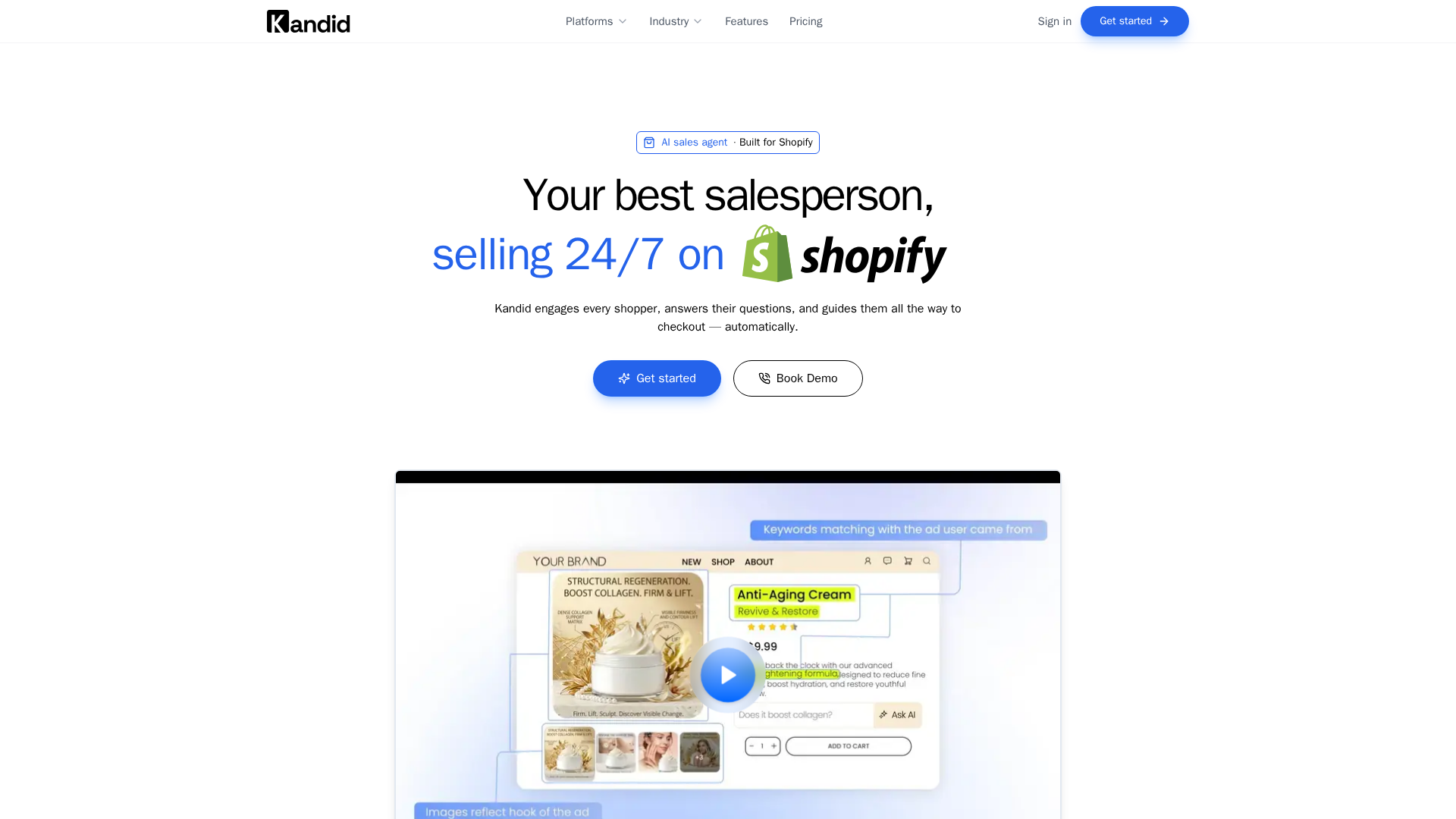
Still weighing chatbots against recommendation apps? Kandid does both: its AI sales agent answers questions and recommends products. See how it works.
Frequently Asked Questions
Q1: Are Shopify AI chatbots or recommendation apps better for assisted sales?
Chatbots. They answer questions and guide shoppers in real time; recommendation apps only show passive widgets.
Q2: Can I use both together?
Yes. Many stores pair a chatbot like Kandid with on-site recommendation widgets.
Q3: How do I measure chatbot-driven sales?
Track chat-attributed orders and revenue in your app analytics, comparing against non-chat sessions.
Conclusion
Chatbots sell through conversation; recommendation apps sell through placement. Shopify's own data shows AI-guided sessions convert nearly 50% better than organic search, so measure influenced sales, not vanity chat counts, and pick based on your catalog and traffic.