9 D2C Product Recommendation Placements That Lift Conversions
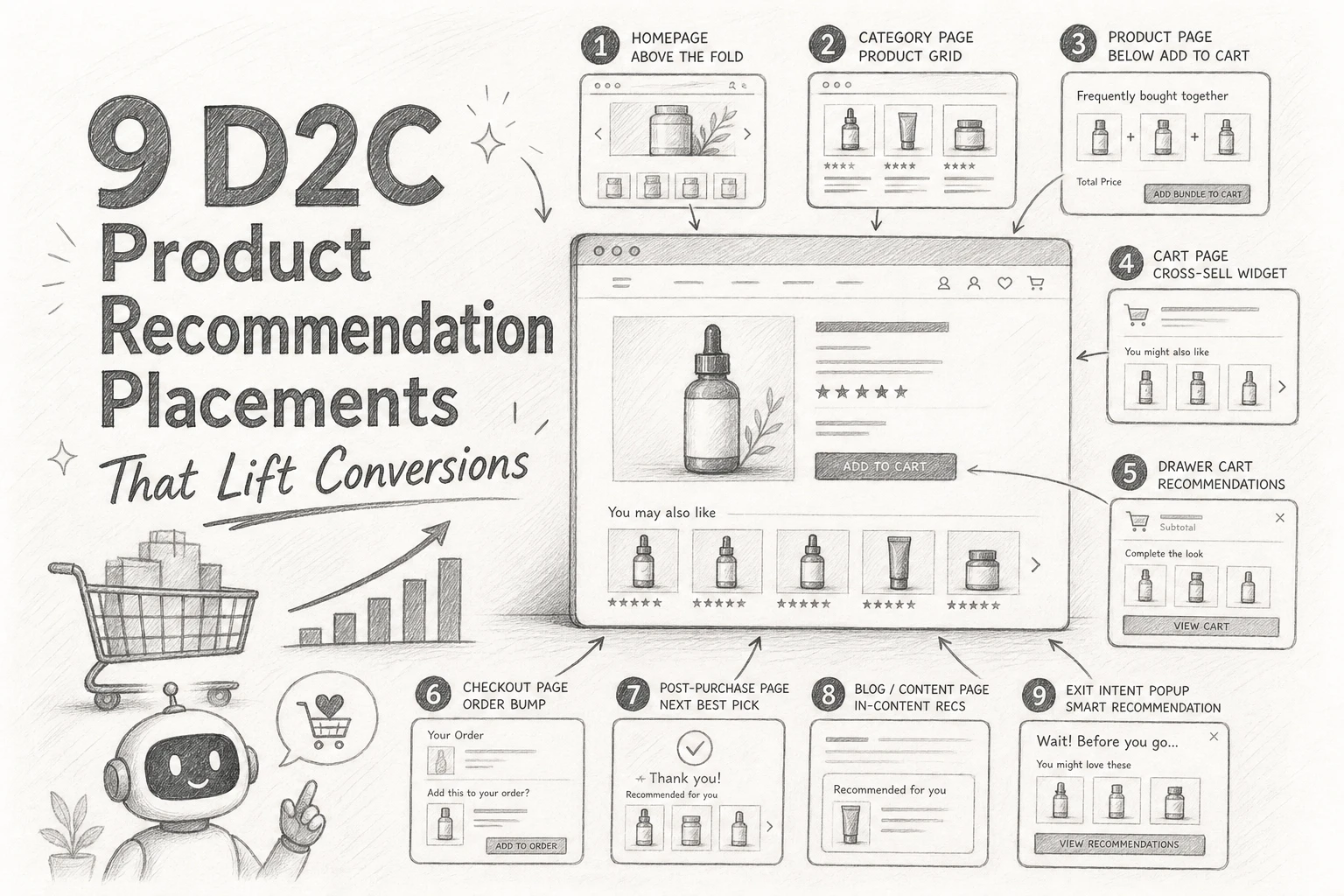
Quick Summary: Product recommendation placements near purchase, especially on product pages, cart, and checkout, significantly boost conversions and average order value. The most effective spots are the product detail page, cart cross-sells, and checkout upsells, which reduce shopper doubt and increase relevant add-ons. Testing these placements individually and aligning them with shopper intent maximizes their impact on revenue.
A recommendation module can raise revenue or pull shoppers off track. Most teams test D2C product recommendation placements in the wrong order, then judge results by clicks instead of conversion, AOV, and checkout completion. This guide ranks the nine D2C product recommendation placements that matter most, starting near purchase. We scored D2C product recommendation placements by purchase proximity, AOV lift, buying fit, and test ease, with priority on placements that cut doubt and add relevant items without friction.
Quick Comparison
| Placement | Best for | Primary KPI | Implementation effort | Risk level |
|---|---|---|---|---|
| Product Detail Page (PDP) recommendations | High-consideration shoppers who need reassurance before buying | Conversion rate | Medium | Low when recommendations are tightly relevant |
| Cart page bundles and cross-sells | Shoppers who are ready to purchase but can still be expanded to a larger basket | Average order value | Low to medium | |
| Checkout upsells | Minimal, high-confidence add-ons at the last step | Checkout completion and AOV | Medium | High if the module adds friction |
| Post-purchase offers | Second-order revenue and replenishment | Repeat purchase rate | Low to medium | Low |
What to know about D2C product recommendation placements
Product recommendations do not win on logic alone. Placement changes results. The same module can feel helpful on one page and easy to ignore on another.
That matters more now because shoppers move fast, compare options, and drop off when choice feels hard. The best placements reduce doubt, guide the next click, and raise cart value without adding friction.
A strong recommendation shown at the right moment usually beats a smarter one shown in the wrong place.
1. Product Detail Page (PDP) recommendations
PDP product recommendations deserve the top spot. They hit shoppers at the exact decision point, where hesitation is highest and a relevant next step can close the sale or grow the basket.

Highlights
- Best for related items, substitutes, and complementary products.
- Shopify supports related and complementary product suggestions on product pages through Search & Discovery.
- Baymard found 68% of desktop sites miss key cross-sell details, so relevance and clear product info matter on PDP suggestions.
Specs
- Best for: High-consideration shoppers who need reassurance before buying
- Primary KPI: Conversion rate
- Implementation effort: Medium
- Risk level: Low when recommendations are tightly relevant
Pros
- Captures intent and can lift both conversion rate and AOV.
Cons
- Weak catalog data or poor matches create friction. It ranks first because PDP recommendations stop doubt before the shopper leaves.
Last updated: August 12, 2026
Also Read: D2C Recommendations vs Static Bundles for Higher AOV
2. Cart page bundles and cross-sells
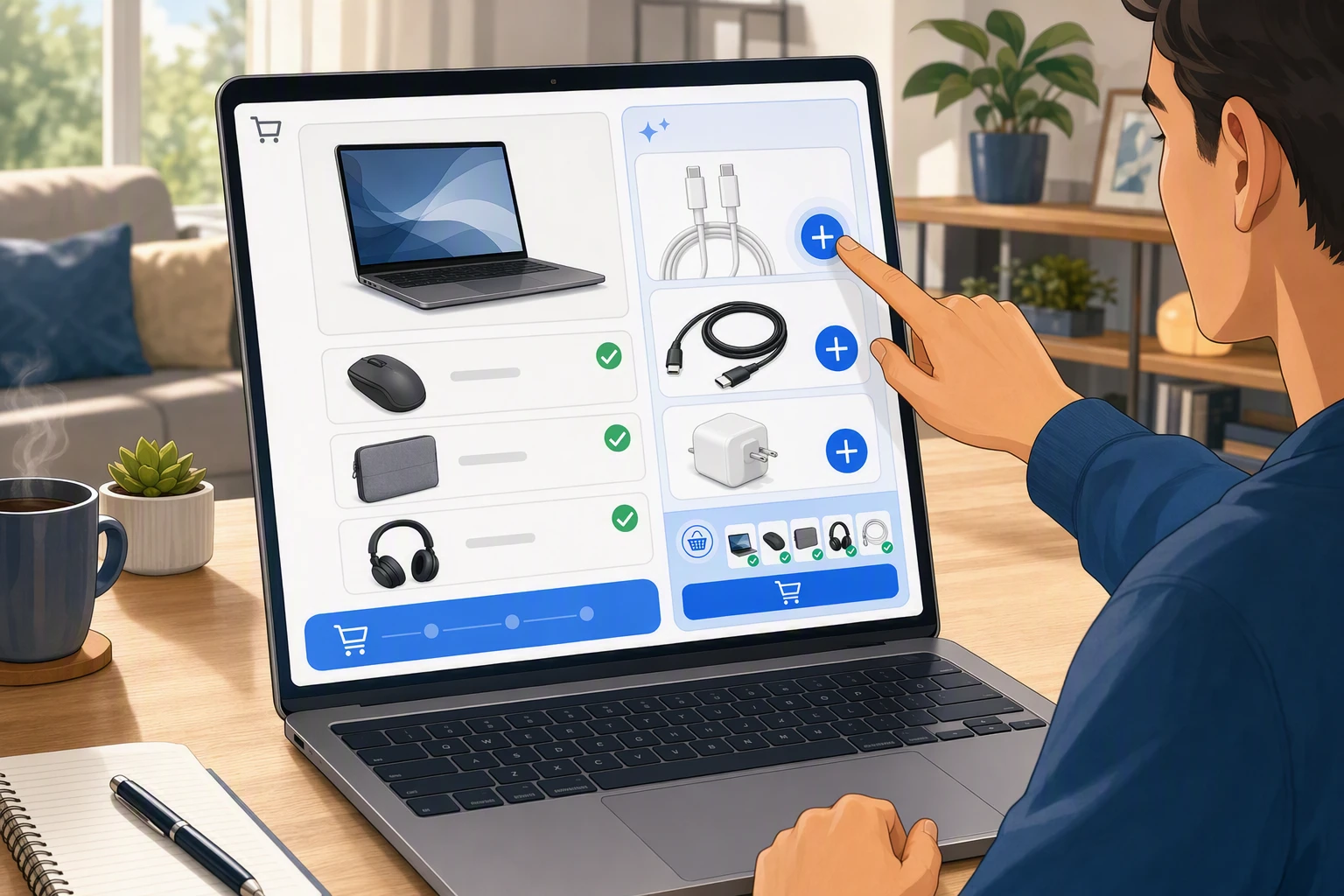
The cart is a strong spot to lift basket size because the shopper already plans to buy. Keep cart page recommendation widgets tight, relevant, and easy to add, since Baymard found irrelevant cart cross-sells hurt trust.
Highlights
- Best for bundles, add-ons, and frequently bought together items
- One-click, low-friction cross-sell recommendations work best
Specs
- Best for: Ready-to-buy shoppers
- Primary KPI: Average order value
- Implementation effort: Low to medium
Pros
- Strong AOV lift
Cons
- Too many choices can slow checkout, a risk in a flow where 70.19% of carts still get abandoned
It ranks here because intent is high, so relevant offers reliably raise order value.
Last updated: August 12, 2026
Also Read: D2C Product Recommendation Setup for Higher Store Conversions
3. Checkout upsells
Checkout is the last safe place to add value, so keep it tight. Since 17% of shoppers abandon long or complex checkout flows, your checkout recommendation modules should stick to one-tap, low-risk extras like protection add-ons or small accessories.

Highlights
- Best for tiny, high-margin add-ons
- Avoid complex comparison or browsing behavior
- Works best when the item is obvious and low risk
Specs
- Best for: Minimal, high-confidence add-ons at the last step
- Primary KPI: Checkout completion and AOV
- Implementation effort: Medium
- Risk level: High if the module adds friction
- Recommended module type: One-tap add-ons, small accessories, protection plans
Pros
- Very close to purchase completion
- Can add incremental margin with little content depth
Cons
- Easy to hurt conversion if overdone
It ranks here because checkout upsell placements can lift revenue fast, but only when they stay minimal.
Last updated: August 12, 2026
Also Read: 9 D2C Cross-Sells That Increase Average Order Value
4. Post-purchase offers
Post-purchase recommendations work after the first sale is done. That makes them a smart spot for replenishment, accessories, and upgrades that fit the original order, especially on thank-you pages or follow-up messages. Klaviyo recommends post-purchase cross-sell flows after order or fulfillment events.

Highlights
- Best for reorder prompts, add-ons, and follow-on products
- Helps shrink dead time before the second order
- Works well via email, SMS, WhatsApp, and thank-you pages
Specs
- Primary KPI: Repeat purchase rate
Pros
- Baymard shows the confirmation step is a low-risk place for post-checkout engagement
Cons
- Timing matters more than placement alone
It ranks here because the first conversion is safe, so retention upside is strong but less immediate.
Last updated: August 12, 2026
Honourable Mentions
These placements still help, but most stores see stronger conversion lift from tighter decision-point surfaces.
- Homepage personalized rows - Good for returning visitors and category re-entry, but weaker than PDP and cart placements for fast conversion.
- Collection page sorting and recommendations - Helps large catalogs feel easier to scan and narrow.
- On-site search results recommendations - Strong for high-intent queries with size, use case, or fit needs.
- Support and chat-adjacent recommendations - Works when questions block purchase, but results depend on traffic and agent quality.
- Email and lifecycle recommendation blocks - Better for retention and repeat orders than immediate on-site conversion.
How to choose the right recommendation placement
- Start where buying decisions happen: PDP first, then cart, then checkout. Fix the closest conversion gap before adding more modules.
- Match intent to format: use substitutes for compare-heavy shoppers, and complements for buyers who are almost ready.
- Keep high-friction steps light. In cart or checkout, show one tight suggestion set, not a wall of choices.
- Fit placement to catalog depth: broad catalogs need search and collection help; niche catalogs win with strong PDP guidance.
- Track the right KPI by placement: PDP = conversion rate, cart/checkout = AOV, post-purchase = repeat rate.
- Test one placement at a time. Kandid stands out when shoppers need live comparison, spec guidance, and compatibility help before they buy.
Want better recommendation placement performance without adding more clutter? Kandid turns high-intent questions into guided product picks that lift conversion, AOV, and ROAS. See how it fits your store.
Frequently Asked Questions
Q1: Discover where recommendation modules work best across the funnel.
Top funnel works best with quiz, category, and educational recommendation blocks. Mid funnel fits comparison and bundle modules. Bottom funnel needs cart, PDP, and checkout suggestions. Match each placement to shopper intent, not page type alone.
Q2: Which placement usually lifts conversions fastest?
Product detail page recommendations often win first. Shoppers already show intent there. Start with related products, size or fit guidance, and compatibility prompts. If your catalog is complex, a guided tool like Kandid can help remove doubt before checkout.
Q3: How many recommendation placements should I test at once?
Test one to two placements first. Too many changes hide the real winner. Pick one high-intent page and one cart or checkout test. Track conversion rate, AOV, click-through rate, and assisted revenue so you see full impact.