Personalized Product Recommendation Logic Explained
Quick Summary: Product recommendations work through three layers: clean shopper and catalog signals, a ranking method using rules, similarity, or learned models, and placement where shoppers notice them. Shopify stores can combine theme blocks, Search & Discovery, and AI chat, but new products need manual rules, attribute matching, or launch boosts to overcome cold-start invisibility. Auditable rules, accurate inventory and tags, and guardrails such as excluding rivals and repeating bestsellers keep recommendations useful, while Kandid applies similar logic through conversational product discovery.
Two Shopify stores stock the same moisture-wicking running tee. One shows shoppers the matching shorts; the other shows a bestseller vest. The catalog is identical, so the difference comes down to product recommendation logic. This guide breaks that logic into three layers: input signals, decision methods and placement. Then it maps each layer to a concrete Shopify setup, with a worked example and a guardrail checklist you can apply to your own store.
How Does Product Recommendation Personalization Logic Work?
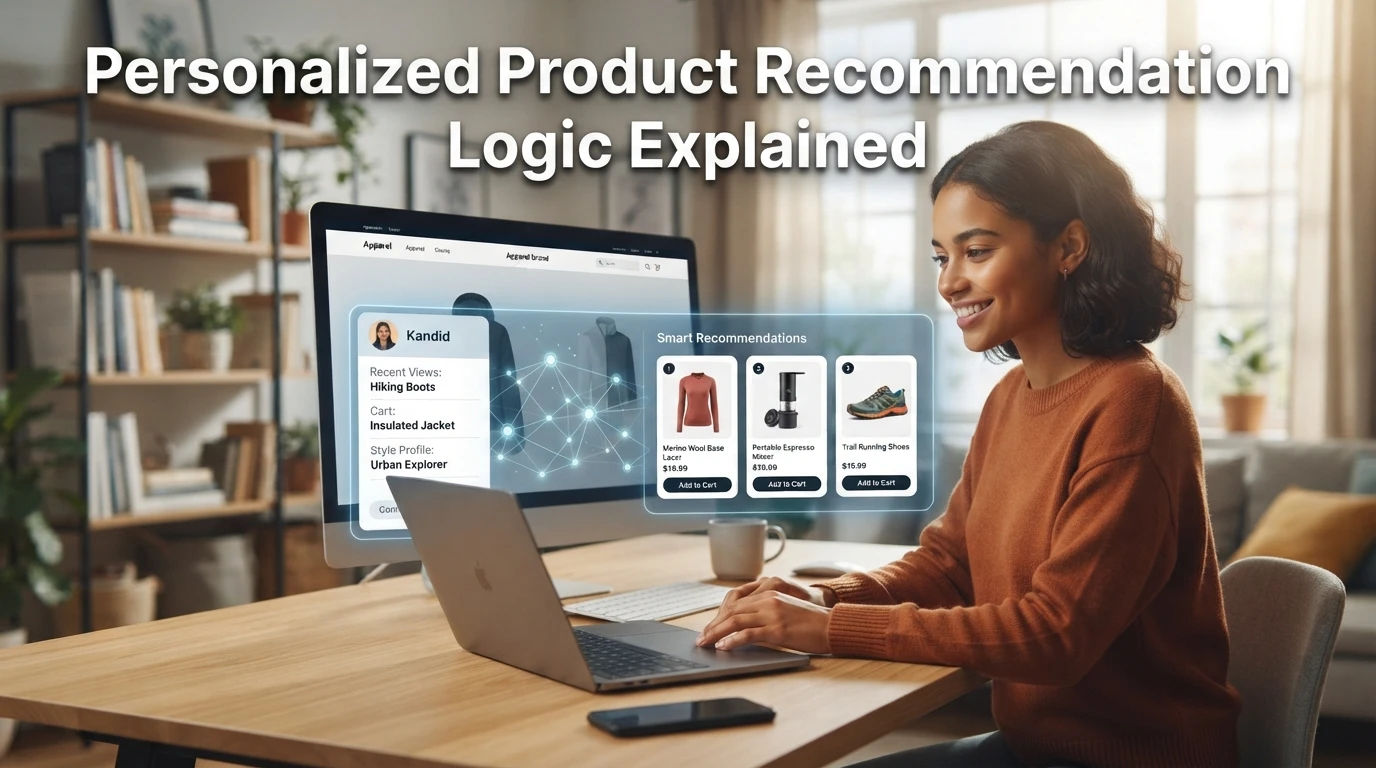
Product recommendation personalization logic works in three layers: it reads signals about each shopper, applies a decision method to rank products, then places the result where the shopper sees it. Signals feed the method, the method picks products, and placement decides whether anyone clicks.

The Signal Stack: What the Logic Reads
Every engine starts with data. On Shopify, that means clickstream behavior, cart and order history, product tags and metadata, and referral context like the ad or email that brought the shopper in. Weak product data quality and tags undermine everything downstream, so clean titles and attributes matter before any model does.
The Decision Method: Rules, Similarity or Learned Models
The method turns signals into a ranked list.
| Method | Control | Data Needed | Typical Use |
|---|---|---|---|
| Rule-based | High | None beyond your rules | Related products merchandising rules |
| Similarity-based | Medium | Product attributes | "Similar items" blocks |
| Learned models | Low | Traffic and orders | Personalized homepages |
Rules are explicit if-then logic you write yourself. Algorithmic methods, including collaborative filtering vs content-based matching, learn patterns from behavior. Many product recommendation tactics mix all three by placement.
Cold Start, Warm Start and Why Your New Product Is Invisible
A new product has no clicks or orders, so learned models skip it. That is the cold start problem. Fix it with manual rules, attribute similarity, or a launch boost in your merchandising priority order.
Where Recommendation Logic Runs in a Shopify Store
Product recommendations run in three places: native theme blocks, the Search & Discovery app, and AI chat assistants. Each layer uses different logic, so where a shopper sees a suggestion depends on which one fires first.
| Layer | How it picks products | Typical placement |
|---|---|---|
| Native theme blocks | Simple rules: same vendor, tags or collection | Product pages, cart |
| Search & Discovery app | Algorithmic matching with merchant overrides | Product and search pages |
| AI chat assistants | Shopper intent from conversation plus store data | Chat window, any page |
Native Theme Recommendation Blocks
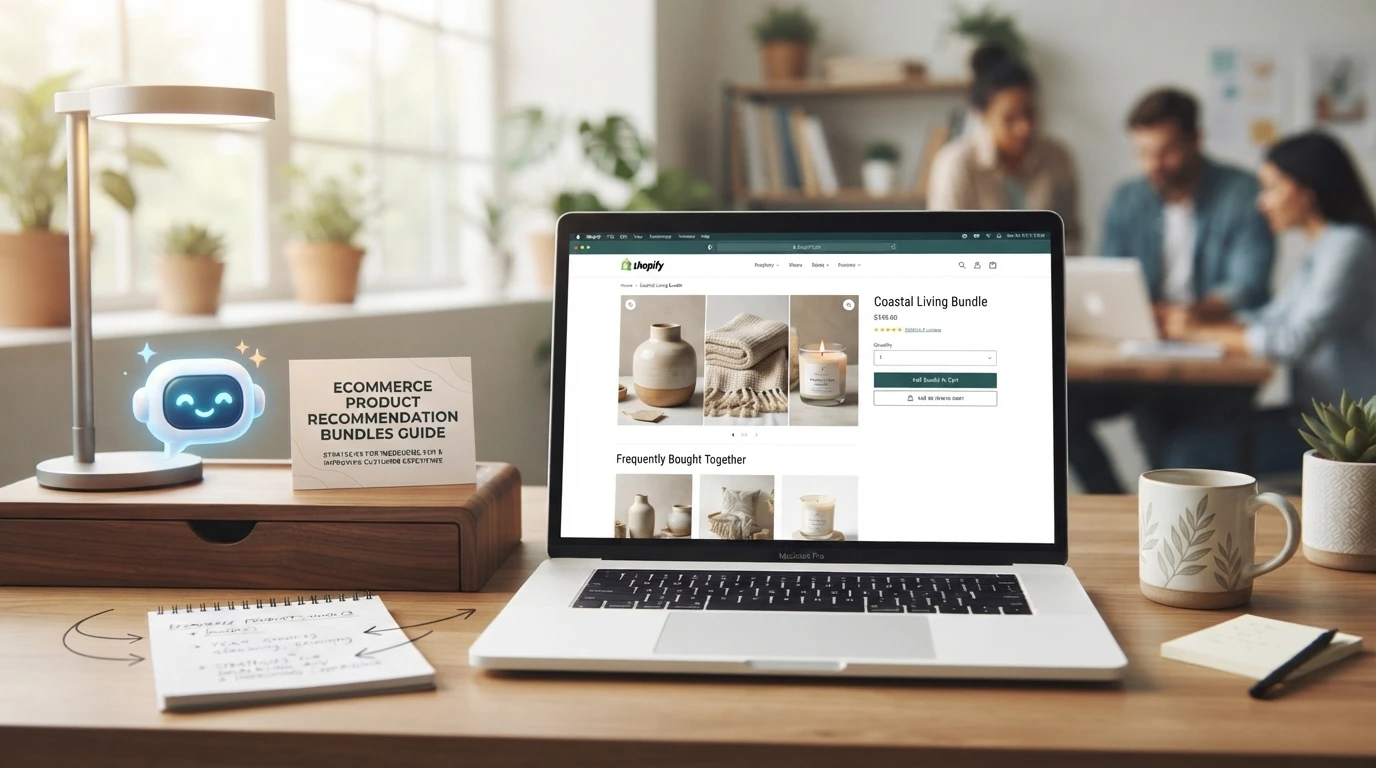
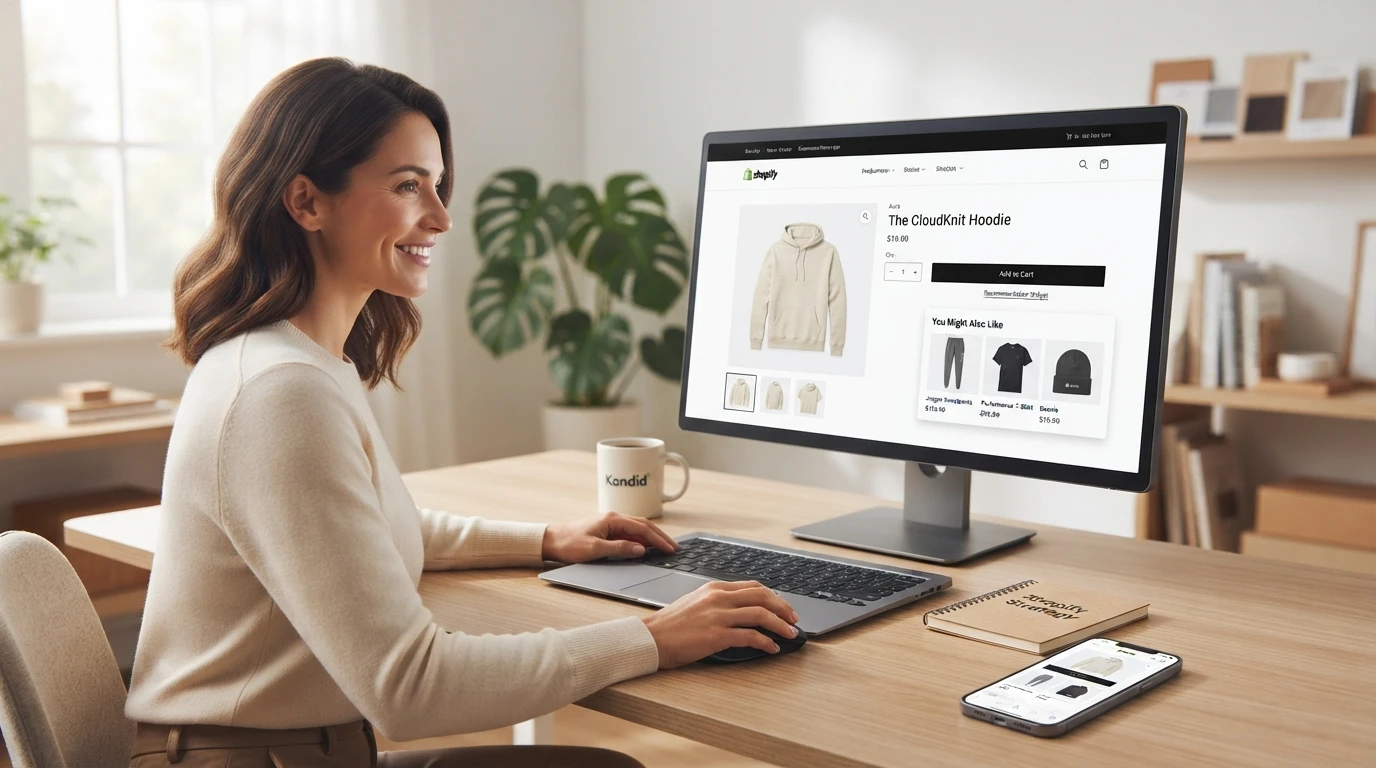
Most themes ship a "related products" section. It pulls items from the same collection or with matching tags, using static rules rather than shopper behavior. Setup takes minutes, but the same block shows every visitor the same products. Placement choices matter here, and a placement guide covers the details.
Search & Discovery and Algorithmic Merchandising
Shopify's free Search & Discovery app adds smarter suggestions. It blends co-purchase patterns, price similarity and your merchandising overrides, like boosting an item or suppressing out-of-stock products. You control priority order through the app's settings.
AI Chat Assistants and Conversational Discovery
Chat assistants run the logic in conversation. The shopper states a need, and the assistant matches it against product data, inventory and past questions, then recommends items in reply. This is conversational product discovery: intent decides the suggestion, not page rules. Platforms like Kandid run this layer for Shopify stores. Because the shopper talks first, results come faster but attribution gets murkier, since the chat influences rather than renders the block.
Specifying and Governing Recommendation Rules
Writing the Rule Set: Slot, Purpose, Priority Order
Write each rule as three lines:
- Slot: where the products appear, like "cart page, bottom strip".
- Purpose: why the slot exists, like "raise order value" or "rescue a stalled browse".
- Priority order: which rule wins when two compete.
This template keeps merchandising rules auditable. Anyone can trace a shown product back to its slot and purpose.

Availability, Brand Fit and Diversity
Add guardrails. Suppress out-of-stock items automatically so no slot shows an unbuyable product. Block rivals or off-brand items from appearing next to your lines. Cap repeats so one bestseller never fills every slot. Review these monthly, because stock, collections and campaigns shift.
Catalog Data That Makes Any Logic Work
Rules only work on clean inputs. Keep titles, tags, collections, margins and stock status accurate, since every method, from Shopify's Search and Discovery app to an AI sales agent, reads the same catalog.

Understanding the logic is step one. Kandid's AI sales agent applies it live, asking shoppers questions and recommending the right products. See how it fits your store.
Frequently Asked Questions
Q1: How does product recommendation personalization logic work?
It reads shopper signals, ranks products with rules, similarity or learned models, then places results in slots. Clean catalog data feeds every layer.
Q2: How do I fix the cold start problem for new products?
Add manual rules, attribute similarity, or a launch boost in your merchandising priority order.
Q3: Can AI chat recommendations be attributed to revenue?
Only partly. Chat influences purchases across pages, so track assisted revenue with stated limits rather than direct clicks.
Conclusion
Product recommendation logic comes down to three layers: clean signals, a decision method that fits your data, and placement shoppers actually see. Get product data quality and tags right, write auditable rules with a clear priority order, and use the Search and Discovery app or AI chat where conversation beats page rules.