Ecommerce Product Recommendation Tactics That Convert
Quick Summary: Intent-matched recommendations such as frequently bought together, cart and checkout upsells, and conversational discovery convert best because they help shoppers at the point of decision. Context-based tactics often outperform personalisation for newer stores with limited shopper data, while generic pop-ups, repeated grids, and poorly placed bestseller widgets tend to add clutter without lifting revenue. Prove impact with a two-to-four-week holdout test and compare revenue per session, rather than trusting last-click attribution; Kandid supports conversational product discovery through live chat.
A shopper hits one product page, and within seconds your store has to guess what they want next. The ecommerce product recommendation tactics you pick for that moment decide whether the session ends in one SKU or three, no matter how clever your model is. This guide sorts the tactics that lift average order value from the ones that just add clutter, including Shopify-native placements and conversational product discovery, then shows how to measure each honestly.
How Product Recommendations Work on Shopify Stores
Every recommendation engine does the same job: it picks products to show a shopper based on what the store knows about them.
The signals your store already has
Views, add-to-carts, purchases, order history and cart contents all feed the engine. Shopify's [Search & Discovery app](
) also lets you hand-pick related and complementary products. Placement matters here; see our guide to recommendation placement.
Rules, collaborative filtering and content-based logic
Rule-based engines follow merchandising logic you set, like "frequently bought together". Collaborative filtering predicts taste from similar shoppers, so it needs traffic; sparse stores struggle, as research notes. Content-based logic matches product attributes instead, which works from day one.
Which Product Recommendation Tactics Actually Convert
The tactics that convert best are the ones that match shopper intent at the moment of choice: cart and checkout upsell, frequently bought together, and conversational product discovery. Here is how the main options compare.
Tactic table: what each one does and when it works
| Tactic | Placement | Data basis | Metric to watch | Failure mode |
|---|---|---|---|---|
| Frequently bought together | Product page | Co-purchase history | Attach rate | Wrong pairings from thin data |
| Also bought | Product page | Related purchases | Product view rate | Repeating the same items |
| Cart upsell | Cart and checkout | Cart contents | Average order value | Irrelevant add-ons |
| Bestsellers | Home, category pages | Sales rank | Click-through | Ignoring shopper intent |
| Conversational discovery | Chat widget | Shopper questions | Conversion rate | Generic, untrained answers |

Why context beats personalisation for most stores
Most stores lack enough per-shopper data for true personalisation. Context-based tactics, like pairing items from the current cart or session, need less history and still lift average order value. That is why frequently bought together usually outperforms also bought on newer catalogues.
Tactics that look good and do not convert
Pop-ups on page load, "you may also like" grids repeated on every page, and generic bestseller widgets rarely move revenue. They interrupt rather than help. Measure each tactic with real attribution before keeping it.
Where to Place Recommendations Across the Storefront
The best placements depend on shopper intent. Match each spot to a decision:
- Homepage: bestsellers and trending items to build trust fast
- Collection pages: similar products to aid browsing
- Product pages: frequently bought together for direct upsell
- Cart and checkout: add-ons to lift average order value
- Post-purchase: cross-sell on the thank-you page

Placement by page and the job each one does
Each page answers a different question. Homepage widgets say "start here"; product pages say "complete the outfit." Use Shopify's native search and discovery settings for related products, then test one change at a time.
Conversational discovery through chat and AI assistants
Chat placements work when shoppers can't name what they want. An assistant asks about fit, budget, or use case, then suggests two or three matches. Tools like Kandid do this inside live chat, so guidance happens where questions already appear.
Measuring Recommendation Revenue Without Fooling Yourself
To measure incremental revenue from recommendations:
- Pick one placement, like the product page widget.
- Record its attributed revenue, attach rate and click-through rate weekly.
- Run a holdout: hide recommendations for 10-20% of sessions.
- Compare the holdout's revenue per session against the exposed group.
- Report the lift, not the raw attributed number.
The metric set to report weekly
Track five numbers: attributed revenue, attach rate, average order value on sessions with recommendations, product view rate on recommended items, and revenue per session. Attributed revenue is a floor, not truth, because a shopper may have bought anyway.
Attribution limits and how to test honestly
Last-click credit overstates widgets that sit near checkout. That is why the holdout group matters: the gap between exposed and unexposed sessions is your real incremental lift. Run the test for two to four weeks, then keep only placements that beat attributed revenue claims.
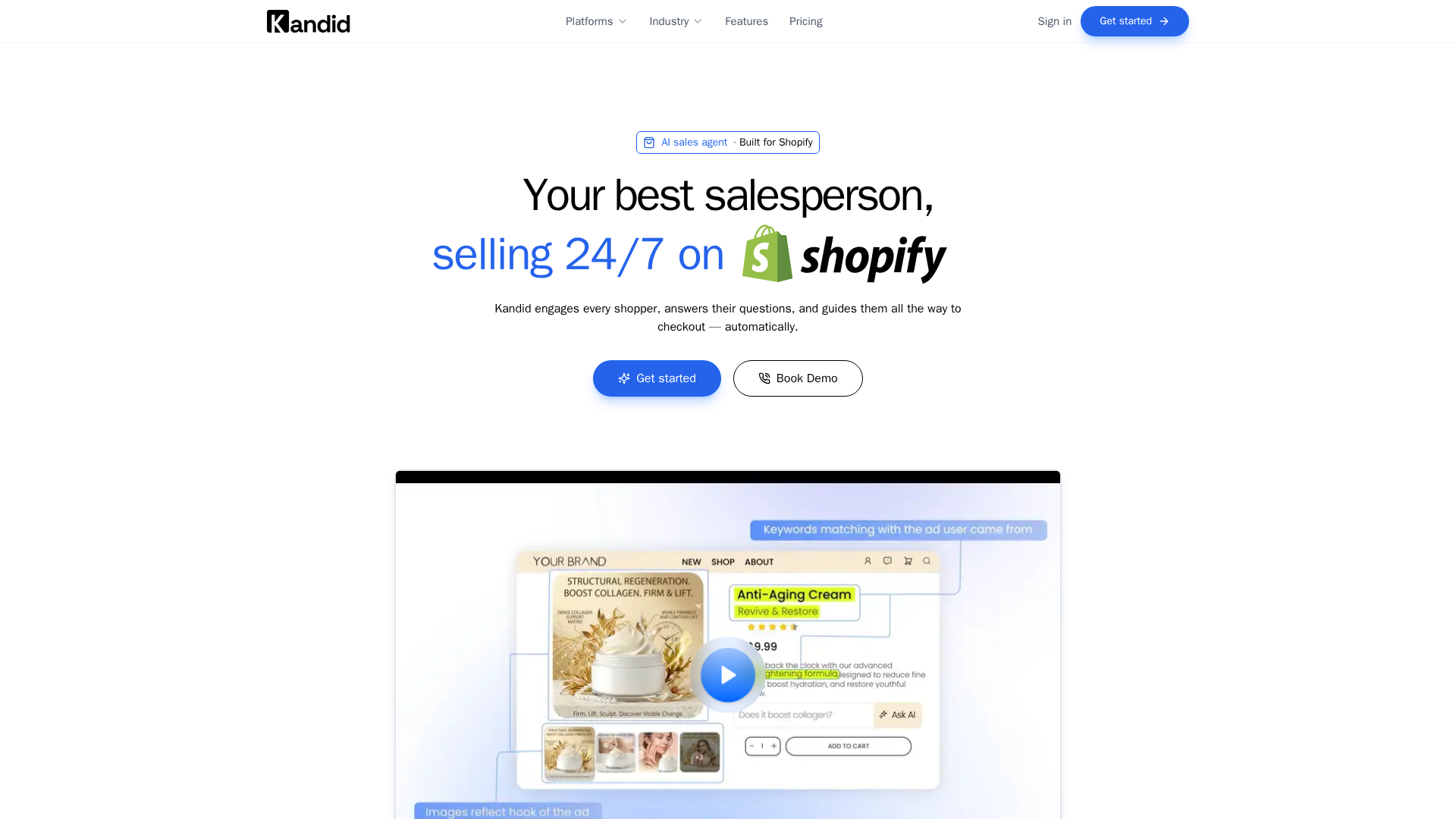
If manual recommendations are eating your time, see how Kandid answers shopper questions and guides product discovery on Shopify automatically.
Frequently Asked Questions
Q1: Which product recommendation tactics convert for ecommerce?
Cart and checkout upsell, frequently bought together, and conversational discovery convert best because they match shopper intent at the moment of choice.
Q2: Are bestseller widgets worth using?
Only on home and category pages to build early trust. They ignore individual intent, so measure click-through before keeping them.
Q3: How long should a recommendation holdout test run?
Two to four weeks. Compare revenue per session between exposed and hidden sessions to find real incremental lift.
Conclusion
Start with intent-matched tactics like frequently bought together and cart upsell, place them where decisions happen, and prove their worth with holdout tests. Attributed revenue is a floor, not truth. For conversational product discovery on Shopify, Kandid's AI sales agent handles that chat.