Ecommerce Product Recommendation Bundles Guide
Quick Summary: Effective recommendation bundles pair complementary products, offer a 10% to 20% discount, and appear where shoppers browse, such as product pages and carts. Use Shopify’s free Bundles app for fixed sets and paid tools for mix-and-match options, while tracking attach rate, average order value, and margin over four weeks. Avoid random pairings, stacked discounts, and outdated inventory recommendations, and refresh bundles as stock and seasons change.
A shopper lands on your hero product page, and the one item you want them to leave with is a second product that fits. That is a bundle decision, not a discount decision, and most stores mix the two up. This guide shows how to build product recommendation bundles: choosing formats, placing them on the right pages, picking tools that fit Shopify, and measuring attach rate so the setup keeps improving. It draws on what works for Shopify and D2C teams, not generic advice.
How to Build Product Recommendation Bundles
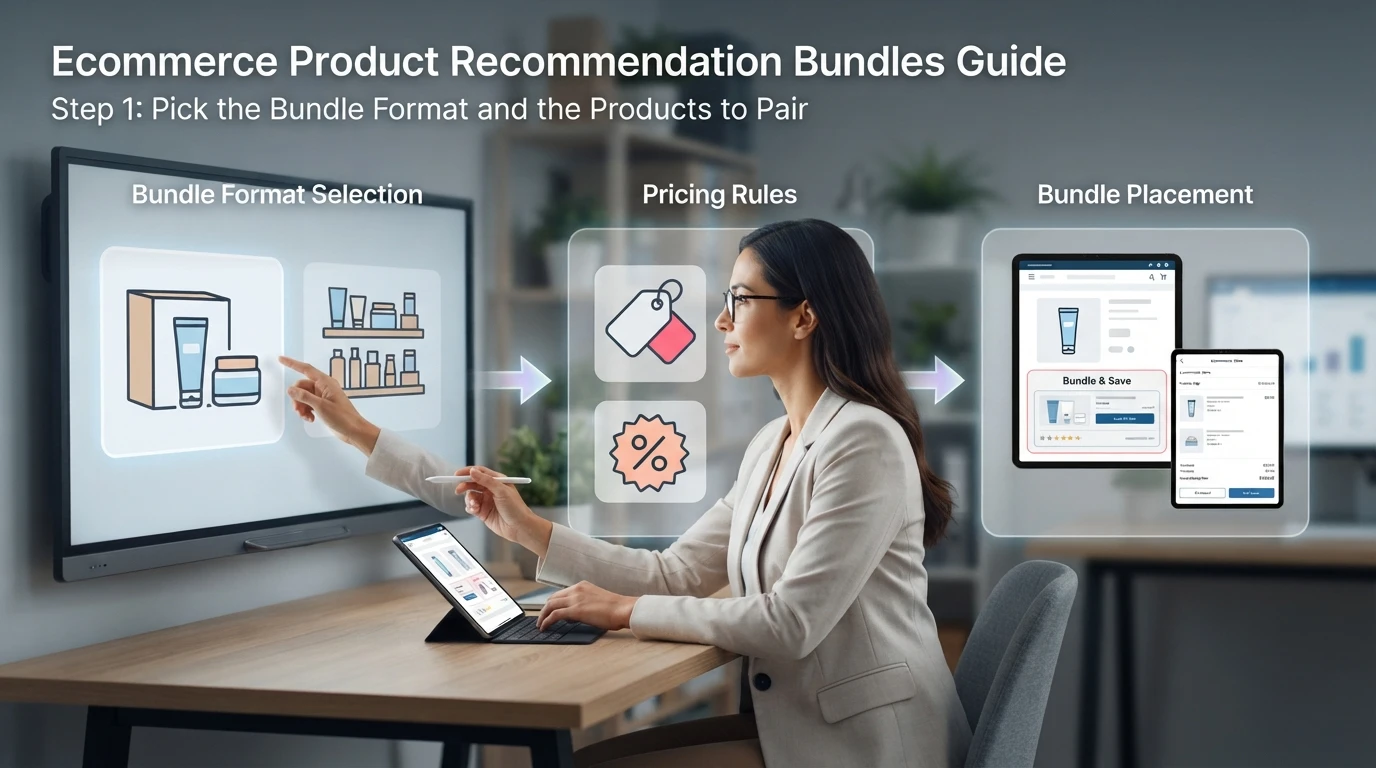
You can build product recommendation bundles in three steps: pick a format and pair complementary products, set pricing and inventory rules, then place the bundle where shoppers browse.
Step 1: Pick the Bundle Format and the Products to Pair
Match the format to your goal:
| Bundle type | What it is | Best for |
|---|---|---|
| Fixed bundle | Set items, one price | Predictable margin |
| Mix and match | Buyer picks items from a group | Variety stores |
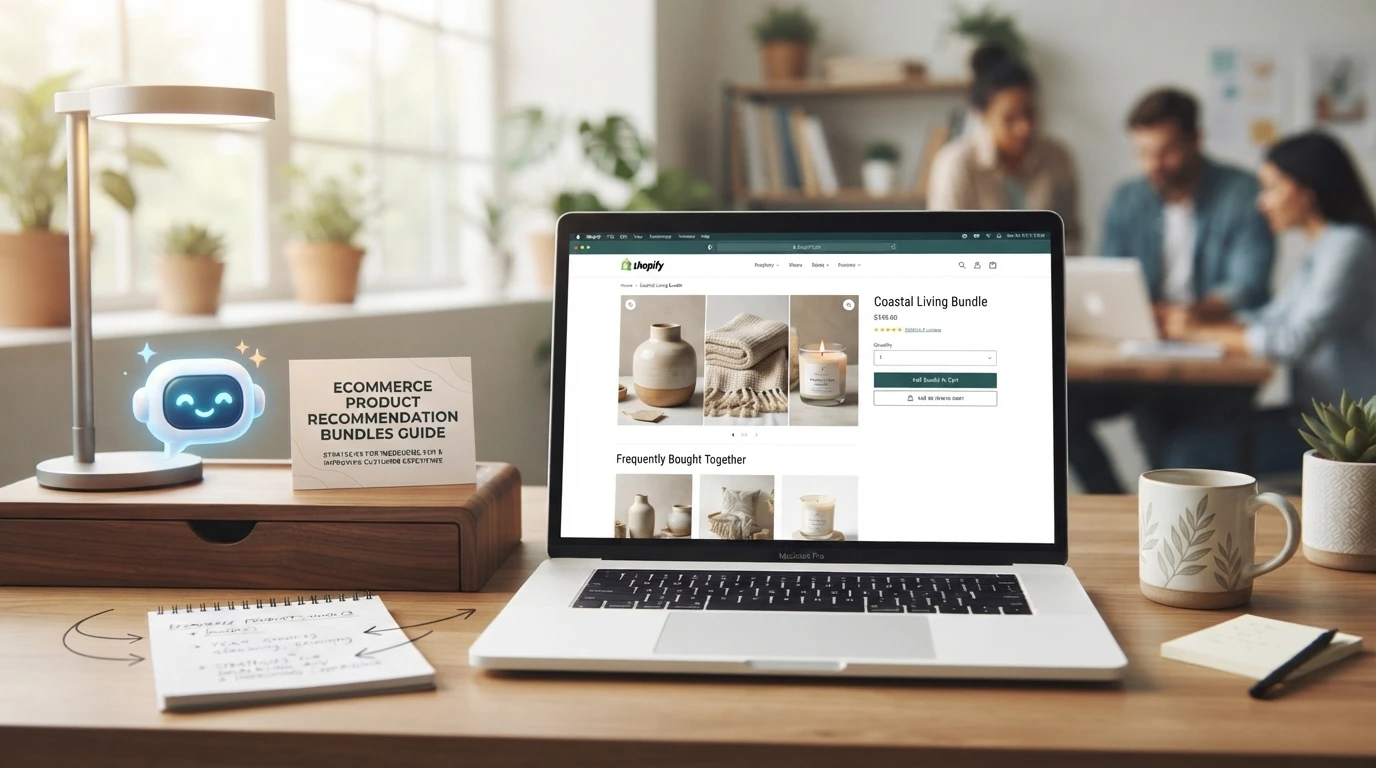
| Frequently bought together | Suggested add-on at checkout | AOV growth |
Pair products that solve one job, like a cleanser with a moisturizer.
Step 2: Set Bundle Pricing, Discount and Inventory Rules
Price the bundle a little below the sum of its parts, usually 10 to 20 percent off. Sync inventory so one component selling out hides the whole bundle. Shopify's own Bundles app handles this sync natively, which is why many merchants start there before adding an upsell app.
Step 3: Publish the Bundle Where Shoppers Actually Browse
Place frequently bought together offers on the product page and in the cart. Put mix and match blocks on collection pages. For deeper placement tactics, product recommendation tactics that convert covers where each format earns the most add-ons.
Choosing the Tool: Shopify Native, Paid Apps and AI Assistants
What Shopify's Free Bundles App Handles
No, the free Shopify Bundles app does not support mix and match bundles. It only builds fixed sets: you pick exact products and set quantities, and Shopify keeps inventory in sync. That covers simple gift sets and starter kits, but shoppers cannot swap items or change counts. When that flexibility matters, you need a paid app.

Where Paid Bundle Apps and AI Assistants Add Value
Paid apps in the upsell and bundle apps category add what the native app lacks: mix and match rules, tiered pricing, volume discounts and bundle placement on product, cart and checkout pages. AI assistants go a step further by reading shopper intent and suggesting relevant products in chat, which suits stores with wide catalogs. For tactics that make those suggestions convert, see our guide to product recommendation tactics.
Measuring Bundle Performance Without Guessing
Which metrics show whether a recommendation bundle works?
- Bundle attach rate: the share of orders containing the bundle
- Average order value (AOV): revenue divided by orders
- Bundle revenue share and margin per bundle order
- Conversion rate on pages showing the bundle
The Metrics That Actually Tell You
AOV tells you what shoppers spend per order, and attach rate tells you whether the bundle itself sells. Together they reveal whether customers buy more or simply shift items into a cheaper bundle. As Salesforce explains, AOV is total revenue divided by number of orders.
Run the Test Before You Scale the Offer
Compare a holdout period or product pages without the bundle against pages with it. Watch for four weeks, then judge margin, not just revenue. If conversion drops while AOV rises, your discount is too deep or the pairing feels forced. To set this up properly on your store, see how to measure AI chatbot revenue before scaling the offer. Triple Whale's bundling guide covers the same trade-off.
What Usually Goes Wrong With Recommendation Bundles
Bad Pairings and Discounts That Break Margin
Most bundle failures start with the pairing. Merchants combine random bestsellers instead of true complementary products, so shoppers see no reason to buy both. Deep discounts then stack with existing sale prices and eat the margin on items that would have sold anyway.
Recommendation Logic That Ignores Stock and Season
Bundles often keep promoting items that sold out weeks ago, or winter gear in June. If your bundle inventory sync is manual, oversells follow. Review pairings each season, and let AI product recommendations flag low-stock items before a bundle breaks your promise.
Bundles only convert when shoppers find them. Kandid's AI sales assistant recommends the right products in chat. See how it works at Kandid.
Frequently Asked Questions
Q1: How do I build product bundles as recommendations?
Pick complementary products that solve one job, price the bundle 10 to 20 percent below the sum of its parts, then show it on product and cart pages. Start with Shopify's free Bundles app for fixed sets.
Q2: What bundle discount strategy protects margin?
Stay between 10 and 20 percent off, and never stack the bundle discount with existing sale prices. Judge margin per bundle order after four weeks, not just revenue.
Q3: Which metric matters most for bundle success?
Bundle attach rate, the share of orders containing the bundle. Pair it with AOV to see whether shoppers spend more or simply shift items into a cheaper bundle.
Conclusion
Strong product recommendation bundles come down to three choices: pair complementary products that solve one job, keep discounts between 10 and 20 percent, and track bundle attach rate alongside average order value. Test for four weeks, watch margin, and refresh pairings as stock and seasons change.