AI Sales Agent vs SDR: Which Scales D2C Outreach Better?
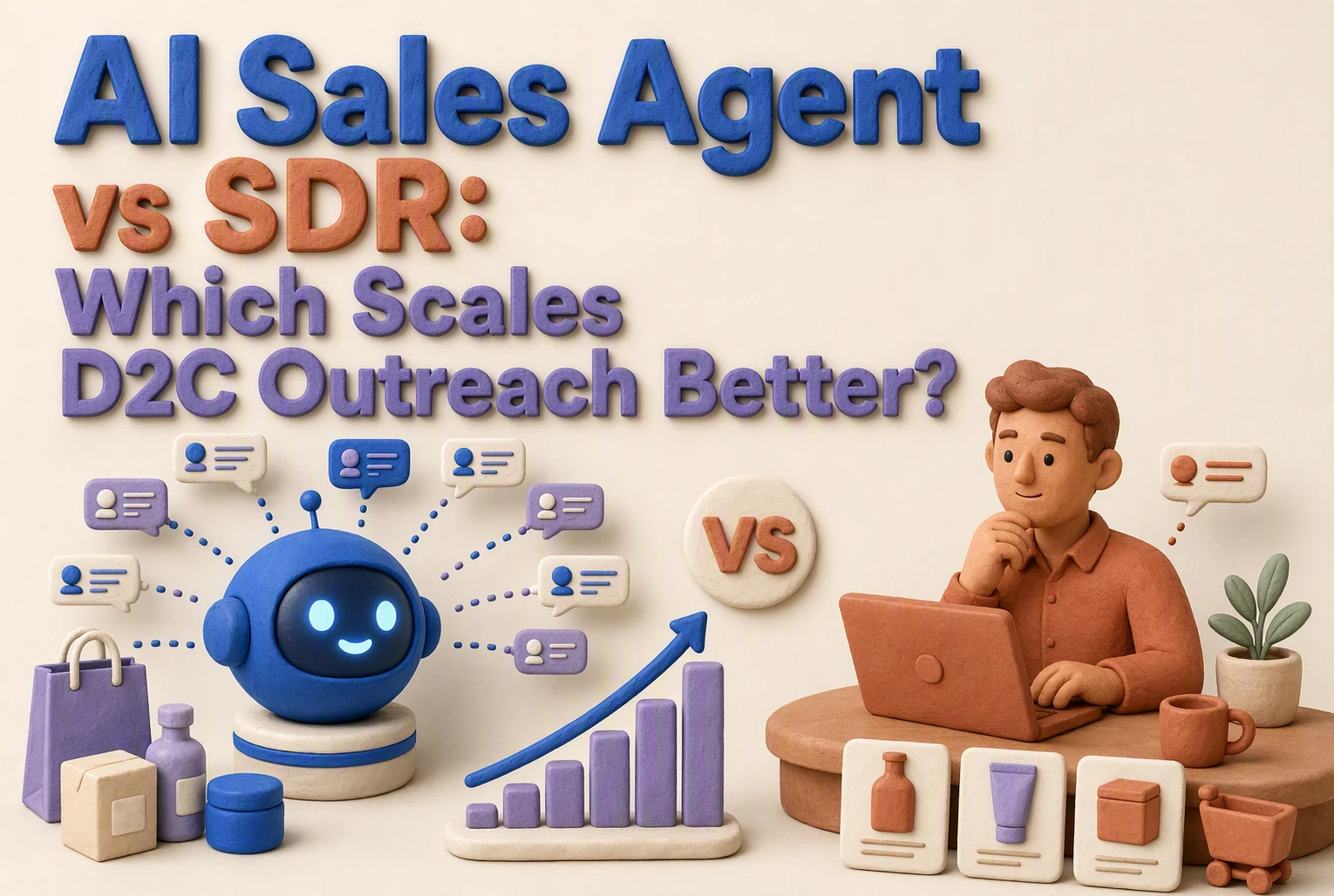
A fast answer to a fit, delivery, or product-match question can win the sale. In the AI sales agent vs SDR choice, AI handles shopper chats at scale, while SDRs suit relationship-led outreach and negotiation. This AI sales agent vs SDR comparison helps Shopify founders assess cost, speed, conversion, and when Kandid, an SDR, or both fit best.
AI Sales Agent vs SDR: At a Glance
| Kandid AI sales agent | Human SDR | |
|---|---|---|
| Primary job | Answer questions, recommend products, and move shoppers toward purchase | Prospect, qualify, follow up, and develop sales conversations |
| Best channel | Website, Instagram, and WhatsApp | Email, phone, social selling, and direct relationships |
| Availability | 24/7 | Usually business hours |
| Conversation capacity | Many simultaneous shopper conversations | Limited by working time and one-to-one attention |
| Revenue impact | Conversion assistance, cart actions, upsells, and attribution | Outbound pipeline, qualification, and relationship-led opportunities |
| Best fit | Shopify brands with repeatable product questions and meaningful traffic | Wholesale, partnerships, high-value accounts, and nuanced outreach |
How Kandid AI sales agent and Human SDR Compare
Kandid AI sales agent
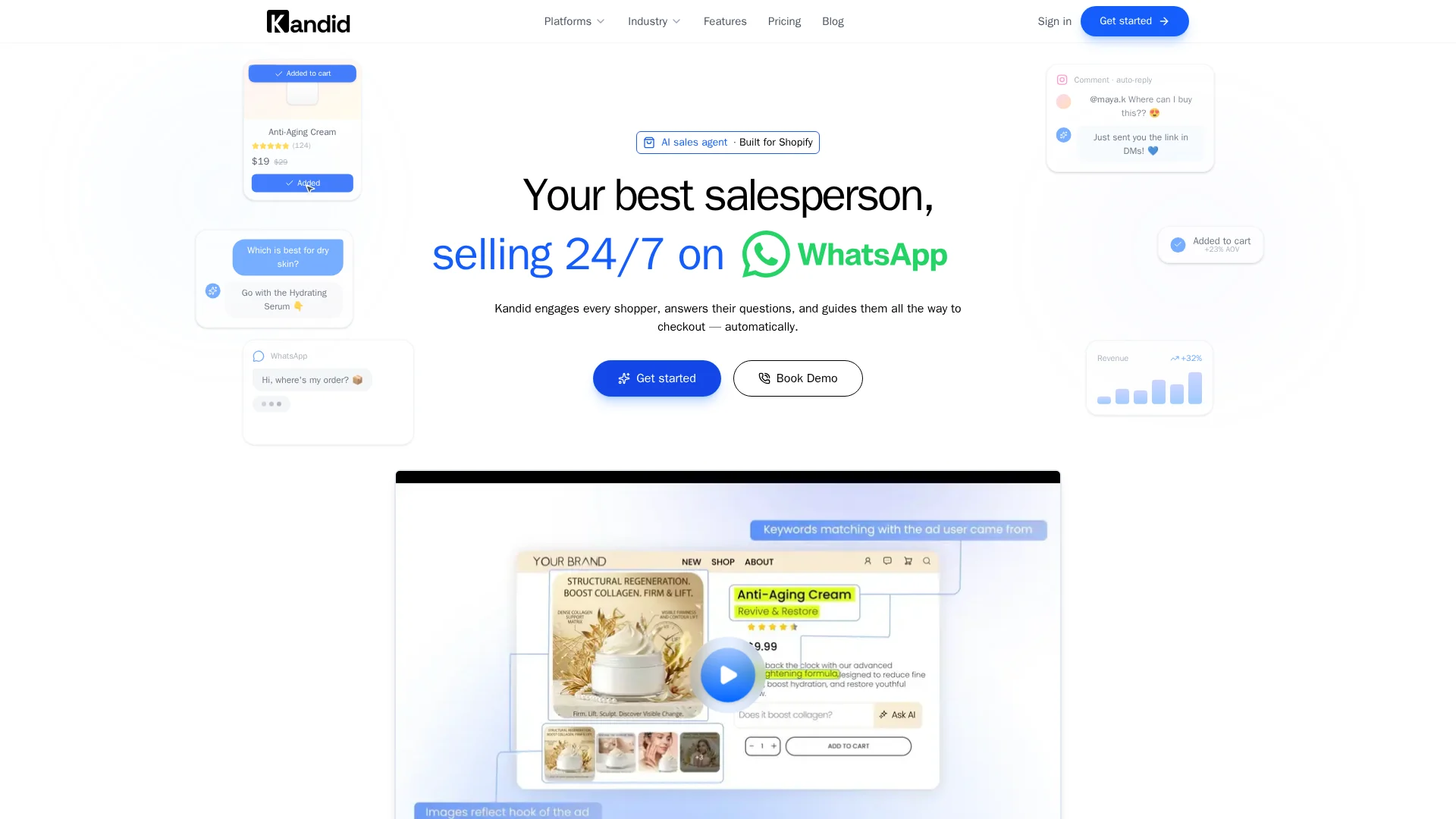
Kandid is a Shopify-focused AI sales agent for website, Instagram, and WhatsApp shoppers. It answers product questions, makes recommendations, and helps buyers act at any hour.
Key strengths
- 24/7 coverage across high-intent channels
- Handles many chats at once
- Supports carts, upsells, and revenue tracking
Human SDR
A human SDR researches prospects, starts outreach, qualifies interest, and builds relationships. This role fits wholesale, partnerships, and high-value accounts where judgment matters.
What Is the Difference Between an AI Sales Agent and an SDR?
Inbound Shopper Conversations vs Outbound Prospecting
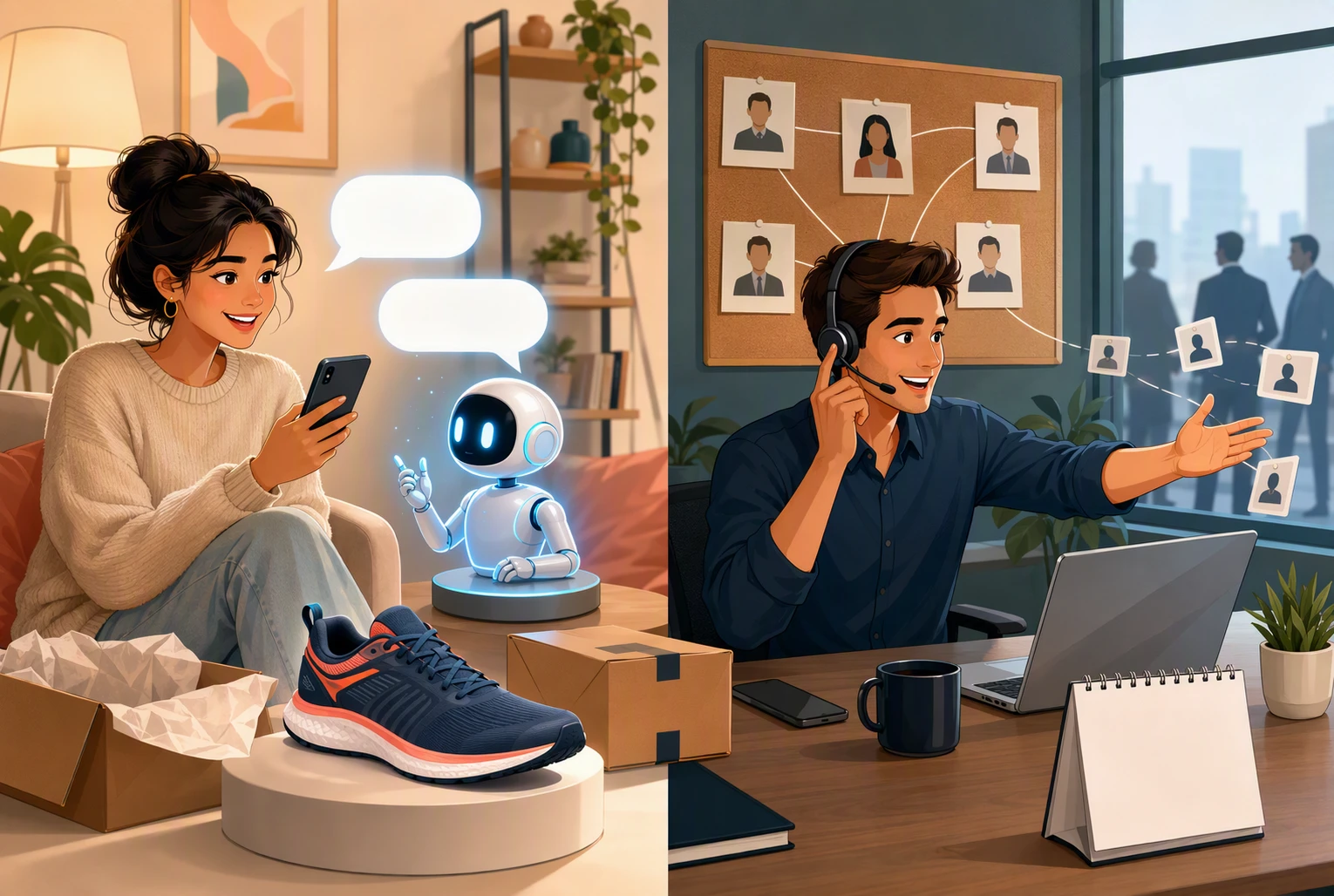
An AI sales agent helps shoppers who already arrived on your store. It answers product questions, compares items, checks fit or compatibility, and guides a buyer toward checkout at any hour.
An SDR usually creates demand through outbound work. They find prospects, send outreach, qualify replies, and book calls. Sales roles commonly involve identifying prospects and contacting them about needs, as the U.S. Bureau of Labor Statistics notes.
| Role | Primary job | Best D2C moment |
|---|---|---|
| AI sales agent | Convert inbound intent | Product-page questions |
| SDR | Start outbound conversations | Wholesale or B2B leads |
Use an AI agent for high-intent store traffic, not cold prospecting.
Also Read: AI Sales Agents: 12 Use Cases for D2C Growth
Which Model Scales D2C Outreach Better?
Speed, Coverage, and Consistency
AI sales agents scale inbound selling better because they answer every shopper at once, day or night. SDRs scale outbound prospecting, but cannot match live site traffic without adding headcount.
| Need | Better model | Why |
|---|---|---|
| Product questions at peak traffic | AI sales agent | Instant, always-on replies |
| Complex deals or wholesale | SDR | Human judgment and follow-up |
| Catalog comparison | AI sales agent | Consistent answers from store data |
Kandid can guide shoppers through product fit, specs, and variants while keeping brand voice steady. Shopify AI chat tools commonly support 24/7 product help and human handoff, as shown in the Shopify App Store.
Use a hybrid model: let AI handle repeat questions, then route high-value or sensitive chats to people.
Also Read: Kandid Review 2026: Can This AI Sales Agent Replace Your BDR Team?
Where an SDR Still Beats an AI Sales Agent
The Best Hybrid Workflow for Growing Brands
An SDR wins when a deal needs trust, negotiation, or a tailored offer. Use people for wholesale leads, high-value carts, custom bundles, and complaints that risk losing a loyal buyer. Shopify notes that high-touch service matters most for complex, high-value needs that require human judgment.

Use this split:
- Let Kandid answer product, fit, and shipping questions 24/7.
- Flag high-intent or unusual requests for an SDR.
- Give the SDR chat history, cart details, and product interests.
- Track revenue per conversation, not chat volume.
Keep human handoff simple. Shoppers should never need to repeat themselves.
Also Read: AI Sales Agents vs Human-Only Support: Performance Reality
Should Your D2C Brand Choose Kandid or an SDR?
Choose Kandid if high site traffic brings repeat product, fit, or compatibility questions. It can guide shoppers at any hour, while an SDR is better for wholesale leads, large orders, and complex deals.
| Need | Best fit |
|---|---|
| Convert inbound shoppers at scale | Kandid |
| Prospect and close business accounts | SDR |
| Cover both motions | Hybrid |
U.S. e-commerce reached 17.1% of retail sales in Q2 2026. Do not use an SDR to answer every shopper question.
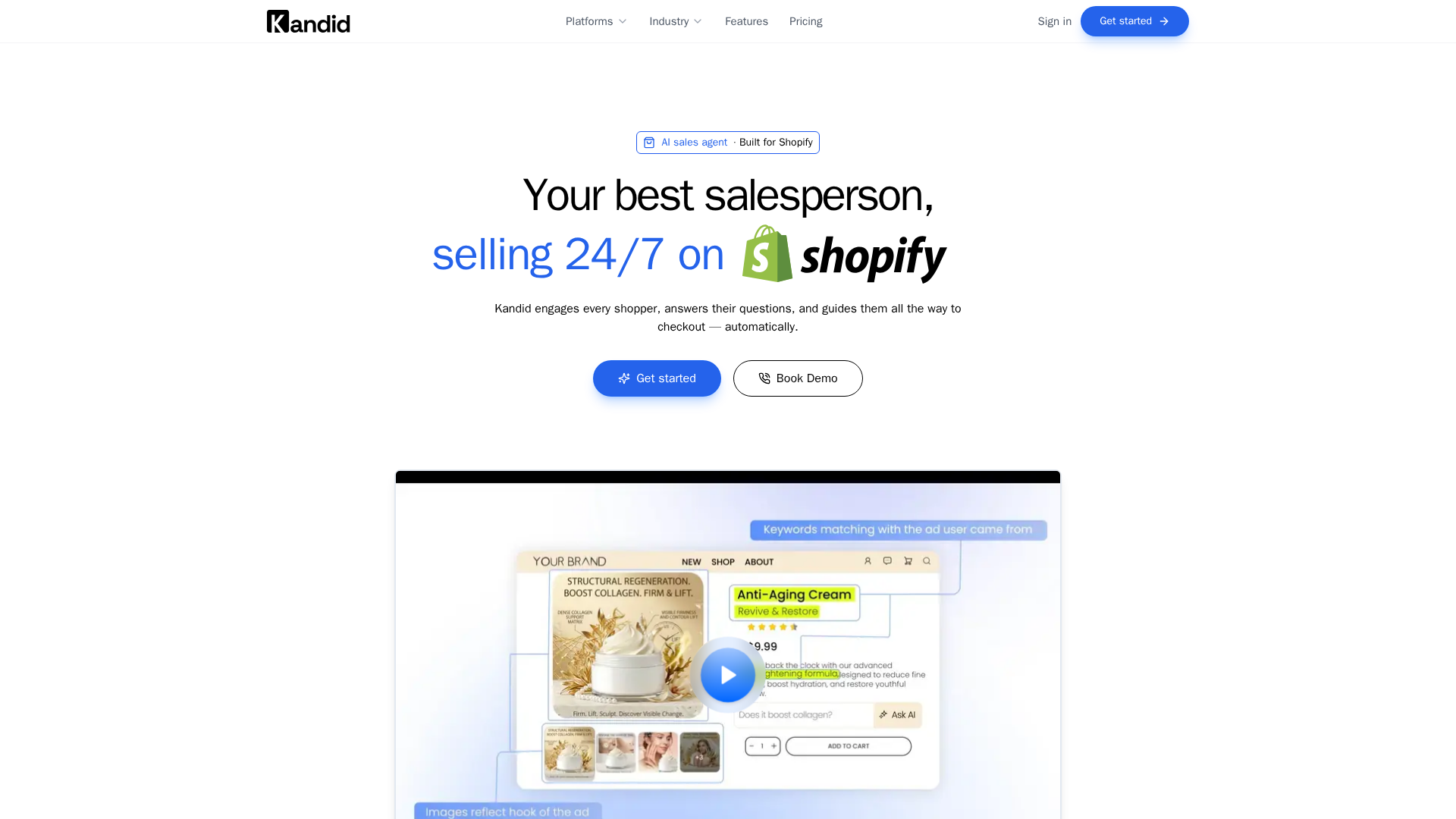
Turn high-intent shopper questions into sales, not tickets. See how Kandid guides every visitor to the right product, 24/7.
Frequently Asked Questions
Q1: Should D2C brands use an AI sales agent or SDR for outreach?
Use an AI sales agent for high-volume inbound shopper questions. Use SDRs for wholesale, partnerships, and complex outbound deals.
Q2: Can an AI sales agent increase conversion rates?
Yes. It can answer product, fit, and compatibility questions instantly, helping hesitant shoppers buy before they leave.
Q3: When should a human take over?
Route refund disputes, unusual requests, and high-value sales conversations to a trained human.
Conclusion
Choose AI agents for always-on shopper guidance and SDRs for outbound relationships. The best D2C model is hybrid, measured by conversion and revenue, not replies. Workflow redesign drives AI value.