Ecommerce Chatbots: Compare Bots for High-Traffic Sales Events
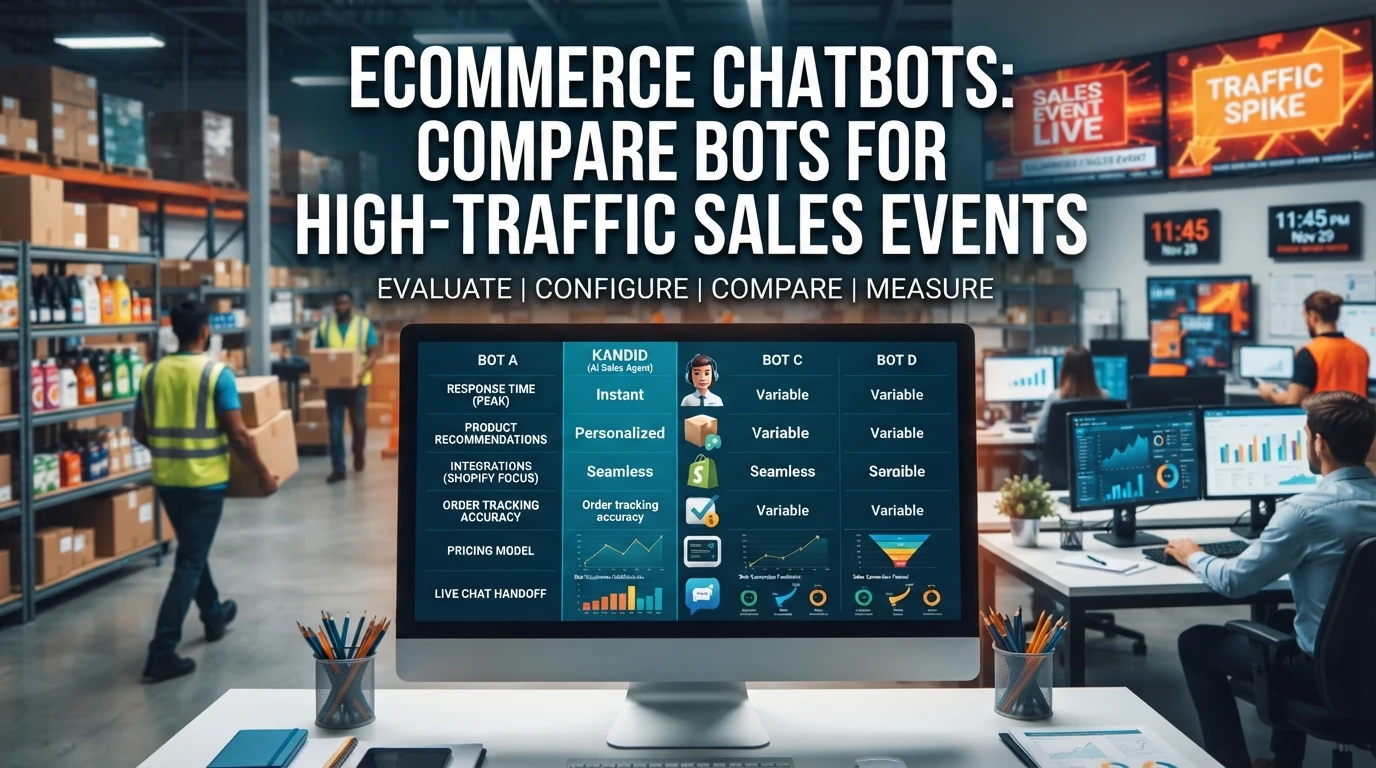
Quick Summary: High-traffic sales events quickly expose chatbot weaknesses in live inventory syncing, surge pricing, and human handoffs. Tidio works best for lightweight pre-purchase lead capture, while Gorgias excels at post-purchase order management despite steep ticket overage fees. For driving conversions under heavy volume, Kandid provides a dedicated sales agent that syncs live stock data directly from Shopify to prevent overselling.
Black Friday breaks weak chat setups. Gorgias handles post-purchase order flow fast for bigger support teams, while Tidio suits smaller catalogs, yet both carry surge-pricing risk. Ecommerce chatbot performance during sales events depends on latency, live inventory, and handoffs under load. We compare Tidio and Gorgias on those stress points, so your next surge tests pricing, not ecommerce chatbot performance during sales events. Kandid wrote this comparison.
Tidio vs. Gorgias: High-Traffic Sales Event Performance
| Tidio | Gorgias | |
|---|---|---|
| Primary Sales Event Focus | Front-of-funnel visitor engagement, pre-purchase Q&A, and automated discount delivery. | High-volume post-purchase resolution, order tracking, address modifications, and ticketing. |
| Traffic Surge Pricing Risk | Hard caps and tiered add-ons on Lyro AI conversations and visitor reach metrics. | Per-ticket overage charges ($36 to $40 per 100 extra tickets) plus per-automated interaction fees. |
| Catalog & Stock Sync Under Load | Knowledge-base scraping and Shopify app integration; best with static or moderate catalogs. | Deep Shopify API integration for live order lookup, customer profiles, and macro automation. |
| Human Escalation Handling | Live chat inbox handoff with routing rules, or fallback to offline email ticketing. | Omnichannel helpdesk assignment with agent collision detection and SLA rules. |
| Best Suited For | Growing brands wanting lightweight pre-sale lead capture and conversational FAQ triage. | Established Shopify stores with dedicated support agents handling heavy transactional inquiries. |
How Tidio and Gorgias Compare
Tidio
Tidio combines live chat, its Lyro AI assistant, and rule-based flows for small-to-midsize ecommerce stores. Its angle on ecommerce chatbot performance during sales events leans toward front-of-funnel work: pre-purchase Q&A and automated discount delivery. Growing brands use it for lightweight lead capture and FAQ triage before tickets pile up.
Key strengths
- Live chat inbox handoff with routing rules and offline email fallback
- Lyro AI answers built from knowledge-base scraping plus Shopify integration
Gorgias
Gorgias is an ecommerce-specialized helpdesk built for deep Shopify order actions and ticket deflection. Its sales-event focus sits post-purchase: order tracking, address changes, and resolution at high volume. Established stores with dedicated support agents get the most from it, since overage ticket fees shape how ecommerce chatbot performance during sales events affects cost.

Key strengths
- Deep Shopify API access for live order lookup and macro automation
- Omnichannel assignment with agent collision detection and SLA rules
Concurrency and Catalog Synchronization Under Heavy Shopper Load
Handling Real-Time Stock Status and Flash Promo Rules
Two failures ruin a launch weekend: a bot that stalls under a thousand simultaneous chats, and a bot that recommends a product sold out an hour ago. Test both before the sale. Ask each vendor for its concurrent session limit, and stress-test with double your expected peak. Then check how the bot syncs inventory. A bot polling the catalog every 30 minutes will happily promise items you cannot ship. Look for real-time pulls from Shopify's inventory API, plus automatic hiding of sold-out variants from recommendations. Flash promos need the same discipline: rules, discount codes and timers should sync within minutes, not overnight. Platforms like Rep AI and Tidio differ here, so verify sync cadence in writing before launch. Kandid's Shopify AI sales agent pulls live stock data so shoppers only see what you can actually ship.
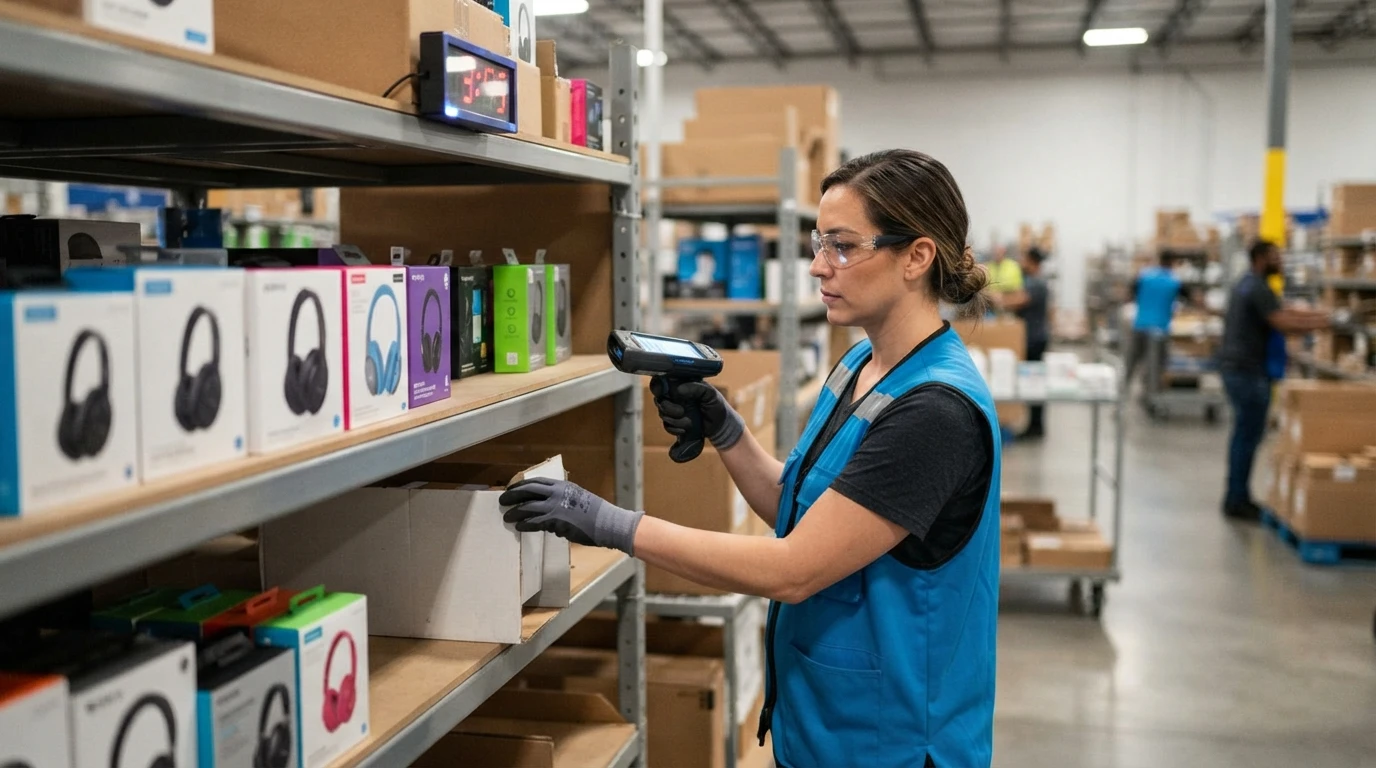
Tip: Run one dress rehearsal a week out. Set a SKU to zero stock, confirm the bot stops recommending it within minutes, then restore it.
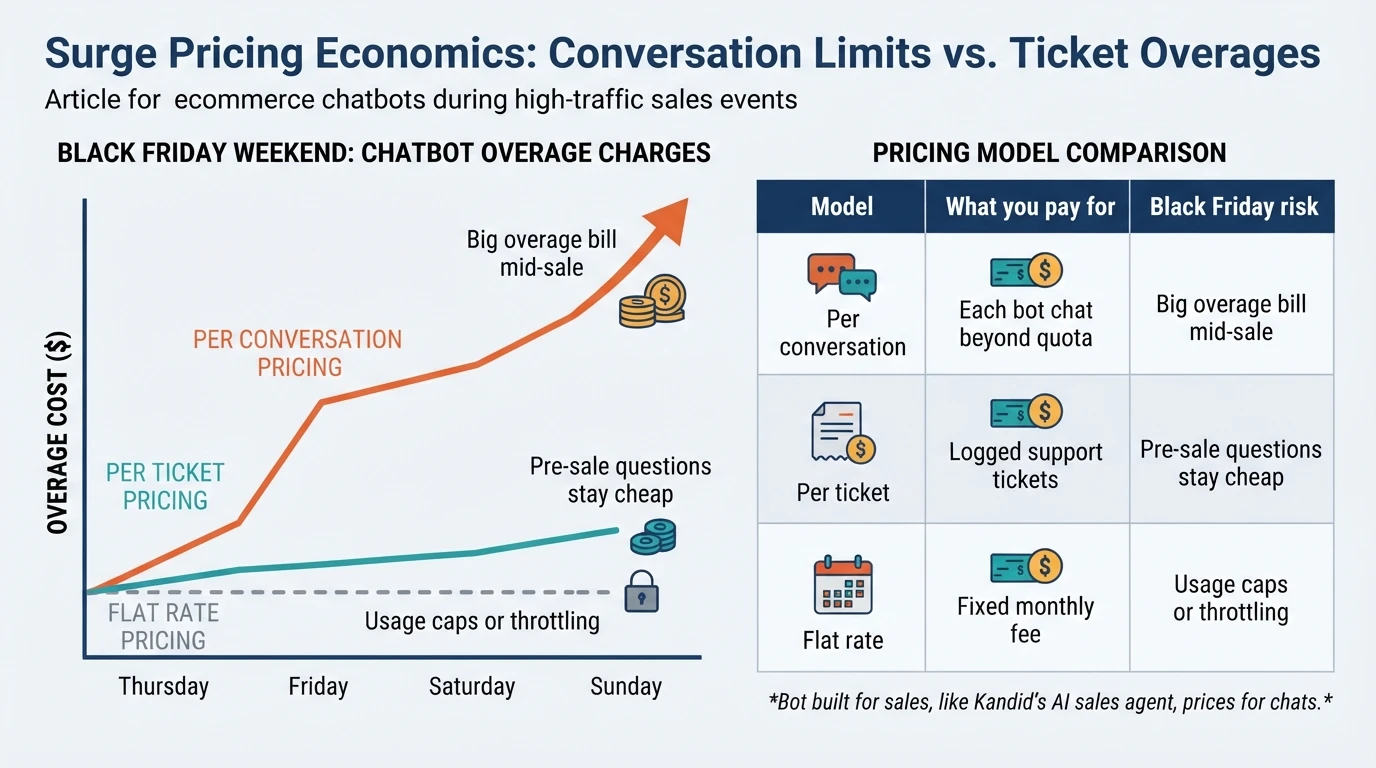
Surge Pricing Economics: Conversation Limits vs. Ticket Overages
Pricing models fail differently under event load. Per-conversation plans bill extra for every chat over your limit, so traffic spikes turn into surprise invoices. Per-ticket helpdesk plans charge for tickets, so answered questions that never create a ticket cost nothing.
| Model | What you pay for | Black Friday risk |
|---|---|---|
| Per conversation | Each bot chat beyond quota | Big overage bill mid-sale |
| Per ticket | Logged support tickets | Pre-sale questions stay cheap |
| Flat rate | Fixed monthly fee | Usage caps or throttling |
Check three things before the event: the overage rate, whether caps throttle quietly, and if sales chats count as tickets. A bot built for sales conversations, like Kandid's AI sales agent, prices for chats rather than tickets, so heavy event traffic is the expected case, not an exception.
Human Handoff and Ticket Queuing During Peak Hours
On a flash sale day, no bot should be an island. Test how each tool escalates when it hits a question it can't answer, such as a split shipment or a refund edge case. Look for chat-to-human transfer with queue position, not a dead-end "email us" reply.
Check whether the bot summarizes the conversation for the agent, tags intent, and routes VIP or urgent tickets first. Gorgias and Tidio, for example, offer ticket routing your helpdesk can absorb during surges. If handoff is clumsy, designing the escalation path before the sale beats fixing it during one.
Plan agent staffing against your expected ticket volume, and set a cap so overflow tickets don't sit unseen for hours.
Which Bot Fits Your High-Traffic Sales Strategy?
Match the bot to your bottleneck. If queues break during flash sales, pick a bot with strong human handoff like Gorgias or Tidio. If product questions stall checkout, a sales-first assistant that recommends products wins; Kandid's Shopify AI sales agent is built for that. Support-heavy stores lean on Gorgias; conversion-focused teams should test a sales agent. Run both against a 10% traffic sample before your next event.
Next step: score each option on queue survival, product guidance and handoff speed.

When your next flash sale floods the store, Kandid answers shopper questions instantly. See how its Shopify AI sales agent handles event-day volume: Kandid.
Frequently Asked Questions
Q1: How do ecommerce chatbots compare during high-traffic sales events?
Check concurrent chat limits, AI response speed, and human handoff. Bots like Tidio and Gorgias handle basics; sales-focused assistants handle product questions better.
Q2: When should I stress-test my chatbot before a sale?
At least two weeks before launch, with traffic simulations and edge-case questions like refunds and stock checks.
Q3: Should a human agent stay available during flash sales?
Yes. Route complex or high-value chats to staff so frustrated buyers don't abandon carts.
Final Assessment
For high-traffic sales events, pick a chatbot on uptime, order tracking accuracy and human handoff speed, not chat volume alone. Test any shortlist, including Kandid's Shopify AI sales agent, against real promo questions before launch day.