AI Sales Agents for Outbound Prospecting: Review and Results
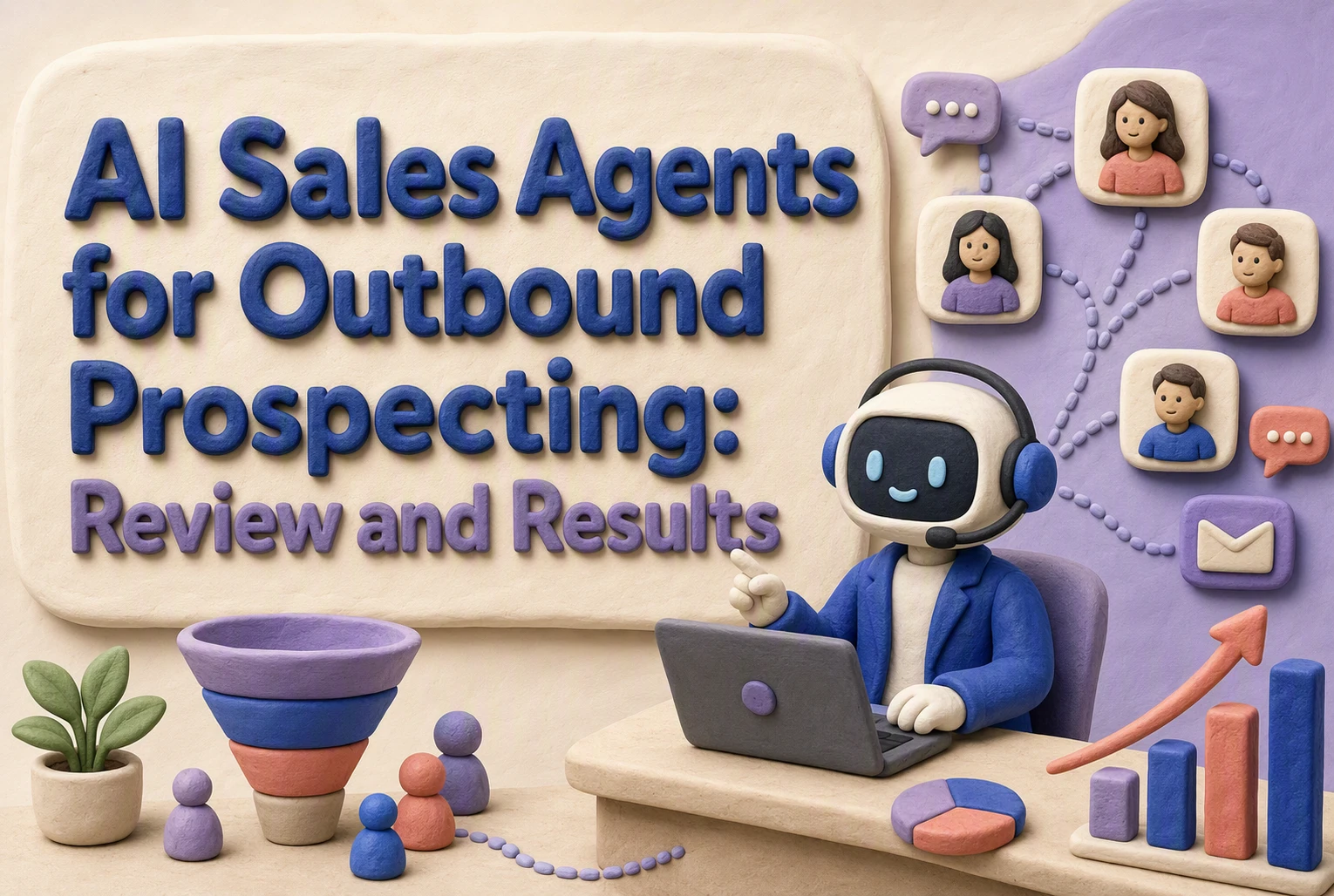
A midnight shopper comparing EV parts or skincare ingredients needs a precise recommendation, not another FAQ. Kandid offers that inbound conversation. The key question is whether calling it AI prospecting automation is accurate, and whether it creates new orders instead of extra chats. This review tests where AI prospecting chatbots fit, how AI prospecting automation differs from outbound work, and what evidence proves AI prospecting automation drives incremental revenue.
What Kandid Actually Automates in the Prospecting Funnel
Inbound Conversion Agent or Outbound SDR?
Kandid is not an outbound SDR. It does not build lead lists, send cold emails, or book sales meetings. It works after a shopper arrives on your site, WhatsApp, or Instagram.
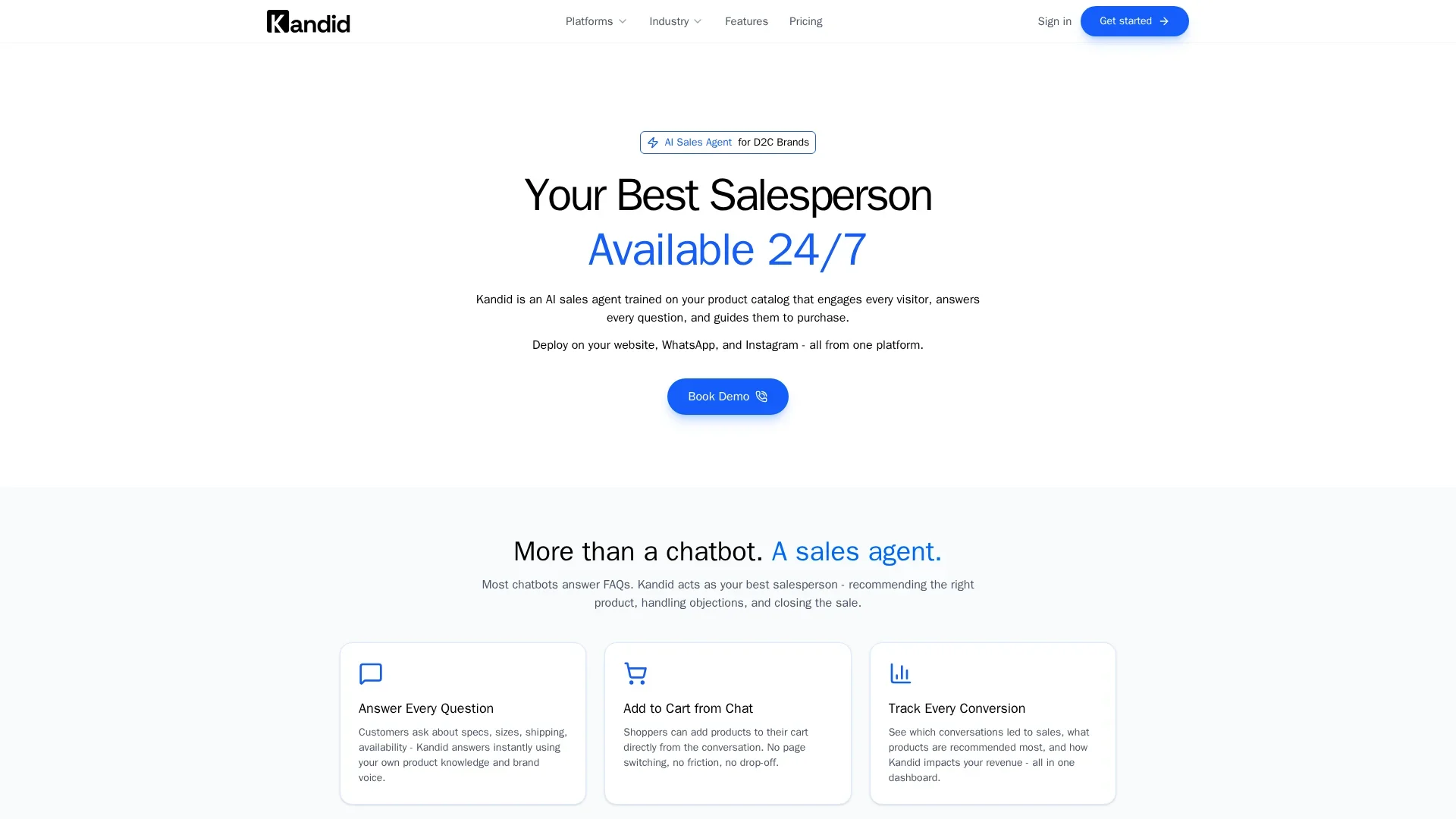
It automates product answers, comparisons, objections, recommendations, and add-to-cart actions. Kandid’s product page also states that it tracks conversations tied to sales.
Treat it as an inbound conversion layer, not a prospecting replacement.
Hands-On Buying Journey to Evaluate
Test a real buying path before you judge results:
- Ask a fit, spec, or compatibility question.
- Request a comparison between two products.
- Check whether the answer matches your catalog.
- Follow its recommendation through to cart.
- Test the human handoff for unclear or sensitive cases.
| Check | Pass signal |
|---|---|
| Product advice | Specific and accurate |
| Cart action | Correct item and variant |
| Escalation | Human help appears when needed |
- Review assisted conversion rate and AOV against a pre-launch baseline.
- Read chat logs for wrong claims before scaling traffic.
Also Read: AI Sales Agents Implementation Guide for Faster Response
Do the Reported Results Prove Better Conversion?
What the Published Evidence Supports
Reported results can show that an AI agent creates more chats, captures more leads, or speeds up replies. They do not prove more purchases on their own.
Treat vendor case studies as directional evidence. Ask for a live test that splits similar visitors into agent and no-agent groups. NIST notes that real-world field testing matters because vendor tests may not match your operating context or be independently verified (NIST field-testing guidance).
Warning: A conversion claim without a control group, date range, traffic source, and sample size is not proof.

The Metrics That Matter More Than Chat Volume
Track the outcome after the conversation, not just the conversation itself.
| Metric | What it shows |
|---|---|
| Conversion rate | Whether more sessions end in orders |
| Revenue per session | Whether lift holds across basket sizes |
| Add-to-cart rate | Whether advice moves buying intent |
| Refund rate | Whether recommendations were accurate |
- Keep paid traffic, promos, and stock levels stable.
- Segment by new versus returning visitors.
- Compare results over a full buying cycle.
Also Read: AI Sales Agents Review for SDR Teams and Daily Outreach
Pricing, Accuracy, and Operational Trade-Offs
Where the Economics Work
Usage-based AI works when it handles repeat product questions at peak hours. Compare cost against recovered carts, assisted orders, and support time, not chat volume alone.
| Test | What to track |
|---|---|
| 30-day pilot | Conversion lift by exposed sessions |
| Usage cost | Cost per assisted purchase |

Set a spend cap before launch. Scale only after the lift exceeds the agent cost.
Where Human Review Remains Necessary
Keep humans on refunds, unusual compatibility claims, custom discounts, and safety-sensitive advice. Generative systems can produce confident false answers, known as confabulation, so NIST recommends risk management across the AI lifecycle. Review chat logs weekly and add failed questions to the catalog source.
- Route edge cases to staff.
- Audit recommendations before major promos.
Also Read: AI Sales Agents vs Human Reps: Lead Qualification
Is Kandid Worth It for AI Prospecting Automation?
Kandid is worth testing if you need to convert live, high-intent store traffic, not send cold outbound emails. It answers product and fit questions in real time, then guides shoppers to checkout.
| Check before launch | What good looks like |
|---|---|
| Product knowledge | Accurate specs, bundles, and compatibility answers |
| Measurement | Holdout test tracks conversion rate, AOV, and ROAS |
The FTC has warned that AI performance claims need evidence. Run a controlled test and judge Kandid on verified sales lift, not chat volume alone.
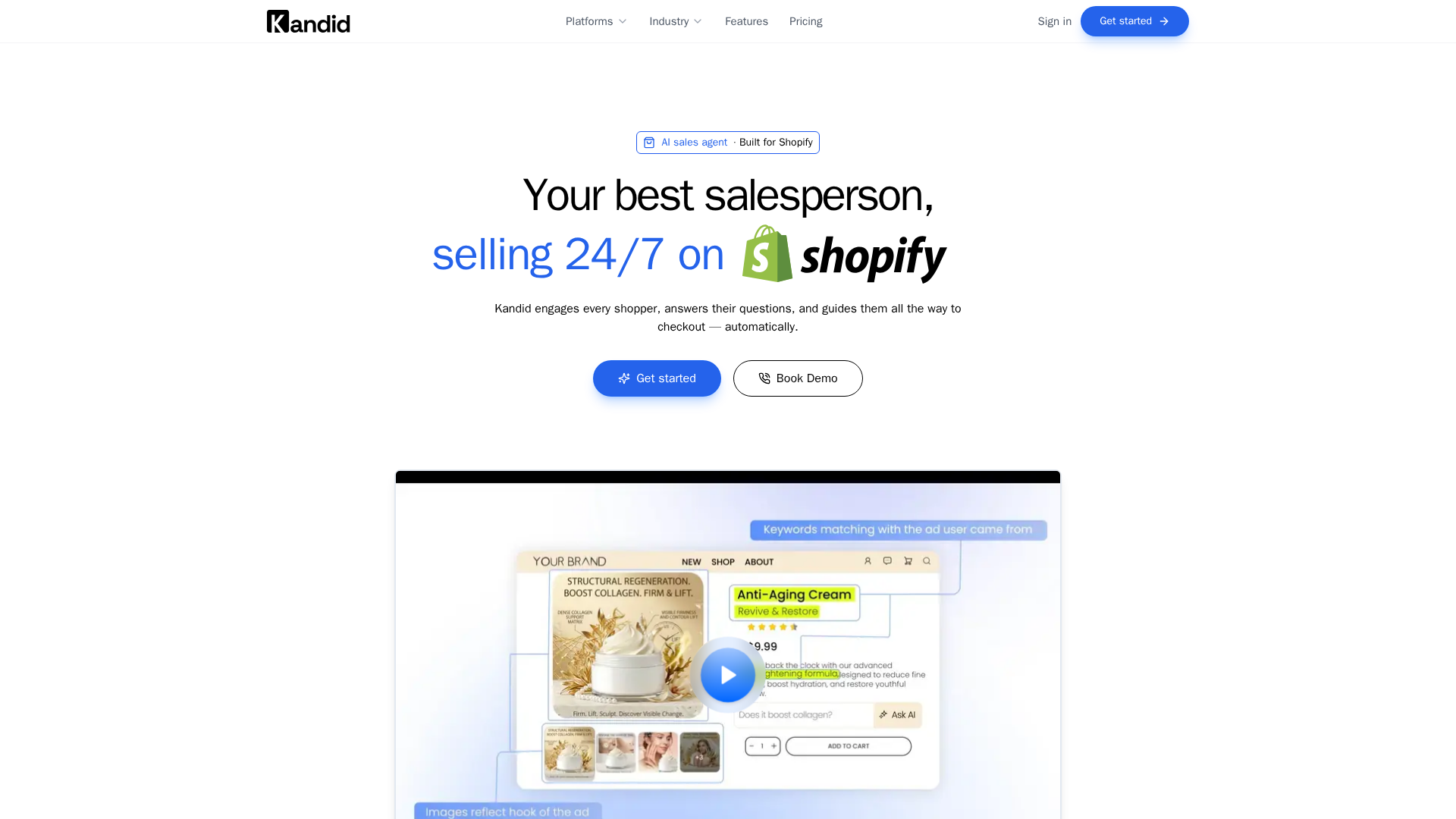
Turn high-intent conversations into sales. Kandid gives D2C shoppers real-time answers, product guidance, and clear next steps, 24/7.
Frequently Asked Questions
Q1: How can AI sales agents like Kandid improve outbound prospecting conversion rates by 24/7 engagement?
Kandid mainly converts inbound shoppers, not cold outbound lists. It answers intent-rich questions at any hour, removes purchase doubt, and captures more value from paid traffic.
Q2: What are the real results of using AI sales agents for D2C brands in ecommerce?
Results vary by traffic quality, product price, and setup. Track conversion rate, add-to-cart rate, AOV, and assisted revenue against a holdout group.
Q3: How do AI sales agents handle complex product questions and objections in real-time?
They use catalog data, FAQs, and brand rules to compare products, explain fit, and flag gaps. Test difficult questions before launch.
Conclusion
AI sales agents work best for outbound follow-up, not inbound conversion. Measure qualified replies and revenue, keep human review, and monitor results after launch, as NIST advises.