AI Sales Agents Implementation Guide for Faster Response
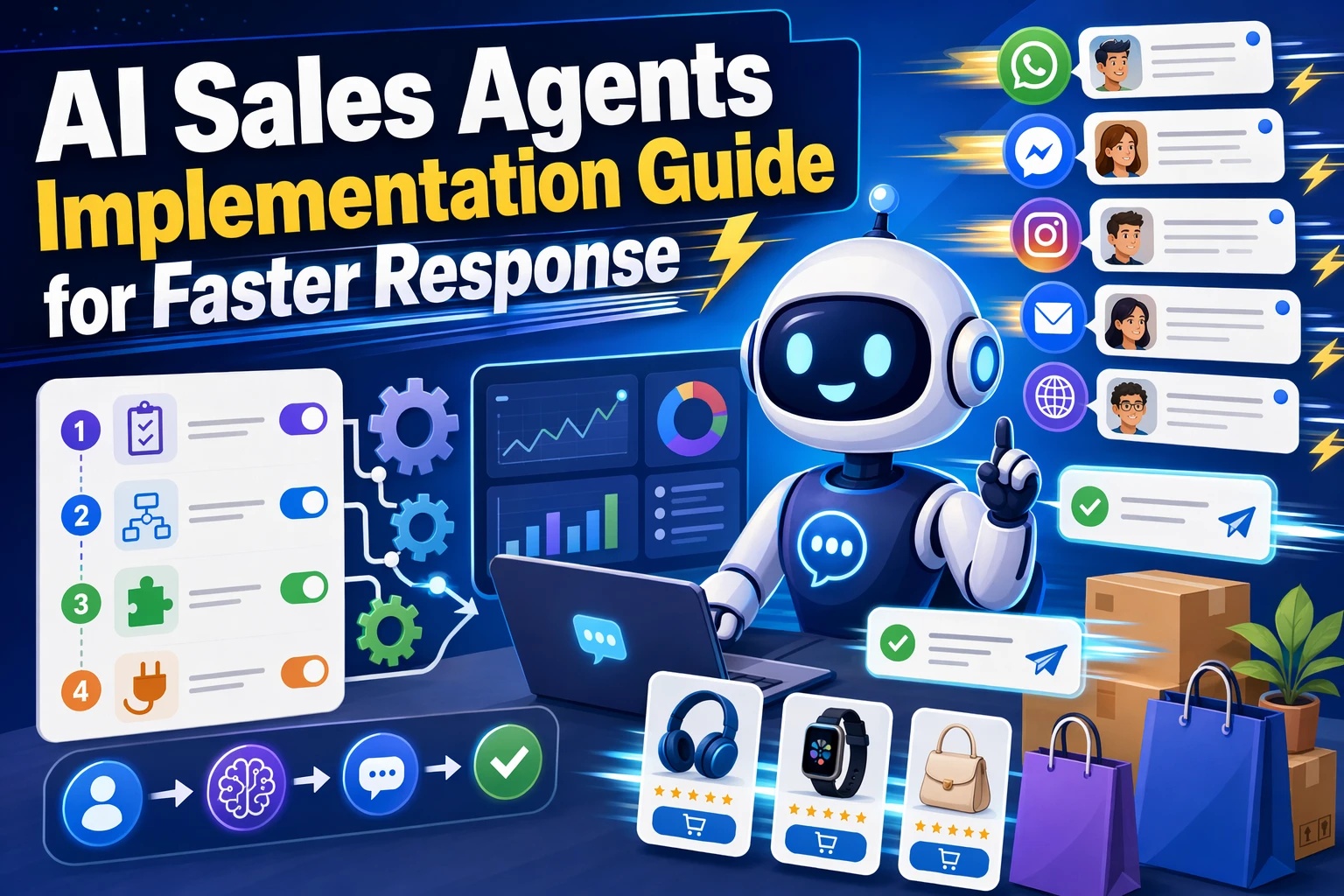
Quick Summary: AI sales agents improve response times, qualify leads better, and ensure smooth handoffs to humans. They handle complex, multi-step tasks across the sales funnel, integrating with CRMs and industry-specific data. Starting small and focusing on high-value use cases helps teams implement them effectively without disrupting workflows.
A shopper needs shade help, an EV buyer asks about charging at 11:48 p.m., and a tech lead compares specs before your team logs in. That gap kills speed, trust, and revenue. This guide shows how AI Sales Software closes it with faster replies, better routing, and clean handoff. You will see where AI Sales Software, a Sales Automation Platform, and Live Customer Engagement fit, plus how strong teams set up AI Sales Software across D2C, EV, tech, and personal care.
What AI Sales Agents Actually Do
AI sales agents do more than answer questions. They read intent, use your product data, and take action across steps. Google defines AI agents as systems that pursue goals and complete tasks with planning, memory, and autonomy according to Google Cloud.
From chatbot to agent
A chatbot reacts to one prompt at a time. An agent keeps context, asks better follow-up questions, recommends products, qualifies the shopper, and can trigger the next step. Salesforce draws the line clearly: chatbots are mostly reactive, while agents can handle more complex, multi-step work as Salesforce explains.

Where it fits in the sales journey
It shows up early, mid, and late in the funnel:
- greet and guide visitors
- answer fit and compatibility questions
- qualify intent and budget
- route hot leads to humans
- support handoff with full context
Also Read: AI Sales Agents vs Human Reps: Lead Qualification
The Features That Matter Most
Response speed and availability matter first. Buyers compare fast, and slow teams lose. One source says leads answered within five minutes are far more likely to convert than those answered later, and many firms still reply far too slowly, according to Speed to Lead Statistics 2026. Your agent should answer in seconds, 24/7.
CRM and stack integration keeps speed useful. The agent should read product data, order history, and lead source, then write every chat back to your CRM. Good tools also pass routing, meeting booking, and transcript data without manual work.

Governance and human handoff protect trust. Set rules for pricing, claims, refunds, and regulated topics. Hand off to a person with full context when the buyer shows strong intent, asks for exceptions, or needs account-level help.
Fast replies help, but clean handoff stops dropped deals.
Personalization by industry separates useful agents from generic bots. EV buyers need fit and spec help. Skin care shoppers need routine and ingredient guidance. D2C teams need catalog-aware answers in brand voice.
Also Read: AI Sales Agents Review for SDR Teams and Daily Outreach
How to Implement AI Sales Agents Without Breaking Your Workflow
Start small. Teams get better results when they launch one narrow job first, not a full bot takeover. Pick a high-value use case like product match, lead qualification, or order-status triage. KUMO’s roadmap also recommends one measurable workflow before wider rollout.
Map the exact data your agent needs, then the decisions it can make. That usually includes catalog data, FAQs, pricing rules, CRM fields, and handoff triggers. Keep risky actions read-only at first. Production workflow guidance stresses controls, observability, and clear human approval paths.
Launch with a small traffic slice. Watch response quality, qualification rate, fallback rate, and handoff success. Tune weekly using real chats. If you use Kandid, this is where fast onboarding helps because you can test live buyer questions without rebuilding your whole stack.
Also Read: AI Sales Agents: The Complete Revenue Operations Guide for 2026
How to Choose the Right Setup for Your Industry
Choose your setup based on buyer risk, question type, and handoff needs. Electronics and beauty buyers hesitate for different reasons, and cart abandonment still sits high across categories, with strong variation by vertical according to 2026 industry benchmarks.
- E-commerce and D2C brands - Use an AI agent on product, cart, and checkout pages. It should answer sizing, shipping, bundles, and returns fast. Prioritize catalog depth, promos, and recovery flows.
- EV and tech product companies - Use an agent built for long consideration cycles. It should explain specs, compare models, qualify serious buyers, and pass hot leads to sales with full chat history.
- Personal care and consumer brands - Use an agent that handles ingredient, routine, shade, and sensitivity questions. Beauty shoppers often pause over fit and trust, as shown in beauty e-commerce data.
Pick the setup that removes your biggest buying doubt first.
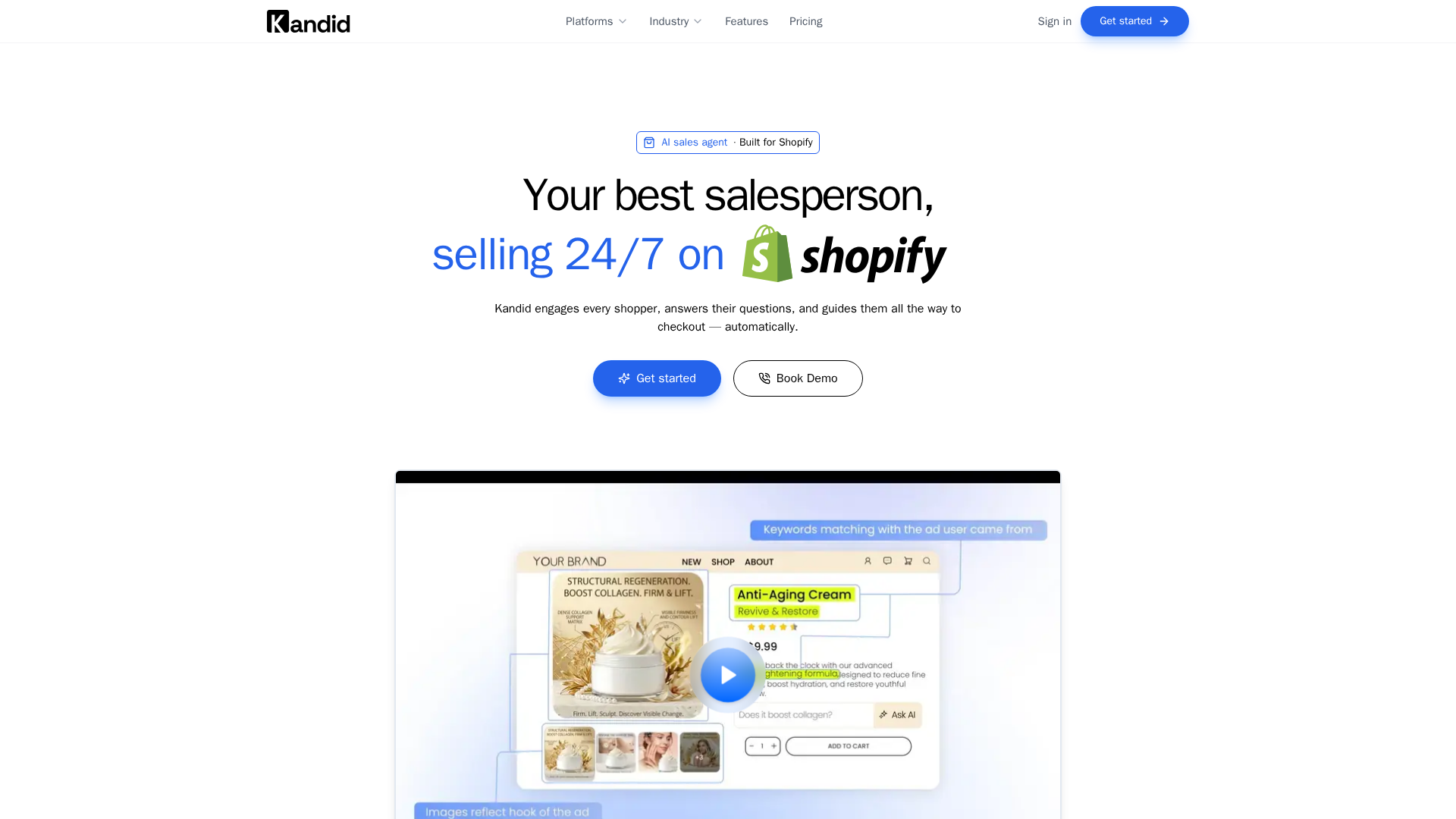
Need faster response and cleaner handoff? Kandid helps D2C teams launch real-time AI sales agents fast, qualify buyers, and lift conversion without adding headcount.
Frequently Asked Questions
Q1: What are the key features to consider when implementing AI sales agents for different industries?
Look for catalog knowledge, fast intent detection, brand-safe replies, CRM sync, and clear handoff rules. EV and tech brands need spec accuracy. D2C and personal care need strong recommendation logic, bundles, and answers for fit, use, and compatibility.
Q2: How do AI sales agents improve lead qualification and conversion rates in B2B sectors?
They ask smart follow-up questions, score intent, capture buying signals, and route hot leads faster. That cuts response time and lifts meeting quality. Better qualification also helps sales teams focus on real opportunities instead of low-fit inquiries.
Q3: What best practices ensure successful AI sales agent deployment and seamless human handoff?
Start with your highest-intent pages and top sales questions. Train on clean product, policy, and brand data. Set rules for edge cases, pricing, and escalation. Pass chat history, buyer intent, and key answers to the human rep.
Conclusion
AI sales agents work best when they answer fast, qualify clearly, and hand off cleanly. Buyers now expect quicker, smarter service, and Genesys research and McKinsey analysis both show why speed plus human oversight matters.