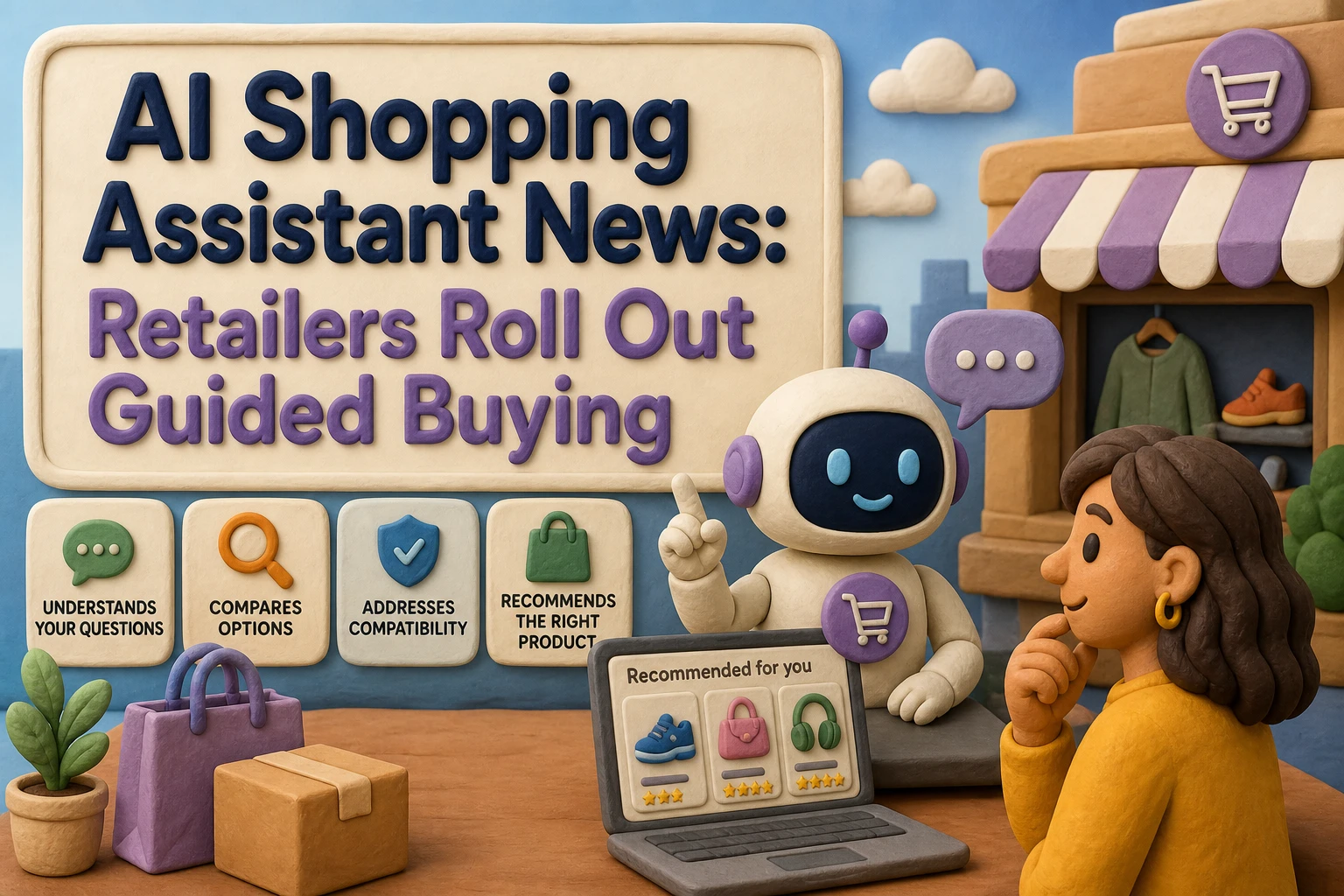
AI Shopping Assistant News: Retailers Roll Out Guided Buying
Quick Summary: Retailers like Kohl’s and Michaels are rolling out AI-guided shopping assistants that help customers find products, compare options, and build carts within chat interfaces. This shift from basic search to guided buying improves conversion rates by reducing choice overload and friction before checkout. Brands see quick deployment and measurable sales gains, making guided buying a key tool for increasing revenue and enhancing customer experience.
Kohl’s, Michaels, Kroger, Ulta Beauty, Home Depot, and Salling Group are pushing AI shopping assistants past basic Q&A. Their 2026 rollouts help shoppers find products, compare picks, spot deals, build carts, and sometimes head to checkout in one chat. That matters now. Standard search still creates choice overload and drop-off. We track retail AI closely, and this piece focuses on the guided-buying layer that is moving fastest, showing what is live, what matters, and where conversion gains look real.
What Retailers Are Shipping Right Now
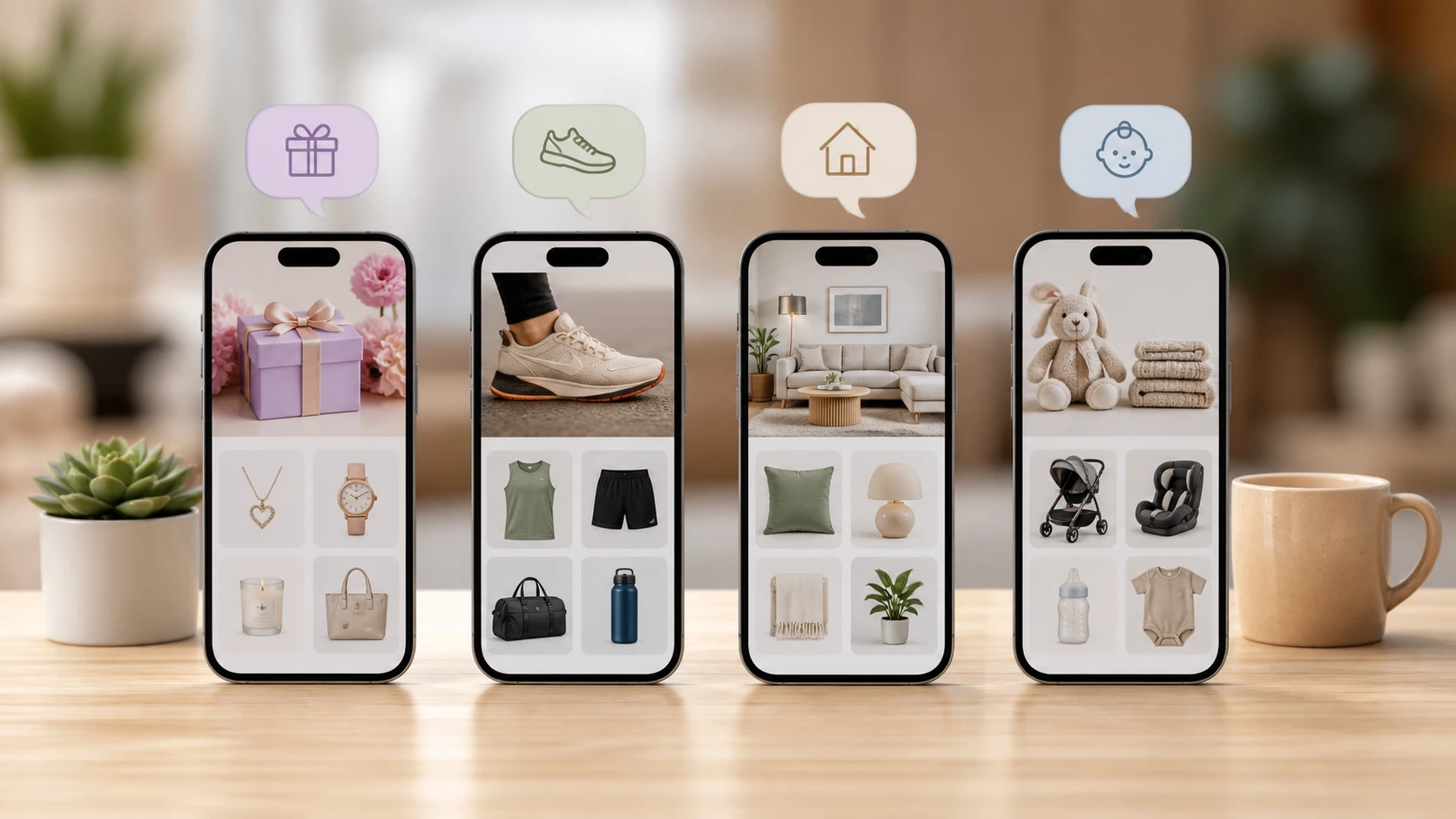
Retail launches now look less like open chat and more like guided buying. The common feature set is getting clear:
- product discovery from plain-language questions
- recommendation flows for gifts, outfits, or use cases
- product comparison inside the chat
- cart actions without forcing a new page
- support blend-ins like order tracking, promos, and pickup help
A good pattern is simple: help shoppers narrow choices, then remove friction before checkout. According to Retail Dive’s report on Kohl’s launch, Kohl’s moved from a Mother’s Day Gift Finder to a broader assistant for discovery.
| Launch pattern | What it does | Why it matters |
|---|---|---|
| Intent capture | Turns vague questions into needs | Better product matching |
| In-chat compare | Shows tradeoffs fast | Fewer drop-offs |
| Support handoff | Mixes shopping and service | Less friction near purchase |
Kohl’s is a useful case because the rollout is practical, not flashy. Its assistant helps with inspiration, deals, image search, comparison, cart adds, promotions, BOPIS help, and order support, as detailed by Kohl’s corporate announcement.
The signal for brands is clear: retailers are shipping assistants that act like sales reps, not novelty bots.
Also Read: Real-Time Shopping News: Brands Push Live Commerce Features
Why Guided Buying Is Catching On
Shoppers now ask full questions instead of typing two keywords. That shift is real. Salesforce says agentic search as the first step in shopping grew 200% year over year. Retailers are reacting by turning search bars into guided chats that hold context, compare options, and narrow choices without making people restart.
Guided buying also spreads fast because teams can launch it without rebuilding the whole store. Michaels moved from concept to production in six weeks. That matters. Fast rollout means brands can test high-intent journeys first:
- gift finding
- compatibility checks
- budget-based recommendations

What brands want is simple: more carts, fewer dead-end sessions, and less choice overload. Guided buying helps because it asks follow-up questions before showing products.
- It cuts weak clicks
- It improves product fit
- It supports bundles and trade-off decisions
The useful part is not the chatbot itself. It is the guided path to purchase.
| Shift | Old search | Guided buying |
|---|---|---|
| Input | Keywords | Natural questions |
| Context | Lost each search | Carried across chat |
| Outcome | List of items | Shortlist with reasons |
Also Read: Real-Time Shopping Setup Guide for Retail Stores
How D2C Teams Should Read the Signal
Big retailers are treating guided buying like a core conversion tool, not a side feature. Amazon moved Alexa into its shopping flow, and Walmart said AI agents will become a primary entry point for shoppers according to Reuters.
Best-Fit Use Cases for D2C Brands
- Large catalogs with confusing choices
- Products with fit, bundle, or compatibility risk
- Categories where shoppers ask the same pre-buy questions
| Use case | Why it fits |
|---|---|
| Skincare routines | Need guided matching |
| Electronics accessories | Need compatibility checks |
If your PDPs already need long FAQs, guided buying is likely worth testing.
Implementation Questions to Ask First
- Which shopper question blocks purchase most often?
- Can the assistant compare products, not just answer FAQs?
- Does it use live catalog, stock, and pricing data?
- Can you track add-to-cart, AOV, and conversion lift?
Macy’s said users of Ask Macy’s spent far more than non-users, a sign this is moving from novelty to revenue tool per Retail Dive.
Turn guided buying into revenue, not a pilot. See how Kandid helps D2C teams guide shoppers, answer fit questions, and lift conversion fast.
Frequently Asked Questions
Q1: How are AI shopping assistants transforming retail customer engagement?
They turn passive browsing into live, two-way guidance. Shoppers ask plain questions, get fast product matches, compare options, and clear up fit or compatibility doubts without waiting for support.
Q2: What are the benefits of guided buying with AI for D2C brands like Kandid?
Guided buying lifts conversion, average order value, and session depth. It also cuts drop-off on complex products by answering buying questions in real time and steering shoppers toward the best-fit SKU.
Q3: How quickly can retailers implement AI-guided shopping solutions using Kandid’s technology?
Many teams can launch fast if catalog data, FAQs, and product rules are clean. Kandid fits best when a brand needs quick setup, brand-voice control, and measurable sales impact from high-intent traffic.
Conclusion
Guided buying is the part of retail AI that matters now. Retailers are shipping tools fast, and AWS says brands can launch in weeks. Early rollouts already tie conversation to stronger conversion and clearer product discovery.