D2C Product Recommendations News: New AI Shopping Research Emerges
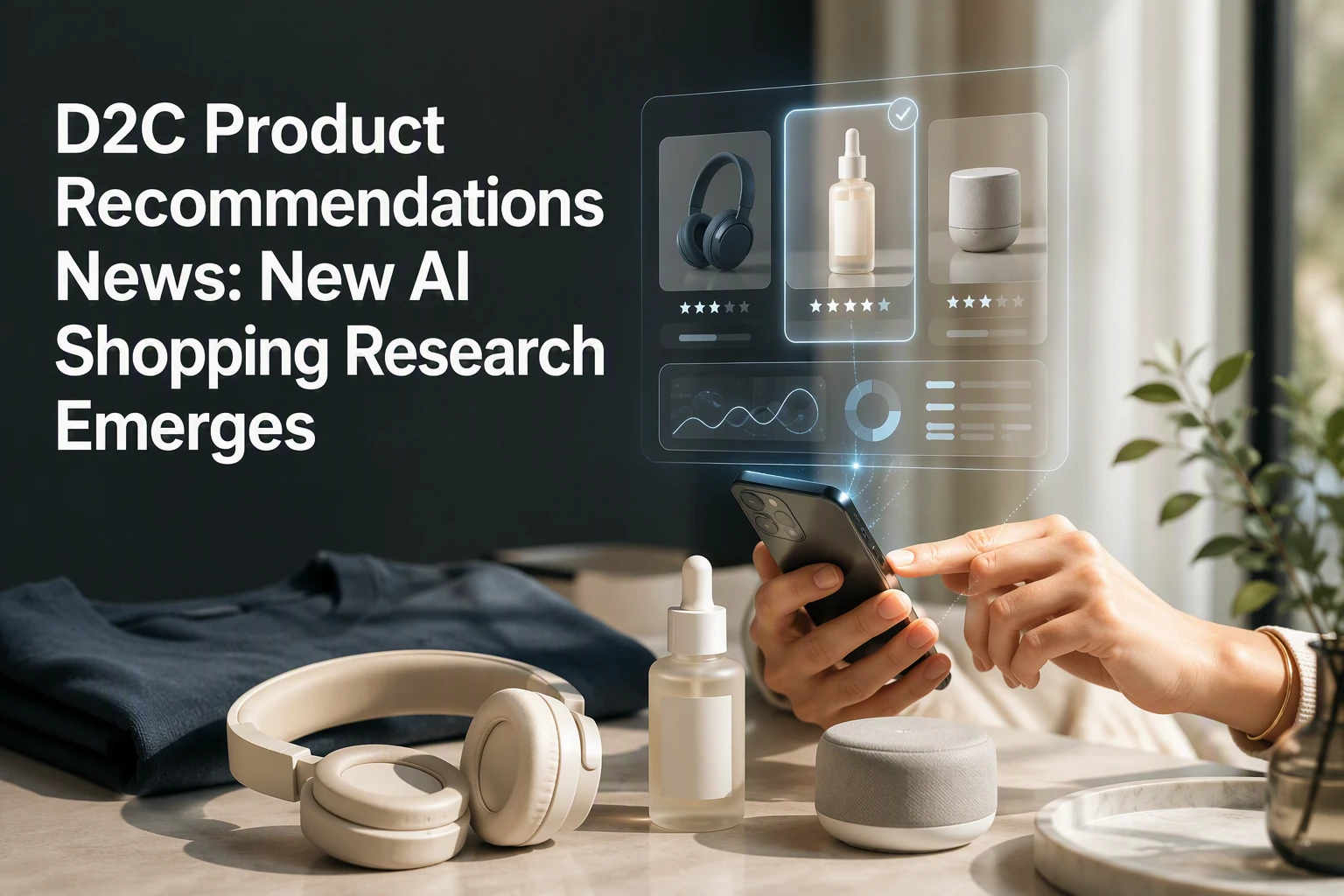
AI now narrows choices before shoppers visit your store. In May 2026, NIQ found 42% had used AI shopping tools recently, and 17% used them for recommendations. Adobe saw U.S. retail traffic from generative AI rise 1,200% by February 2025. This D2C product recommendations news review separates influence from purchase automation. AI trust remains mixed, so shoppers verify results. We assess the evidence and set product-data and measurement priorities.
AI Recommendations Are Becoming a New D2C Discovery Layer
The Numbers Behind the Shift
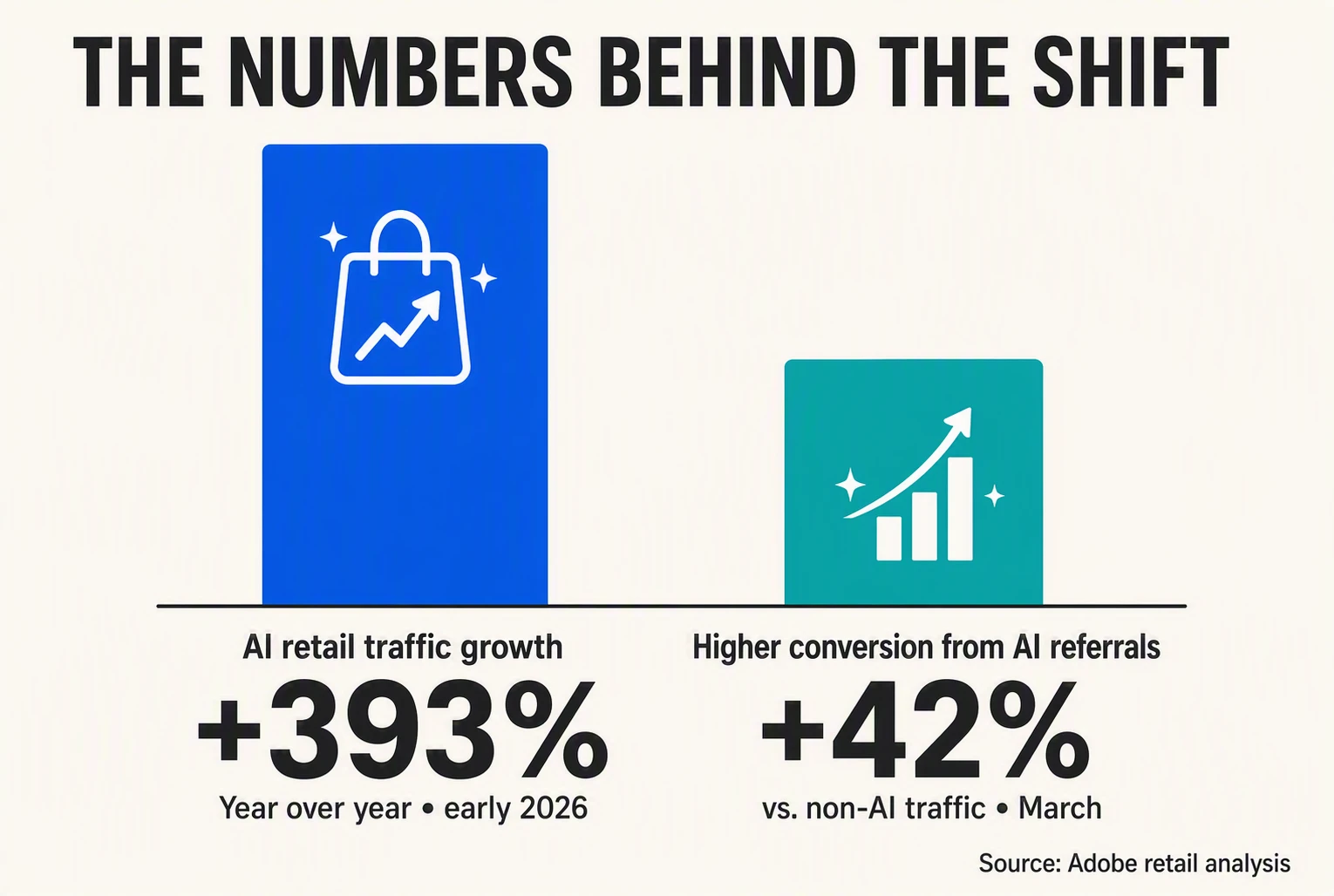
D2C product recommendations news now includes a clear channel shift. Adobe found AI-driven retail traffic rose 393% year over year in early 2026, while 39% of shoppers had used AI for online shopping. Adobe’s retail analysis also found AI referrals converted 42% better than non-AI traffic in March.
Referral Growth Does Not Equal Conversion
Do not treat every AI click as a sale. Track source-level sessions, add-to-cart rate, purchase rate, and assisted revenue by product type. AI often sends shoppers with detailed questions, especially for complex items.
- Keep specs, fit details, prices, and stock status machine-readable.
- Check landing pages match the recommendation promise.
- Use a site agent to answer the final question.
AI discovery needs clean product data and a strong on-site close.
Also Read: Latest Trends in D2C Product Recommendations Worldwide in 2026
Trust Still Determines Whether Recommendations Change the Sale
Consumers Use AI as a Shortlist, Not Always a Verdict
AI helps shoppers compare and narrow choices, but they still check the facts. IAB found that 95% take extra online steps after AI advice, and only 46% fully trust its recommendations in its shopping study. That makes AI a shortlist tool, not a final verdict.
Key insight: A recommendation changes a sale only when the buyer can confirm it on your site.
What D2C Brands Must Make Verifiable
Give every AI-assisted shopper proof they can scan fast:
| Product fact | Proof to show |
|---|---|
| Fit or compatibility | Clear size, model, and use-case details |
| Performance claim | Specs, test data, and limits |
| Value | Price, bundle terms, shipping, and returns |
- Keep catalog data current across product pages.
- Show real reviews and clear policies near the buy button.
- Let shoppers compare options side by side.
Kandid can answer product questions from live catalog data, so the recommendation links back to evidence.
Also Read: Latest Industry News on D2C Product Recommendations 2026
Why Product Data Is Becoming Recommendation Infrastructure
From Keywords to Need States
Shoppers now ask for outcomes, not product names: "a quiet EV charger for apartment parking" or "a face cream for dry, reactive skin." Recommendation systems need data that maps each item to those needs. Google’s retail search guidance combines contextual matching with filters such as brand, material, and price in hybrid retail search.

Tip: Capture the language customers use in chat, reviews, and returns. It reveals the needs your catalog must answer.
The Minimum Viable AI-Ready Catalog
Start with a consistent record for every sellable variant.
| Field | Why it matters |
|---|---|
| Specs and dimensions | Answers fit and compatibility questions |
| Use cases and limits | Prevents poor matches |
| Price and stock status | Keeps recommendations buyable |
- Add material, ingredients, and key benefits.
- Define compatible products and exclusions.
- Keep shipping and return facts current.
Google recommends rich data on features, benefits, variants, and images to improve discovery and buyer confidence in product description pages.
Also Read: Top Trends Reshaping D2C Product Recommendations in 2026
From Search Rankings to Algorithmic Consideration Sets
A top ranking no longer guarantees a shopper sees your product. AI now narrows a large catalog into a small consideration set based on fit, price, proof, and stated needs. IAB found that AI shoppers use it most to compare options and narrow choices, yet 89% still verify its answers elsewhere. IAB research
| Old priority | New priority |
|---|---|
| Rank for a query | Supply clear product facts |
| Drive clicks | Earn inclusion and trust |
- Keep specs, compatibility, stock, price, and returns consistent.
- Add plain-language comparison points.
Measure product mentions, assisted sessions, and conversion after AI-led questions - not rankings alone.
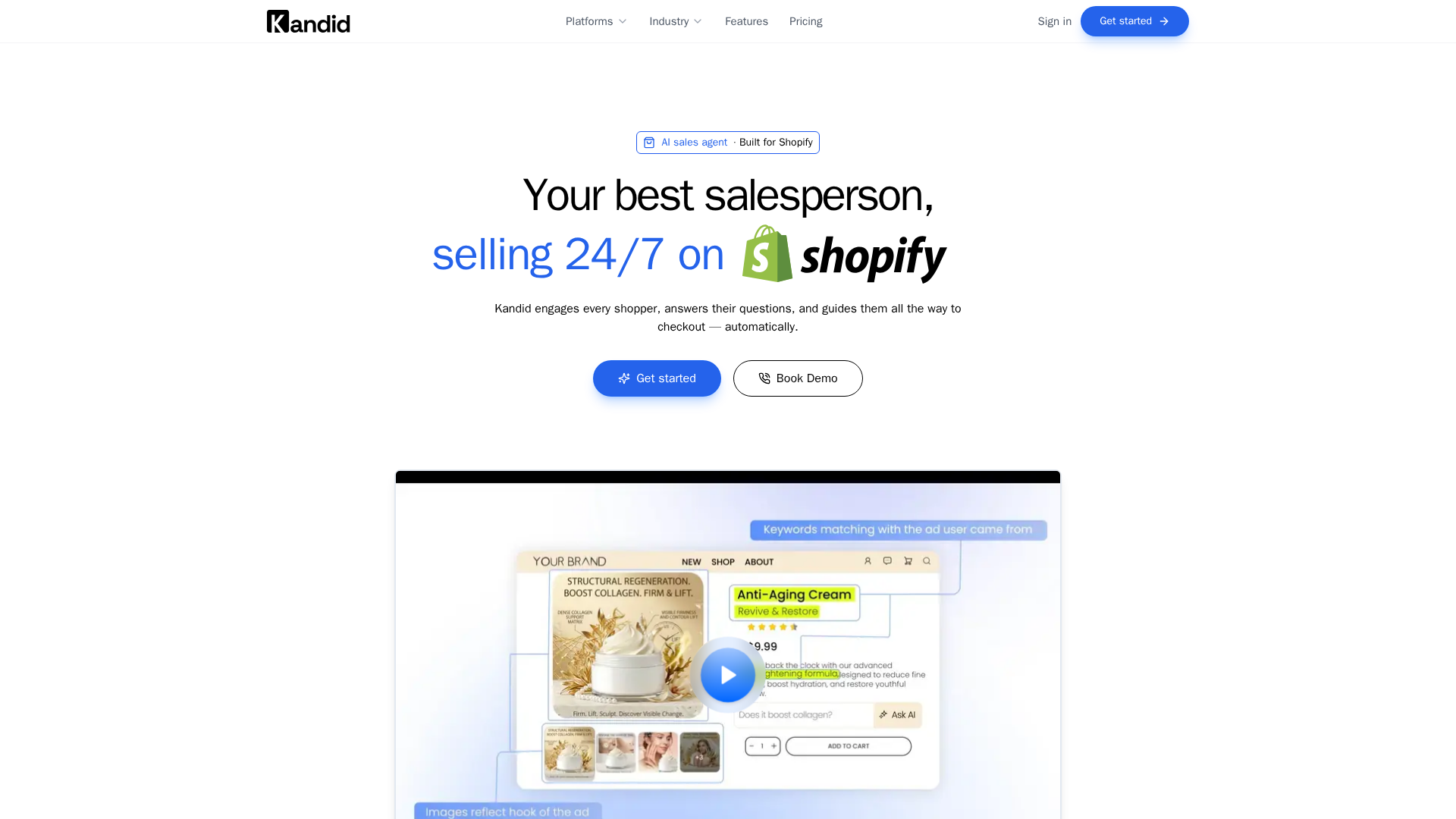
Turn research into guided buying. Kandid answers live product questions, compares options, and delivers relevant recommendations that move high-intent shoppers to checkout.
Frequently Asked Questions
Q1: Cover the latest research shaping product recommendations.
Recent findings point to AI influencing research and choice, not replacing checkout. Brands need clean specs, fit guidance, and proof.
Q2: What product data should D2C brands fix first?
Prioritize variant facts, compatibility, stock status, pricing, use cases, and clear comparison points. Wrong answers quickly break trust.
Q3: How should we measure recommendation impact?
Track assisted conversion rate, add-to-cart rate, average order value, and returns. Compare AI-guided sessions with matched non-guided sessions.
Conclusion
AI now shapes product discovery, not full purchase control. Keep product facts clear, current, and easy to verify. NIQ research shows recommendations lead autonomous buying.