Ecommerce Chatbot vs Shopping Assistant: Key Differences Explained
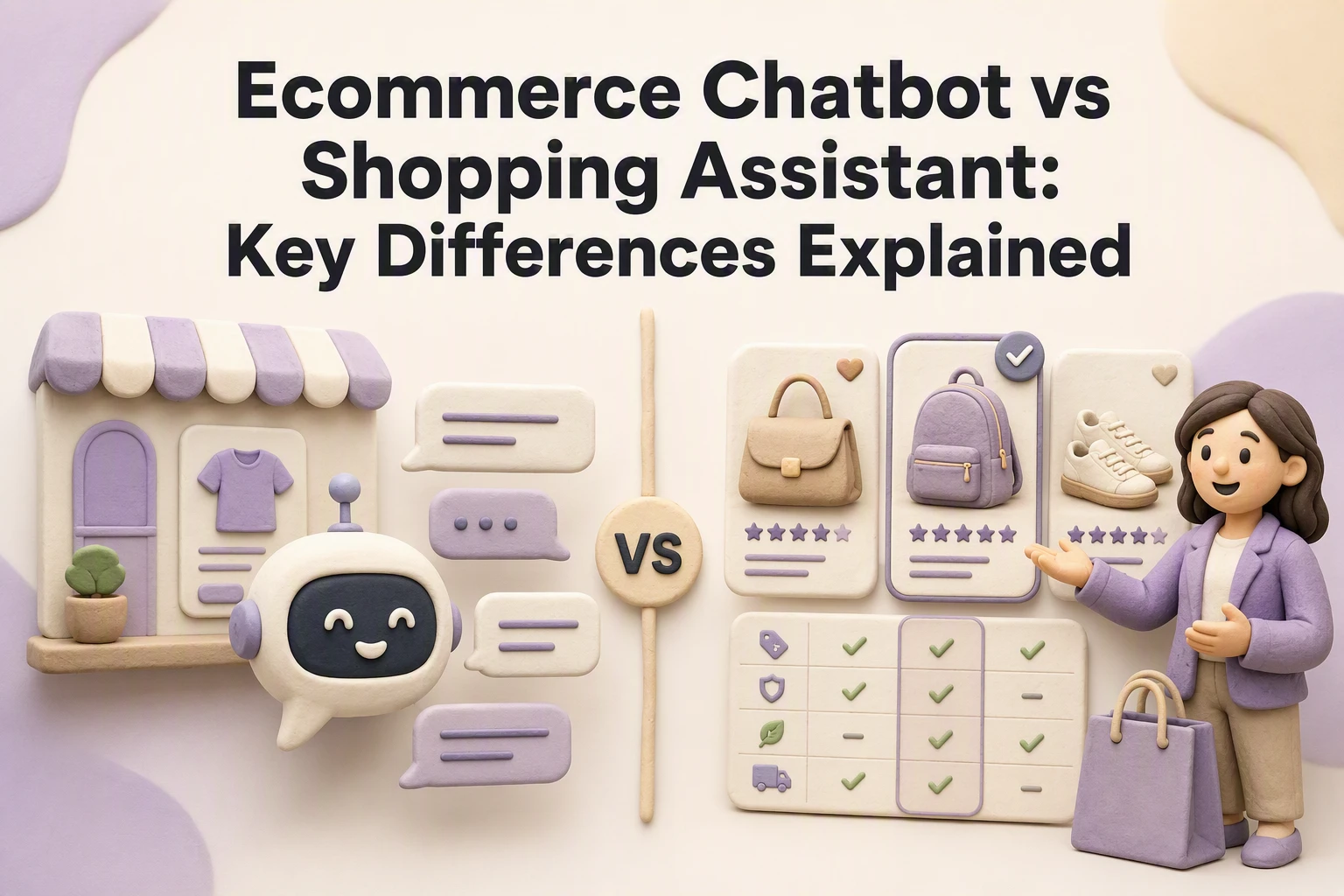
Quick Summary: A shopping assistant actively guides shoppers through product choices by asking follow-ups, comparing options, and explaining picks-like helping someone with sensitive skin narrow down skincare products-while a chatbot just answers FAQs like order status or return policies. The key difference is whether the tool ends the conversation or drives a purchase: assistants push toward carts, chatbots resolve tickets. Stores should pick based on their top questions-if they’re about products, use an assistant; if they’re about support, a chatbot works. Both can coexist, but combining them requires deep catalog data and sales-focused actions.
A shopper with sensitive skin needs more than an FAQ link. A shopping assistant asks questions, compares products, explains its pick, and guides checkout. An ecommerce chatbot handles repeat support tasks like order status and returns. In the ecommerce chatbot vs shopping assistant choice, labels mislead. Compare intent, data, actions, context, and metrics to pick one, combine both, or use Kandid.
Ecommerce Chatbot vs Shopping Assistant: At a Glance
| Ecommerce chatbot | Shopping assistant | |
|---|---|---|
| Primary job | Answer FAQs and resolve support requests | Guide product discovery and purchase decisions |
| Main knowledge source | Help content, policies, FAQs, and order data | Catalog, product attributes, inventory, cart, and session context |
| Typical shopper journey stage | Support, logistics, and post-purchase | Discovery, evaluation, and pre-purchase |
| Core actions | Answer, link, look up, route, or escalate | Ask, compare, recommend, explain, and guide to cart |
| Best success metric | Resolution rate, deflection, and response time | Add-to-cart rate, conversion, and assisted revenue |
| Best fit for | Stores with repetitive support volume | Stores with complex or high-consideration products |
How Ecommerce chatbot and Shopping assistant Compare
Ecommerce chatbot
An ecommerce chatbot handles repeat questions, order lookups, and support requests. It suits stores with heavy ticket volume and relies on help content, policies, FAQs, and order data. Key strengths
- Fast answers and routing
- Support ticket deflection
- Human handoff for complex cases
Shopping assistant
A shopping assistant helps visitors find, compare, and choose products before they buy. It uses catalog and session data to guide high-intent shoppers toward the right cart, as conversational product discovery tools do. Key strengths
- Product-led guidance
- Context-aware recommendations
- Assisted revenue measurement
The Core Difference Is the Job After the Question
A Chatbot Resolves an Immediate Request
A chatbot ends the interaction once it solves a clear task: “Where is my order?” or “What is your return window?” It pulls an answer, shares a link, or routes the ticket. Shopify describes chatbots as tools for repetitive questions, workflows, and human escalation in its customer service guide.
A Shopping Assistant Guides a Buying Decision
A shopping assistant treats the first question as the start of a sale. It asks follow-ups, weighs budget, fit, use case, and product details, then explains its pick. It should guide the shopper to cart, not just answer them. Shopify notes that assistants use product and shopper signals to tailor recommendations in its shopping assistant overview.

Tip: Measure chatbots by resolution rate. Measure shopping assistants by conversion rate, AOV, and assisted revenue.
Also Read: Kandid vs Manifest: Which Real-Time Shopping Assistant Is Better in 2026?
How Their Data, Context, and Actions Differ
Different Knowledge Sources Create Different Answers
A chatbot usually draws from FAQs, policies, and support tickets. It answers, "Where is my order?" A shopping assistant needs catalog facts, variants, inventory, and the shopper's live question. Shopify itself uses product details, related collections, and purchase patterns for recommendations, as its Search & Discovery guidance explains.
The Action Test Separates a Reply from Assistance
Use this test: can the tool move a buyer toward the right item?
| Tool type | Typical output | Next action |
|---|---|---|
| Chatbot | Returns policy answer | Sends a help link |
| Shopping assistant | “Choose this size for trail running” | Compares, recommends, and guides to cart |
- A chatbot resolves service questions.
- A shopping assistant handles product fit, trade-offs, and choice.
Tip: Measure product-page engagement, add-to-cart rate, and assisted revenue, not chat volume alone.
Also Read: Ultimate Guide to Live Chat & AI Chatbot Integration Strategies
Which One Should a Shopify Store Choose?
Choose a chatbot if most chats are about order status, returns, and basic FAQs. Choose a shopping assistant if shoppers need help comparing products, picking variants, or solving fit and compatibility doubts.
| Store need | Better choice |
|---|---|
| Reduce support tickets | Chatbot |
| Guide product choice | Shopping assistant |
| Lift cart value | Shopping assistant |
Shopify shopping assistants can use catalog and cart context to recommend products and answer buying questions, as shown in the Shopify App Store.
Start with your top 20 pre-sale questions. If they require a product recommendation, choose an assistant.
Also Read: Live Chat vs AI Chatbot: Which One Actually Converts Better in 2026?
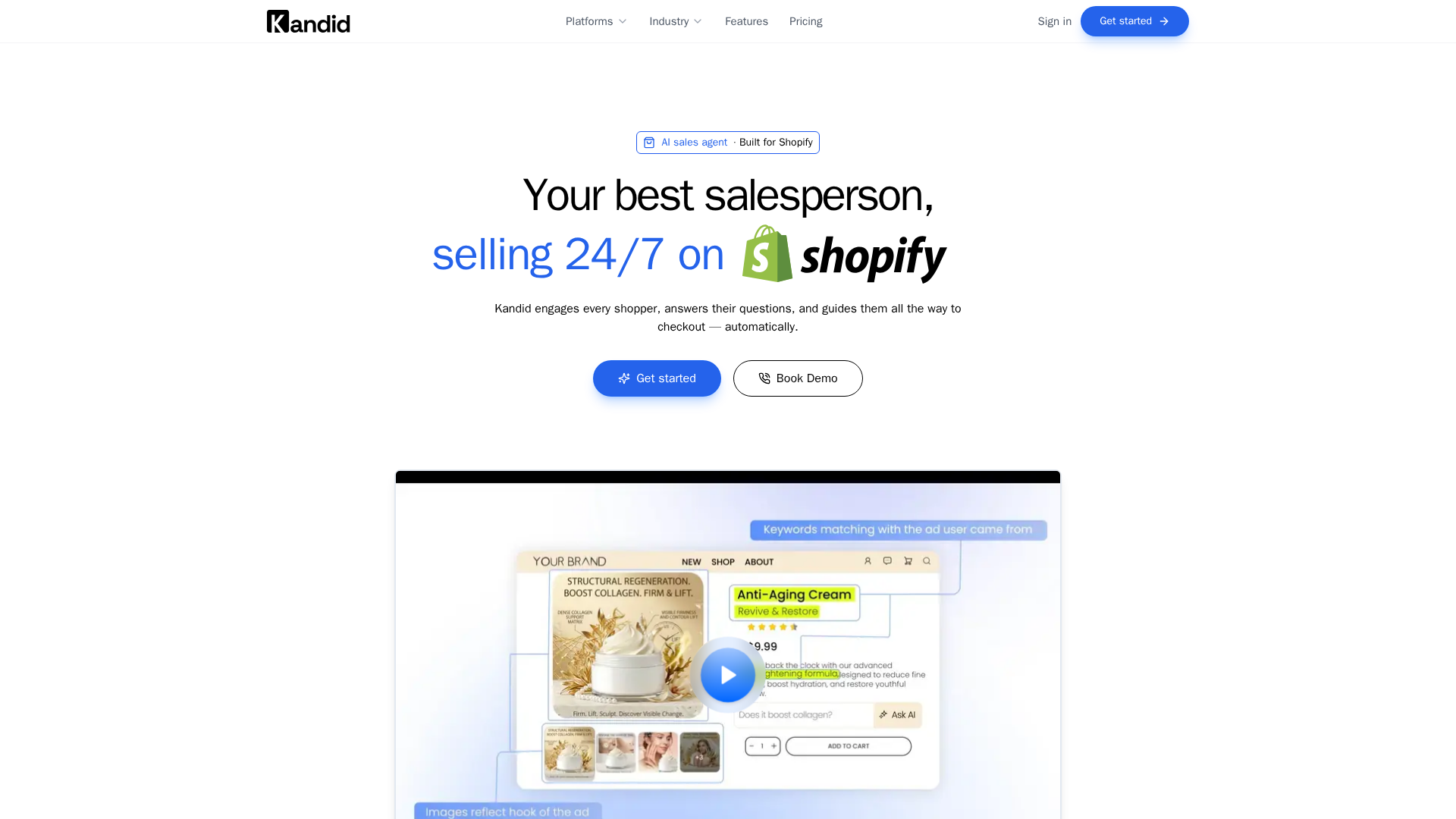
Turn visitor questions into guided purchases with Kandid, a real-time AI sales agent built for Shopify stores.
Frequently Asked Questions
Q1: What are the differences between ecommerce chatbots and shopping assistants?
Chatbots handle broad support tasks. Shopping assistants use catalog data and shopper intent to compare products, answer fit questions, and guide purchase decisions.
Q2: Can one tool do both jobs?
Yes, but check its product knowledge and sales actions. A support-first bot may not give reliable recommendations.
Q3: What should Shopify stores measure?
Track assisted conversion rate, revenue per chat, average order value, and handoffs.
Conclusion
Choose a chatbot for support and routine tasks. Choose a shopping assistant for guided product decisions and sales. Shopify distinguishes these roles clearly.