Live Chat and AI Chatbot Setup Guide for Ecommerce Stores
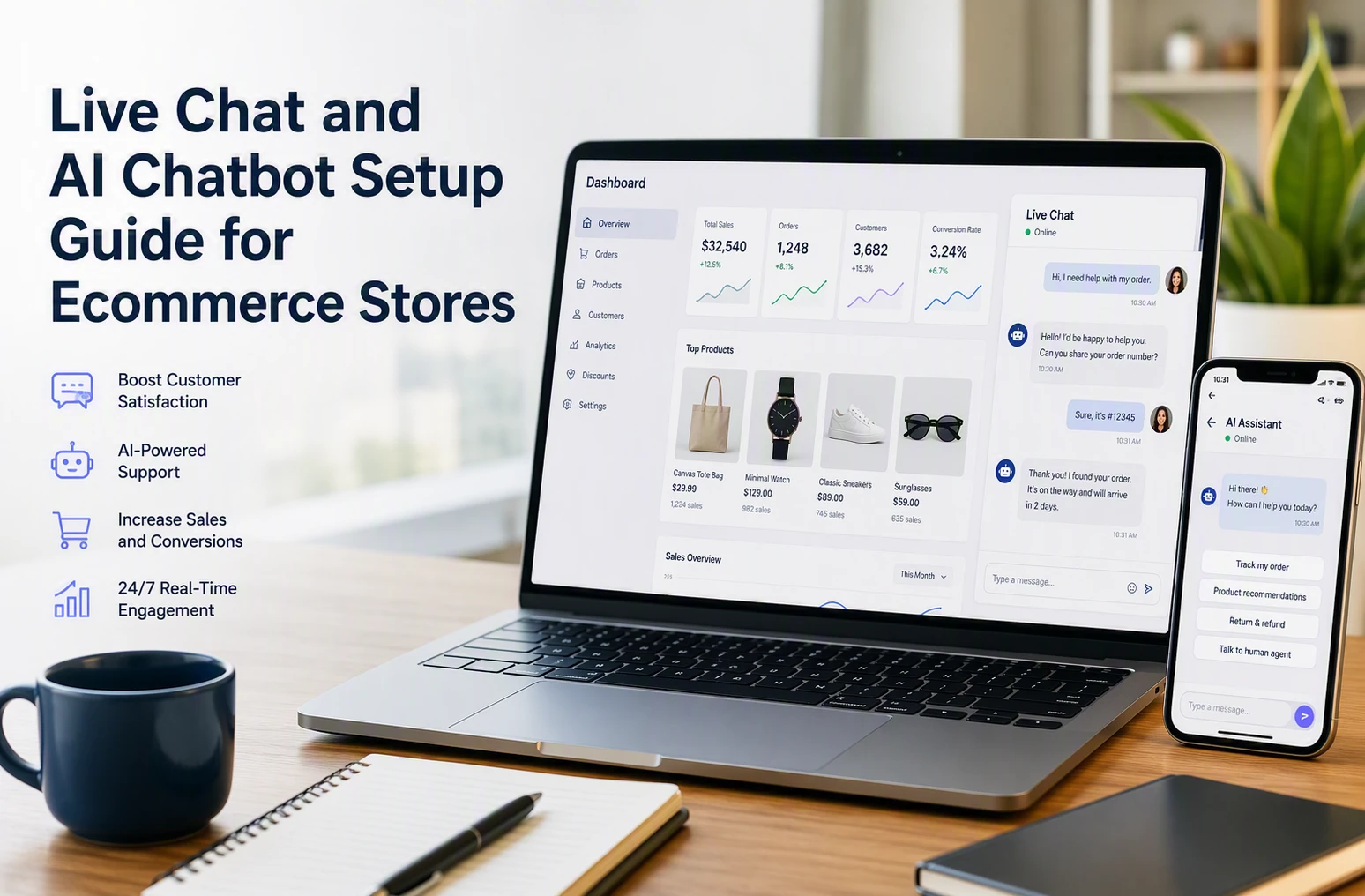
Quick Summary: Setting up live chat and AI chatbots for ecommerce involves defining common customer questions, choosing integrated software, connecting store data, and testing thoroughly. The best approach combines AI handling routine inquiries and quick escalation to humans for complex issues, improving support speed and sales. Measuring key metrics like response time and customer satisfaction ensures the system's effectiveness.
A shopper asks if a skincare refill fits their last order. Strong teams reply at once with AI Chatbot Setup that handles policy checks and routing, then pass odd or sensitive cases to staff. That is the core problem this guide solves: slow support, weak handoff rules, and missed sales. You will learn AI Chatbot Setup, Live Chat Guidance, and Ecommerce Chatbot roles, plus what to measure. This AI Chatbot Setup guide is built for ecommerce teams that need clear, practical setup steps.
Step 1: Define the support jobs your chat system should handle
Start with intent, not tools. List the top reasons shoppers open chat. Mintel notes most online service contacts are still reactive, so review search logs, chat transcripts, order issues, and product pages to find repeat questions Mintel's 2025 online customer service report.
- Pre-sale questions
- Order status
- Returns and exchanges
- Product fit or compatibility
- Payment or checkout issues
Next, draw a hard line between bot answers and human help. Simple, repeat questions fit automation. Complex cases do not. A 2025 CX Leaders report says 54% of brands believe 21% to 60% of customer engagements are too complex for self-service or AI CX Leaders research.
Escalate fast when the shopper shows urgency, confusion, or high purchase value.
Also Read: How Kandid Enhances Customer Support with Live Chat & AI Chatbots
Step 2: Choose software that fits your store and team workflow
Check integrations before features. Your chat stack should connect to your store, helpdesk, and order data first. If the bot cannot see catalog details, shipping status, or past tickets, it will answer in fragments. eesel’s ecommerce guide shows why store plus helpdesk connections matter for real order lookups and clean escalations.
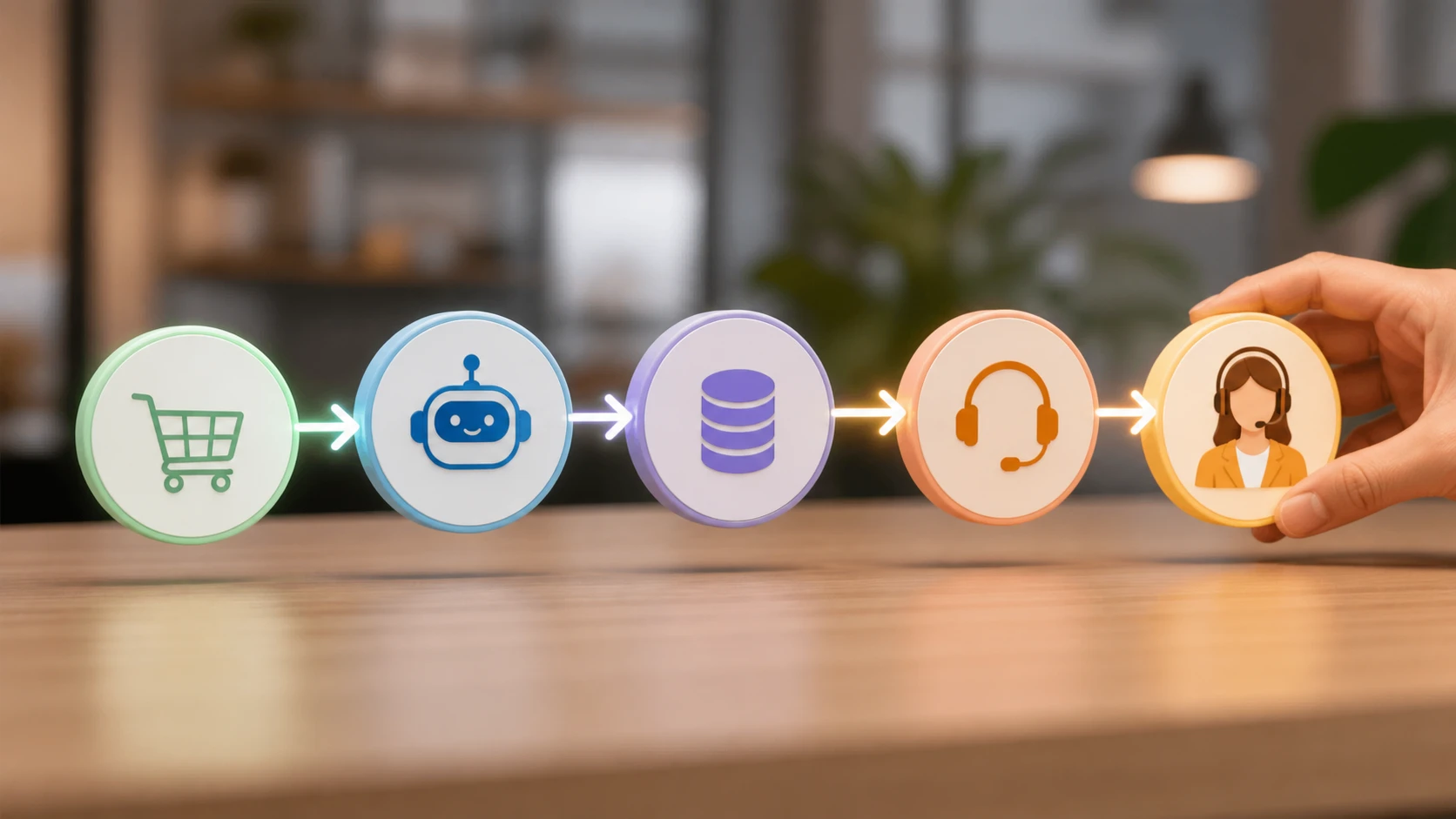
Compare how each tool handles automation, then how it exits automation. Strong setups let you set clear triggers for human takeover, pass the full transcript, and route by issue type. Smartsupp’s handoff guide highlights direct human requests, complexity, and frustration as core escalation triggers.
Also Read: 8 Live Chat and AI Chatbot Use Cases for Support Teams
Step 3: Connect your store data, knowledge base, and chat channel
Your bot gets useful only when it can see real order data, approved answers, and the same customer thread across channels. Shopify notes that strong omnichannel support depends on shared context, including purchase history and prior interactions across chat, email, and social in its 2026 guide.
Connect live store and order data
- Sync order status, shipping events, returns, and customer history first.
- Let the bot read context, but limit risky actions unless a human approves them.
- Map key intents: order tracking, address changes, returns, warranty, and product fit.
Bad data creates bad answers fast. Test with real edge cases before launch.

Load policies, FAQs, and past tickets
- Import your shipping, returns, warranty, and product care content.
- Add top ticket themes from the last 90 days.
- Rewrite vague policy text into short, plain answers.
Gorgias reports that order tracking, returns, and shipping FAQs are still core AI use cases in ecommerce for 2026.
Embed live chat where customers already shop
- Put chat on product pages, cart, checkout help, and order status pages.
- Keep the same knowledge source across web chat and social messaging.
- Pass full conversation history to agents on handoff.
Also Read: Ultimate Guide to Live Chat & AI Chatbot Integration Strategies
Step 4: Test, launch, and measure the system
Run test conversations before going live
Test the full flow before launch. Run 15 to 20 chats across key intents: product questions, shipping, returns, order issues, and edge cases. Check bot answers, routing, tone, and handoff speed. Make sure humans see the full chat history. Fix dead ends fast.
If the bot cannot answer clearly in two turns, send the chat to a person.
Track the metrics that prove impact
Measure speed, quality, and sales impact from day one. LiveChat's report highlights first response time, chat duration, and CSAT. Freshworks benchmark data also tracks first contact resolution and resolution time.
- First response time
- AI resolution or deflection rate
- Escalation rate
- Conversion rate from chat
- CSAT after bot and human handoff

Need faster support without adding headcount? Kandid gives your store an AI sales agent that answers product questions, routes edge cases to humans, and helps turn more chat sessions into revenue.
Frequently Asked Questions
Q1: What are the key benefits of implementing live chat and AI chatbots for ecommerce stores?
They raise conversion, answer pre-buy questions fast, cut support load, and recover unsure shoppers. AI handles scale and speed. Live chat handles edge cases, emotion, and high-value sales moments.
Q2: How do I choose the best live chat or AI chatbot software for my ecommerce platform?
Pick based on catalog complexity, support volume, integrations, handoff rules, and reporting. Test answer quality on real shopper questions first. If guided selling matters, Kandid fits better than basic support-first tools.
Q3: What are the essential steps to integrate a live chat or AI chatbot into my ecommerce site?
Set goals, map key journeys, train the bot on products and policies, define escalation triggers, place chat on high-intent pages, then track conversion, deflection, revenue per chat, and missed handoffs.
Conclusion
The winning setup is hybrid: let AI handle routine questions, but route complex or emotional cases fast. Research shows human intervention protects service quality in key escalations Alibaba field evidence, while mature AI programs improve support metrics more often Intercom report.