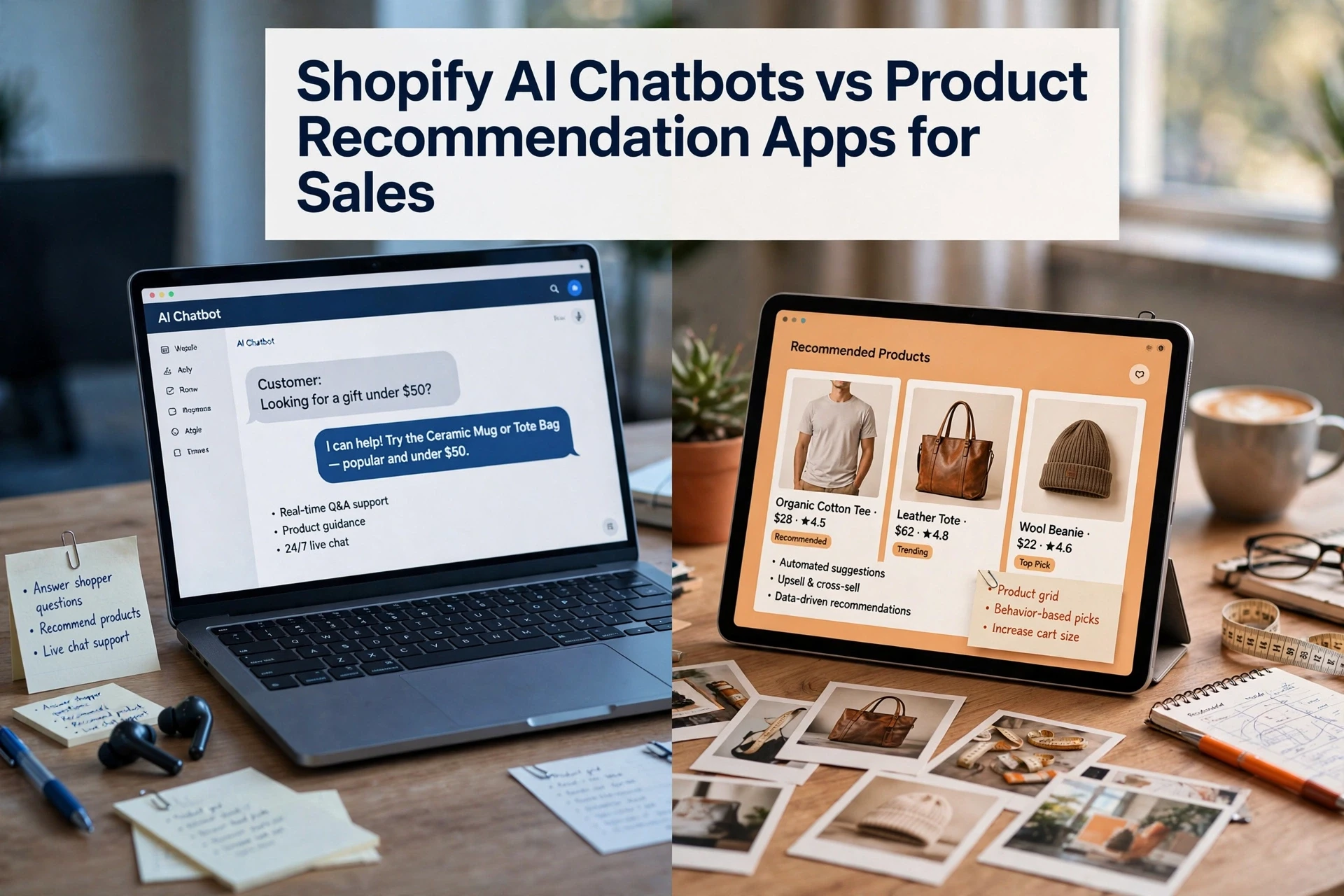
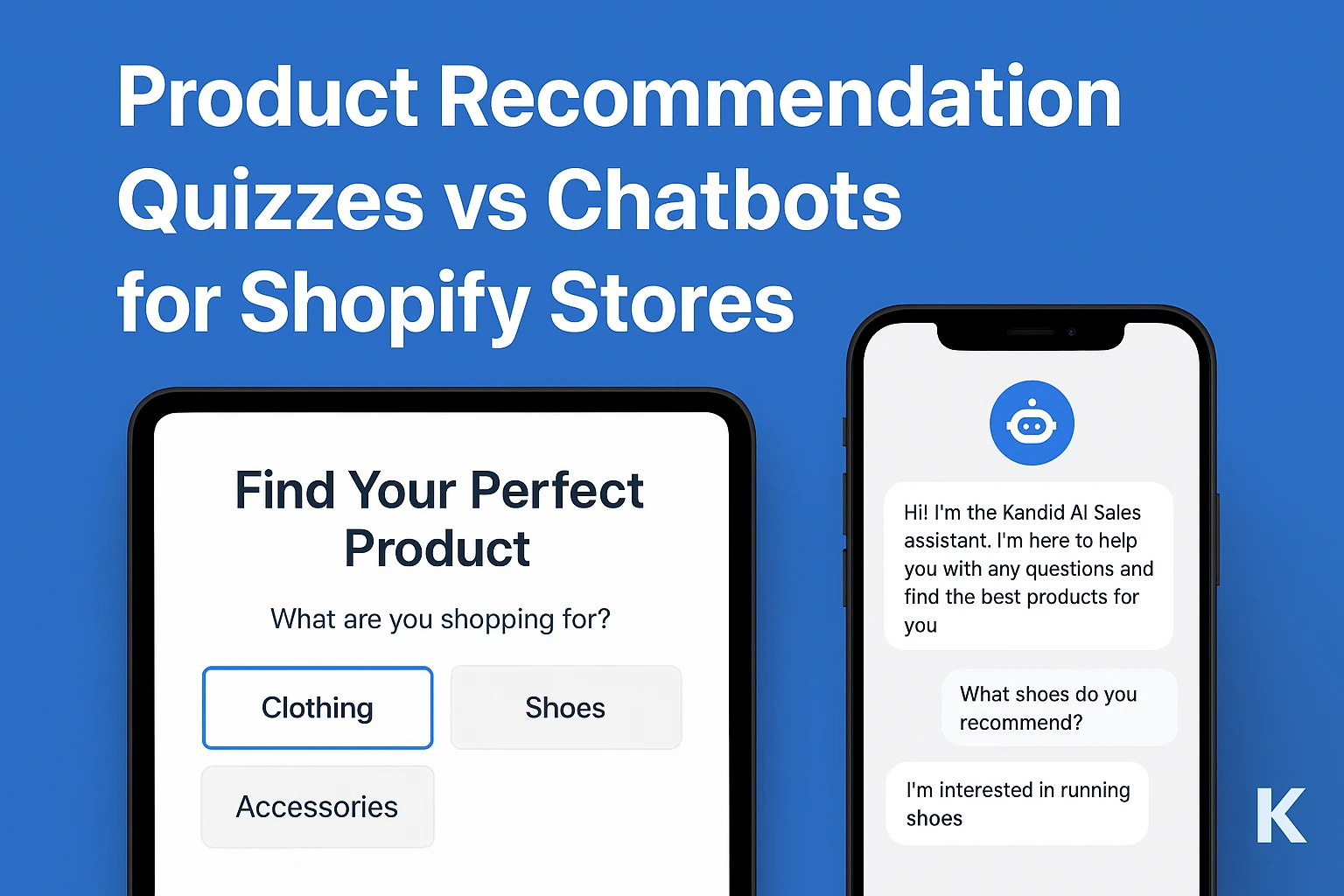
Product Recommendation Quizzes vs Chatbots for Shopify Stores
Quick Summary: Product recommendation quizzes work best for predictable needs like skin type or size, while AI chatbots handle complex catalogs and open-ended shopper questions. The article compares control, setup, and measurement, noting quizzes need simple rule-based paths and chatbots suit vague or changing needs. Track full paths from quiz or chat to purchase, and report attributed sales without claiming incremental lift. Use both only if each solves a distinct shopper problem.
A shopper with sensitive, dry skin may need follow-up questions, not a fixed path. In the product recommendation quiz vs chatbot choice, quizzes suit predictable needs. Chatbots help with complex catalogs. This product recommendation quiz vs chatbot guide compares control, setup, handoff, and measurement so Shopify teams can reduce choice overload without bad product matches.
Product Recommendation Quiz vs Chatbot: At a Glance
| Product recommendation quiz | AI chatbot | |
|---|---|---|
| Matching method | Rules, weights, and answer-to-product mappings | Natural-language intent, catalog data, and conversation context |
| Best for | Predictable needs such as routines, fit, gifts, and product finders | Complex catalogs, comparison-heavy products, and nuanced shopper questions |
| Shopper interaction | Guided questions with a defined results page | Open-ended conversation with follow-up questions |
| Setup and maintenance | Requires question design and product mapping updates | Requires reliable catalog, store content, configuration, and review |
| Support beyond recommendations | Usually limited unless connected to additional tools | Product answers, order lookup, cart actions, and human handoff may be available depending on configuration |
| Measurement | Quiz funnel, recommendation, conversion, and revenue metrics where supported | Conversation analytics, recommendation activity, and purchase attribution where supported |
How Product recommendation quiz and AI chatbot Compare
Product recommendation quiz
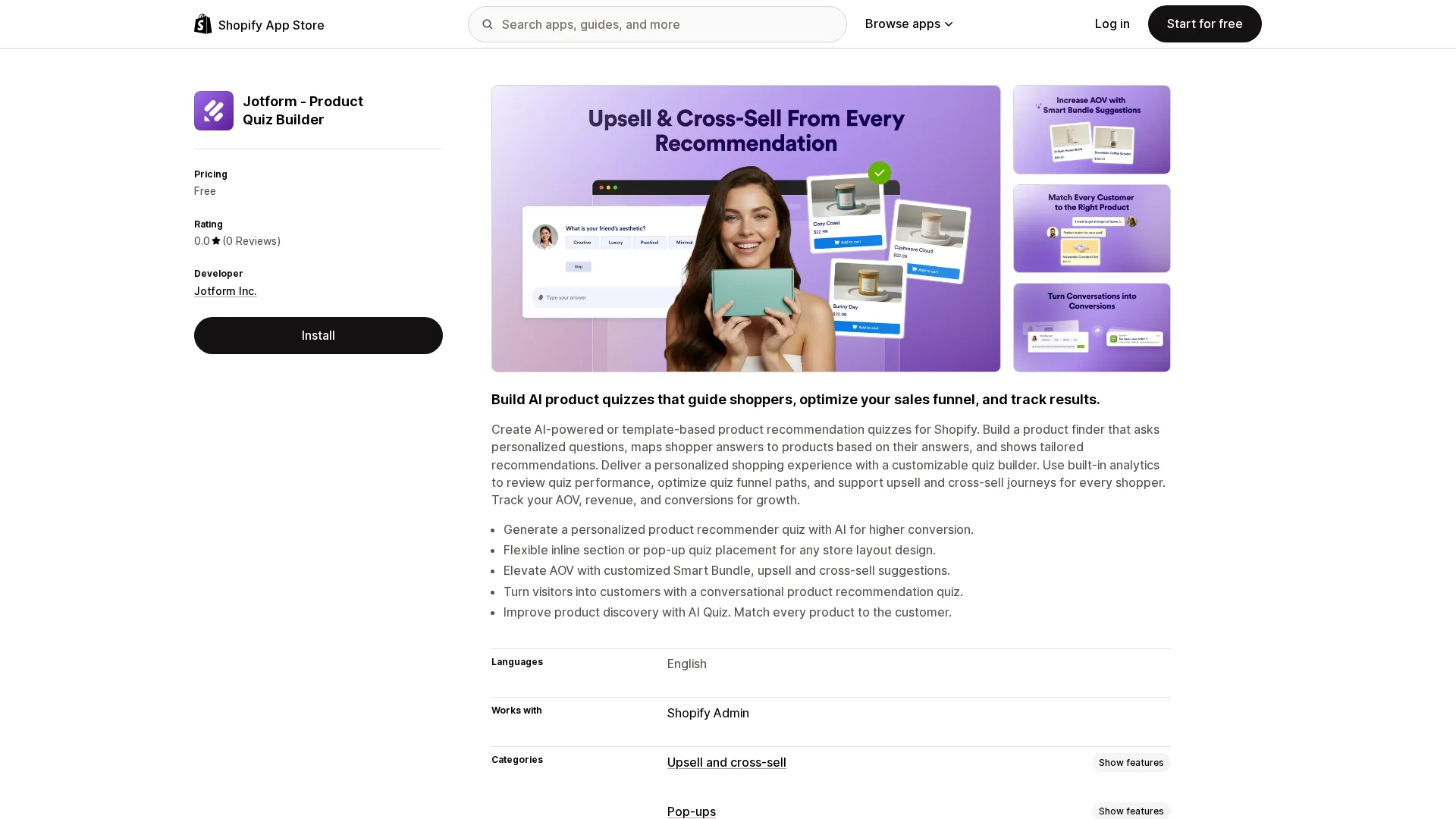
A product recommendation quiz guides shoppers through fixed questions, then maps answers to selected products. It suits predictable choices such as routines, fit, gifts, and simple product finders. Jotform’s Shopify guide shows how answers can include weights, recommended items, and exclusions.
AI chatbot
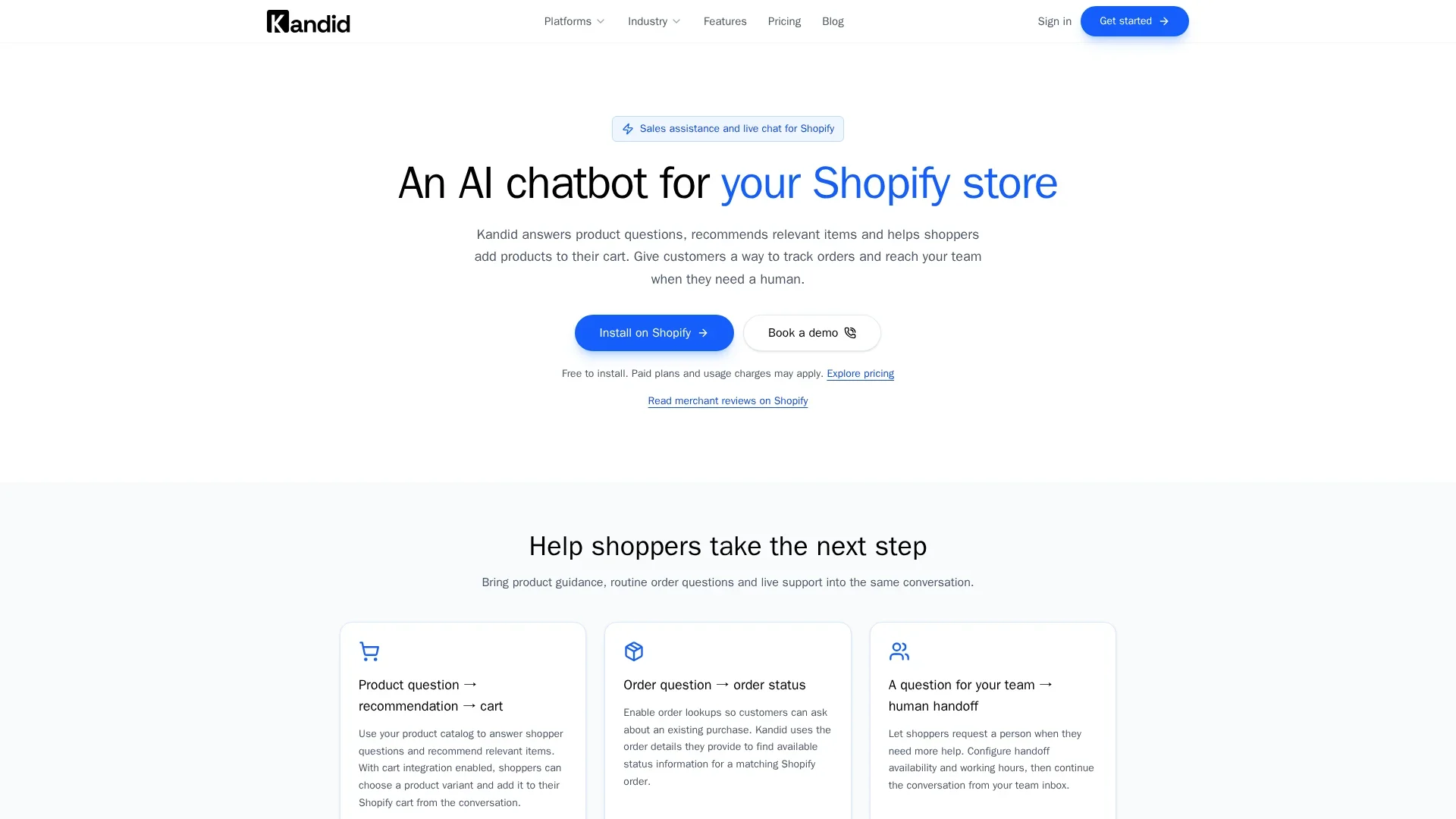
An AI chatbot lets shoppers ask open-ended questions and receive guidance based on catalog data and chat context. Kandid fits stores with complex products, comparison questions, and needs that change during the conversation.
How Quizzes and Chatbots Match Products Differently
When Structured Questions Produce Better Matches
Use a quiz when every answer maps to a clear rule. It works well for skin type, size, budget, pet breed, or device model. Baymard notes that compatibility filters help shoppers narrow to suitable items, especially for parts and accessories that must fit.

- Keep questions short.
- Show why each answer changes the result.
- Test every result against stock status.
When Shoppers Need a Conversation
Choose a chatbot when needs are vague or change mid-chat. A shopper may ask, "Which gift suits a runner with sensitive skin?" The bot can ask follow-up questions, explain trade-offs, and answer shipping or ingredient concerns before recommending products.
Do not force a chat into fixed quiz paths. Let shoppers skip questions and hand off to a person when needed.
Also Read: Ecommerce Chatbot vs Shopping Assistant: Key Differences Explained
Which Option Fits Your Shopify Store Operations?
Catalog Complexity and Maintenance
Use a quiz when a few stable questions can narrow a small catalog. Use a chatbot when shoppers ask varied questions about fit, materials, stock, or comparisons.
Shopify lets products carry up to 2,048 variants, so rigid quiz paths can grow hard to maintain as options expand. Shopify's variant guidance explains the limit.

Keep product titles, tags, and variant data clean before launching either option.
Support, Cart Actions, and Handoff
Choose a chatbot if product discovery overlaps with order questions, cart help, and staff support. Kandid can use store data for product answers, relevant suggestions, configurable cart actions, order lookup, and human handoff.
- Set clear handoff rules for refunds, complaints, and unusual requests.
- Review chats weekly for missing answers.
Shopify notes that chat tools can automate replies and escalate important issues to people. See Shopify's chatbot guide.
Also Read: D2C Product Recommendations Strategy for Higher Average Order Value
How to Measure Product Matching Without Overclaiming
Track the Full Recommendation Path
Log each step: quiz answer or chat intent, products shown, product click, add-to-cart, checkout, and purchase. Review match rate by category and traffic source.
| Metric | What it shows |
|---|---|
| Product click rate | Interest in shown items |
| Add-to-cart rate | Strength of the match |
| Purchase rate | Attributed outcome |
Report these as attributed sales, not proof the recommendation caused the sale.
Separate Attribution From Incremental Lift
Attribution follows the shopper path. Incremental lift asks what changed versus a holdout group. IAB guidance notes that attribution alone cannot prove cause. Test a small random group without recommendations before claiming lift.
Also Read: Ecommerce Chatbot Product Discovery Features Compared for Shopify Stores
Should Your Shopify Store Use a Quiz or a Chatbot?
Choose a quiz for a fixed path, such as skin type, size, or gift selection. Choose a chatbot when shoppers ask varied follow-up questions about products, shipping, or fit. Shopify notes that AI shopping assistants can clarify intent through conversation. Read Shopify’s overview
Use both only if each solves a distinct shopper problem.
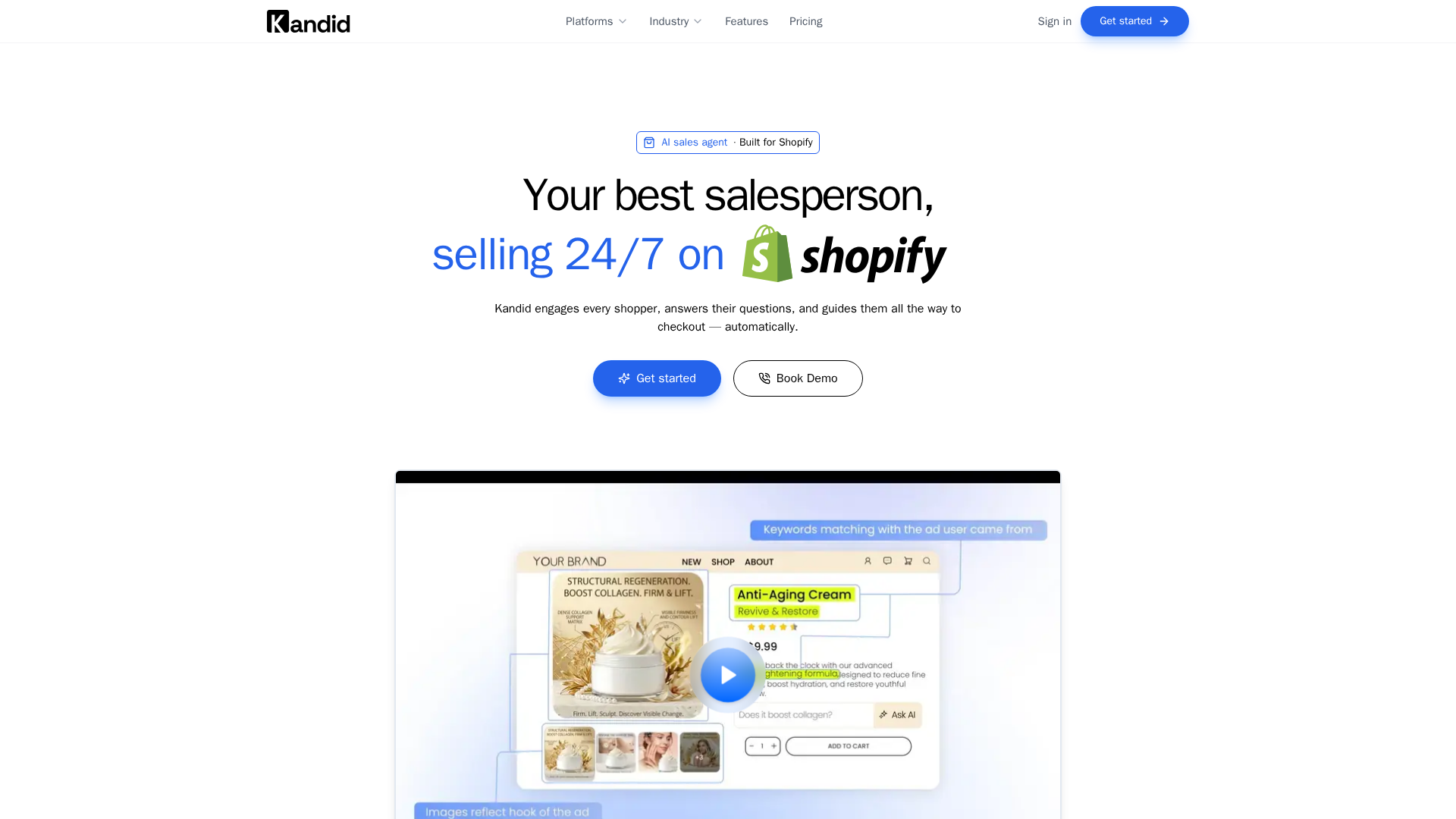
Turn product questions into guided conversations with Kandid, built for Shopify product discovery.
Frequently Asked Questions
Q1: Should Shopify stores use recommendation quizzes or chatbots for product matching?
Use quizzes for fixed paths and simple catalogs. Choose chatbots when shoppers ask varied questions, need follow-ups, or compare products.
Q2: Can a Shopify store use both?
Yes. Use a quiz for guided collection entry and a chatbot for product questions, stock checks, and help after the result.
Q3: What should teams measure first?
Track quiz completion, chat engagement, product clicks, add-to-cart rate, and assisted orders. Compare results against a similar period.
Conclusion
Choose quizzes for fixed decisions and clean data. Choose chatbots for open questions and follow-ups. Shopify notes conversational AI supports natural-language product discovery.