Shopify AI Chatbot Conversion Tracking Guide
Quick Summary: Shopify chatbot revenue reports often overstate success because they include shoppers who would have bought without chat. Tag sessions with UTMs and session IDs, match them to Shopify orders, and cross-check with a chat-only coupon. Run a bot-on versus bot-off holdout for at least two weeks, then compare conversion rate, average order value, and revenue per session to measure real lift, with Kandid supporting this measurement-first setup.
Your Shopify chatbot conversion tracking numbers can lie. A chat shows 40 conversations and 12 orders, yet some of those shoppers were buying anyway. Most stores never separate chatbot-assisted conversion from real lift, so they either overspend on the wrong tool or cut one that was working. This guide gives you a measurement-first framework for Shopify chatbot conversion tracking: how to tag sessions, read order reports, and run simple holdout tests that reveal actual incremental revenue, not flattering screenshots.
Step 1: Define the Metrics Before You Open Any Dashboard
Decide what counts as revenue before you look at numbers. The difference between chatbot-attributed revenue and incremental revenue is simple: attributed revenue is any order that touched the chat, while incremental revenue is sales the bot actually caused. A shopper who would have bought anyway still gets counted as attributed, so the two numbers rarely match.
| Metric | What It Counts | Use It For |
|---|---|---|
| Direct (last-touch) | Orders where chat was the final click | Basic Shopify chatbot conversion tracking |
| Assisted | Orders where chat helped earlier in the journey | Understanding influence |
| Bot-driven (incremental) | Extra sales versus a no-chat baseline | Deciding if the bot pays for itself |
The Metrics That Flatter the Bot
Some chatbot metrics look great and tell you almost nothing. Treat these with caution:
- Engagement rate - eager chatter is not intent
- Deflection rate - fewer tickets can mean frustrated shoppers
- Attributed revenue - 12 orders in 40 chats may include buyers who needed no help
- Assisted conversion rate in ecommerce - correlation, not causation
Track average order value from chat sessions too, then subtract what would have happened anyway.
Step 2: Tag Chat Sessions So Orders Can Be Traced Back
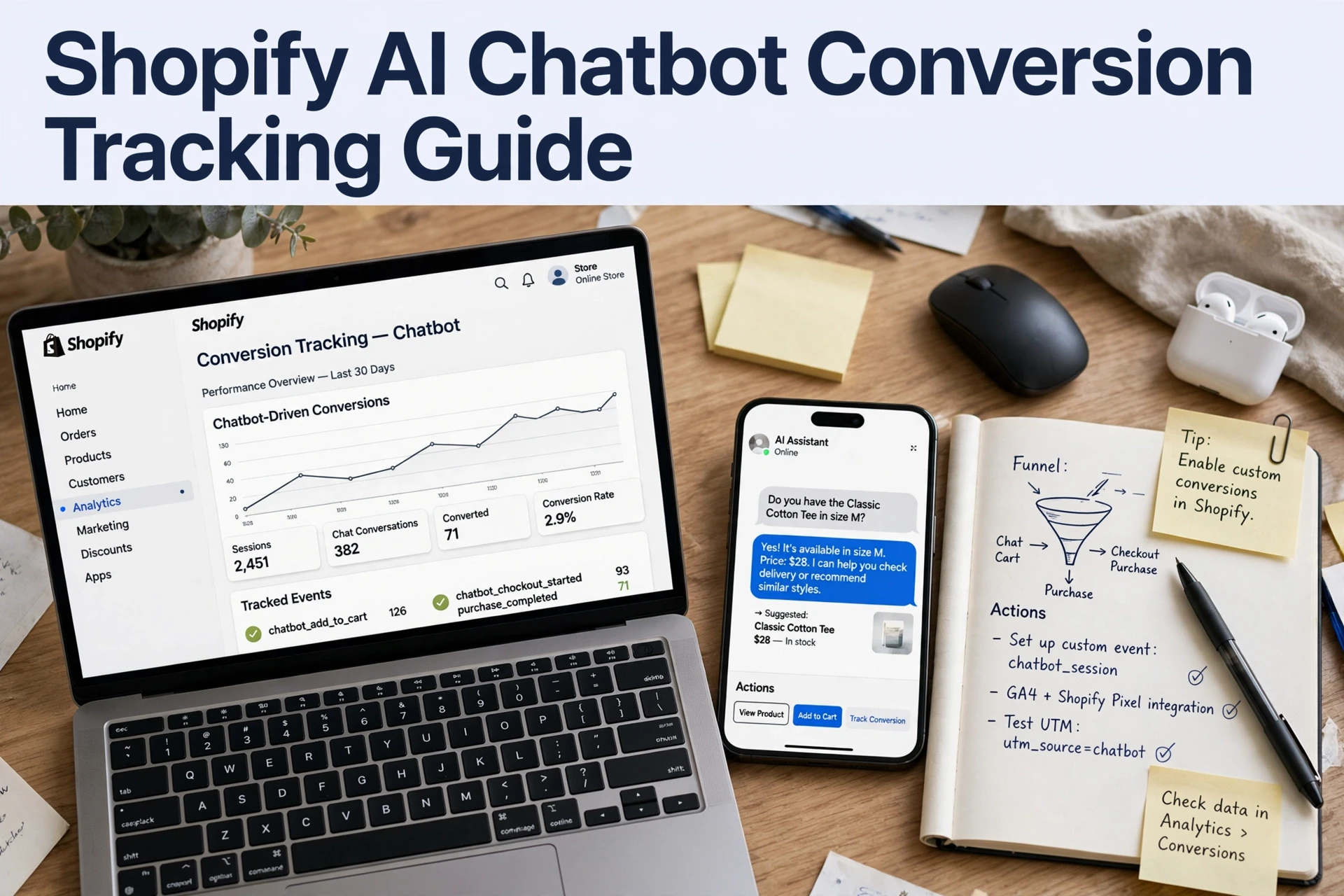
Tagging is what lets you trace an order back to the chat that helped create it. Do three things:
- Add UTMs to chat entry links and a chat session ID to each conversation.
- Join that data to Shopify orders by customer email or order note.
- Run a dedicated chat coupon as a cross-check.
Set Up UTMs and Chat Identifiers on Entry Points
Give every chat entry link UTM parameters such as utm_source=chatbot and a unique session ID. Most platforms, including Kandid, can pass these along automatically, so check your settings before building anything by hand.

Join Chat Data to Shopify Orders
Next, connect sessions to orders. Match on the email a shopper gives in chat, or write the session ID into the order note or a metafield. Then Shopify's order source reporting shows chat-attributed orders in one filterable view.
Use a Dedicated Chat Coupon as a Cross-Check
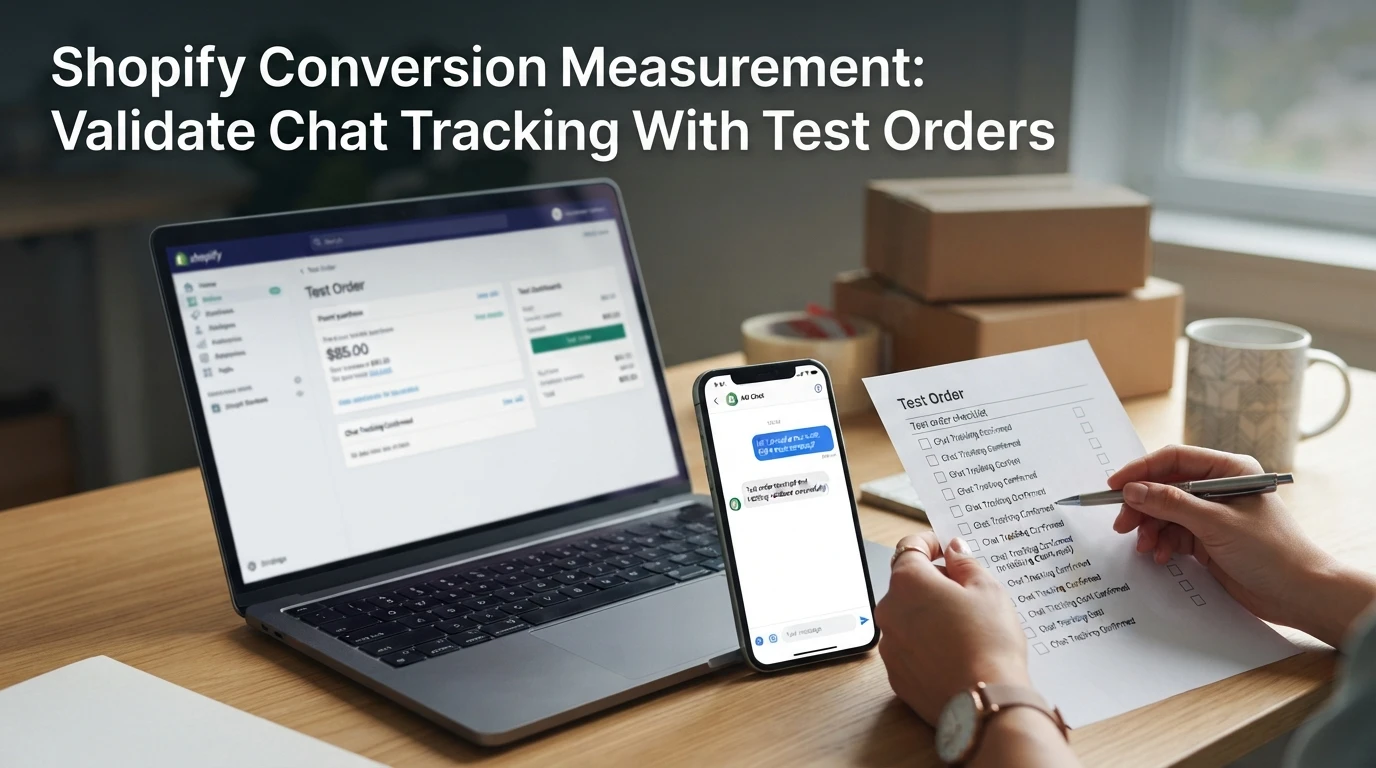
Finally, create one discount code used only in chats. Orders carrying it are safe proof of chat influence. Compare this coupon count against your tagged sessions to spot tagging gaps before you trust the numbers.
Step 3: Prove Incremental Impact With a Holdout Test and a Reporting Cadence
How do you test whether a chatbot actually increases revenue? Run an incrementality test:
- Split traffic so 90% of shoppers see the bot and 10% do not.
- Compare conversion rate, average order value and revenue per session across both groups.
- The gap between them is your true lift, not attributed orders.
Run a Bot-On vs Bot-Off Holdout
Most tools can route a small share of sessions away from the bot. Keep the holdout running for at least two full weeks so weekends and paydays balance out. A rise in conversion rate and AOV among bot-visible shoppers proves the lift is real.
Build the Weekly and Monthly Reporting Routine
Check weekly: chats started, orders from tagged sessions, handoff rate and lift against the holdout. Review monthly by product and traffic source, and note seasonality. Set up holdout groups properly to keep the test clean.
Feed the Data Back Into the Bot
Use what the numbers show. Low AOV points to weak product recommendations, and frequent handoffs flag missing answers. Update the bot's prompts and recommendations, then watch whether the lift improves next cycle.
Common Mistakes to Avoid
Counting every chat order as bot revenue. Some buyers would have purchased anyway, so separate assisted conversions from incremental revenue. Ignoring UTM tags. Tag chat links consistently or Shopify's order source reporting cannot trace them. Skipping the 10% holdout, which is the only clean way to prove lift. Reviewing numbers too rarely. Weekly checks catch broken tags early. Chasing deflection rate alone while ignoring human handoff quality and average order value. Measure what actually moved revenue, not just activity.
Can't prove your chatbot's lift without a clean holdout? Set up tracking the right way, then see how Kandid helps you measure what actually sells.
Frequently Asked Questions
Q1: How do I track conversions from my Shopify AI chatbot?
Tag every chat entry link with utm_source=chatbot and a session ID, then match those sessions to orders by email or order note. Cross-check with a dedicated chat coupon.
Q2: What's the difference between attributed and incremental revenue?
Attributed revenue includes any order that touched chat, even ones that would have happened anyway. Incremental revenue is the lift your holdout test proves the bot actually caused.
Q3: How long should I run a chatbot holdout test?
At least two full weeks. That window balances weekends and paydays, so the conversion rate and AOV gap between bot-on and bot-off groups reflects real lift.
Conclusion
Attributed revenue flatters; holdout tests prove. Tag chat sessions, join them to Shopify orders, and run a bot-off group for two weeks. Kandid's AI sales agent supports this measurement-first approach.