Shopify Chatbot Attribution Models Compared for Ecommerce Revenue
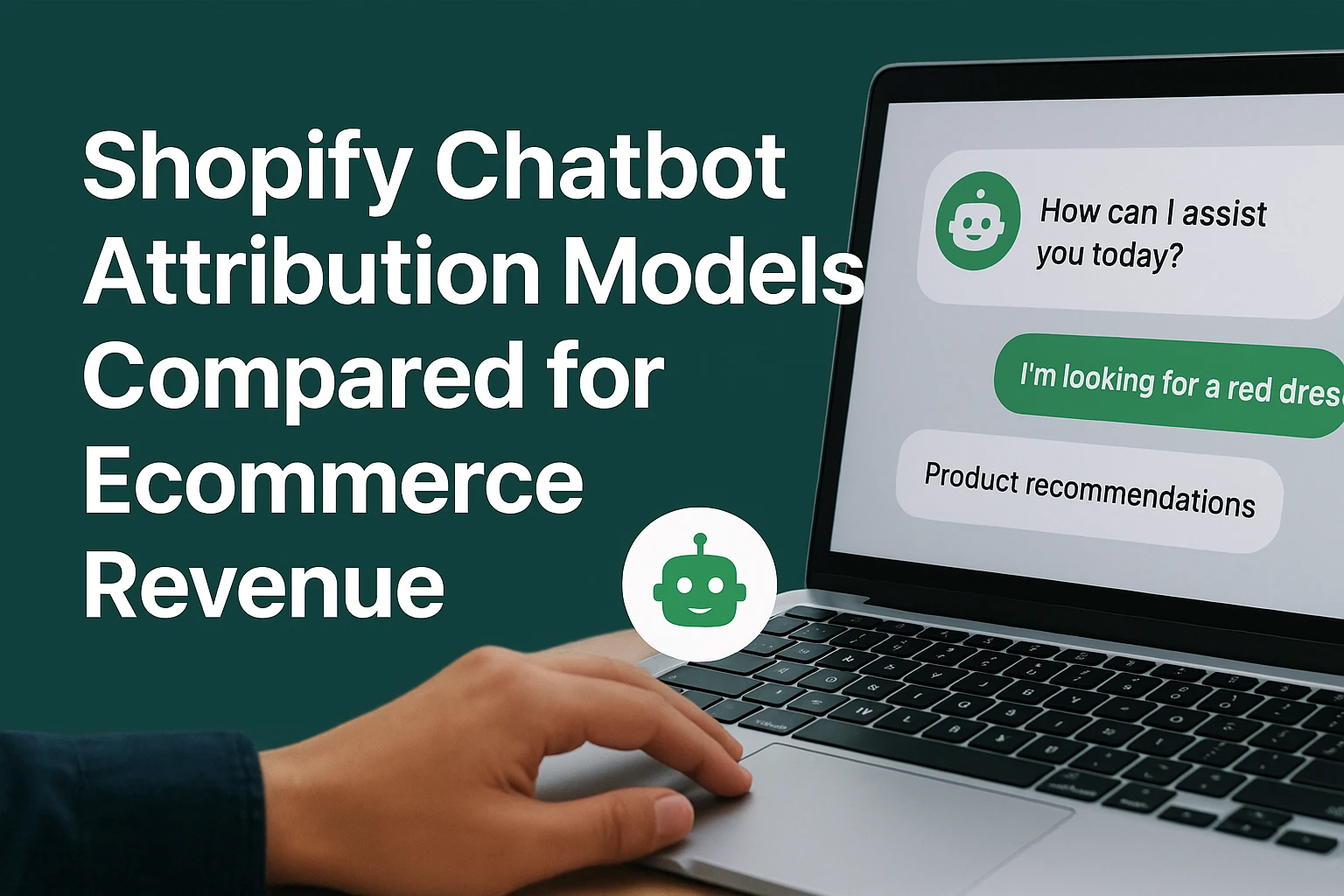
Quick Summary: Shopify chatbot attribution models serve different purposes: last-click suits daily channel reports, deterministic chat-to-cart tracks operational revenue, and holdout tests estimate true incremental lift. Use chat-to-cart for your revenue ledger, but only a randomized holdout can prove causation for budget decisions. Kandid tracking shows attributed revenue, not guaranteed incremental sales, so keep these figures separate.
A chatbot can build a cart yet earn very different credit under each Shopify chatbot attribution model. This comparison tests every Shopify chatbot attribution model by rule, data, confidence, and effort. Use deterministic chat-to-cart for operations, last-click for channel reports, and shown-versus-hidden tests for lift. Kandid tracking shows attributed revenue, not guaranteed incremental sales.
Shopify Chatbot Attribution Models at a Glance
| Last-click attribution | Deterministic chat-to-cart attribution | Holdout-based incremental lift | |
|---|---|---|---|
| Credit rule | 100% to the last interaction | Credit when chat and order are directly linked | Estimates difference between test and control |
| Confidence level | Low for chatbot influence | High for chat-led orders | Highest for causal inference when designed well |
| Best use | Channel and closing-touch reports | Operational chatbot revenue reporting | Estimating incremental conversion and revenue |
| Shopify data required | Referrer, campaign, or marketing interaction | Conversation, cart, and order linkage | Exposure, control assignment, orders, revenue |
| Main limitation | Ignores earlier chatbot influence | Misses influence without a persistent link | Needs sufficient traffic and clean experimentation |
Meet the Contenders
Last-click attribution
A channel-reporting model that gives all credit to the final eligible interaction before purchase. Shopify supports last-click reporting for closing-touch analysis, but it cannot show earlier chat influence. Shopify’s model guide confirms it assigns 100% credit to the last interaction.
Deterministic chat-to-cart attribution
This order-level model links a chat-marked cart to a completed Shopify order. It suits teams that need a clear operational record of chat-led revenue.
Holdout-based incremental lift
This test compares chatbot-exposed shoppers with a similar control group. It is best for causal revenue estimates, but needs enough traffic and clean assignment.
What Each Shopify Chatbot Attribution Model Actually Measures
Last Click Is a Channel Metric, Not a Chatbot Causality Test
Last click gives the final tracked touch 100% of order credit. Shopify defines it as the last channel a buyer interacted with, including direct visits, before purchase. It helps identify the closer, not prove chat caused the sale. Shopify's marketing reports support this distinction.
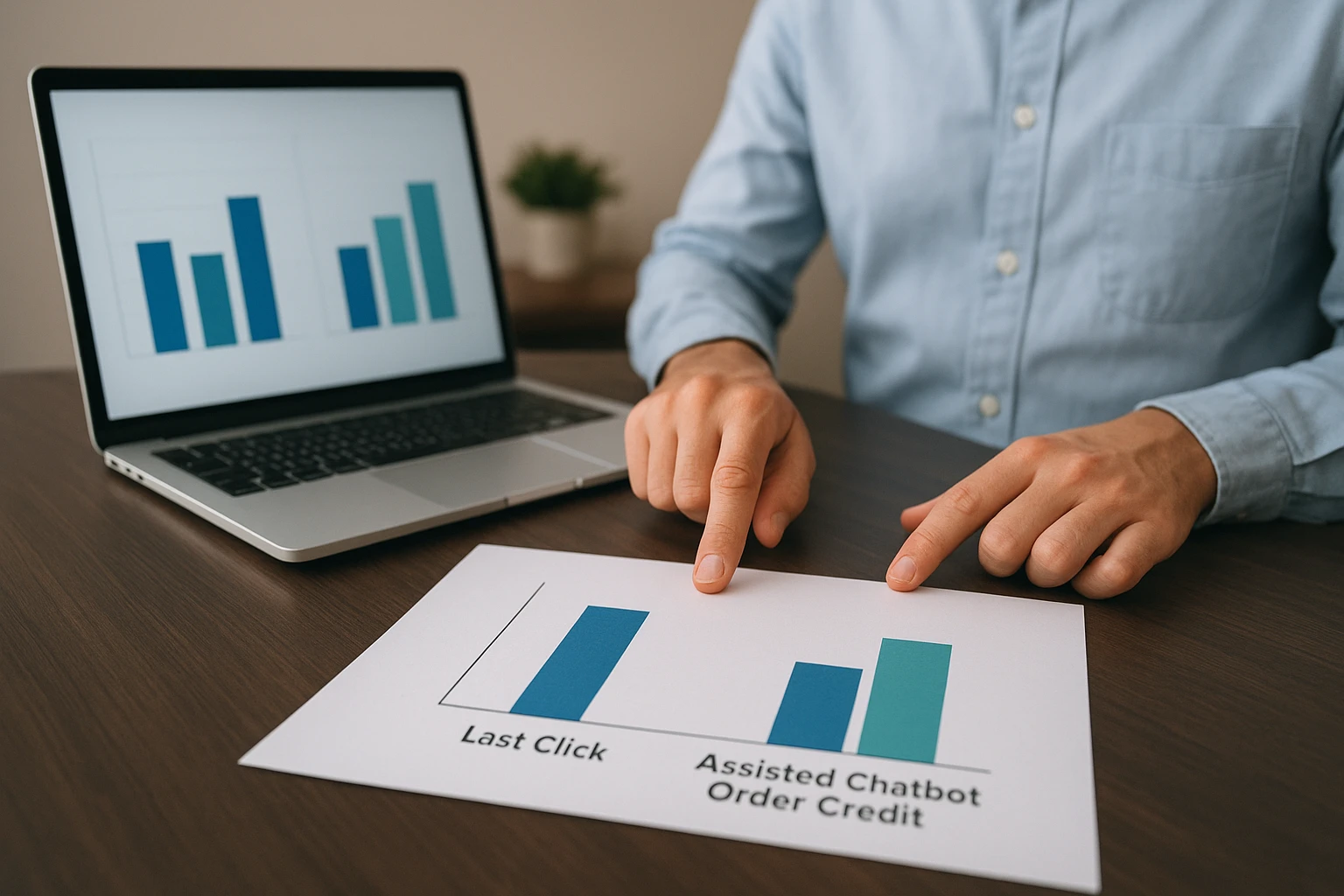
Treat last click as a daily reporting view, not a budget verdict.
Deterministic and Assisted Revenue Are Different
Deterministic chat-to-cart revenue requires a recorded chat action, such as a product added from a chat link, followed by that item in the order. Assisted revenue counts orders where chat appeared in the journey. It shows involvement, not proof.
| Measure | What it records | What it cannot prove |
|---|---|---|
| Deterministic | Traceable chat action to cart or order | The shopper would not have bought anyway |
| Assisted | Chat occurred before purchase | Chat changed the outcome |
Also Read: How to Connect an AI Sales Agent to Your CRM
Which Model Best Measures Shopify Chatbot Revenue Impact?
Use Deterministic Attribution for the Revenue Ledger
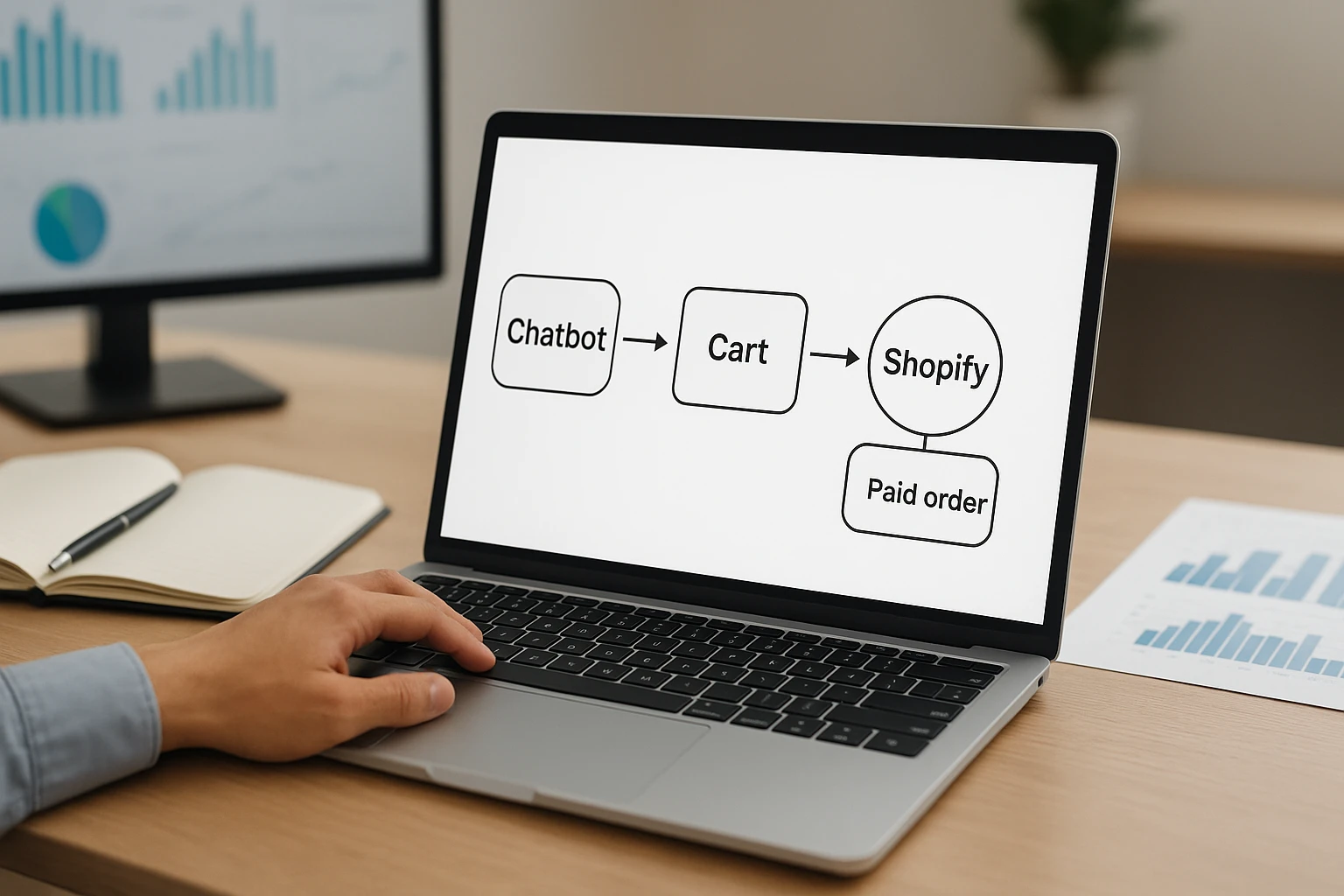
Use deterministic chat-to-cart attribution for your weekly revenue ledger. Credit an order only when a shopper chats, clicks a tracked product or cart link, then buys within your chosen window. Shopify’s order conversion details can show visit and UTM data, but tracking may be limited when cookies are blocked. See Shopify’s conversion tracking notes.
Tip: Keep this figure separate from last-click revenue. It is a clear record of chat-linked orders, not proof that chat caused every sale.
Use a Holdout to Estimate Incremental Lift
Use a holdout test to answer the harder question: what sales did chat cause? Randomly hide the chatbot from a small, similar share of eligible traffic. Compare conversion rate and revenue per visitor after enough traffic accrues. Shopify supports several report models, but they only reassign credit across recorded interactions. Shopify’s marketing reports do not replace a holdout.
Also Read: AI Sales Agents: 7 Metrics to Prove Revenue Impact
How to Set Up a Defensible Shopify Chatbot Attribution Workflow
Define the Event, Window, and Revenue Amount First
Write one rule before viewing results:
- Event: a chat led to a product click or cart add.
- Window: credit orders placed within 24 hours.
- Revenue: use paid order value, less refunds.
Shopify separates order-source and marketing attribution, so label your method clearly in reports. Shopify’s attribution guidance explains the difference.
Reconcile Chat Records With Shopify Orders
Match chat sessions to orders using a cart or checkout token first. Shopify order data includes both identifiers for this purpose. Its Orders query supports filtering by each.
| Check | Rule |
|---|---|
| Duplicate credit | One order, one chatbot record |
| Refunds | Remove refunded value weekly |
Keep unmatched chats in a separate audit list.
Also Read: How to Measure Ecommerce Chatbot Revenue Attribution
Which Should You Choose: Last Click, Chat-to-Cart, or Holdout?
Use last click for quick daily reporting. Use chat-to-cart to show clear chatbot influence on a Shopify order. Use a randomized holdout before making budget or staffing decisions.
| Model | Best use | Main limit |
|---|---|---|
| Last click | Simple dashboards | Over-credits the final touch |
| Chat-to-cart | Chatbot reporting | Does not prove causation |
| Holdout | Revenue impact decisions | Needs enough traffic |
Attribution assigns credit. A holdout estimates causal lift, as IAB guidance explains.

Set up Kandid to guide Shopify shoppers, then measure chatbot revenue with a model your team can defend. Explore Kandid.
Frequently Asked Questions
Q1: Which attribution model best measures Shopify chatbot revenue impact?
Use deterministic chat-to-cart reporting for daily revenue. Use holdout tests to judge true lift.
Q2: Does last-click chatbot revenue overstate results?
Often. It credits chat for an order even when another channel created demand.
Q3: How long should a chatbot holdout test run?
Run it for at least two full buying cycles, while keeping traffic and offers stable.
Conclusion
Use last-click and chat-to-cart for daily reporting. Track assists for context. Use holdouts for budget decisions, since randomized tests best estimate causal impact.