Shopify Chatbot vs Live Chat: Which Converts More Shoppers?
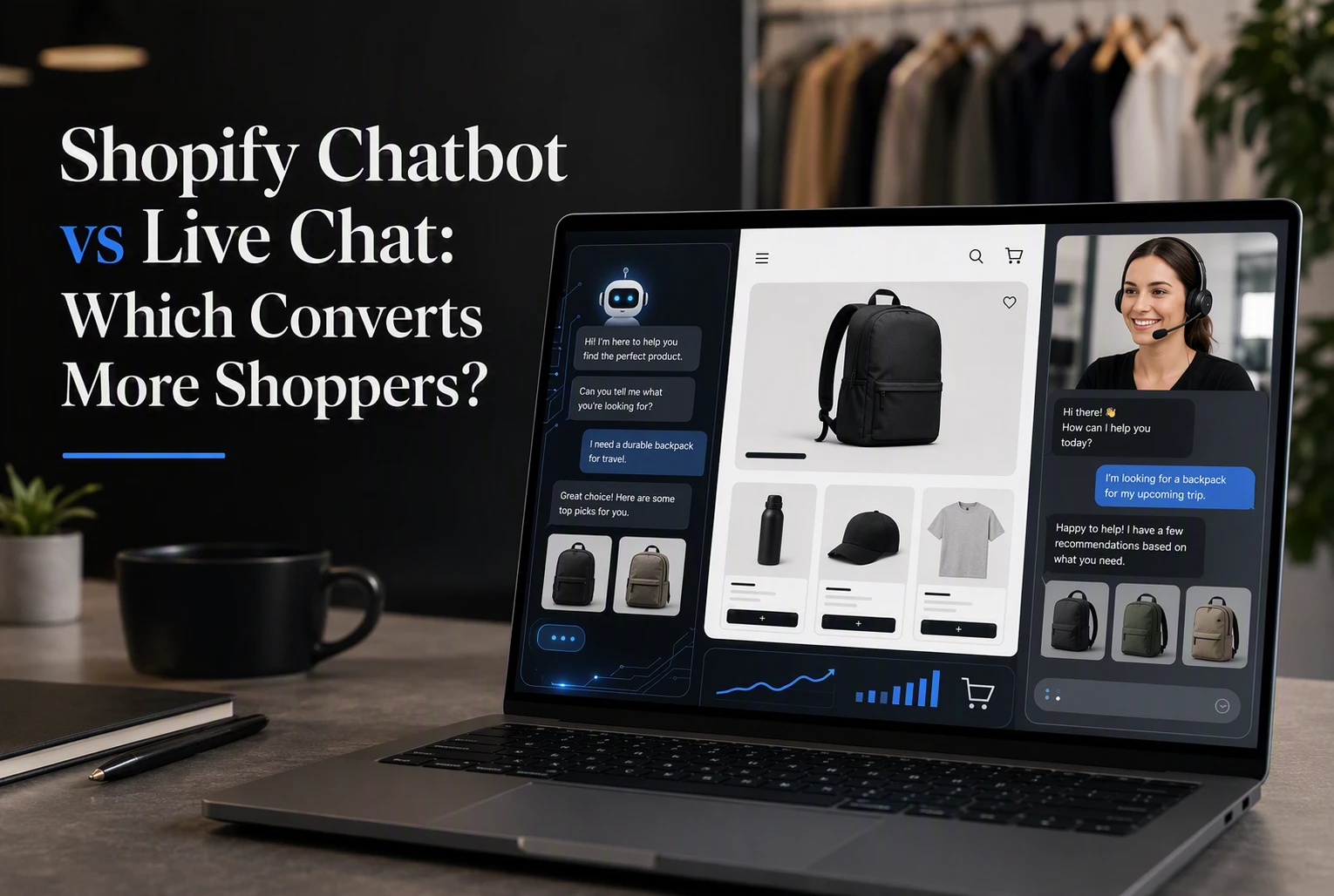
A shopper asking about ingredients, device specs, or sizing needs help now. Shopify chatbot conversion often wins for always-on traffic, while live chat wins complex trust questions. We assess Shopify chatbot tools, chatbot conversion rate, actions, and staffing. This evidence-led guide shows where Shopify chatbot conversion works best and when humans should step in.
Shopify Chatbot vs Live Chat: Conversion at a Glance
| Shopify AI Chatbot | Shopify Live Chat | |
|---|---|---|
| Conversion mechanism | Instant answers, recommendations, and proactive guidance | Human reassurance, objection handling, and tailored advice |
| Availability | 24/7 automated coverage | Limited by staffing and configured hours |
| Product guidance | Uses catalog, policies, and store content | Depends on agent training and available context |
| Complex questions | Handles known topics; escalates uncertain cases | Strongest when specialist judgment is needed |
| Cart friction | Can support product discovery and checkout intent | Agents can share products and discounts |
| Measurement | Track assisted orders and buyer satisfaction where supported | Conversation and sales attribution through chat analytics |
How Shopify AI Chatbot and Shopify Live Chat Compare
Shopify AI Chatbot
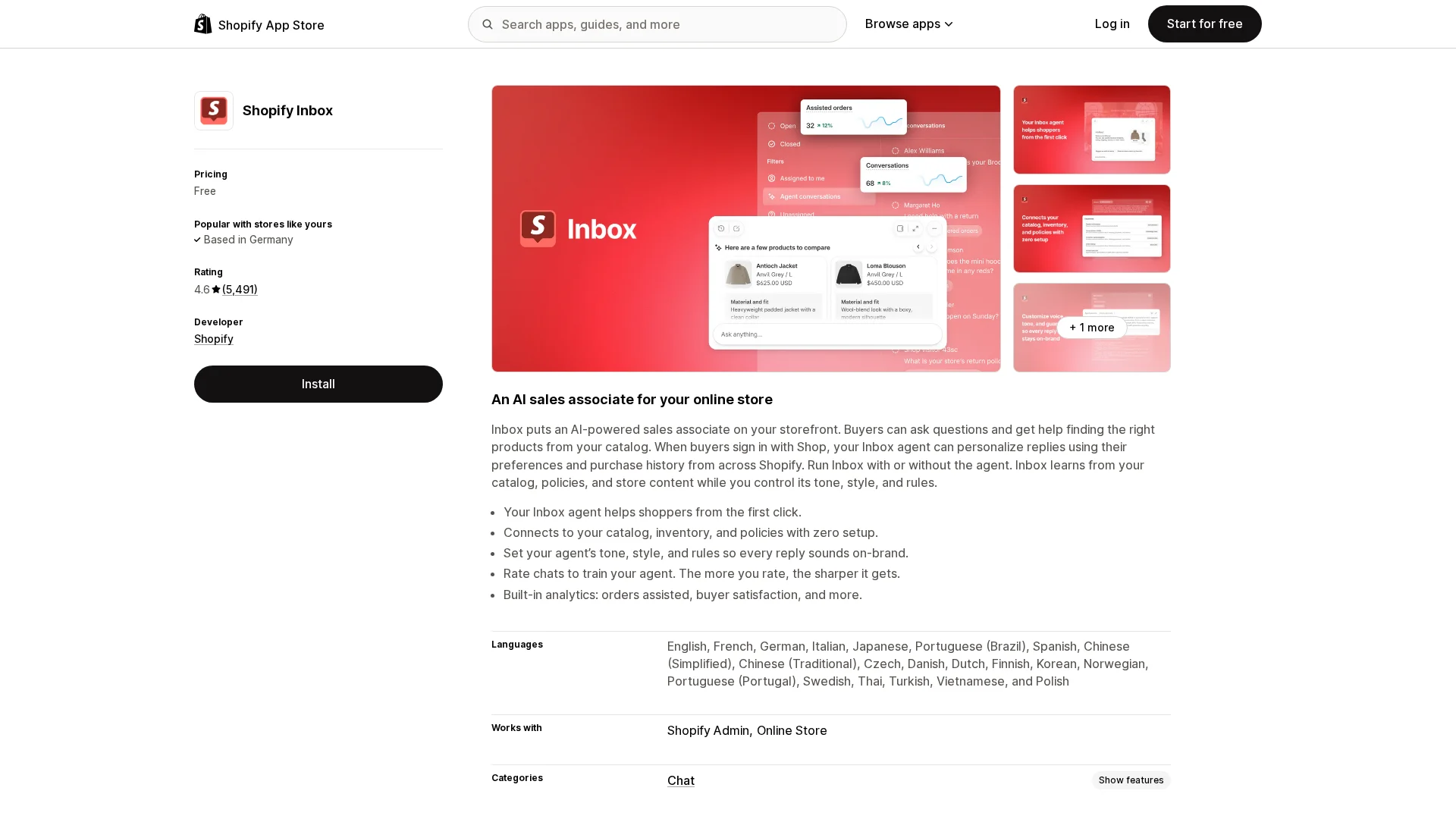
A Shopify AI chatbot gives shoppers instant help with products, policies, and basic buying questions. It suits stores that need 24/7 coverage and guided discovery without adding agent shifts.
Key strengths
- Fast answers and product suggestions
- Escalates unclear questions
Shopify Live Chat
Shopify live chat connects shoppers with human agents for personal advice and support. It fits brands where expert reassurance or nuanced product questions drive purchase decisions.
Key strengths
- Handles complex objections
- Shares products and discounts
Which Chat Experience Creates More Shopify Conversions?
Speed Helps Only When the Answer Moves the Shopper Forward
Instant chat wins when it gives a clear next step: confirm fit, compare variants, or link the right product. Shopify says 70% of Inbox chats involve a purchase decision, so speed matters most on high-intent questions. Shopify Inbox data

A fast vague reply creates friction. A fast, catalog-based recommendation can remove it.
Where Human Live Chat Still Has the Conversion Edge
Use people for unusual bundles, sensitive product concerns, or exceptions to policy. A skilled agent can read nuance and build trust. Shopify reports shoppers answered within five minutes were 69% more likely to buy. Shopify research
Also Read: Live Chat vs AI Chatbot: Which One Actually Converts Better in 2026?
Chatbot Conversion Depends on What Happens Inside the Conversation
Catalog Context Beats Generic Answers
A shopper asking, “Will this work with my device?” needs a clear product match, not a canned FAQ. Shopify Inbox can answer from catalog and store content, as Shopify documents. Kandid goes further when technical specs, variants, and use cases need a guided comparison.
- Test answers for fit, compatibility, and bundles.
- Track product-card clicks by question type.
Native Cart Actions Reduce the Last-Mile Drop-Off
The best reply ends with a low-friction next step. Shopify Inbox product cards let shoppers view details, choose variants, add to cart, or check out inside the chat flow, per Shopify's changelog.
Judge chat by assisted add-to-cart and checkout rate, not reply speed alone.
Also Read: Live Chat and AI Chatbot Setup Guide for Ecommerce Stores
How to Measure Shopify Chatbot Conversion Fairly
Use Assisted Revenue and Incremental Lift Separately
Track assisted revenue for orders where chat helped, but do not call it caused revenue. Measure incremental lift with a holdout group: show chat to half of similar sessions, then compare purchase rate and AOV. Shopify defines conversion as sessions that result in an order in its conversion reports.

Test Coverage, Availability, and Escalation
Keep traffic source, device, country, offer, and test dates matched. Log chat exposure, answered questions, human handoffs, and failed replies.
A chatbot cannot claim lift from shoppers it never reached.
- Compare exposed and holdout sessions.
- Exclude outages and campaign spikes.
- Review checkout completion, not just chat-attributed orders.
Also Read: 7 Best Chatbots for Shopify Stores to Increase Sales
Which Should You Choose: Shopify Chatbot or Live Chat?
Choose live chat if shoppers need trust, nuance, or expert advice before buying. It works well for high-ticket, custom, and sensitive products.
Choose a chatbot when questions repeat, your team cannot cover all hours, or buyers need fast product matching. Shopify Inbox supports staff chat and an opt-in agent that can answer from your catalog and store content, according to Shopify’s help center.
| Choose | Best use case |
|---|---|
| Live chat | Complex objections and VIP sales |
| Chatbot | 24/7 product guidance and FAQs |
| Hybrid | Most growing D2C stores |
Use Kandid when technical specs, fit, or compatibility drive the sale.
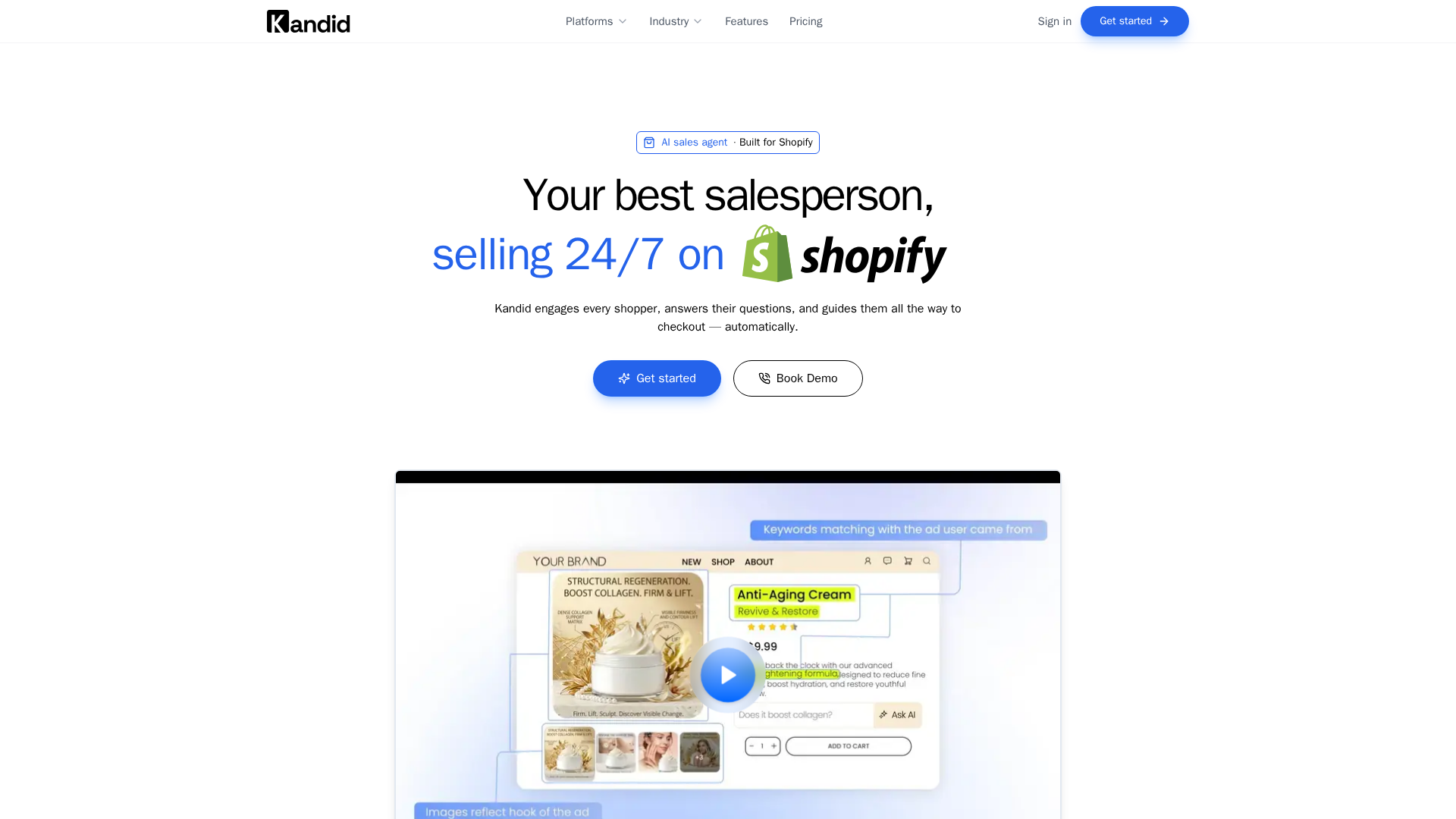
Turn more high-intent chats into purchases with Kandid, an AI sales agent built for Shopify product guidance.
Frequently Asked Questions
Q1: How do AI chatbots improve Shopify conversion rates compared to live chat?
They reply instantly, qualify intent, and recommend products at any hour. Live chat can win for nuanced sales, but only while agents are available.
Q2: What’s the best AI chatbot for Shopify stores to recover abandoned carts?
Choose one that can answer product doubts before checkout. Kandid suits stores with technical items, fit questions, or compatibility concerns.
Q3: Can AI chatbots handle complex customer questions better than live chat?
They can handle repeat questions well when trained on accurate catalog data. Send unusual, high-risk, or emotional cases to a human agent.
Conclusion
Use live chat for high-value, complex questions. Use Kandid for always-on sales guidance. Shopify Inbox can automate answers, but test conversion lift by chat path.