Shopify Conversion Measurement: Compare Chatbot and Human Agent Revenue
Quick Summary: Vendor dashboards overstate chatbot revenue, so Shopify stores should measure assisted sales and run holdout tests to find true incremental lift. Compare chatbot and human agents using the same date range, denominator, and deduplicated orders, then split traffic randomly for two to four weeks to see which channel actually adds revenue. Trust incrementality over last-click attribution, since high-intent shoppers often buy anyway, and run tests for at least four weeks to avoid campaign-timing noise.
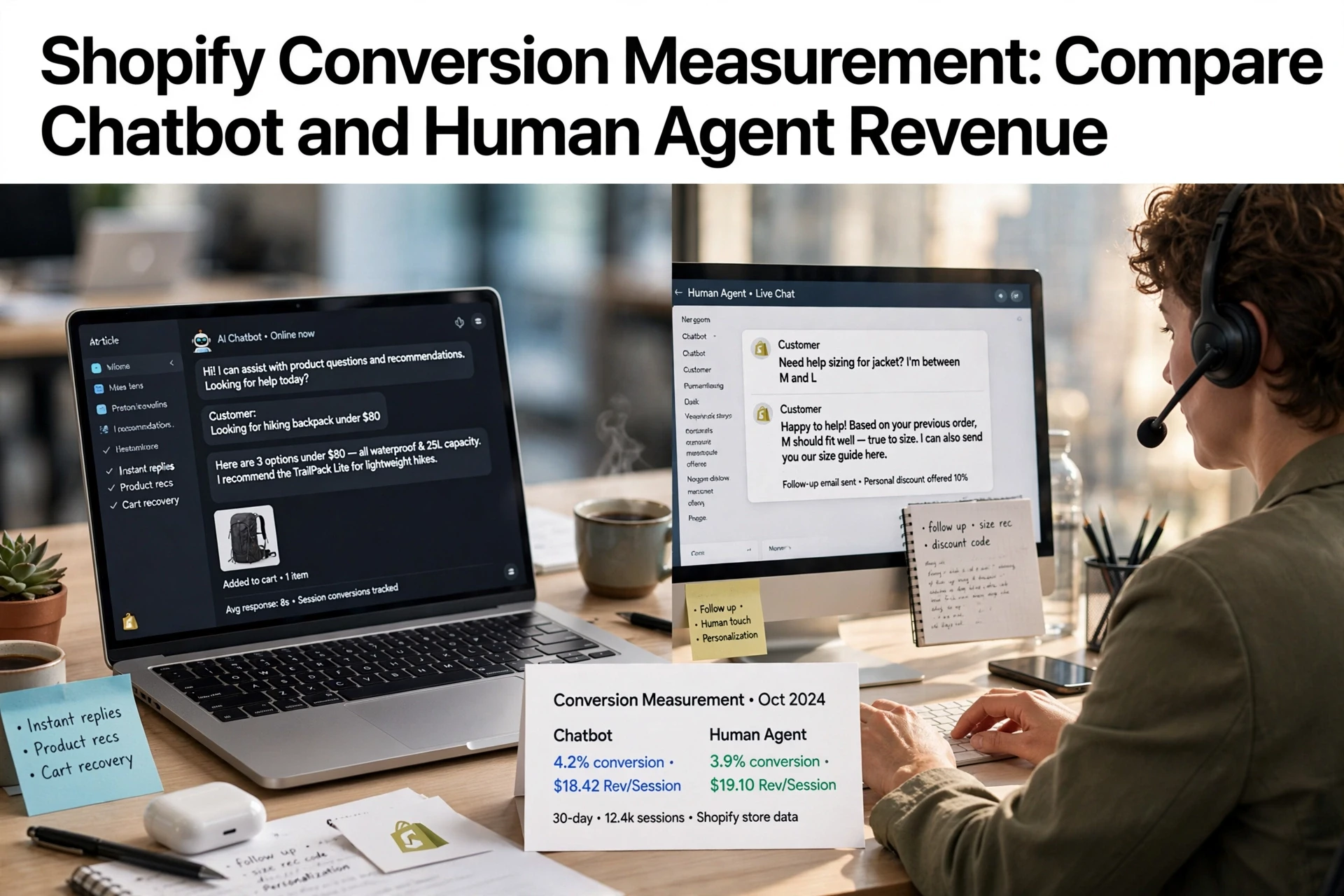
A shopper chats with a bot, escalates to a human, then orders later. Who gets credit? Last-click reporting can't answer that, which is why Shopify chatbot vs human revenue needs cohort metrics and holdout tests. Measured fairly, Shopify chatbot vs human revenue shows assisted orders and incremental lift, not inflated vendor claims.
Shopify Chatbot vs Human Agent Revenue: Measurement at a Glance
| Shopify chatbot-assisted sales | Shopify human-agent-assisted sales | |
|---|---|---|
| Revenue signal | Orders linked to chatbot interaction | Orders linked to human-agent interaction |
| Attribution challenge | Engagement may correlate with intent, not cause the purchase | High-intent shoppers may be more likely to request an agent |
| Useful comparison metric | Revenue per eligible visitor and chat-engaged visitor | Revenue per eligible visitor and agent-engaged visitor |
| Best evidence of incremental lift | Randomized visitor-level holdout | Randomized visitor-level holdout |
| Typical role in the journey | Immediate answers, discovery, and initial assistance | Complex questions, reassurance, and escalation |
How Shopify chatbot-assisted sales and Shopify human-agent-assisted sales Compare
Shopify chatbot-assisted sales
These are orders tied to shopper conversations an automated chatbot handled, wholly or in part. The bot covers instant answers, product discovery, and first-touch help for every visitor. Its revenue signal is simple to pull, but engagement often tracks intent rather than causing the sale - the core tension in any Shopify chatbot vs human revenue comparison.
Key strengths
- Always-on coverage of discovery and initial questions
- Clean per-visitor revenue metrics
Shopify human-agent-assisted sales
These are orders linked to conversations a human service or sales agent handled. Humans shine on complex questions, reassurance, and escalations. One catch: shoppers who ask for an agent are often high-intent already, so their revenue can look better than it really is.
Key strengths
- Handles complex questions and escalation
- Builds trust at decision points
What Counts as Chat-Attributed Revenue?
Chat-attributed revenue is a sale where a chat touched the buyer before checkout. Not every sale after a chat counts as caused by the chat. There are three buckets:
- Last-click: the chat was the final touch before purchase.
- Assisted: chat helped earlier, but another channel closed the sale.
- Incremental: the buyer would not have bought without chat. This is the only true lift.
Vendors usually report last-click numbers, which overstate results. Your Shopify analytics may attribute the same order to email or paid ads too, so counts can double.
Also Read: Shopify Chatbot Conversion Rate Tracking: Metrics and Attribution
Compare Chatbot and Human Agent Revenue Fairly
Use the Same Window and Denominator
Fair comparison starts with identical conditions. Give the chatbot and human agents the same date range, the same traffic mix, and the same product categories. Then divide revenue by the same base number, such as total sessions in that window.
Use incrementality as your main metric, not last-click revenue. Ask one question: did chats add sales that would not have happened anyway? To check, compare assisted sessions against similar sessions without chat.
| Metric | Chatbot | Human Agent |
|---|---|---|
| Window | Same dates | Same dates |
| Denominator | Sessions served | Sessions served |
| Revenue basis | Assisted orders only | Assisted orders only |
| Overlap | Deduplicate joint orders | Deduplicate joint orders |
Run both channels for at least four weeks before you judge the results.

Also Read: Shopify Chatbot Attribution Models Compared for Ecommerce Revenue
Test Whether Either Channel Adds Revenue
Vendor dashboards show attributed revenue, not added revenue. A shopper who chats and buys might have bought anyway. To know if a channel truly adds revenue, run a split test.
- Split traffic randomly between bot-only and bot-plus-human for two to four weeks.
- Keep ads, pricing and traffic sources unchanged during the test.
- Compare revenue per visitor, not total revenue, so sample sizes matter.
- Check statistical significance before you declare a winner.

If the difference is within normal week-to-week swings, neither channel has proven lift. Rerun the test with more traffic or a longer window.
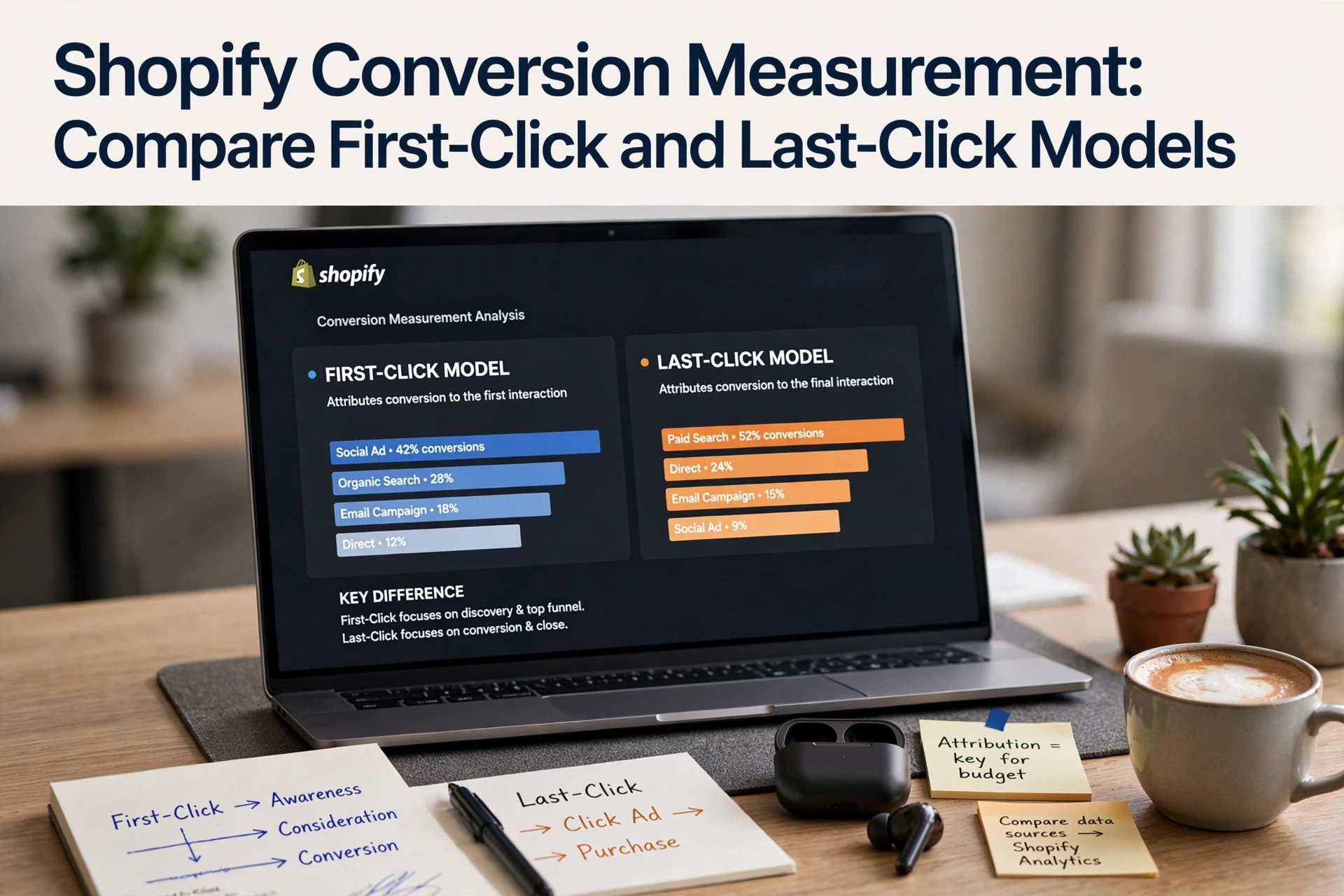
Also Read: Shopify Conversion Measurement: Compare First-Click and Last-Click Models
Which Revenue Measure Should Your Shopify Team Trust?
Trust incrementality: the sales your chat added, not the sales it touched. A buyer who asks a bot then checks out on her own would have purchased anyway. Last-click attribution credits the chat; your real lift is smaller.
Use this quick test:
- Run a holdout period where a small share of shoppers sees no chat.
- Compare revenue per visitor across both groups.
- Treat vendor dashboards as directional, never as proof.
Ready to measure what your chat actually earns? See how Kandid tracks chatbot and agent revenue side by side.
Frequently Asked Questions
Q1: How does chatbot-assisted revenue compare with human agent revenue?
Chatbots usually win on volume and speed; humans win on bigger carts and tricky cases. Compare incrementality, not vendor dashboards, since both channels often claim the same orders.
Q2: How do I split credit between a chatbot and a human?
Tag every order with the channel that last touched the shopper, and log handoffs. Then run holdout tests to see which channel truly adds revenue.
Q3: Should I replace my human agents with a chatbot?
No. Use the chatbot for instant answers and routine questions, and route complex or high-value shoppers to humans. Most stores earn more with both.
Q4: How long should I run the comparison test?
Run at least four full weeks, ideally eight, so weekly swings and promotions even out. Shorter tests usually reflect campaign timing, not real revenue differences.
Measure Assisted Sales, Then Test Incrementality
Vendor dashboards overstate chatbot revenue. Compare chatbot and human agents fairly with consistent attribution, then run incrementality tests to see what each channel truly adds.