Ecommerce Chatbot Guide for Product Discovery and Sales
Quick Summary: An AI sales chatbot turns shopper questions into product recommendations, and the highest-value use case is guided recommendations and comparisons, which can lift basket value by 47%. To work well, it needs clean catalog and policy data from Shopify, plus guardrails and a human handoff for complex issues. Measure success with chat-assisted conversion rate and average order value against a 30-day baseline, not just chat volume. Tools like Kandid focus on AI-led product discovery, while Gorgias and Tidio cover support well.
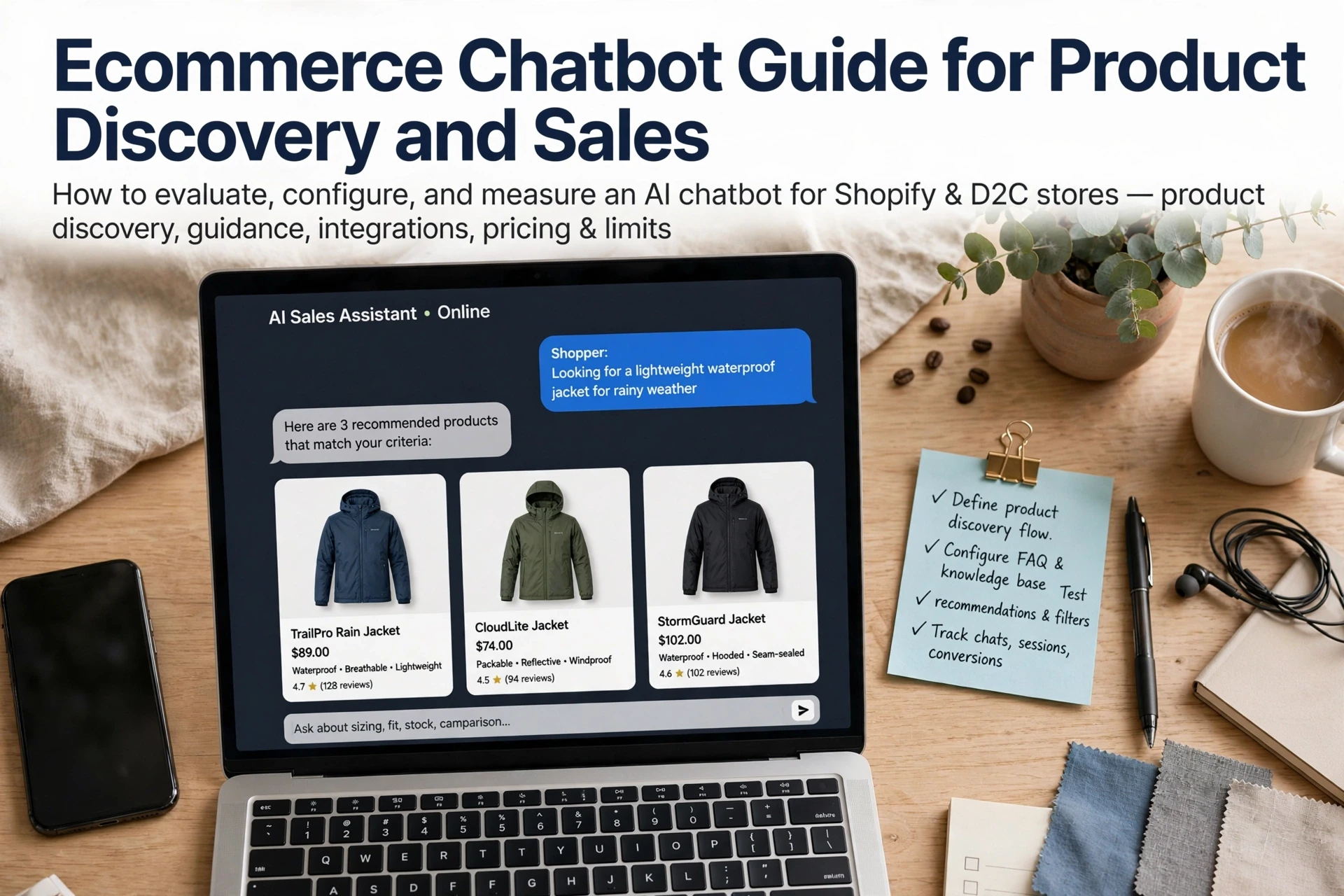
A shopper who asks "Which jacket works for a rainy commute under $150?" wants real answers, not an FAQ. An AI sales chatbot that understands the goal, checks your catalog, and explains trade-offs can close that sale. This guide shows how a product discovery chatbot turns conversations into Shopify product recommendations, with setup steps, metrics, and honest limits. We write for store owners running AI sales chatbot tools like Kandid.
What an Ecommerce Chatbot Does for Product Discovery
An ecommerce chatbot turns shopping questions into product suggestions, in real time, inside your store.
From shopper intent to relevant products
A shopper types "need a waterproof hiking boot under $150". The chatbot reads that intent, checks your catalog, and returns a short list with reasons why each option fits. No filters, no ten open tabs. This matters because shoppers increasingly start with a question to an AI: agentic search as a first step in shopping grew 200% year over year, per Salesforce's State of Commerce report. A chatbot puts that same conversational style on your own site.

Sales assistance versus customer support
Support bots answer "where is my order". Sales bots do more: they ask about budget, fit, and use case, then recommend. The same conversation handles both, which is why Salesforce holiday data found AI and agents influenced $262 billion in 2025 holiday sales. Tools like Gorgias and Tidio cover support well; discovery-focused assistants like Kandid lead with product guidance.
Also Read: Ecommerce Chatbot Product Discovery Features Compared for Shopify Stores
The Ecommerce Chatbot Use Cases That Matter Most
Most chatbot projects fail because they try to do everything. Focus on three jobs that move revenue directly.
Guided recommendations and comparisons
This is the highest-value use case. A good bot asks about budget, use case, and preferences, then shows matching products side by side. Gorgias research found that AI-influenced orders ran 47% larger in basket value than unassisted orders on the same stores.

Buying questions, cart assistance, and objections
Shoppers abandon carts when questions about sizing, shipping, or returns go unanswered. The bot answers instantly, adds missing items, and offers fair alternatives when something is out of stock. Speed matters here: hesitation kills sales.
Order tracking and human handoff
"Where is my order?" floods support inboxes, so automate it with live carrier data. But always route complex or upset customers to a person, with full chat context attached.
Also Read: AI Sales Agent Shopify Catalog Product Question Guide for Merchants
What a Shopify AI Sales Chatbot Needs to Work Well
A chatbot is only as good as the data behind it. Two things decide whether it helps shoppers or frustrates them: clean store data and clear limits.
Reliable catalog and policy data
The bot needs accurate product info - titles, prices, stock levels, sizes - pulled straight from Shopify. If your catalog is stale, the bot recommends items you no longer sell. Shipping, returns, and sizing policies matter too. A shopper who gets a wrong refund answer trusts the whole store less. Update product descriptions before you launch any AI agent.
Guardrails, permissions, and escalation
Set clear boundaries. The bot should answer product questions, but not invent discounts, promise delivery dates, or guess at medical claims. Give it permission rules - what it can say, what it can offer. Most importantly, connect it to a human handoff. Tools like Gorgias and Tidio let agents take over mid-chat when questions get complex or a buyer signals frustration.
Also Read: Ecommerce Chatbot Product Recommendations and Add-to-Cart Setup Guide
How to Choose and Measure an Ecommerce Chatbot
Use criteria that match the store's bottleneck
Pick a tool based on the problem costing you sales. If shoppers ask sizing or spec questions, prioritize a bot that answers from live catalog data. If tickets pile up, look at support automation and human handoff. Vendors like Rep AI and Tidio lead with reported conversion lifts, but treat vendor numbers as directional, not promised results for your store.
| Priority | What to Test |
|---|---|
| Product discovery | Catalog answers, recommendations |
| Support load | FAQ accuracy, human handoff |
| Cart recovery | Proactive triggers at checkout |
Measure assisted progress, not just chat volume
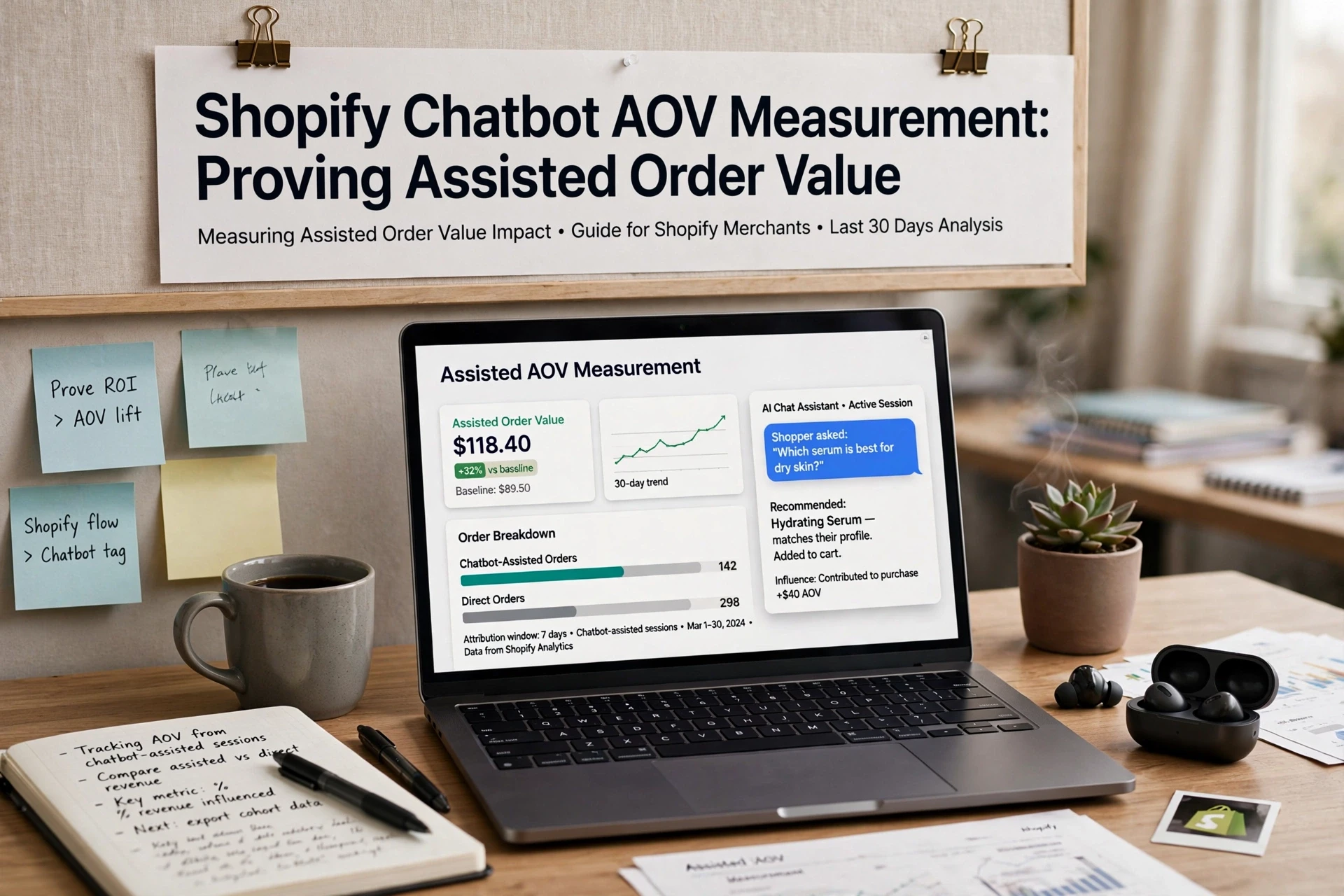
Chat counts say little. Track chat-assisted conversion rate, average order value from chat sessions, and handoff rate against a baseline period. Compare assisted shoppers with non-assisted ones, and give the test 30 days before judging.
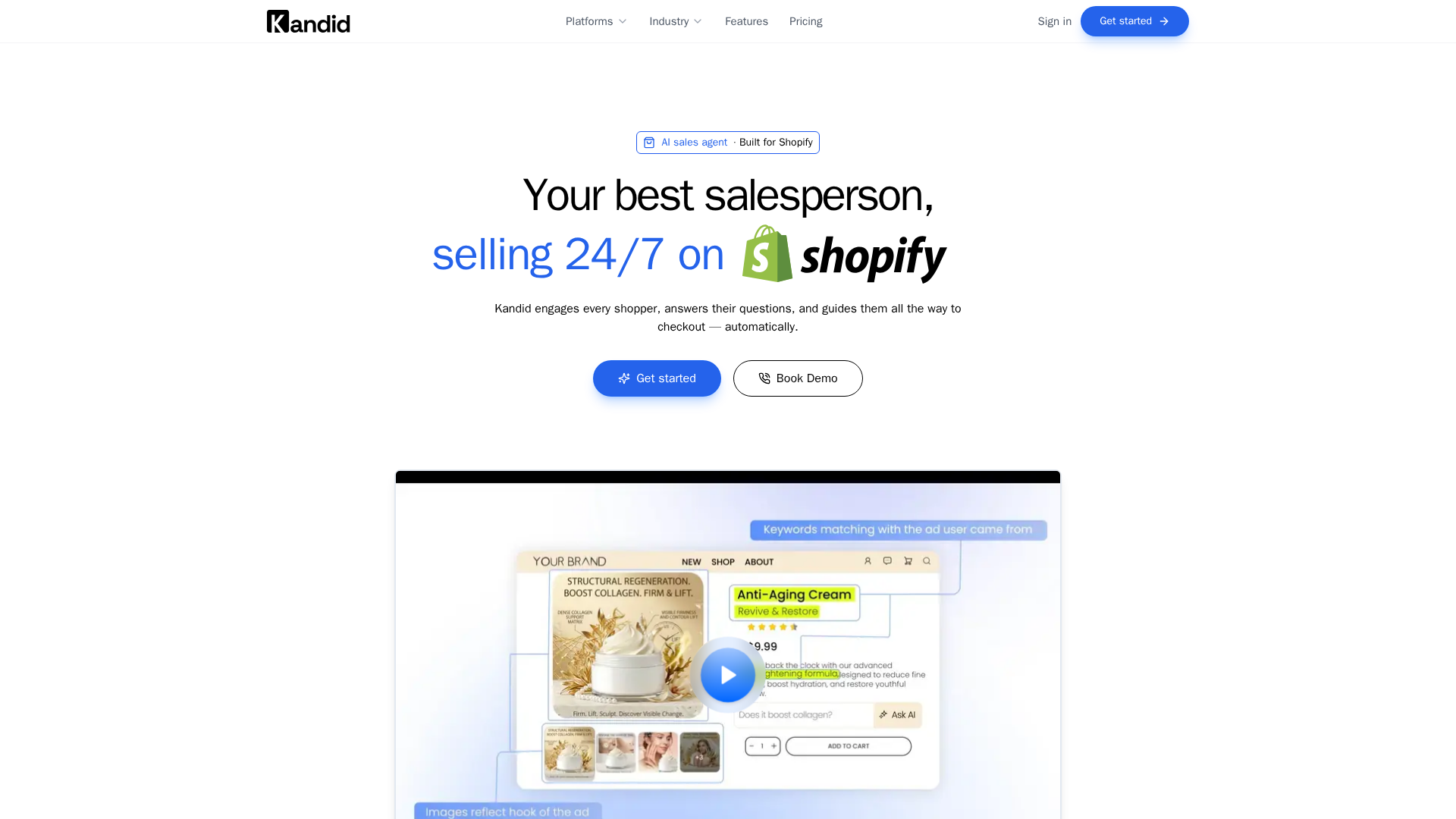
Ready to turn shopper questions into guided product discovery? See how Kandid works on your Shopify store.
Frequently Asked Questions
Q1: How do ecommerce chatbots improve product discovery and sales?
A chatbot asks shoppers what they need, then points them to matching products in your catalog. This shortens the path to checkout and answers buying questions instantly, which often lifts conversion rates.
Q2: What are the best ecommerce chatbot use cases for Shopify stores?
The strongest uses are product recommendations, answering pre-purchase questions, order tracking, and human handoff for complex issues. Tools like Tidio and Gorgias cover support well, while Kandid focuses on AI-led product discovery.
Q3: How to choose an ecommerce chatbot for your online store?
Check four things: Shopify integration depth, product data accuracy, human handoff options, and revenue reporting. Test with your real catalog before committing, and avoid tools that promise guaranteed sales results.
Conclusion
A good ecommerce chatbot starts with clean product data, answers shopper questions in real time, and hands off to humans when needed. Shopify's own data shows AI-assisted shoppers convert better, so track results and improve steadily.