Shopify AI Chatbot: Best Practices and Use Cases
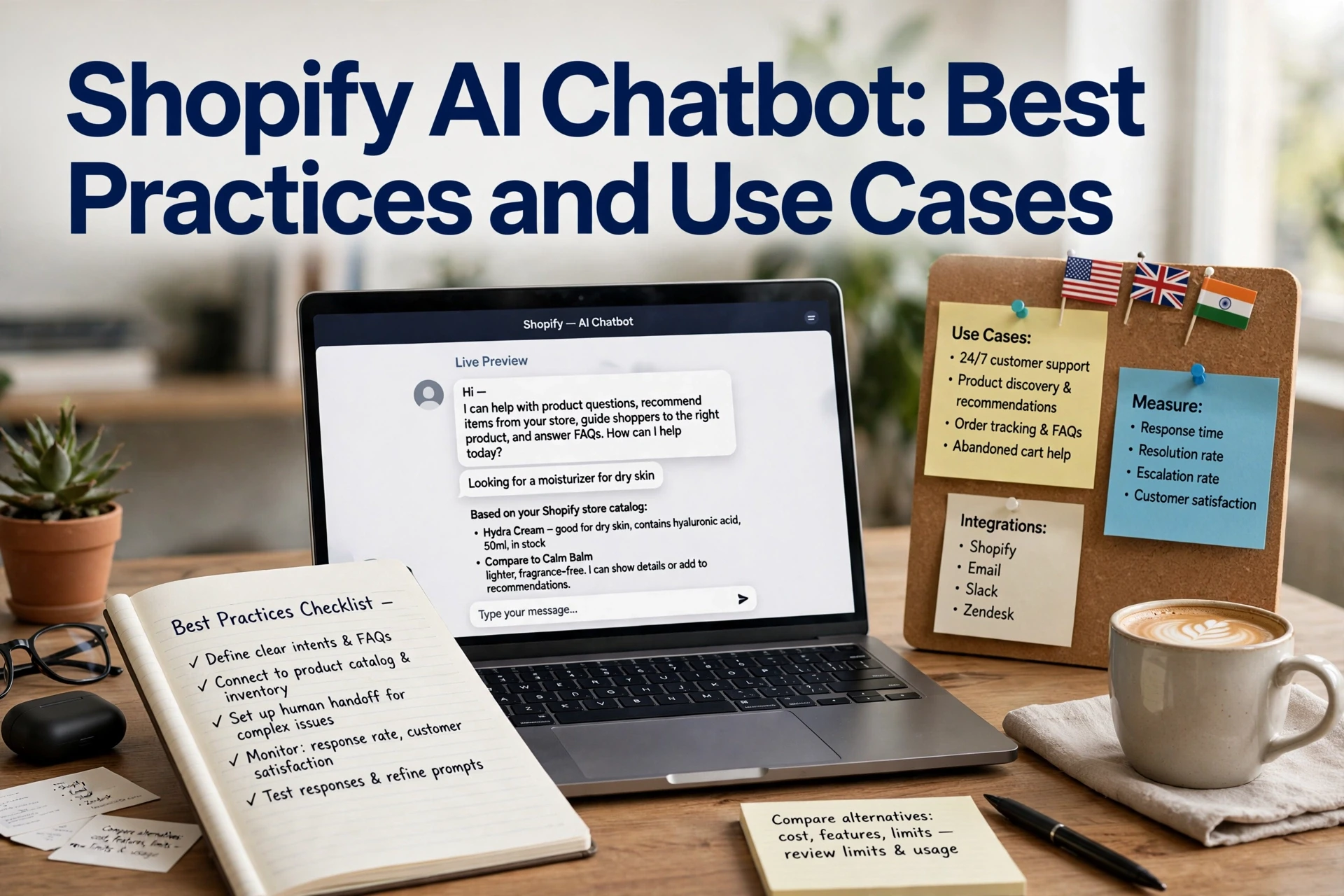
Quick Summary: A Shopify AI chatbot works best when it can draw on clean product, policy, and order data, follow firm guardrails, route complex questions to humans, and pass mobile testing before launch. It creates the most value through product discovery, order tracking, and checkout support, while tools such as Kandid can ground storefront answers in the merchant’s own content. Measure containment, product clicks, handoff rates, and chat-assisted orders weekly, and distinguish attributed revenue from genuinely incremental sales.
A Shopify AI chatbot that cannot name your size chart, your return window or your delivery estimate will improvise all three, and shoppers notice within five messages. This guide lays out Shopify AI chatbot best practices as an ordered framework: connect your data, set guardrails, plan human handoff, test before launch and measure honestly. It covers both Shopify's first-party AI tools and third-party storefront agents.
What a Shopify AI Chatbot Can and Cannot Do
First-party Shopify AI versus third-party AI agents
Shopify's built-in AI handles merchant work: product descriptions, image editing, email copy, and Sidekick for admin tasks like drafting storefront changes. It is not built to chat with your shoppers.
Third-party AI agents do that job. They read your catalog and policies, answer product questions in real time, recommend items, and handle order tracking, then hand off to a human when needed. A storefront agent can also answer catalog questions that generic bots guess at.
What no chatbot can do: guarantee sales lift, invent product facts, or replace refund and returns judgment.

A practical rule: keep first-party AI for back-office work, and use a dedicated agent on the storefront where buyer questions happen.
Shopify AI Chatbot Best Practices, Step by Step
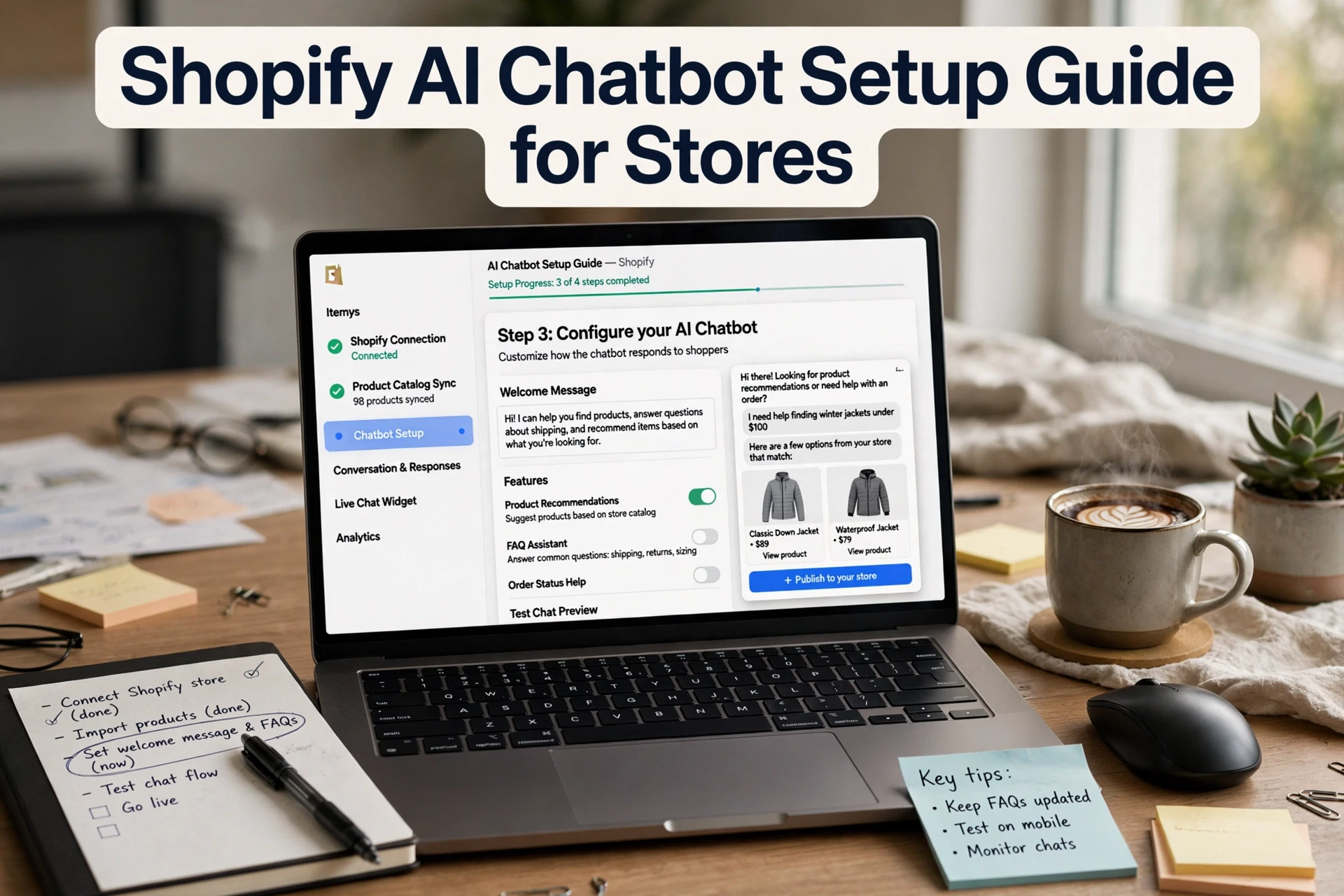
A Shopify AI chatbot only works as well as the store behind it. Follow this order: data, rules, handoff, then testing.

Clean your product, policy and order data first
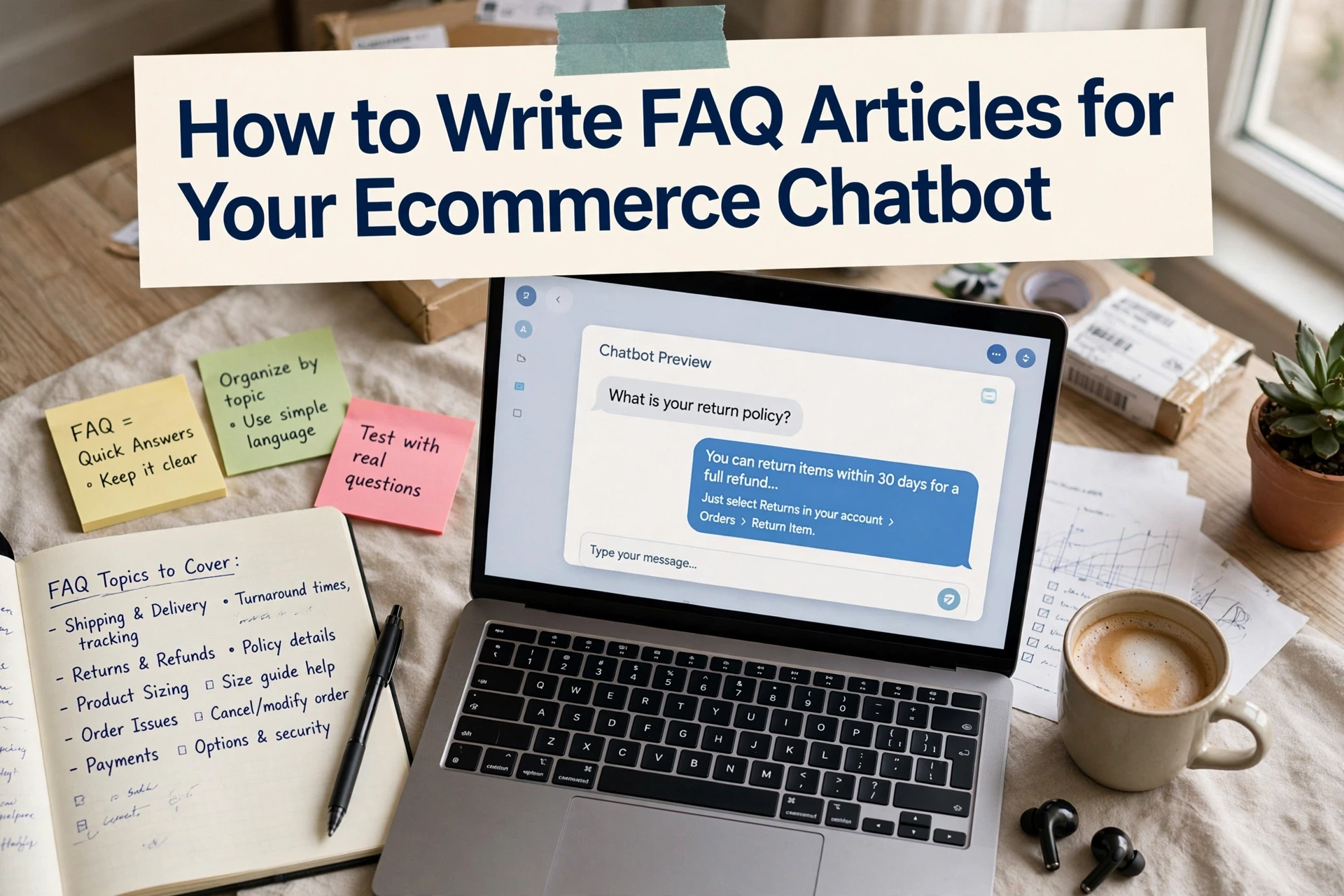
Fix titles, descriptions, sizes and stock status before launch. Rewrite vague shipping and return policies in plain sentences. The bot answers from what you give it, so gaps become wrong answers.
Set tone, rules and hard limits
Decide how the bot should sound and what it can promise. Block guesses on pricing, delivery dates and medical claims. A tool like Kandid lets you ground answers in your own store content, but the guardrails stay your job.
Design human handoff and order lookup
Route refunds, complaints and complex sizing questions to a person within one or two replies. Connect the bot to order status so shoppers self-serve tracking instead of waiting. For routing details, see this handoff and escalation guide.
Test on mobile before you go live
Most shoppers chat on phones. Test on a real device: slow loads, cramped buttons and cut-off replies kill conversations. Run twenty real questions, including edge cases, before publishing.
Where Shopify AI Chatbots Deliver the Most Value
Three jobs earn the fastest payback: finding products, answering order questions and clearing checkout doubts. Start there before you automate anything else.
Product discovery and recommendations
Shoppers often know what they need but not what it's called. A chatbot that reads your catalog can turn "gift for a runner" into three concrete products. This is where a well-trained product recommendation engine earns its keep, because each chat doubles as a guided search.
Order tracking and post-purchase questions
"Where is my order?" dominates support tickets. Connect the bot to order data and it answers instantly, which frees your team for refunds and real problems.
Cart and pre-checkout support
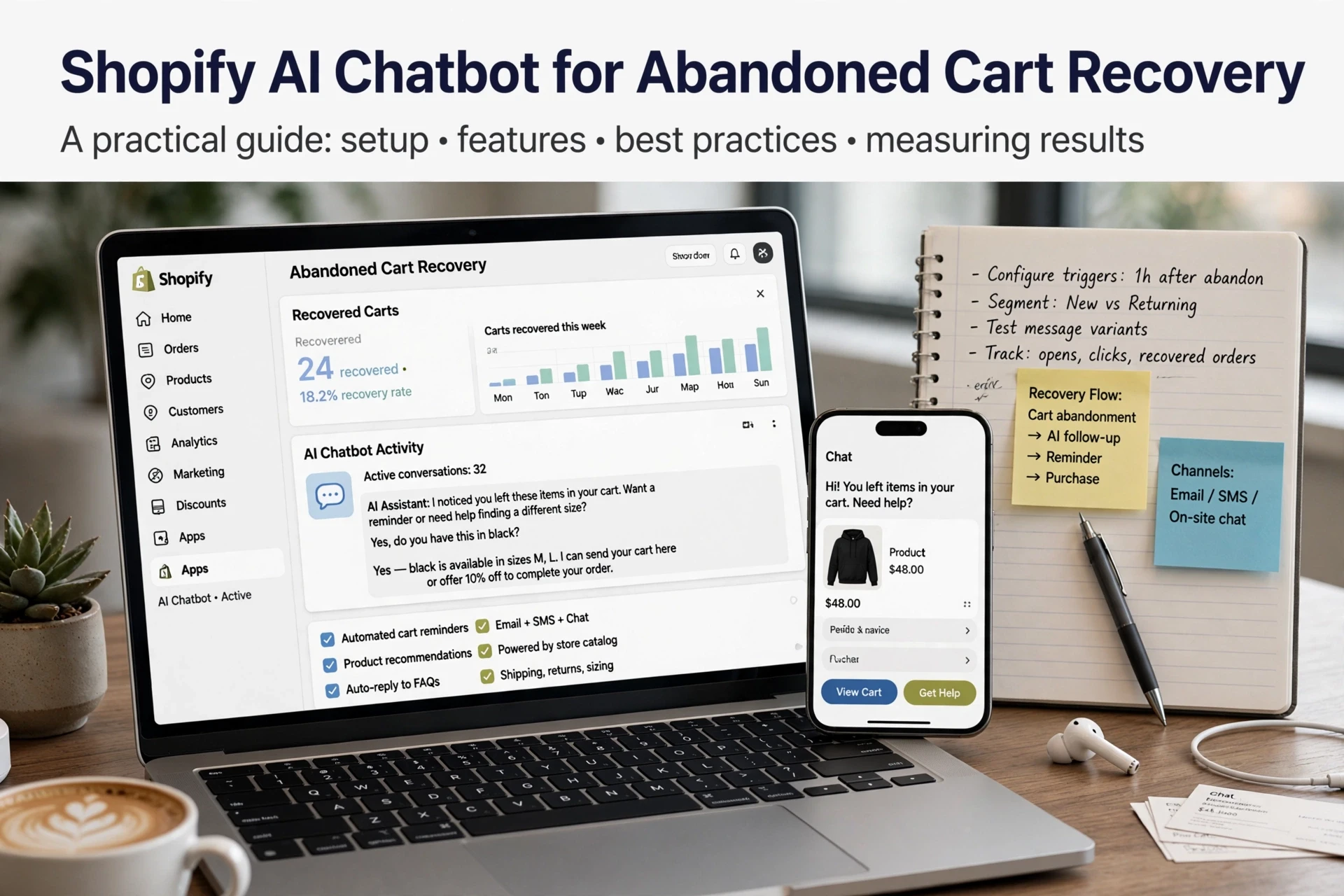
At checkout, hesitation is fatal. Bots that answer sizing, shipping and return questions right in the chat recover sales you'd otherwise lose.
Measuring Results Without Overclaiming
Chatbot numbers look impressive until you check what they actually caused. Review a few metrics weekly and be honest about attribution.
Metrics worth reviewing weekly
Track chat engagement rate, product clicks from chat, handoff rate to a human, and orders where chat appeared in the session. Watch containment, meaning questions the bot resolved alone. Review weekly so a broken flow or bad product answer gets fixed within days, not months.
Separate attributed revenue from incremental revenue
A chat-assisted order is not the same as a chat-created order. Many shoppers would have bought anyway, so attributed revenue overstates the lift. To estimate incremental value, compare similar periods with the assistant on and off, or hold out a product category. State the method and the limits in any report you share.

If these best practices match what your store needs, see how Kandid puts them to work with an AI sales agent built for Shopify.
Frequently Asked Questions
Q1: What are best practices for Shopify AI chatbots?
Clean your data first, set guardrails, plan human handoff, test on mobile, then measure weekly.
Q2: How do I hand off chats to a human?
Route refunds and complex questions within one or two replies.
Q3: How do I measure chatbot revenue?
Track chat-assisted orders weekly, but compare on/off periods to estimate incremental lift.
Conclusion
A Shopify AI chatbot works when the store behind it is ready. Clean data, firm guardrails, quick human handoff, mobile testing and honest weekly measurement turn it from a gimmick into a reliable sales and support layer.