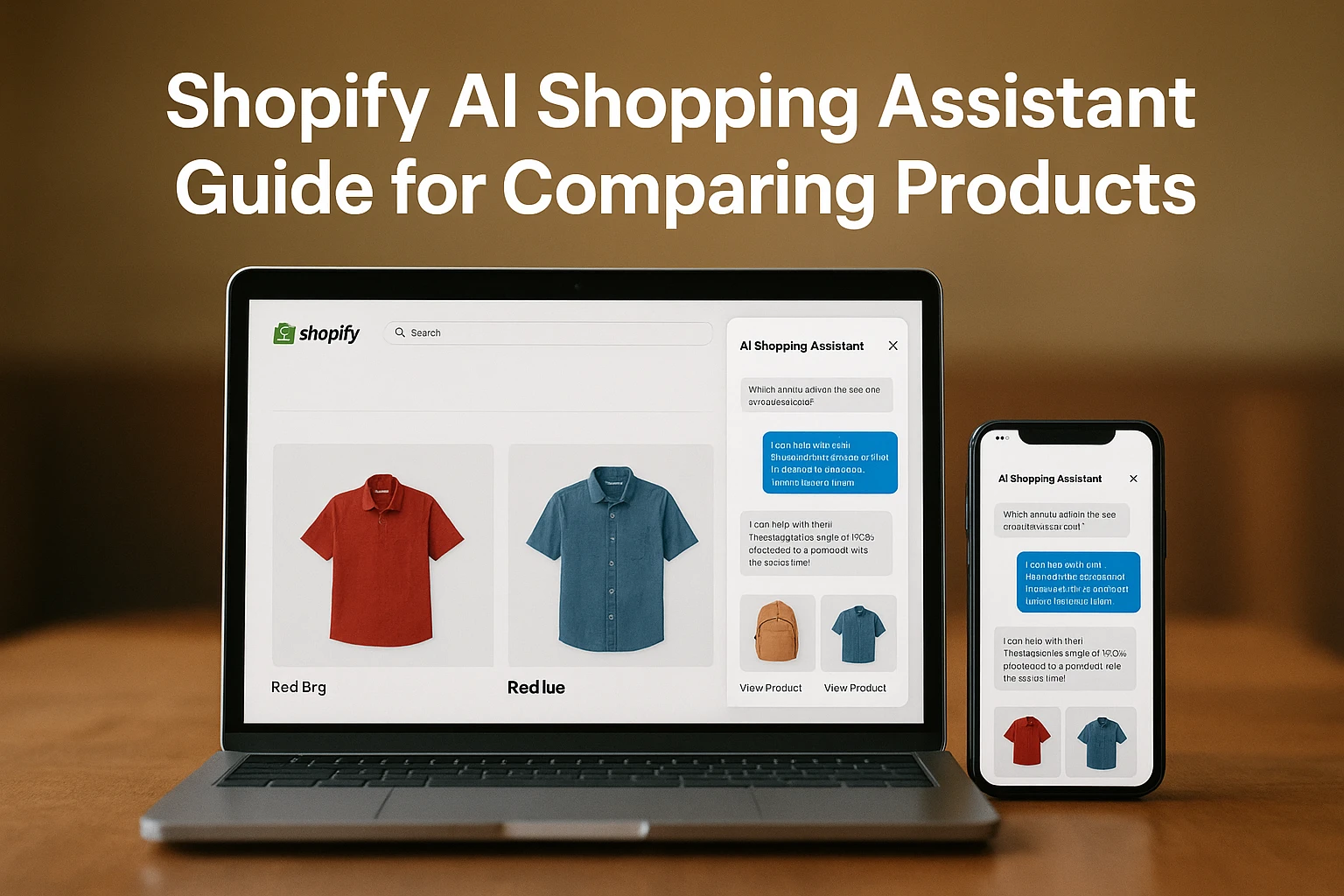
Shopify AI Shopping Assistant Guide for Comparing Products
Quick Summary: A Shopify AI shopping assistant should guide product comparisons by asking only questions that change the recommendation, showing honest trade-offs instead of declaring a universal winner, and ending with a clear next action. Set fallback rules to hand off to humans when data is missing or complex, and measure the full decision path, not just revenue, to spot weak answers. Avoid listing features without trade-offs, recommending out-of-stock items, or skipping clarification. Test comparison replies weekly against real catalog changes.
A shopper weighing two similar products does not need another grid. They need a clear answer: which model works for daily use under $100? A Shopify AI shopping assistant can ask one follow-up, explain the real trade-offs, and suggest the best fit. This guide shows how to set up comparison chats, keep advice honest, route tough cases to staff, and measure which Shopify AI shopping assistant conversations lead to sales.
Step 1: Define the Comparison Decision Before You Configure the Assistant
Turn Product Differences Into Shopper Questions
Start with the decision, not product copy. Ask: What must the shopper choose between?
- List the two to four products often compared.
- Turn each difference into a plain question:
- “Do you need daily use or occasional use?”
- “Is price or durability more important?”
- “Do you need a compact size?”
Product finders commonly map answers to matching products, as Shopify App Store listings describe.
Choose Evidence the Assistant Can Safely Use
Use facts your team can verify. Keep claims tied to product data, not guesswork.
| Evidence | Safe assistant response |
|---|---|
| Specs and materials | “Product A uses stainless steel.” |
| Price and stock | “Product B costs less today.” |
| Fit, care, or use notes | “Choose A for machine-washable care.” |
Tip: If a shopper asks about medical results, safety, or an unclear edge case, route them to a human.
Also Read: Ecommerce Chatbot Product Recommendations and Add-to-Cart Setup Guide
Step 2: Guide the Shopper Through a Short, Fair Comparison
Ask Only the Questions That Change the Recommendation
Ask one question at a time. Focus on details that change the pick:
- Budget
- Main use
- Required size, fit, or feature
Skip questions the product page already answers. Shopify can surface related products based on purchase history, descriptions, and collections, but chat should clarify the shopper's intent. Shopify explains these recommendation inputs.
Show Trade-Offs Instead of Declaring a Universal Winner
Compare two or three options on the facts that matter.
| Option | Best for | Trade-off |
|---|---|---|
| Product A | Daily use | Fewer premium features |
| Product B | Heavy use | Higher price |

Say why each option fits. Do not hide a lower-priced choice just to push stock.
End With a Useful Next Action
Recommend one option, then offer a clear choice:
- Add the suggested product to cart.
- View the product page.
- Ask a human if fit or compatibility remains unclear.
Also Read: D2C Product Recommendations Strategy for Higher Average Order Value
Step 3: Add Guardrails, Human Handoff, and Measurement
Set Clear Fallback Rules
Set rules for when the assistant must stop and bring in a person. The NIST AI Risk Management Framework recommends ongoing risk measurement and management.
- Hand off when product data is missing or conflicting.
- Never guess about stock, delivery dates, medical claims, or discounts.
- Show the shopper what the team needs to resolve.
Tip: Send the chat transcript, products compared, and stated need with every handoff.

Measure the Decision Path, Not Just Revenue
Track each comparison from question to outcome. Revenue alone hides weak answers and abandoned chats.
| Event | What it shows |
|---|---|
| Comparison started | Demand for product guidance |
| Clarifying question answered | Shopper intent captured |
| Product clicked | Recommendation relevance |
| Human handoff | Guardrail or data gap |
| Purchase after chat | Attributed assisted sale |
Review failed answers weekly. Fix missing product facts, then test the revised response.
Also Read: Ecommerce Chatbot Product Discovery Features Compared for Shopify Stores
Common Mistakes to Avoid
- Listing features without trade-offs. State who each product suits, then explain the key difference.
- Recommending out-of-stock items. Shopify excludes some unavailable products from recommendations, but check your chat data too. Review Shopify's eligibility rules.
- Skipping clarification. Ask about budget, use case, size, or must-have features before comparing.
- Treating a chat answer as final. Offer a human handoff for complex fit, safety, or bulk-order questions.
Test comparison replies against real catalog changes each week.

Let Kandid guide product comparison chats, clarify trade-offs, and hand complex questions to your team when needed.
Frequently Asked Questions
Q1: How can a Shopify AI shopping assistant help customers compare products and choose the right item?
It asks about needs, budget, fit, and use case, then shows clear trade-offs between suitable items. It should state limits honestly and offer human help for complex questions.
Q2: What product data should I prepare?
Add accurate specs, sizing, stock status, key benefits, and who each item suits.
Q3: When should chat hand off to a person?
Hand off when the shopper needs a custom answer, reports a problem, or remains unsure after comparison.
Conclusion
Strong comparison chats clarify the shopper's need, show honest trade-offs, and suggest in-stock options. Pair the assistant with Shopify recommendations, human handoff, and clear attribution to improve product discovery without forcing a sale.